Beyond the well-trodden path to Hanssam, Arisu is another go-to when we crave Korean food in Munich. Arisu has a simple and warm décor. There’s seating outside too, perfect when Munich blesses you with good weather.
The owner is wonderfully friendly, whose care can be seen in every plate that leaves the kitchen. Although Arisu has a good selection of authentic, delicious dishes, there’re a few that slip straight into our personal rotation almost each time we visit. Let dive in.
Restaurant Profile
🏷️ Name of the Restaurant: Restaurant Arisu (incl. menu)
📍 Adress: Triftstraße 1, 80538 München
🍜 Style: Korean Cuisine – dumplings, rice bowls, noodles, soups, street foods, deep-fries etc.
💰 Price: around 20 – 30 EUR per Person (incl. Drinks and Tips)
Kimchi Jeon (김치전) — Kimchi Pancake
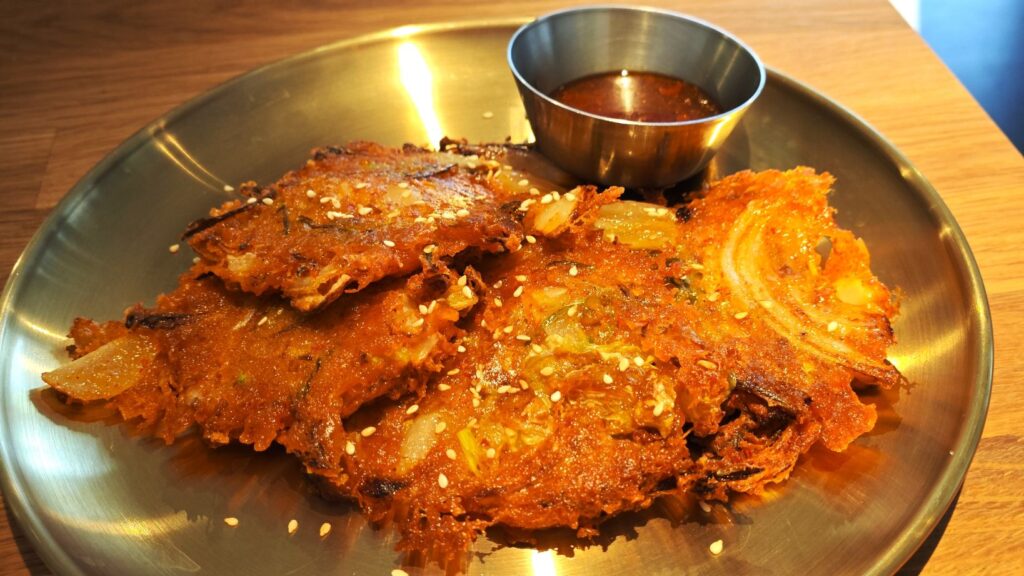
Yache Jeon (야채전), simply put, is a “vegetable pancake.” This pancake, especially the famous Kimchi version, is a beloved street food and comfort snack all over Korea.
The Kimchi Pancake is scattered with toasted sesame seeds, its surface a mosaic of kimchi, leek, and onion.
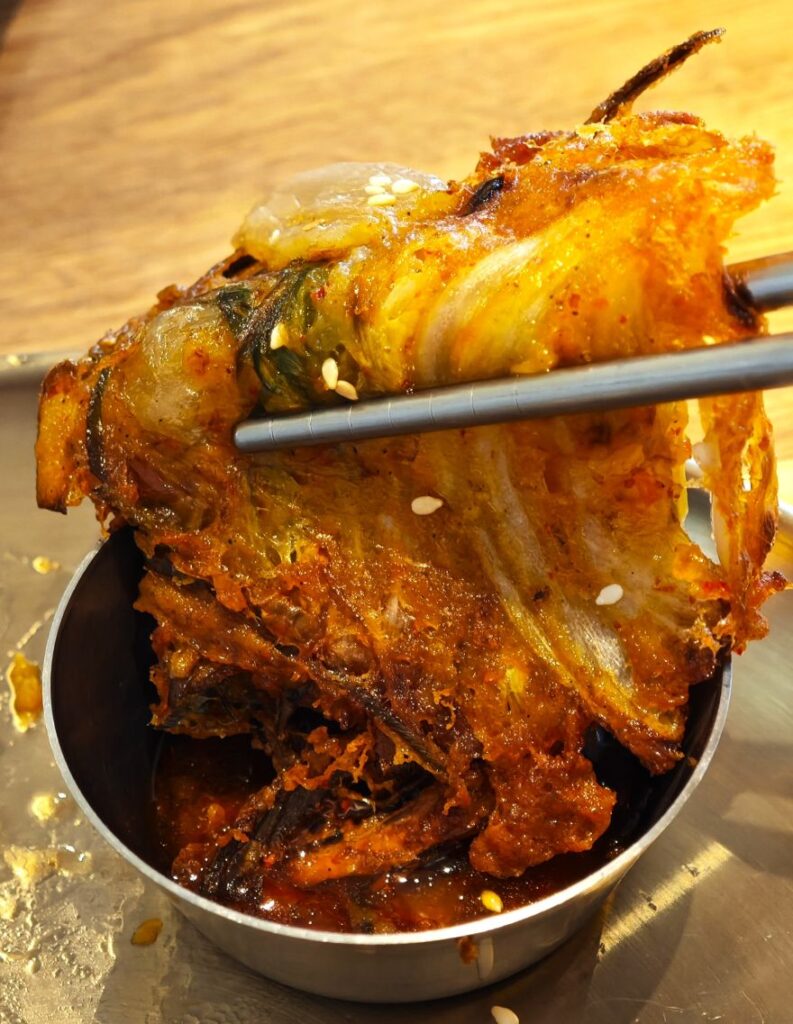
The edges are crispy, forming a delicate lace that shatters with each bite. While the exterior is all about the crisp, the interior remains surprisingly soft and tender.
The first bite is an explosion: the initial spicy, starchy hit from the pancake, followed by the juicy burst of vegetables.
The onion releases a fragrant sweetness that cuts through any oiliness, while the kimchi provides a tangy, fermented kick.
It comes with a salty, sweet, and quite spicy dip.
Daesi Dolsot Bibimbap (대신 돌솥 비빔밥): The Iconic Korean Rice Bowl
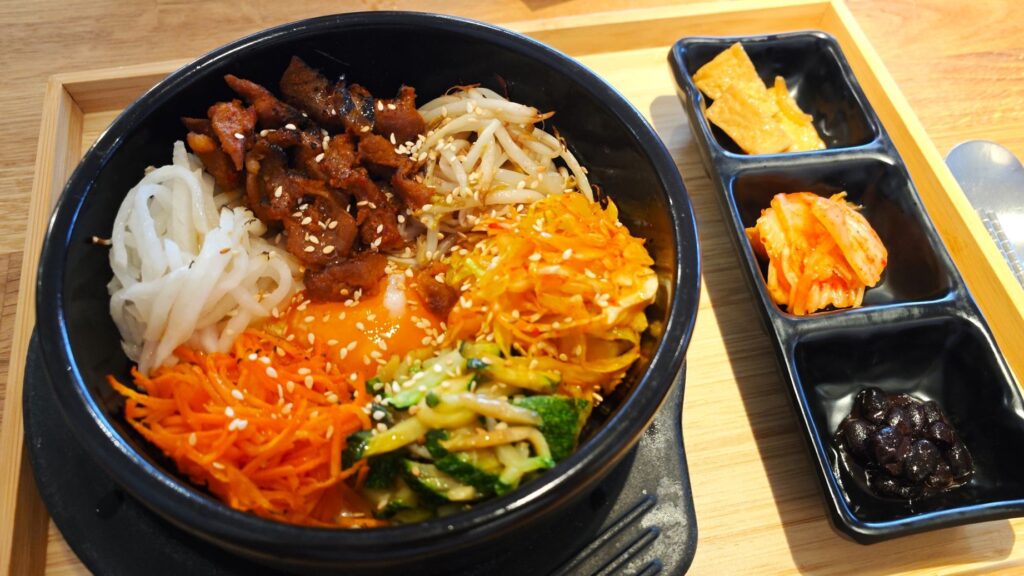
“Bibimbap” means “mixed rice,” and “dolsot” the scorching hot stone bowl it’s served in.
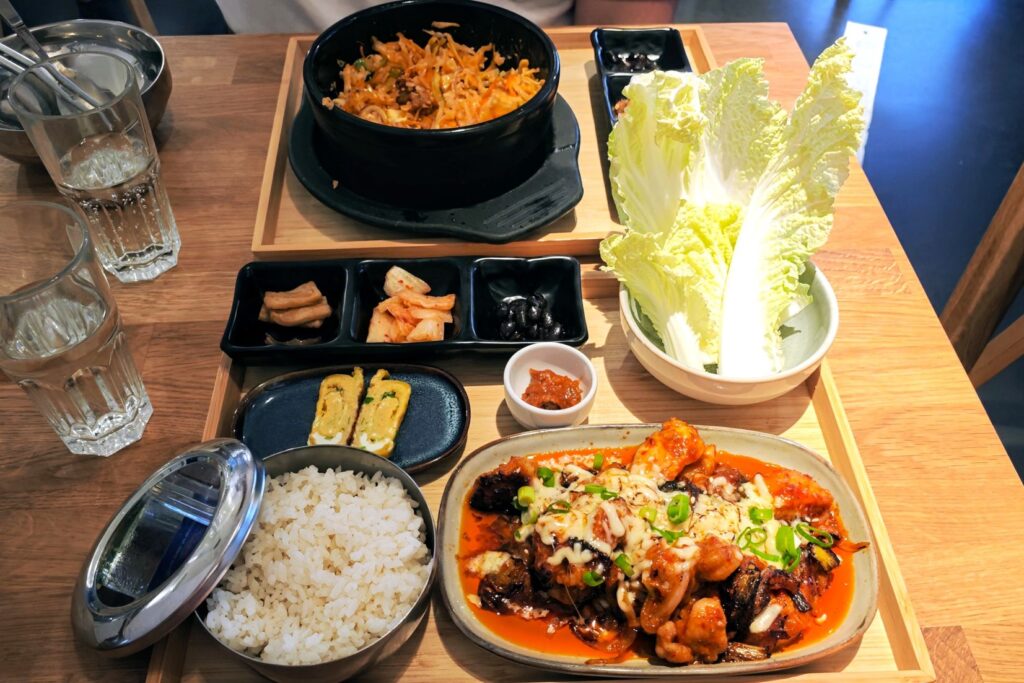
As the name goes, the bowl arrives sizzling audibly. On top of the rice is an array of delicious ingredients: charred, slightly sweet and spicy pork, a rainbow of sesame-oil perfumed vegetables (spring sprouts, fermented radish, carrots, cabbage, zucchini), and the crowning fried egg with a runny yolk.
On the side come classic Korean small bites: sweet tofu, kimchi, and sweet-savory red beans.
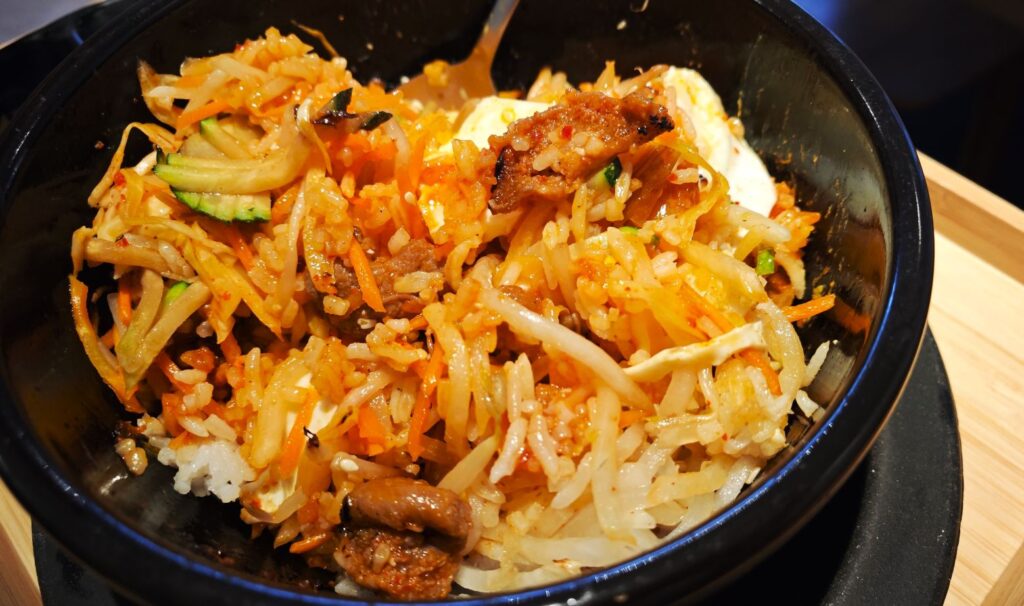
The tip is always to mix it all together with a nice dollop of chili paste. As you stir, the raw egg yolk and paste become a rich, creamy sauce that coats every grain of rice. At the bottom, the intense heat of the bowl creates a layer of savory, crunchy scorched rice like a texture dream.
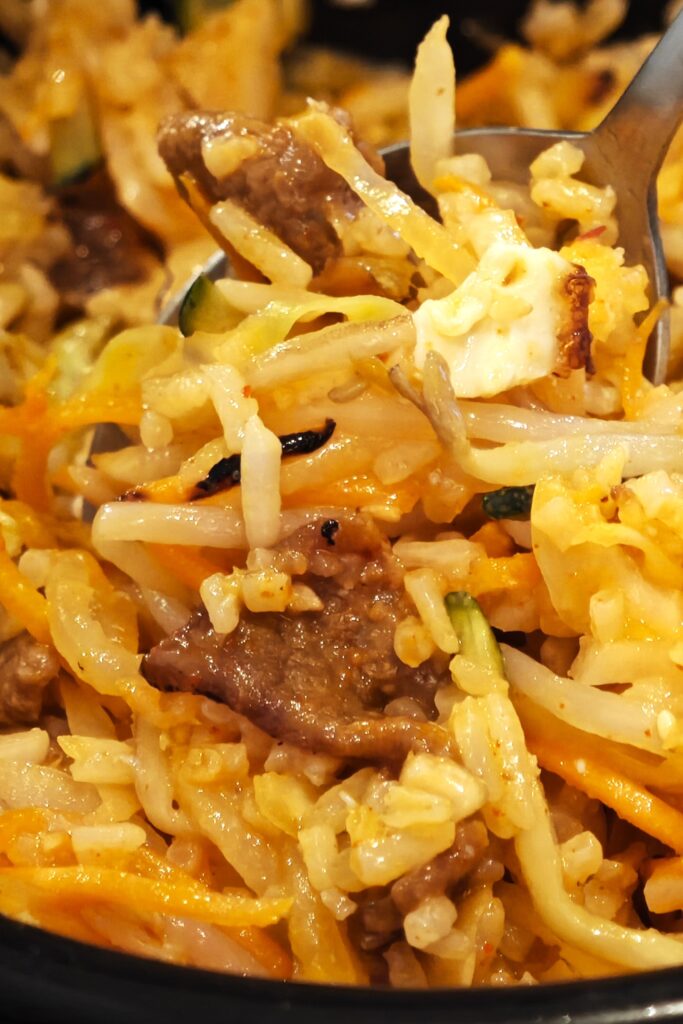
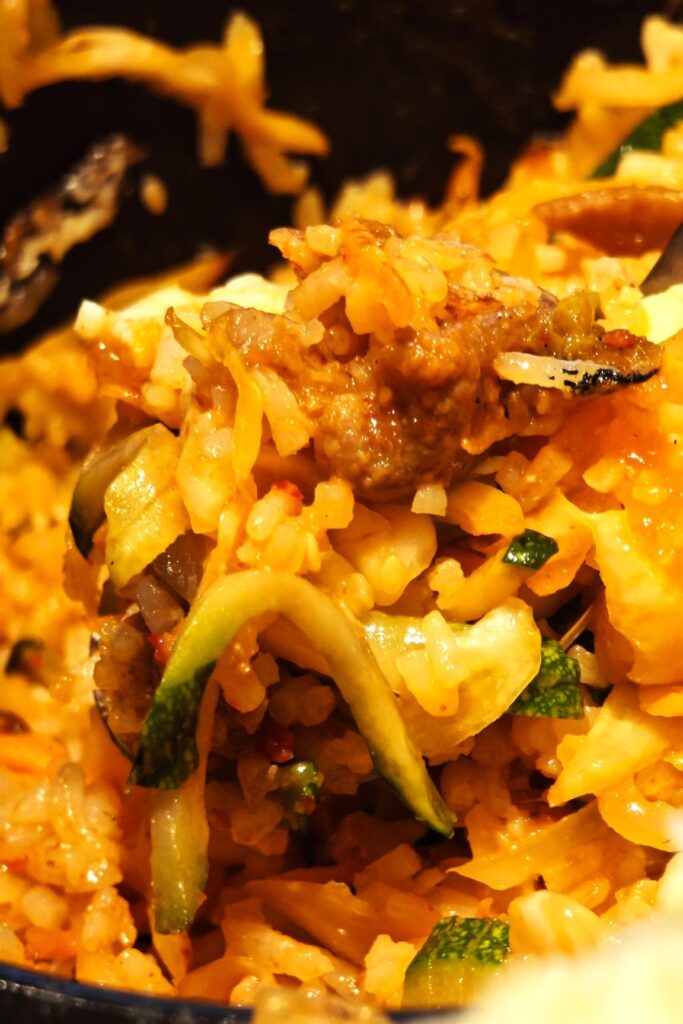
While the overall flavor feels gentler than some heavier versions you often find in Germany, it is incredibly balanced and comforting, with a wonderful smokiness.
Real Buldak Jeong Sik (불닭 정식): Korean Fire Chicken
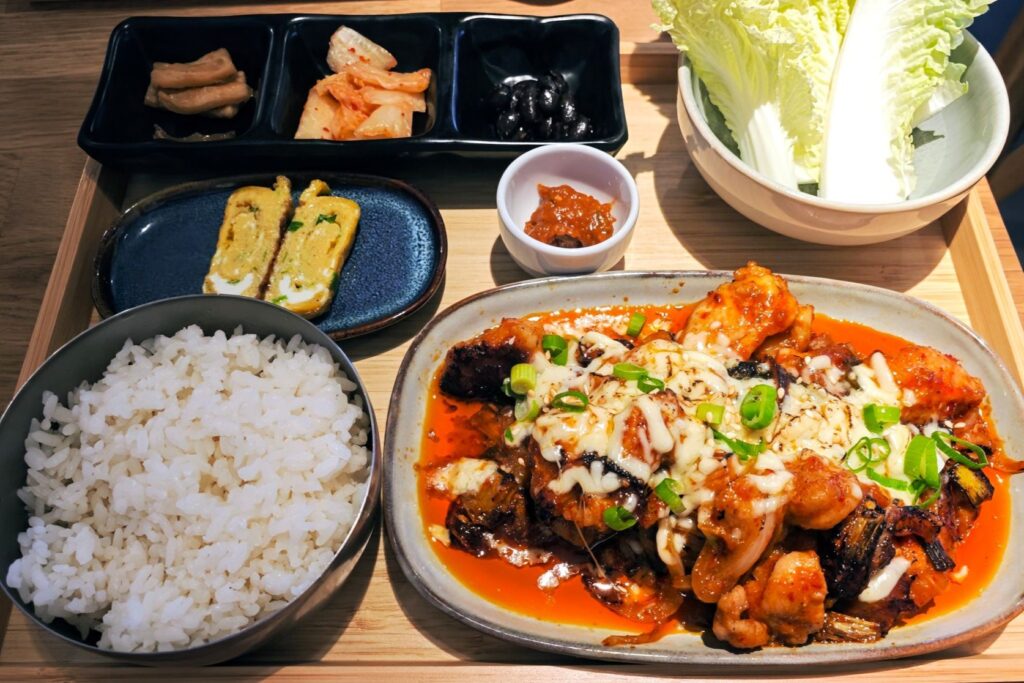
This is for those who like to play with fire. “Buldak” literally translates to “fire chicken.”
At its heart are tender pieces of chicken in a spicy, savory, and slightly sweet sauce that packs a serious punch.
We add a blanket of melted cheese, which gives a creamy, rich counterpoint to the inferno below. Mixed with spring onions, onions, and earthy mushrooms, each piece of chicken is juicy, with a slightly charred, smoky edge.
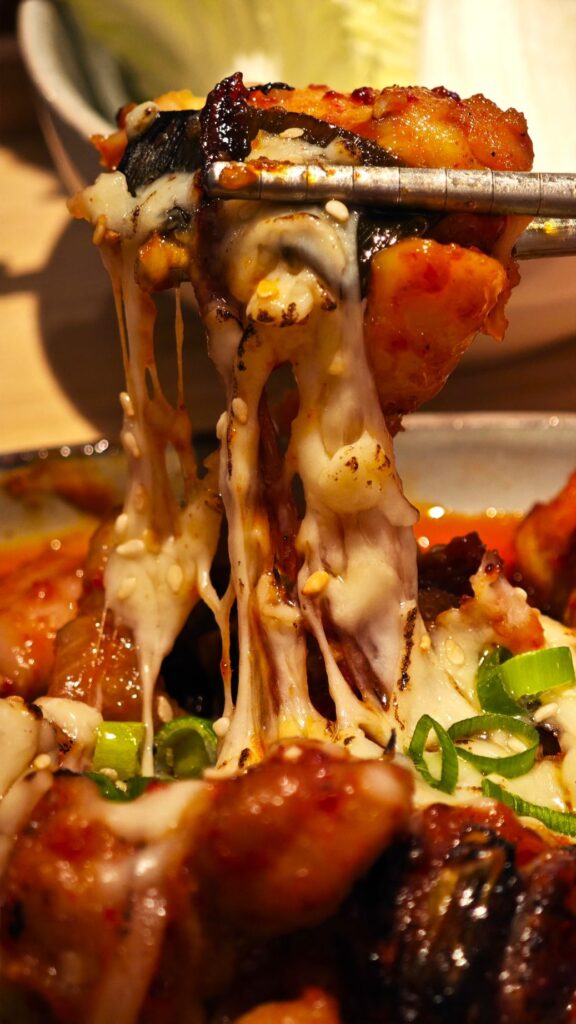
For a full experience, build your own perfect bite: You take a fresh, crisp piece of raw cabbage, use it as a base to carry a little rice, then top it with the cheesy chicken, a bit of the savory spring onion omelette, and your chosen sides—maybe a dot of kimchi for tang, or some sweet red beans.
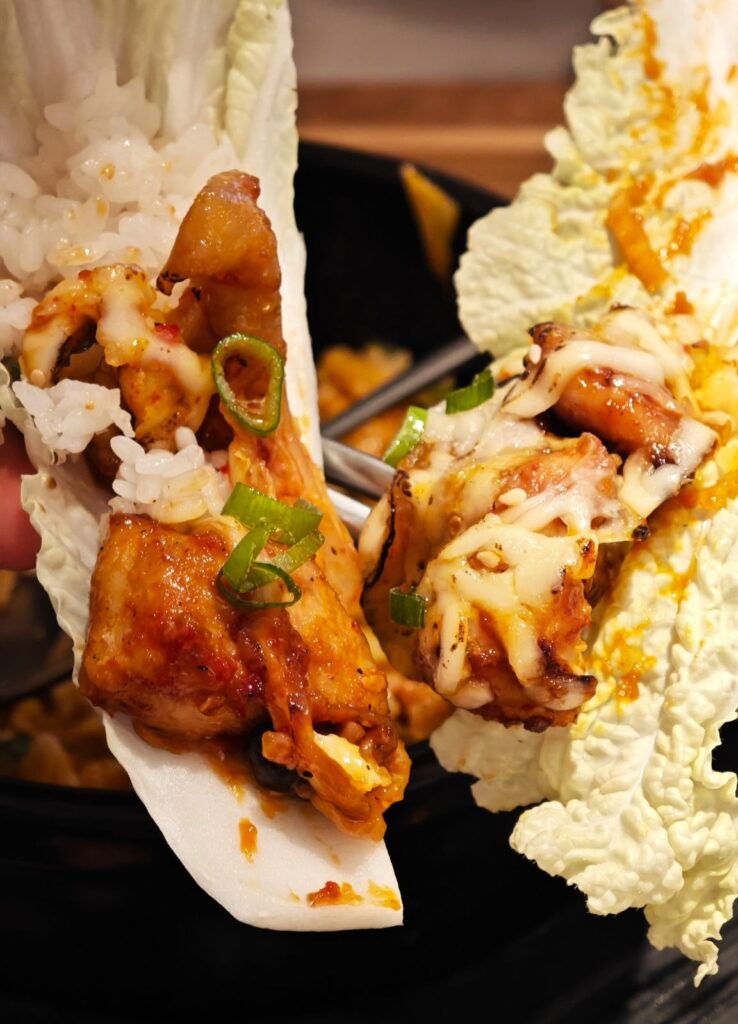
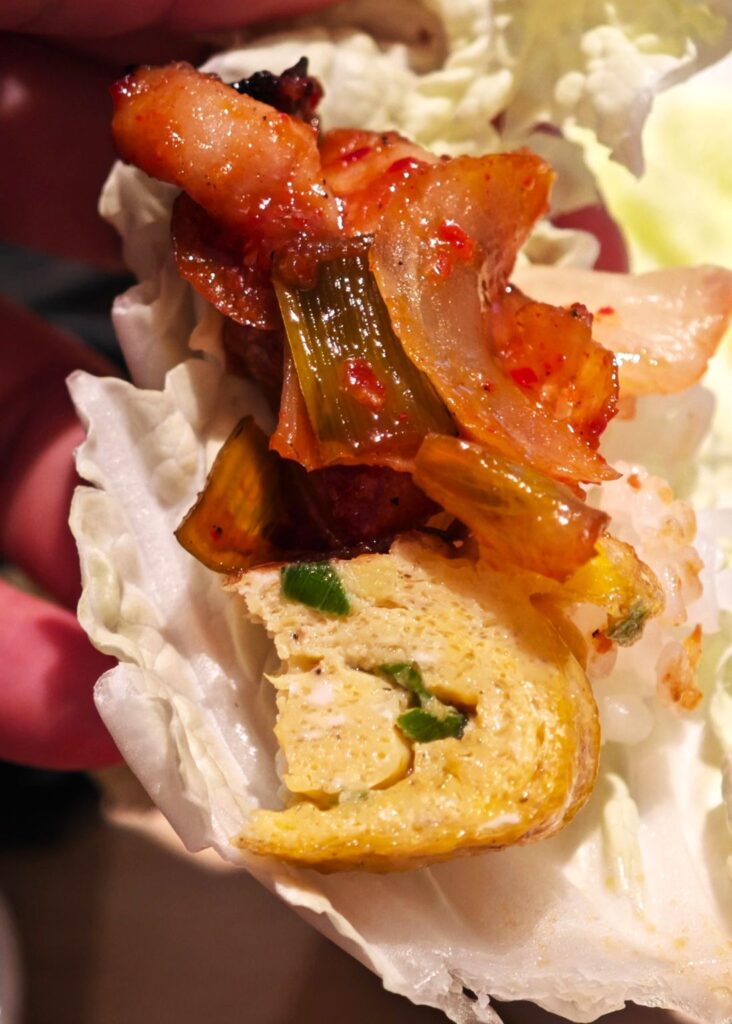
One bite is a texturalexplosion: fresh, crisp, creamy, and chewy, with spicy heat, cheesy creaminess, sweet undertones, savory depth, and that unmistakable smoky buldak aroma.
The spice does make you break a sweat, but it’s so flavorful that you won’t want to stop the burning, blissful spiciness.
Beyond the above highlights, Arisu’s menu is full of classics, guided by Korean edible philosophy known as “Obaek” (오백)—the harmony of Five Colors (red, green, yellow, white, black) and Five Tastes (spicy, salty, sweet, sour, bitter).
You’ll find Mandu (dumplings), a variety of Bibimbap rice bowls—topped with fresh vegetables or melty mozzarella for a rich finish—as well as the popular Kimchi and Bulgogi (sweet-savory beef). Add to that deeply flavorful soups and stews (Jjigae) and Korean street-food favorites like truffle Chapagetti noodles and spicy rice cakes (Tteokbokki).
It’s best to book a table. Otherwise, you might find yourself caught in the happy, hungry crowd!
Das Kimchi, das man aus der offenen Küche bekommt, ist einfach das aus dem Asia-Supermarkt. Auch die Reiskuchen, die vor Ort für dich herausgenommen werden, sind Supermarktware. Die Toppings für den Bingsu sind ebenfalls Müsli aus dem Laden.
Als ich die koreanische Mitarbeiterin gesehen habe, dachte ich ehrlich gesagt, das wäre alles hausgemacht … tja, na ja
Got the stone pot bibimbap and fried chicken. Pretty okay overall
Thanks for sharing. I read many of your blog posts, cool, your blog is very good.
The food tastes good, but it’s not great value for money.