Author: 玖伊岚 – Jiu Yi Lan

  • Chagiya Grill: Ultimate Korean BBQ Bliss in Munich

    Chagiya Grill: Ultimate Korean BBQ Bliss in Munich

    Today, BBQ lovers, prepare to be amazed! We’re about to introduce you to the absolute must-visit Korean BBQ spot in Munich. This gem has earned rave reviews from everyone we know, standing out as one of the best BBQ destinations in the city.

    Restaurant Profile

    Step inside and you’ll be greeted by a vibrant yet elegant setting. The ambiance is casually chic, with just the right amount of space between tables to make your dining experience feel intimate and special. This restaurant hits every high note: top-notch ingredients, unbeatable value for money, tantalizing variety with so many customization options, crafting flavors that’re are out of this world!

    Service is an integral part of the entire experience. The staff are not just waiters or waitresses; they’re your personal BBQ guides, keen to tailor the experience to your preferences. They’ll even show you photos from their own phones to give you a sneak peek of what to expect.

    As soon as we glanced at the menu, we were instantly thrilled by the incredible variety of offerings. We knew the staff’s patient consultation would be invaluable in guiding us through the options. This is more than a Korean BBQ place; it’s a global culinary fusion. They serve the fine cuts of meat, celebrated not only in Korea but also in Japan, Beijing, Thailand, Taiwan, and Vietnam, each with its own unique marinade and style.

    You can choose from pork, beef, lamb, chicken, and seafood with two main sets. The standard composition, priced at around 35 EUR, lets you enjoy 300g of three different meat and seafood types. For those with a bigger appetite, the extended composition, at around 40 EUR, offers 400g of four different types.

    Wagyu beef is also available for an extra charge. Although it’s not listed on the menu, you can request it—20 EUR for 100g of premium Wagyu from Japan. They also offer Australian Wagyu, which can be included in your set for about 5 EUR on top of the composition price.

    At Chagiya, the beef cuts are from Black Angus Beef, known for its rich marbling and tender texture. Different cuts from different parts of the body offer unique tastes and textures. To enjoy the variety, we sampled different meat types, but made sure to keep beef front and center. For the two of us, we decided on two extended sets with Australian Wagyu included.

    The Australian Wagyu, with its excellent marbling, promises buttery, rich, beefy flavors. The menu sets start with No. 1.1 Classic Seoul-Style Kalbi Short Ribs, featuring high-marbled short ribs from the front back area, sliced with bone for supreme juiciness. Next up is No. 1.6 Japanese Chuck Yakiniku Bliss, which includes large cuts of chuck rib meat from the shoulder area, known for its intense beefy flavor. No. 1.7 Imperial Beijing Flat Iron (Burgmeisterstück) offers thick slices of flat iron steak, prized for its robust taste and often considered one of the best for grilling.

    For a spicy and aromatic delight, we chose No. 1.8 Thai Peppery Pinnacle, which consists of flat iron steak pieces seasoned with pepper sauce, onions, cumin, and a touch of coriander. Next in line was No. 2.2 Duroc Jeop Sal, featuring thick slices of Duroc pork belly, known for its succulent and juicy texture, with a rich and slightly sweet flavor. No. 4.1 Kimchi Dak-Bokkeum brought a bold and tangy flavor with its chicken meat marinated in a spicy Korean kimchi sauce, offering a hint of heat. Finally, No. 5.3 Scallops presented four large-sized scallops, bringing a sweet, oceanic flavor that perfectly complemented the hearty meats.

    For two people, two extended sets at Chagiya are more than enough, leaving you thoroughly satisfied. If you’re inclined towards the standard sets and still want to explore more, we highly recommend trying the M1 Korean Seafood Jeongol Pancake with Leek and Spicy Sauce. This popular dish is a delicious medley of shrimp, octopus, and crispy leeks, topped generously with sesame seeds.

    The soul of this pancake is in its dipping sauce. It combines the deep flavors of soy sauce, a tangy hint of vinegar, and the nutty notes of sesame oil. Minced green onions infuse it with freshness, while chili lends a spicy kick. The pancake’s starchy texture softens the briny sweetness of the seafood and the pungent aroma of leeks. Paired with the savory sauce, it delivers umami richness in every bite, making for a solid foundation before diving into the BBQ feast.

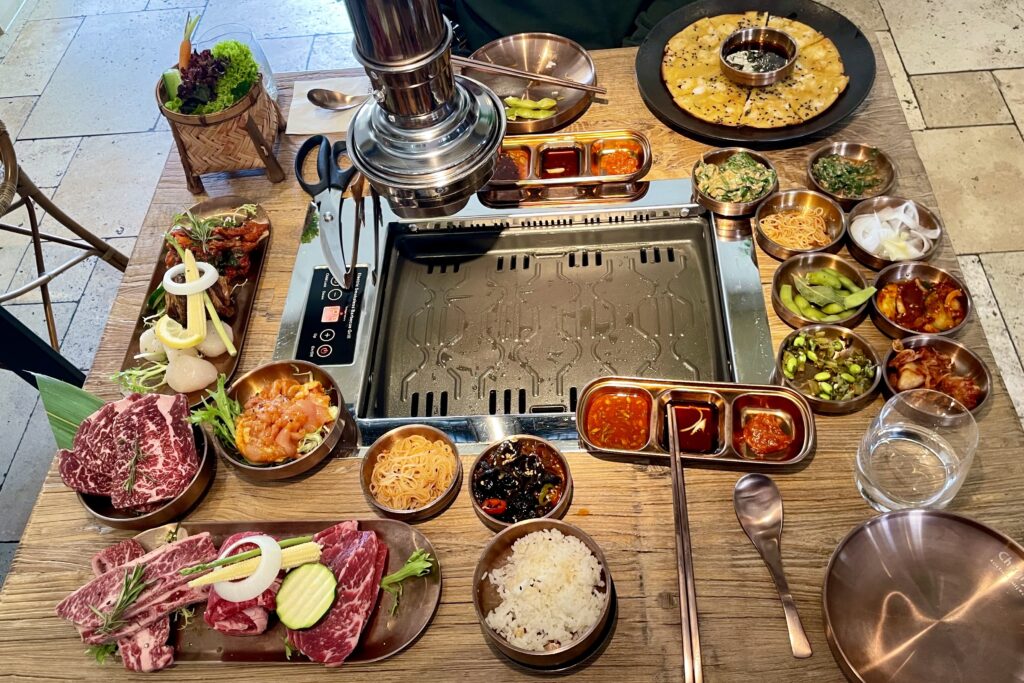
    Once we placed our order, the staff promptly served an array of delectable side dishes. These included fresh spinach in sesame paste, tangy and slightly spicy rice noodles, salted edamame in shells, pickled mustard greens with edamame, savory wood ear mushrooms in a spicy sauce, kimchi, zucchini, pickled radish, fresh salad with carrots and cucumber, and steamed rice topped with sesame seeds.

    All these banchan are complimentary and can be refilled free of charge. Seriously, just indulging in these delicious sides can leave you feeling full and utterly satisfied. This unlimited refill policy is a game-changer that will transform your BBQ experience.

    The variety of vegetarian banchan ensures that the BBQ never feels heavy, allowing you to balance rich meats with fresh veggies. And you get to fully enjoy Korean BBQ the authentic way, known as Ssam (쌈):  wrapping succulent meat in leafy greens such as lettuce, adding BBQ sauce, and piling on different flavorful sides for that ultimate mouthwatering bite. Each mouthful is an exciting, perfectly balanced burst of flavor.

    While you’re savoring the side dishes, the main event—the BBQ platters—arrive at lightning speed. The staff quickly gets the BBQ equipment ready for you, with the stove embedded right in the middle of the table. With a grill plate at the center, you can place your meat and other ingredients on top, flip and grill at your own pace. The enticing aroma and the sizzling sounds make the grilling incredibly fun and engaging.

    The BBQ set is a complete package, even with a smoke extractor hanging above. The staff adjusts it to the right spot to soak up the grilling smoke, so you won’t leave smelling like BBQ. Each table is equipped with scissors and tongs. In Korean kitchens, scissors are beloved for their versatility, perfect for cutting meat into manageable pieces. Here’s a pro tip: use the scissors to cut the meat either before grilling or after it’s cooked to avoid cross-contamination. And it’s best to use the tongs rather than chopsticks to flip the raw ingredients, just to keep things sanitary.

    Let’s fire up the grill—the moment the meat hits the hot surface, the crackling sound and aroma is irresistible. The high-quality beef showcases exquisite marbling, with the fat gently melting and enhancing its juiciness on the grill. The smell is deeply enticing, with hints of caramelization and a savory sweetness from the rendered fat.

    As the meat grills, its surface crisps to a brownish perfection, creating a tender inside and a crispy outside. Accompaniments like onions, baby corn, asparagus, and rosemary enhance the natural savoriness of the protein and add vibrancy to the grill plate.

    There are three dipping sauces: a thick, spicy paste combining fermented soybean and chili, offering a dynamic flavor profile of nutty, garlicky, sweet, and spicy notes; a dark, sesame oil-based sauce with salt and black pepper for a mild, nutty taste and subtle savory flavor; and an extra-spicy variant for those seeking more heat. Each sauce elevates the umami richness of the meat with a spicy-savory kick and subtle nutty undertones.

    All the meat types are delicious—whether it’s tender chicken, juicy pork belly, or plump scallops—but the beef simply reigns supreme. Bite into its juicy succulence, savor the luxurious, robust beefiness with caramelized charr that completely engulfs you in its richness and intensity – a true taste of heaven.

    Try it the Korean way: wrap the meat in lettuce leaves and layer a few sides for an explosion of flavors and textures – the wood ear mushrooms add a chewy, earthy flavor, while rice noodles provide a soft, starchy element that absorbs the flavors of the meat and sauces. Zucchini contributes a slight sweetness and crunch, complementing the tanginess of kimchi, which gives a spicy and fermented kick. Onions offer a subtle sharpness, balanced by the mild sweetness of edamame and the refreshing coolness of cucumber.

    Indulge in the juicy, hearty meat, paired with vibrant accompaniments and enriched by the dipping sauces bursting with spicy-savory depth, nutty richness and a fiery punch. Enveloped in a crisp freshness of the lettuce, each mouthful ignites a gratifying taste sensation that captures the very essence of Korean BBQ dining.  

    Korean BBQ is an ancient tradition, tracing its roots back to the Goguryeo Kingdom (37 BCE to 668 CE) with Maekjeok, a type of grilled meat. It evolved over the centuries from Seolya Mijeok, a snowy night delicacy in the Goryeo Dynasty (918 to 1392 CE), to Neobiani Gui (thinly sliced grilled beef), a royal treat in the Joseon era (1392 to 1910), before becoming a popular choice for communal feasting.

    Although no longer a symbol of royalty nowadays, the Korean BBQ retains its festive character. I fondly remember it as a popular post-exam celebration from my school days. In our cramped dormitory, the home-style BBQ grill dominated the center, claiming much of the available space. Yet, we didn’t mind. It was an indulgent moment in our teenage days – a long-awaited reward after the toughest exams. We embraced the grilling aroma that filled every corner of our dorm, itching neighboring classmates to join.

    Those days of marathon study sessions, daily struggles and endurance distilled into a moment of fervent satisfaction. As we bit into the palm-sized lettuce wrap of pork belly – relishing the rich, fatty flavors with a firm chew of juicy meat – was it the comfort of the food, or the optimistic spirit and hopeful anticipation unique to student years? Our faces glowed with contentment. We were seventeen that year. Now, revisiting the Korean BBQ in Munich, it still stirs in the recesses of memory an unfinished nostalgia, for the youthful bliss and heartening camaraderie.

  • Northeastern Chinese Flavors at True Tasty: From Ice Flower Dumplings to Grilled Delights

    Northeastern Chinese Flavors at True Tasty: From Ice Flower Dumplings to Grilled Delights

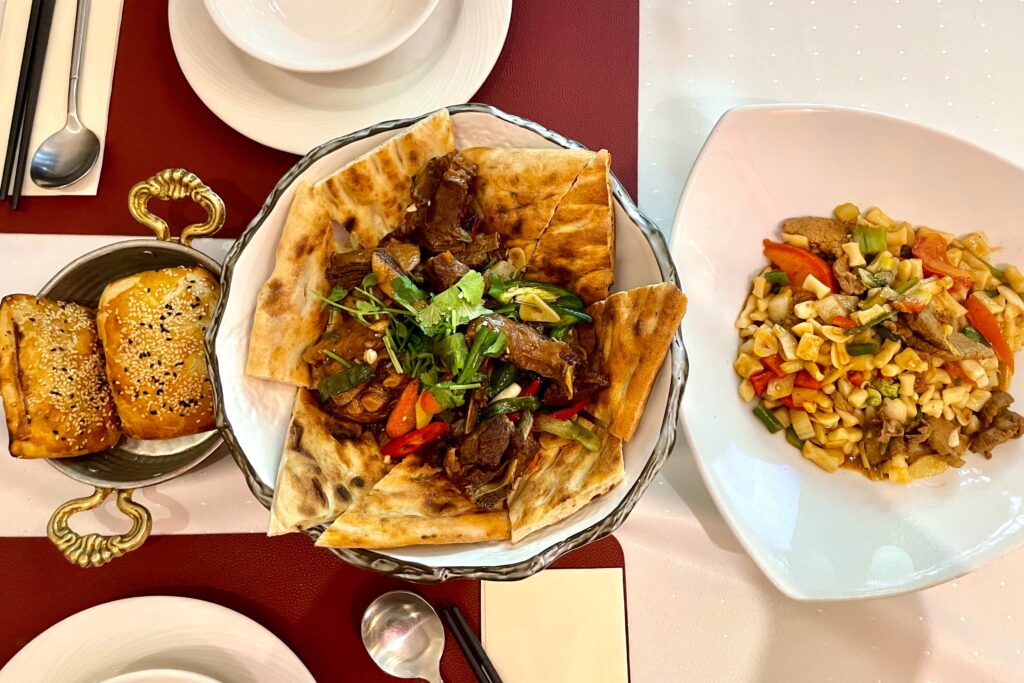
    If you’re on the hunt for delicious street food with the warmth of homemade flavors, look no further than True Tasty. Unassumingly located in the heart of Frankfurt, this charming eatery has become a favorite among those who appreciate authentic Chinese eats. My previous visit had me raving about their lip-smacking dumplings and savory beef pies, but there’s so much more to explore. This time, we’re excited to introduce you to a few more of their must-try dishes that embody the irresistible charm and comfort of homemade cooking, which we absolutely adore.

    Restaurant Profile

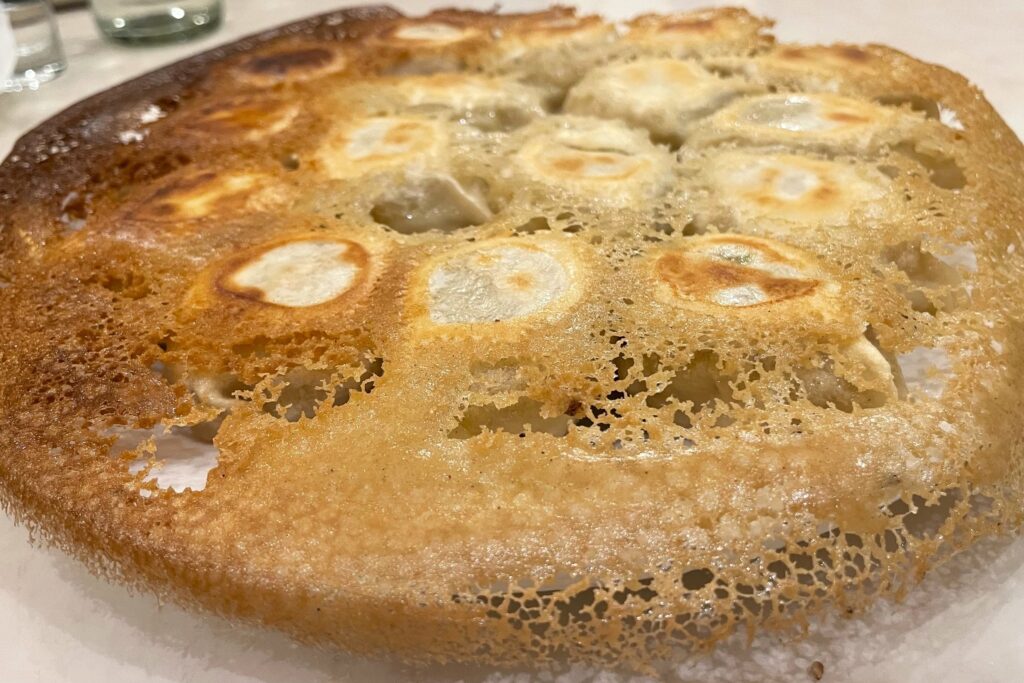
    猪肉锅贴NO4 Fried Dumplings with Pork, also known as 冰花锅贴 or Ice Flower Potsticker, holds a special place in the hearts and stomachs of locals. These Potstickers are celebrated for their crispy and lacey bottom, which resembles an ice flower (冰花 bīng huā) due to the unique pattern formed during cooking. Once beloved mainly in northeastern China, these days you can find them gracing street stalls across the country.

    Crafting these potstickers is an art in itself, requiring careful attention to detail. From mastering heat control—knowing precisely when to crank it up or dial it down—to managing the water temperature and the flour-to-starch ratio for optimal elasticity and crispness during frying, every step shapes the final flavor and texture.

    The dumpling fillings are made from minced pork mixed with soy sauce, rice wine, pepper, salt, and sesame oil. Due to the short frying time, the dumplings must be thoroughly steamed before they are swiftly pan-fried, to achieve their signature ice flower pattern on the crispy base — a step that must be executed flawlessly to avoid any doughy texture.

    It’s served with its crispy bottom side up, so you can start with the most enticing part – the golden-brown, lightly charred, and incredibly fragrant pieces. As you bite into the juicy, savory filling beneath its soft top, you’ll relish a pleasurable crunch and a burst of aromatic flavors all at once – a moment that never fails to excite.

    Noodles with Pork in Soybean Paste” (炸酱面NO7) is a highly popular dish in northern China, especially during the summer months. This traditional noodle dish originates from northeastern China and was brought to Beijing by the Manchus after their conquest in the early 17th century.

    The dish features homemade noodles topped with meat sauce, cucumber slices, scallions and cilantro. The meat sauce, made in-house, involves diced pork stir-fried with ginger and scallions until golden brown, then combined with soybean paste for a deep, savory flavor.

    The real magic lies in the distinctive Northeastern soybean paste, which owes its existence to the region’s long history of soybean cultivation. Crafted from fermented soybeans in a process that takes from months to years, this thick, dark brown sauce has a robust, salty-sweet flavor with earthy undertones.

    Once boiled, the noodles are quickly cooled in cold water, enhancing their firm texture. For those seeking a spicy kick, True Tasty’s homemade chili oil is a must-try.

    A scoop of fragrant chili sauce and a dash of vinegar, mix them up well and ensure every strand of noodles is coated in this savory goodness – isn’t it just downright appetizing?

    Grab a little bit of everything – the firm, smooth noodles, covered in rich umami sauce, paired with fresh cucumbers. Each mouthful is full of aromatic and refreshing flavors, deeply satisfying.

    In a previous post on True Tasty, we delved into the barbecue culture that’s so prevalent in Northeast China, especially in the vibrant, bustling night markets. These markets are where you can truly feel the lively, down-to-earth atmosphere. Street food stalls line the streets, teeming with people on their evening food hunts, their faces light up with excitement, enjoying both the delicious food and the company of friends.

    As an authentic spot for northeastern cuisine, it wouldn’t be right if True Tasty didn’t offer BBQ. Last time, we introduced a few of their BBQ highlights, such as lamb skewers, grilled tofu rolls with tongho, string beans, grilled chicken wings, and octopus. This time, we’d like to spotlight two more must-tries: the grilled chive skewers and the grilled eggplant.

    Grilled chives skewers (烤韭菜 G09) offer a bold and unique flavor.

    The grilling process brings out a slightly charred, smoky flavor that enhances the chives’ natural sharpness and garlicky undertones. Each bite delivers a satisfying chewiness, accompanied by a mild, grassy sweetness.

    Seasoned with cumin, garlic, pepper, chili powder, white sesame seeds and True Tasty’s special barbecue sauce for a touch of sweet, umami flavor, these skewers are savory, aromatic, and pack an intense yet refreshing flavor punch.

    Grilled eggplant (烤茄子 G06) is a popular dish, as the silky softness of the eggplant perfectly complements the smoky, savory BBQ flair.

    The tender eggplant is brushed with BBQ sauce for a sweet, tangy, and spicy touch, then generously topped with sesame seeds, cilantro, and green onions. It’s also loaded with freshly minced garlic, whose enticing aroma mingles with black pepper and cumin for a mouthwatering blend of smokiness and umami.

    In the Northeast, grilled eggplant with garlic is the ultimate pairing. The sharp, zesty flavor of the garlic cuts through the sweet, creamy eggplant for a balanced taste that’s both soothing and exciting.

    Scattered along bustling streets, the familiar flavors of street food are not only a sentimental favorite for many locals, but also remain a perennial pursuit for food lovers around the world. These humble foods reflect the profound depth of culinary artistry, embodying the skill and dedication of their makers. While some local delicacies are best enjoyed in their hometowns, many have journeyed across oceans and found a warm welcome among international food enthusiasts, like at True Tasty. Offering dishes that weave tradition and innovation, it’s a great place to deepen your journey through global flavors.  

  • Nana’s Ramen: A Taste of Japanese Ramen Artistry in Frankfurt

    Nana’s Ramen: A Taste of Japanese Ramen Artistry in Frankfurt

    Welcome to another food adventure in Frankfurt. Today, we’re thrilled to introduce you to a relatively new spot – an authentic Japanese ramen place that’s won our hearts right from the start. We first discovered this cozy eatery just weeks after it opened. Back then, the menu was modest, with only three ramen soup bases.

    Despite the limited options, we kept coming back again and again. What we experienced there is the spirit of craftsmanship, typical of the Japanese fashion – focusing on a few dishes but perfecting each one with care and dedication. Simple, yet exceptional, the hallmark of Japanese cuisine that we deeply admire.

    Now, to our delight, their menu has expanded, offering more appetizers and new ramen soup bases. Of course, we couldn’t wait to try them, and as always, we were not disappointed. So get ready, as we share our favorites from this humble yet extraordinary Japanese ramen restaurant.

    Restaurant Profile

    The first appetizer is vegetarian – Edamame Harumaki, a Japanese spring roll filled with a mix of bell peppers, glass noodles, and lettuce.

    The wrappers have a natural green hue, thanks to the addition of edamame in the dough, which gives it a gentle, sweet, vegetal taste. This flavor goes well with the crisp lettuce, sweet bell pepper, and soft glass noodles, creating a refreshing and crunchy mouthfeel. Paired with yuzu chili sauce, it brings a very delightful balance of citrus brightness, a bit of heat and a touch of bitterness, making it a great complement to the fresh flavors of the roll.

    Next up is a classic Japanese favorite – gyoza. These dumplings are filled with a savory mix of minced meat, carrots, cabbage, corn and shallots, all wrapped in an incredibly thin skin.

    Expertly pan-fried, the gyoza is golden brown and crispy on one side, while the other side remains tender and soft. Thanks to the thin skin, it requires less cooking time and absorbs minimal oil, keeping the dumplings light and letting the juicy, flavorful filling take the spotlight – the minced meat forms rich, hearty base, while the carrots and corn add a natural sweetness. They are nicely balanced by the crisp, fresh cabbage and pungent shallots, creating a satisfying taste in every bite.

    Paired with a dipping sauce of rice vinegar and chili oil, the tangy and spicy kick elevates the flavors to new heights.

    Katsuretsu, or “Katsu with Fillings” is a popular Japanese dish of breaded and fried cutlets with different fillings. Each of the four pieces has a golden, crisp exterior. Two are filled with sweet corn paste, delivering a burst of natural sweetness and a pleasing soft texture against the crunchy breading. The other two are filled with a green paste of vegetables and herbs, and adorned with black sesame seeds. This filling provides a savory and aromatic contrast to the corn-filled pieces.

    Accompanying these cutlets are shredded cabbage stripes, a refreshing palate cleanser between bites of fried foods.

    To add moisture and flavor, dip the katsuretsu into tonkatsu sauce. The sauce has a complex, savory-sweet taste – slightly peppery, mildly sour, and subtly spicy. It pairs well with the fried crispness and enhances the flavors of the fillings.

    Tsukune Cheese is a favorite at izakayas (Japanese pubs) and restaurants, and it’s one of our most frequent orders. This dish consists of Japanese-style meatballs (known as “tsukune”) grilled with melted cheese on top.

    The meatballs are firm, savory and well-seasoned, with a tantalizing blend of soy sauce, garlic, ginger, and a hint of sweetness. The cheese topping, when grilled, gets slightly charred and smoky on top. It looks so appetizing and adds a creamy richness to the savory meatballs.

    This dish is served with a sweet soy-based sauce, likely a mix of teriyaki and dashi (Japanese soup stock) that offers a balanced fusion of sweetness, saltiness and umami. It certainly adds an aromatic depth and boosts its hearty, luscious appeal.

    At Nana’s Ramen, they offer different noodle types to cater to different tastes. Each soup base is paired with the noodle type that best complements its flavor. The thin noodles are delicate and smooth, while the thick noodles are hearty and a bit chewy.

    In addition to standard toppings, Nana’s Ramen now offers numerus customization options at extra costs. You can add extra noodles, pork, chicken slices, or minced meat. They also offer an array of toppings, such as tsukune (three savory meatballs), shrimp, eggs, extra chili, and a variety of vegetables like eggplant, zucchini, corn, tofu, and more. So you can tailor your bowl to your exact liking.

    The specialty of Nana’s Ramen is undoubtedly the Tori Paitan (鶏白湯, which translates to “chicken white soup“).

    Tori Paitan is a beloved classic ramen broth, celebrated for its luscious, creamy white soup and deep, flavorful taste. Its popularity in Japan dates back to the early 20th century. During this time, Japanese chefs began experimenting with ways to fully extract the deliciousness of chicken. Through continuous experimentation and refinement, Tori Paitan gradually emerged as a distinctive ramen feature and has become a vital part of Japanese ramen culture.

    Tori Paitan is made by simmering chicken and chicken bones for a long period, allowing collagen and fat to dissolve into the broth, giving it its signature creamy white color and thick consistency. During the simmering, seasonings like sault and soy sauce are added to enhance the flavors.

    The result is a delicious broth that’s not only rich in flavor but also packed with protein, collagen, and various nutrients that are beneficial to health.

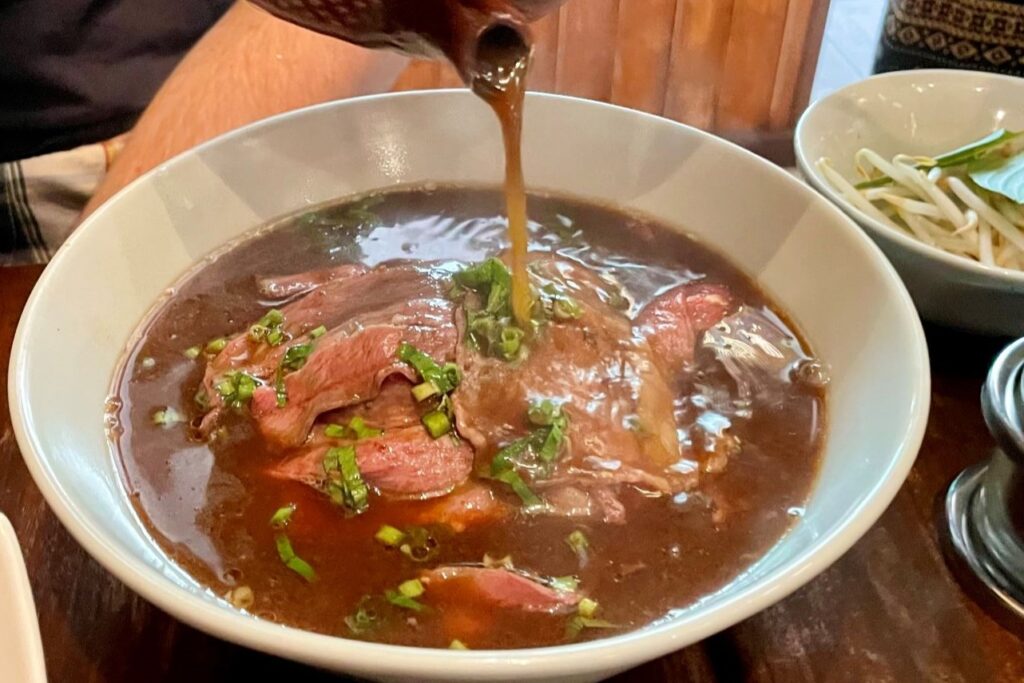
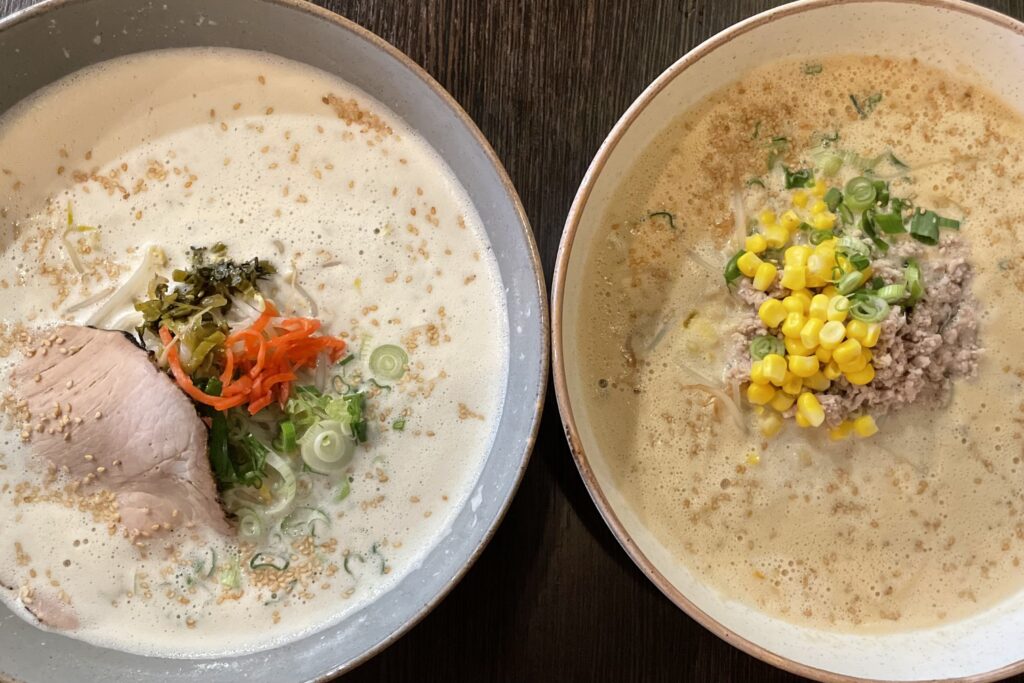
    The Nōkō Shōyu Tori Paitan Ramen (濃厚醤油鶏白湯ラーメン or „Rich Soy Sauce Chicken White Soup Ramen” in English) at Nana’s Ramen offers a gratifying dive into the culinary artistry of Japanese paitan. The creamy white broth has a form-like consistency on top, crafted from hours of vigorous boiling and emulsification of chicken bones. The broth is thick, luscious and umami-rich, sprinkled with sesame seeds for a nutty crunch, and topped with tender chashu pork, tangy red ginger, crisp bean sprouts, and fresh green onions.

    When the silky, smooth noodles are enveloped in the rich broth, each slurp unveils a satisfying depth of flavors. Eat with various toppings for a dynamic mouthfeel – red ginger for a pungent kick, bean sprouts for a fresh crunch, and green onions for a subtle sharpness. The chashu pork slices, braised to a fine tenderness, brings a savory heartiness, wonderfully complementing this deep umami dish.

    Miso Tori Paitan Ramen (味噌鶏白湯ラーメン or “Miso Chicken White Soup Ramen” in English) is a delectable ramen dish that combines the rich, creamy texture of chicken paitan broth with the savory depth of miso. It’s topped with sweet corn, aromatic shallots, and flavorful minced meat, all brought together in a luxurious paitan broth.

    The broth boasts a pronounced umami-ness from the miso and a satisfying saltiness that complements each ingredient beautifully. The noodles are thick and slightly chewy. Its firm texture is perfect for soaking up the rich broth, making every mouthful packed with flavor. Pair with sweet corn and the pungent shallots that balance the hearty minced meat and the rich, creamy broth. It’s a great choice for those who love rich and savory flavors.

    However, due to miso’s inherent saltiness, the soup is best enjoyed in moderation to avoid excessive thirst. If you’re sensitive to salt or prefer a lighter experience, it’s a good idea to sip the broth sparingly rather than drink it in large quantities. 

    Ebi Shio Ramen (海老塩ラーメン or “Shrimp Salt Ramen” in English) is a delicious ramen dish known for its clear and light broth, different from the richer paitan soups. The broth, with its shio (“salt” in Japanese) base, has a clean, savory taste. It’s seasoned with shirasu, small dried, salted shrimps, which lend a briny, umami flavor.

    Standard toppings include green onions, spring sprouts, and a grilled shrimp skewer. We customized it with extras like chashu pork and chili paste, which add a delicious tenderness and a spicy kick. The thin, slightly firm noodles are ideal for the shio broth, allowing the broth’s delicate flavors to come though without overpowering it.

    The spotlight of this dish is the grilled shrimps, with their tender and smoky flavor. The shirasu and garlic on top are slightly charred, imparting a subtle burnt taste and a layer of garlicky, umami goodness, nicely contrasting against the light broth. We asked for extra chili paste (level 2, the spicier option available) in a separate dipping bowl to adjust the spice level in our broth and enjoy dipping the grilled shrimp. The fiery addition perfectly complements the shrimp’s natural sweetness, making each morsel all the more dynamic and invigorating!

    The introduction of ramen to Japan dates back to 1912 when it arrived in Yokohama with returning Japanese travelers from China. This exchange was facilitated by the Treaty of Amity and Commerce between Japan and Qing China in 1871, which spurred Chinese migration and the establishment of Chinatowns in major ports like Yokohama, Kobe, and Nagasaki. One of the earliest ramen shops in Japan catering to these communities, “Rairaiken,” opened in Asakusa, Tokyo, in 1910.

    While ramen has its roots in China, it has been considerably evolved and popularized in Japan. Unique variations include soy sauce, salt, miso flavors, and chicken paitan which we explored today. At Nana’s Ramen, you can also try spicy broths like Tantanmen (特製担々ラーメン) with chili pepper.

    Additionally, there’re vinegary broths reminiscent of soba, European-style tomato broths, and even curry flavors. One of the most beloved styles is tonkotsu, originating from Kyushu, known for its rich, creamy pork bone broth. There’s much more to discover in the world of Japanese ramen, and Nana’s Ramen is a great place to start. Join us as we continue our delicious explorations – stay tuned for more!

  • Authentic Lebanese Cuisine in Frankfurt: Exploring Du Liban

    Authentic Lebanese Cuisine in Frankfurt: Exploring Du Liban

    Lebanon has always been on our travel list, for its fascinating destinations in archaeology, architecture, and ancient civilizations. We’ve heard countless tales of its friendly, warm-hearted people, their joie de vivre (joy of living), making people feel welcome and at home. And the food—its vibrant culinary scene—is said to be absolutely incredible for its freshness, flavor, and variety, with dishes like hummus, falafel and kebabs. We’re absolutely thrilled when we discovered Du Liban, a restaurant offering authentic Lebanese food right here in Frankfurt. Many fans of Lebanese cuisine swear by it as the absolute go-to spot. So, naturally, we had to check it out for ourselves!

    Restaurant Profile

    Before we dive into the food, there is one drink we simply can’t overlook – the Laban Zeer, a Lebanese yogurt drink with garlic. It’s mingled with black cumin seeds for added flavor and health benefits. It has a slightly salty taste that balances the tanginess of the yogurt nicely. With the aromatic garlic and the earthy, slightly peppery notes from the black cumin seeds, it creates a very unique blend of deep, bald flavor. While not a typical thirst-quencher, its refreshing quality makes it a very good companion to a hearty Lebanese meal.

    Billahmeh Sambus is a delicious Lebanese dumpling, topped with fresh scallions and cilantro, and served alongside crisp cucumber, juicy tomato, and shredded lettuce. The pastries are generously filled with a savory mixture of minced meat, onions, pine nuts, and a blend of Lebanese spices. It’s hearty, aromatic and incredibly flavorful.

    Sink your teeth into the flaky, golden crust that crumbles and reveals the succulent filling inside – tender, juicy meat seasoned with traditional Lebanese spices; the sweet onions that bring out the richness of the meat; and the crunchy pine nuts. Its savoriness gets deepened with hints of warm cinnamon, peppery allspice, and smoky cumin. The interplay of savory, earthy, nutty and spicy notes creates an exciting taste experience, which is then nicely complemented by the refreshing, cool vegetables.

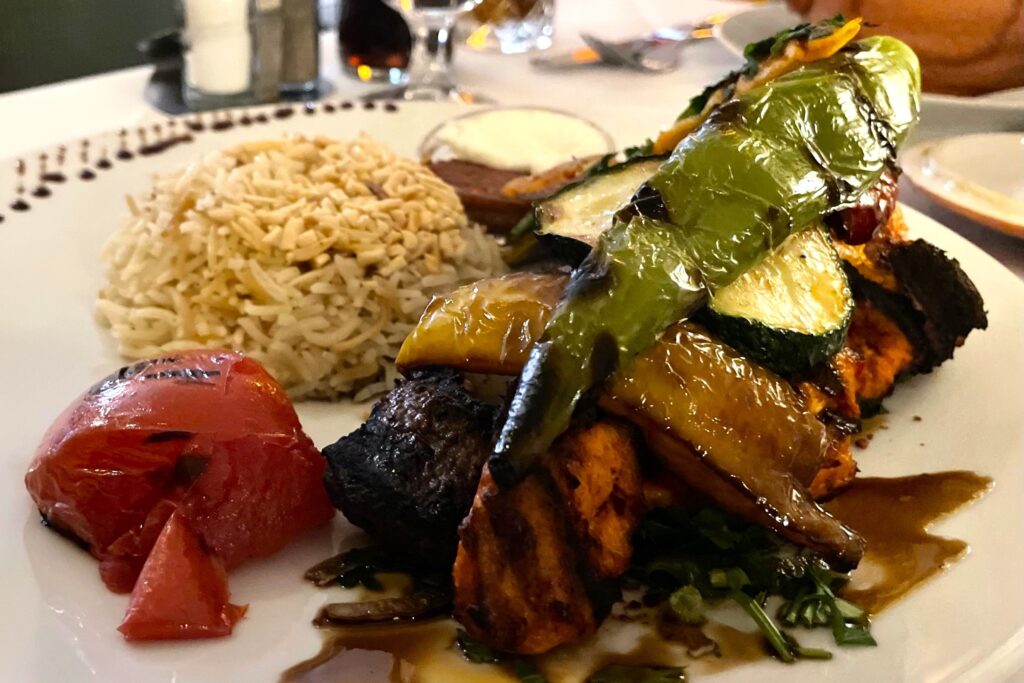
    Let’s start the main courses right away with our highlight – Schakkaleh Maschawi, a beautifully presented Lebanese mixed grill dish that showcases rich flavors and textures.

    Arranged in a triangular shape, you’ll find succulent lamb meat, ground lamb kebabs, and juicy chicken breast fillet, accompanied by colorful grilled vegetables like sweet, smoky long bell pepper, tender zucchini, creamy eggplant, and the slightly charred tomato.

    The tender lamb, seasoned with herbs and spices like cumin, coriander, and parsley, reveals its robust and hearty flavors in full folds. The chicken, marinated in garlic, lemon juice, and olive oil, tastes both savory and refreshing. The slightly charred, smoky vegetables add a burst of freshness – I especially enjoy the juicy sourness of the tomato and the occasional kick of the paprika that cut through the richness of the meat.

    Accompanying this is Basmati rice mixed with crunchy almonds and peanuts, providing a nutty flavor, and a thin, flatbread-like pancake topped with fresh coriander that gives a herbal note to the dish.

    Lebanese grilled food wouldn’t be complete without its array of traditional sauces. Du Liban offers two classic sauces that totally win our hearts – the creamy, garlicky white sauce (probably Toum) and the nutty, peppery, spicy sauce (probably Muhammara). Both have a thick and paste-like consistency, perfect for scooping up and spreading on grills, adding a delightful rich and smooth tang to the smoky, charred meats and veggies.

    Their grilled dishes are exceptional. Two others we highly recommend are the Kaftet Mischwieh Ghanam (lamb kofta kebab) and the Riasch Ghanem (lamb chops).

    Kaftet Mischwieh Ghanam is a traditional Lebanese dish of ground lamb expertly mixed with parsley, onions, and a blend of aromatic Lebanese spices. Formed into three generous pieces, the lamb has a hearty and substantial appearance. The outside has a beautiful, crunchy char, while the inside is still slightly pink, indicating a skillful grilling that locks in moisture without overcooking. The meat is incredibly tender, almost springy when pressed with a knife, testifying to its excellent texture and quality.

    Each bite begins with the satisfying crunch of the charred exterior, followed by the succulent lamb meat. It tastes savory and aromatic, with the spices enhancing the natural richness of the lamb, while the parsley, onions, and a side salad add fresh, herbaceous notes that balance the dish perfectly.

    Riasch Ghanem features four tender lamp chops, carefully selected for their quality and marinated in a blend of traditional Lebanese spices. The marinade tenderizes the meat and imbues it with a robust, complex flavor – savory, herbal, with lamb’s natural deep earthiness and a bright, citrusy note.

    The meat is firm with a satisfying texture. But that doesn’t make it any less juicy, thanks to the excellent marbling of premium lamb. The intramuscular fat melts during cooking and bastes the meat from within, intensifying its luscious flavor.

    Like the Schakkaleh Maschawi grill platter, this dish also comes with grilled veggies and sauces that complement the lamb wonderfully.

    Bamih bil Lahme (okra with meat in Arabic) is a popular traditional dish in Middle Eastern cuisine. It combines tender veal and okra, slow cooked in a rich tomato sauce with onions, garlic, and coriander.

    The tomato sauce adds a subtle tanginess, balancing the dish with a refreshing sour note, while the okra lends a smooth, almost velvety texture that complements the meaty flavor of the veal. The veal itself is exceptionally tender, known for its delicate texture and mild flavor. This allows it to absorb the rich, savory notes of the sauce, resulting in a robust and deeply satisfying flavor.

    The sauce is not overly salty, so that you can taste more of the flavor of the quality ingredients. Drizzle it over the fragrant rice, adorned with almonds and peanuts, and enjoy the heartiness and comfort of this classic Middle Eastern stew!

    Today’s glimpse into Lebanese cuisine barely scratches the surface of its full charm. From hearty stews to succulent grilled dishes, each one evidently emphasizes fresh, high-quality ingredients, expertly spiced and put together, to create enticing fusions of flavor and texture.

    Lebanon, with its modest size of 10,000 square kilometers, boasts abundant cedar trees and breathtaking natural landscapes—rolling mountains, deep valleys, sprawling plains, and hills. Its unique blend of diversity, where Islam and Christianity coexist, fuels a vibrant artistic and cultural scene.

    Despite facing challenges, the resilience, optimism, and pride of the Lebanese people shine through. A visit to a Lebanese restaurant like Du Liban is a great start to experiencing their culture, one that celebrates food as a form of art, nourishment and connection, with the intricate presentation of the dishes mirroring the artistry of their flavors and the warmth, positivity, and hospitality characteristic of their Mediterranean spirit.

  • Gran Canaria: From Sioux City’s Old West Thrills to Allende 22º’s Global Cuisine

    Gran Canaria: From Sioux City’s Old West Thrills to Allende 22º’s Global Cuisine

    Sun, beach, mountain, and culture have been the key words in our travels through the island of Gran Canaria so far. As we mentioned in our previous post, apart from its natural beauty, this island is not short of countless man-made entertainment opportunities such as amusement parks, golf and tennis clubs etc. Normally, when visiting an island, amusement parks are not high on our agenda. However, Sioux City Park San AUGUSTIN in Gran Canaria, a western-themed amusement park, has unexpectedly become one of the highlights of our trip.

    Nestled in the arid landscape of San Bartolomé de Tirajana, Sioux City Park blends seamlessly with its natural surroundings – the rugged, sun-baked terrain and dessert climate – a perfect backdrop for this Western oasis.

    The moment we walked through the gates, we felt as if we had landed right in the heart of the Old West, a world straight out of a western film, characterized by the expansion of the American frontier, the gold rush, and the presence of cowboys and outlaws.

    The various settings – the Native American village showcasing tribal life and culture, the Mexican villages, old Western hotels, bustling saloons, schools, churches, sheriff’s office, a bank and even a Chinese inn – create a dynamic social fabric that brings the cultural melting pot of the Old West to life.

    But these aren’t just static displays – this is a living, breathing town. You can step inside and experience how people lived and worked in these historic spaces. The great attention to detail makes you easily forget that you’re on a Spanish island rather than in a late 19th – century Western town.

    Your explorations are also intertwined with well-thought-out live shows. Order a tequila at the saloon, and the waiter, dressed in period costume, will serve you in true Western style. One moment you’re sipping your drink, the next moment the room erupts into chaos as part of a show. Suddenly, the waiter who just served you is “shot” in a thrilling reenactment.

    And then the show unfolds right in the middle of the audience, bringing the action right up close.

    The performers are incredibly interactive. They’ll engage with you, invite you to dance, or wink at you as you snap photos, making you feel like you’re part of the story.

    The live shows – such as the bank robbery, the saloon show with its dancing, music, and bar fights, and the dramatic gunfights between the sheriff and outlaws – vividly recreate the romanticized Old West. They evoke larger-than-life figures like Billy the Kid and Wild Bill Hickok, who embody bravery, rugged individualism, and resilience.

    These performances revive an era when civilization and savagery coexisted, a lawless land where people could reinvent themselves and leave their pasts behind.

    Amid the rise and fall of the horses’ hooves seems to lie the struggle between justice, morality, and survival. In the end, who is to decide the blurred lines between good and evil? This complexity, however, is expressed through actors’ raw dialogue and interactions, reflecting simplicity and straightforwardness of that time, which aligns perfectly with the spirit – of a time when hard work and perseverance could lead to success and prosperity.

    Compared to today’s complex society, it’s easy to see why many still idealize this period of opportunity and transformation, and see it as one of the most fascinating parts of US history, shaping the nation’s character and values.

    The Sioux City Park rekindles this bygone age, offering a journey back in time that’s fun, nostalgic, and educational. 

    Tips for your visit:
    • Book Online for Better Prices: Tickets are around 25 EUR per person, varying by season. Online booking is usually cheaper than buying on-site. The ticket includes all the live shows but not food.
    • Getting There: Easily accessible by car. Alternatively, there’re also bus tours that include free transportation and entrance fees, like this one. Using the same link, you can also check out the live show schedules.
    • Arrive Early: If you’re not joining a tour, get there before 11 am to catch the first show. Live shows run throughout the day until 3 pm, with breaks in between to grab a bite or explore the town.
    • Food Options: Food is available inside the park for an additional cost. Most are fast-food style like fries, burgers, and fried chicken wings.

    In sync with our visit to the cultural melting pot of the Old West, we chose a dining experience that mirrors this diversity – Restaurante Allende 22º. This spot is a fusion hub, blending Asian, American, Mexican, and traditional Canary Island flavors into an intriguing menu. The mix of global influences on various dishes sparked our curiosity right away.

    Portions are on the smaller side here, but they’re perfectly priced for exploring various tastes and styles. We dove in with three appetizers and two mains, which suited our adventurous appetites just right.

    22º Nachos: Corn Crisps with “Chili Bean” Made with Shiitake Mushrooms, Guacamole, Sour Cream, and Mango – a dish that clearly echoes global inspirations.  

    Crispy corn crisps and the purple sweet potato chips form a satisfying base. The purple sweet potatoes add a visually striking touch with their darker color. Their slightly sweeter taste with earthy, nutty notes makes them a unique addition to nachos. The chili beans, enriched with savory shiitake mushrooms, deliver a meaty umami punch without any actual meat.

    Fresh guacamole offers a creamy, citrusy, and earthy blend. Along with the cool, tangy sour cream, it provides a refreshing contrast to the rich flavors of the “chili bean”. Scoop them up with the potato chips, for crunch and sweetness, accompanied by juicy cherry tomatoes and peppery microgreens. Together, they create the perfect balance to the dish’s savoriness.

    And let’s not forget the mango – the occasional bust of fruity taste dazzles with its tropical sweetness, adding an exotic touch of indulgence to this nacho magic.

    Fried Eggplant with Cane Honey can be enjoyed as an appetizer or as a dessert.

    These eggplant fries are coated in a light egg batter, making them crisp on the outside while tender and soft inside, with a delightful savory touch. The natural sweetness of the eggplant pairs well with the drizzled cane honey, which has a robust, complex flavor with hints of caramel and smokiness. Despite its intensity, the dish isn’t overwhelmingly sweet, thanks to the mild eggplant that balances the deep taste of the cane honey. It’s a uniquely satisfying dish, with a harmonious blend of sweet and savory flavors.

    Croquettes with Iberian Ham, Cod and Shrimps, Beet and Goat Cheese offered us a great tasting experience. Typically, you’d choose one filling, but we asked to try them all, and our waiter graciously arranged it with the kitchen. Served as a set of six, these homemade treats include 2 each of Iberian ham, cod and shrimp, and beet and goat cheese.

    These croquettes are made with mashed potatoes and flavorful fillings, expertly breaded and deep-fried to an appetizing golden crunch. Their freshness really stands out. The fillings are well-seasoned and moist, encased in a thin, crispy exterior that’s at all not greasy. Enveloped in the velvety interior, you’ll relish the rich savoriness of the Iberian ham, the delicate oceanic flavor of the cod and shrimp and their tender, flaky textures. The earthy, sweet beetroot and the tangy goat cheese offer a tantalizing contrast, wonderfully balanced within the creaminess of the croquettes.

    Black Rice with Baby Squid, Prawns, and Aioli didn’t pass up on our order, although we’ve enjoyed it several times on this trip. Its hearty, satisfying nature made it an ideal reward after a day of travel.

    Unlike traditional paella dishes, which typically serve two or more people, this black rice dish can be enjoyed in a single serving.

    The rice is modestly portioned, allowing each grain to be generously infused with the deep, savory, umami flavor of the squid ink. The tender baby squid and plump shrimps brighten up with their freshness and a hint of brininess. Mixing aioli with the black rice enriches its already luxurious flavor with a creamy, garlicky taste, and a tangy twist that harmonizes with the savory squid ink. It’s a coastal indulgence not to be missed.

    Previously, we indulged in the melt-in-your-mouth sensation of Iberian ham, renowned for its excellent marbling. Back then, we couldn’t help but wonder how incredible it would taste when grilled. Today, we’re excited to unveil the Grilled Iberian Pork.

    The premium cut boasts a naturally sweet and nutty flavor, with a hint of pepper and a subtle fruity undertone, likely from a wine glaze during cooking. As the fat renders and melts on the grill, it enhances the meat’s richness without making it greasy. The result is tender, plump meat that bursts with juicy savoriness in every bite. Contrasting with the succulent interior is a lightly charred and caramelized exterior, adding depth of flavor.

    Served with concentrated pan sauces and a simple drizzle of olive oil, the natural umami goodness of the pork is superbly accentuated. 

    Yogurt with Candied Pumpkin and Vanilla is a sweet treat that soothes the senses.

    The tangy, slightly tart yogurt nicely balances the other sweet ingredients. Vanilla weaves its smooth fragrance into the creamy yogurt, enhancing the overall richness. The candied pumpkin adds a fresh, caramelized sweetness with a subtle earthy note, bringing a cozy warmth to each bite. This comforting, refreshing dessert is perfect for those seeking a touch of sugary pleasure without overwhelming sweetness.

    After an exhilarating day at Sioux City amusement park, our next trip will take us to secluded beaches, where untouched coastlines await, far from the bustle of crowds, with endless horizons and the gentle rhythm of the sea as our only company. Stay tuned!

  • Tejeda and More: Exploring Gran Canaria’s Mountain Oasis and Dining

    Tejeda and More: Exploring Gran Canaria’s Mountain Oasis and Dining

    Previously, we headed north from Maspalomas towards the iconic Roque Nublo. A short 30-minute drive further north into the center of the island will bring you to the picturesque town of Tejeda. Located not far from each other, Roque Nublo and Tejeda are popular destinations that are often visited together, allowing travelers to enjoy both stunning locations in one trip.

    The drive from Maspalomas to Tejeda took us about 1.5 hours, winding through verdant landscapes and ascending into the mountains. As we neared Tejeda, the scenery transformed, revealing terraced green fields and classic Spanish white-washed houses dotting the hillsides.

    Upon arrival, the first sight that caught our eye was the serene church dominating the central square. Painted in white and orange, it stood against a backdrop of rugged mountains and lush vegetation, under a perfectly blue sky without a cloud in sight.

    Tejeda, at an elevation of about 1,050 meters (3,445 feet) above sea level, offers a naturally cooler climate compared to the coastal areas. Surrounded by lush greenery and enjoying the crisp mountain air, it felt like a world away. The expansive views and the quietude of the surroundings were simply refreshing.

    The peaceful ambiance of the town is perfect for a leisurely stroll. Though small, Tejeda is full of little surprises, with flowers and greenery blooming everywhere. A casual glance reveals scenes like living paintings, as if they were meticulously designed to captivate the heart.  

    If you want to sit down and relax, there are plenty of spots to enjoy the local flavors, whether it’s a full meal, a light snack, or a café treat.

    The town of Tejeda seems to be a haven for dessert lovers, with numerous renowned pastry shops lining the charming streets. We stumbled upon an inviting ice cream shop named LaLexe and tried four delicious flavors.

    LaLexe Con Gofio delivered a unique and comforting blend of nutty and slightly sweet gofio—a traditional Canarian flour made from roasted grain—combined with the creamy richness of the ice cream base. Hierbahuerto Con Toque De Menta tasted like a garden in a scoop. The herbal and slightly citrusy notes of the spearmint (hierbahuerto) were refreshing and cooling, with just a hint of fresh mint.

    The Mango flavor burst with the tropical sweetness and juicy flavors of ripe mangoes. The Dark Chocolate ice cream didn’t disappoint with its deep, intense flavors, bitter and smooth.

    There was just no better way to savor the moment than by letting the majestic mountain views enhance every sweet, indulgent bite.

    As we went deeper into the town, we discovered a range of accommodations, from rustic rural hotels and cozy guesthouses to charming holiday rentals, priced from €70 to €150 per night. Located right in the middle of the rugged mountains, these lodgings offer a tranquil getaway and an immersive experience in the island’s natural beauty. There’re also plenty of outdoors activities to enjoy nearby, particularly hiking and climbing.

    However, prepare for lots of zig-zagging mountain roads when driving back to your hotel. If you plan on exploring the entire island frequently, this is something to keep in mind.

    Despite the winding roads, the drive to Tejeda is nothing short of breathtaking. The endless mountain ranges unfold like a dynamic canvas, each layer revealing more of the stunning landscape. You can gaze far into the distance, even catching a glimpse of the Teneriffa island, stretching all the way to the sea horizon —a view that truly rejuvenates the spirit.  

    On our way back to Maspalomas, just a short 15-20 minutes’ drive from Tejeda, we passed by the fascinating hiking trail, Roque Bentayja. The hike is relatively short yet rewarding, taking about 20 minutes to reach the top. From there, the view is just amazing – majestic mountains sprawling far and wide under the clear blue sky.

    Roque Bentayga holds deep archaeological significance as a sacred site for the ancient Canarian people. It features caves and rock shelters used for dwellings, burials, and likely rituals and astronomical observations. The ancient inhabitants were really ingenious, having constructed such structures atop this prominent peak, where they could enjoy the awe-inspiring panoramic views round-the-clock.

    About an hour’s drive southwest of Roque Bentayga, on the road to Maspalomas, lies the beautiful village of Fataga. Nestled deep in the mountains of San Bartolome de Tirajana, it’s often shrouded in a veil of clouds, giving it an almost ethereal atmosphere. Adding to its charm are the colorful flags adorning the rooftops and the intricate wall murals depicting scenes of suns, birds and other lively motifs.

    The combinations of Fataga’s mystical vibe, colorful decorations, and serene surroundings brings to mind the Tibetan scenery, where the payer flags flutter in the wind and the religious art invokes peace and spirituality.

    Tips for your visit:
    • Culture and Heritage: Immerse yourself in Tejeda’s rich cultural heritage through its traditional architecture and charming squares. You can visit the Museo de la Historia y Tradiciones de Tejeda for a deeper understanding of its storied past. Admission costs around €2-3, and a visit typically takes 30 minutes to 1 hour. If you’re coming in January to early February, don’t miss their Almond Blossom Festival (Fiesta del Almendro en Flor). This period coincides with the blooming of almond trees in the region, transforming the area into a beautiful sea of pink and white blossoms. It is a lively celebration with traditional music, dancing, and local cuisine.
    • Hiking and Exploring the Area: The trails around Tejeda cater to a wide range of hiking abilities, offering something for casual walkers and experienced hikers alike. Within a 30-minute drive, you can reach iconic landmarks like Roque Nublo, Roque Bentayga, and Parque Rural del Nublo, all perfect for hiking and nature exploration.
    • Gastronomy: Indulge in the authentic Tejeda flavors with specialties like Mazapan oder Bienmesabe from Dulceria de Nublo. Bienmesabe a locally produced, traditional Canarian almond dessert that is especially famous in Tejeda. Other well-known local treats include goat and sheep cheese and honey.

    Restaurante La Ciudadela is like a melting pot that has it all – pizza, steaks, grilled meats, fresh fish, vegetarian grills, and even the famous noodle paella known as Fideuà.

    We were so excited by the menu that we almost went overboard with our order. But our thoughtful waiter, confident in their generous portions, stepped in and helped us scale back. So we settled on a juicy steak and a seafood fish platter.

    The sirloin steak with rice, smashed potatoes and fries is an invigorating dish. Cooked to a perfect medium-rare, the steak is juicy and flavorful, with a soft, tender inside and a hint of smokiness. The highlight is definitely the 5-pepper sauce. Just when I thought Spanish food wasn’t spicy, this sauce proved me wrong. It packs quite a punch, challenging the stereotype that most Europeans can’t handle the heat and that they think pepper is spicy. Well, maybe they were talking about this 5-pepper sauce!

    Despite the elevated heat, this sauce doesn’t lack in flavor complexity. It combines black, white, green, and pink peppers with possibly other exotic varieties, to create a distinctly bold sensation – pungent and numbing, yet at the same time floral, fruity, and a bit citrusy. It’s really one-of-a-kind.

    Its smooth texture supremely complements the savory richness and sweet undertones of the steak. It coats the steak evenly, enhancing its juiciness without overpowering it, and distributes the flavors throughout every hearty bite.

    Notably, the spiciness of 5-pepper sauce can vary. Depending on the specific peppers and recipe used, some versions may be milder. It’s a good idea to ask about the spicy level if you have concerns about heat.

    The seafood fish platter includes grilled hake, monkfish, mussels, clams, calamaries, red shrimps and Norway lobster (also known as langoustine or Dublin Bay prawn), boiled potatoes, and paired with red mojo, green mojo, and aioli.

    Beloved Canarian dipping sauces, red mojo is rich and smoky with a hint of spice, while green mojo is fresh, tangy, and herbaceous. Often enjoyed with “papas arrugadas” (wrinkled potatoes), these mojos are a staple and local favorite in Canarian cuisine.

    The seafood and fish, masterfully grilled Spanish-style, offer a light yet intensely fresh flavor and briny depths of the ocean. Grilled hake is delicately sweet, tender with a hint of smokiness, while the monkfish brings a robust, meaty bite similar to lobster. Fresh plump mussels always delight with their briny juiciness, their vibrant flavors are elevated even more when enjoyed with green mojo. Squid/Calamari tantalize with their unique, firm tenderness and crisp exterior, brimming with oceanic flavor.

    Red shrimps add a burst of sweet brininess, a perfect match for the aioli’s creamy notes. Norway lobster boasts a natural sweetness and a more delicate, succulent flavor that tastes especially good with the vibrant flavors of the mojos.

    Mix and match as you please—there are no bad combos here! But if you want our top picks, we’ve shared our highlights for you.

    After a rigorous drive on mountain roads, invigorating hikes, and some great food, we found ourselves utterly content lying by the beach. As the sun set over Playa del Inglés, the beach emptied, leaving us to recline on the sand, our bags as makeshift pillows. Above us, stars began to twinkle, painting graceful arcs across the vast sky. Gazing at the boundless sea and the celestial sway above, a wave of wistful nostalgia washed over us. Today has passed—just one of the many days in our lives. Tomorrow will bring a new dawn, and we remain ever young.

    Our next trip will be to the wild west world of Sioux City. See you soon!

  • Bangkok Restaurant: Our Go-To Spot for Authentic Thai Comfort Food

    Bangkok Restaurant: Our Go-To Spot for Authentic Thai Comfort Food

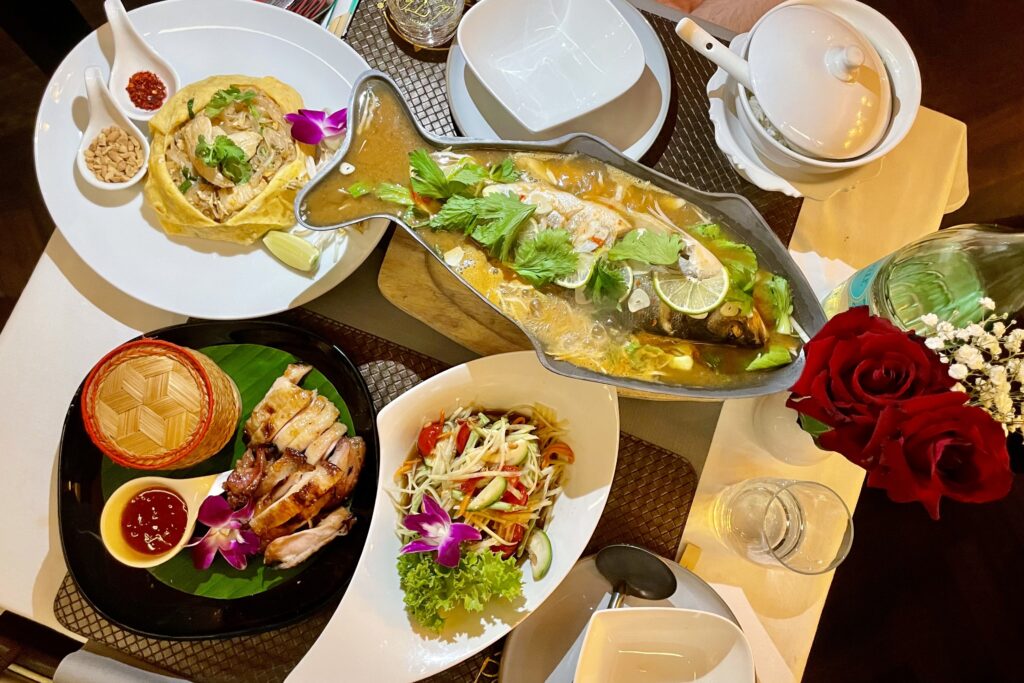
    Today, we’d like to introduce you to an authentic Thai restaurant in Frankfurt that has become a beloved staple of our weekly routine. This article is long overdue, as we’ve been visiting this spot almost every week, especially during the COVID days, when their convenient take-away lunch sets were a lifesaver. Often, we’d reheat what we couldn’t finish, and their flavors have seamlessly woven their way into our everyday home-cooked meals.

    Last time, we showcased a casual, authentic Thai eatery. This time, we’ll feature a restaurant with a different flair. Elegantly decorated with traditional Thai wooden elements and a nature-inspired ambiance, it’s perfect for gatherings with friends and coworkers alike.

    Restaurant Profile

    Before diving into the main dishes, let’s check out some of their popular appetizers.

    Giaw Grob is a traditional Thai dish, widely enjoyed across Thailand, particularly in bustling food markets. It consists of crispy fried dumplings stuffed with a savory filling of shrimp, chicken, or bamboo shoots, all served with a tangy sweet and sour sauce.

    The wonton skins are very thin, lightly fried to a crisp, delicately wrinkled exterior that holds succulent fillings within – be it briny shrimps, or tender chicken, or crunchy bamboo shoots – all promising a delightful interplay of flavors and textures.

    The chicken variation is our personal favorite. The chicken has a milder taste. Its subtle sweetness and tender juiciness simply make it the ideal foil for the savory crispy shell, delivering satisfying crunch and twist in every bite. Don’t overlook the sauce, it adds just the right amount of sourness to balance the fried food and ensure they remain moist and flavorful!

    If you’re a fan of crispy deep-fried foods, you can also try their spring rolls and fried chicken wings.

    The spring rolls are filled with a mix of chicken, carrots, white cabbage, and glass noodles. They are crunchy on the outside, and savory and slightly sweet on the inside, combining tenderness of the chicken with the crispness of the vegetables and the soft, elastic glass noodles. The dish is served with a sweet and sour sauce. The vegetarian version simply omits the chicken but retains the same good taste.

    These fried chicken wings incredibly crunchy. Marinated in a blend of turmeric, lemongrass, and pandan leaves, they have a fragrant, herbal, and slightly earthy flavor. The turmeric adds a warm, peppery taste, while the lemongrass gives a fresh, citrusy note, and the pandan imparts a nutty aroma. They are served with a chili sauce that packs quite a punch!

    Tom Yam Soup is a classic Thai dish that’s sure to awaken the senses. It features a tangy and spicy broth infused with aromatic lemongrass, fresh long coriander (culantro), green onions and earthy mushrooms. You can choose to have it with shrimp, chicken, or as a vegetarian option. Our top recommendation is the shrimp version, which is also the most authentic.

    The soup itself has a complex yet harmonious balance of flavors – a burst of bright, citrusy notes from the lemongrass, followed by a herbal, peppery undertone from the culantro and a hint of heat that warms your palate. The soup is refreshing and comforting at the same time. The earthy, umami mushrooms and the sweet, briny shrimps beautifully balance the soup’s sour and spicy notes, making each spoonful substantial and satisfying!

    At Bangkok Restaurant, most main dishes are paired with fragrant steamed rice and can be customized with a variety of proteins like beef, pork, chicken, duck, seafood, or tofu for vegetarians. Unless the dish must be made with a specific type of meat, we usually lean towards chicken. We love its mild, tender texture and how perfectly the restaurant prepares it. We can’t wait to share our favorites with you, so let’s dig in!

    First up is Gai Pad Med Mamuang Himaparn, a popular Thai stir-fry that brings together tender chicken with crunchy cashew nuts, onions, leeks, and bell peppers, all bathed in a savory soy sauce.

    This dish offers a mild yet appetizing mix of savory, sweet and slightly spicy notes. The chicken is incredibly tender and umami-rich, while the cashew nuts add crunch and subtle sweetness. The onions, leeks, and bell peppers bring a touch of freshness and a mild, sweet undertone, brilliantly balancing out the dish’s savory character. All in all, it’s a very delicious and comforting dish.

    Kio Wan Gai, also known as Green Thai Chicken Curry, is a beloved Thai dish that showcases rich, smooth flavors. It features simmering the curry paste and coconut milk, along with chicken pieces and eggplant.

    The green curry, made from green chiles, garlic, lemongrass, kaffir lime leaves, and other aromatic ingredients, is naturally a bit spicy. But the spice level can be adjusted to your liking. It stands out with a lighter taste, slightly sweet fragrance and a well-balanced, luxurious creaminess. The eggplant absorbs the curry sauce well, becoming soft and creamy. The tender chicken combines with coconut milk to deliver a velvety texture and rich, deep flavors. Its natural sweetness nicely complements the spicy, herbal notes of the curry paste.

    Pair with fluffy steamed rice and let it soak up the curry sauce for a complex, satisfying blend of – sweet, spicy, creamy, herbal, and savory tastes – all in one mouthful!

    As amazing as their chicken dishes are, let’s mix it up and try some of their delicious options with other meats, like Pad Kanah Moo Grob, or “Crispy Pork Belly with Chinese Kale.” This dish consists of crispy pork belly stir-fried with Thai broccoli (Chinese kale) and soy sauce.

    The pork belly, with its perfect mix of fat and lean meat, is fried to a golden crispness, resulting in a rich, crunchy, and slightly fatty goodness that remains moist inside. The dish carries a savory, garlicky, slightly spicy flavor profile, typical of Thai cuisine.

    The star green veggie, Chinese kale, adds a refreshing balance, cutting through the richness of the pork and keeping it from feeling greasy. This combination of the crispy, rich pork belly and the fresh, slightly bitter greens makes Pad Kanah Moo Grob a deliciously dynamic and well-rounded dish.

    Pa Naeng Nua is a rich and aromatic dish featuring succulent slices of beef in acreamy red curry sauce.

    The beef is sliced super thin, making each piece melt-in-your-mouth tender. This delicate texture allows the beef to fully soak up the flavors of the creamy coconut milk and the mildly spicy red curry. The meat is so juicy that it almost fuses with the curry, becoming a silkiness that glides smoothly on the palate.

    The curry itself is mildly spicy, balancing the heat with the sweet coconut milk and the nutty ground peanuts. This combination is a definition of velvety with a hint of warmth that enhances the flavors. The dish is a great choice for those who enjoy a touch of spice without it being too intense.

    Gaeng Pet Ped Yaang is a show-stopping Thai dish that tantalizes the senses with its vibrant colors and irresistible aromas. This dish features crispy roasted duck in red curry with creamy coconut milk, Thai eggplants, cherry tomatoes, and pineapple.

    The duck meat is very lean and tender, wrapped in crispy golden skin. The luxurious red curry, enriched with creamy coconut milk, envelops the duck in a velvety embrace. The crisp Thai eggplant and juicy tomatoes balance the richness, while the sweet pineapple introduces an exotic, tangy freshness. It’s a masterpiece of spicy, sweet, sour, and aromatic flavors.

    Take a bite of the tender duck, fully bathed in the luscious red curry, and paired with a medley of fresh vegetables and fruits, and you’ll have a taste symphony that sweeps you right off your feet.

    Ped Saam Ros features crispy duck with cashew nuts, Thai basil, and chili-tamarind sauce, it’s a tantalizing dish that combines crispy textures with bold flavors.

    The duck is roasted to gain a shiny, crunchy skin, while retaining tender and juicy meat underneath. Its richness is complemented by the nutty cashews. What also adds to the crunch is the Thai basil. Quickly fried, it lends a fresh herbal note with hints of peppery sweetness, enhancing the overall aroma.

    The chili-tamarin sauce is the key that ties each ingredient together. It brings a tangy, slightly sour note with a subtle sweetness. Combined with chili, it adds a spicy kick that elevates the rich savoriness of the duck and keeps the dish moist with a glossy sheen.

    Eat it with fragrant steamed rice for a deeply satisfying and invigorating meal. This dish is rich in meaty flavors, with a delightful crunchy nuttiness. If it’s a bit too rich for your taste, consider asking for a wedge of lime to squeeze over it—it brightens and refreshes beautifully.

    Many may perceive authentic Thai food as intensely spicy, especially when thinking about the dishes from the Northeastern region (Isan cuisine). But in fact, many Thai dishes are quite mild. They’re renowned for their smooth blend of sweet, sour, salty, bitter, and spicy flavors. At Bangkok Restaurant, every dish strives to balance these flavors, ensuring that none overpower the others. So they won’t be overly spicy. By using unique Southeast Asian ingredients like lemongrass, kaffir lime leaves, and Thai basil, the result is a unique taste sensation where different flavors come alive on the palate at the same time.

    This restaurant also has an impressive selection of dishes, many of which are considered Thailand’s most famous and tasty, like Tom Yum Soup, Kio Wan Gai, and Gaeng Pet Bet Yaang (grilled duck in red curry). Whether you’re a seasoned Thai food lover or just starting to explore, you can find something here that makes you happy.

  • From Las Canteras Beach to Cuatro Puertas Caves: Sun, Sea, History, and Tempting Spanish Cuisine

    From Las Canteras Beach to Cuatro Puertas Caves: Sun, Sea, History, and Tempting Spanish Cuisine

    Las Canteras Beach is one of the crown jewels of Las Palmas, with its picturesque shoreline that stretches for about 3 kilometers.

    At its western end stands an architectural marvel, the Alfredo Kraus Auditorium.

    With a design as unique as it is whimsical, it looks almost like a character from a children’s storybook or a conceptual art piece. From one angle, the structure is akin to a “robotic scientist” with a distinctive white hat that sparks curiosity and creativity. Its body is like a mishmash of different shapes, reminiscent of a playful combination of boxes or recycled metal, adding to its quirky charm.

    In front of the auditorium lies a vast pile of stones that resemble volcanic rocks. Perhaps a nod to the island’s volcanic origins, this natural feature adds an intriguing contrast to the modern architecture and its surroundings.

    The day we arrived at Las Canteras Beach, the coastline was a little misty, shrouded in a mysterious aura. The humid air and the cool, crisp sea breeze created a lazy, languid feeling. Despite the choppy waves, the golden sands still drew crowds of people engaging in various water sports and beach games.

    Strolling along the street, the people, dressed in effortlessly stylish disarray, seem ready to jump into the water at any moment, especially the locals. Their skin, glowing with a healthy tan, shimmers from either the sweat of activity or the salty sea. With hair still damp and tousled, cascading over their shoulders, they radiate a carefree vitality, a natural grace that defies the bounds of neatness or convention.

    A sense of freedom and ease is brimming.

    This distinctive spirit of freedom transforms itself into an artistic scene, vividly painted on the old houses and walls, giving this place an extra dose of life and vibrancy. The energy here is infectious, boldly proclaiming a distinct attitude towards life.

    There is no need for flashy skyscrapers or modern fancy buildings; the true essence of life is showcased through simplicity, modesty, and artistry – the raw power of life celebrated in the most unassuming ways.

    Close by, the cheerful sounds of people playing and the crashing of waves fill the air. In the distance, the formidable shapes of mountains and sky, through the mist, slowly unveil their elusive splendor, completing the uniquely charming scene of Las Canteras Beach.

    After some relaxing time on the beach, we made a little detour and visited an archaeological site on this island – Cuatro Puertas. Located near the town of Telde, it’s easily accessible by car. This site is believed to have been used by the indigenous Canarian people, known as the Guanches, who inhabited the island before the Spanish conquest in the 15th century.

    A short hike (15-20 min) leads you to this remarkable place. The site sits majestically on a hill, perhaps chosen for its closeness to the sky, a step nearer to heaven.

    The name “Cuatro Puertas” translates as “Four Doors.” It refers to the four large entrances carved into the side of a volcanic rock formation. Through the four entrances, you can enter the main cave, believed to have been an important communal or ceremonial space for the Guanches.

    In addition to the main cave, several smaller caves surround the area. Some of these were used as living quarters, while others as storage spaces for food and other supplies.

    One of the most intriguing features is the “Almogarén,” a sacred area used for religious rituals, with stone carvings and engravings thought to have been used in fertility rites and other ceremonies.

    Many of these archaeological remains are well-preserved, presenting a peek into the lives of ancient civilizations. Imagine people living in these stone caves – they would rise with the sun and rest with its setting, with the vast landscape being their ever-changing view. Their lives, attuned to the rhythms of nature, seemed to transcend the frenetic pace of our modern existence, with our busy chases for all kinds of things. Instead, they focused on their community, contributing their share, honoring the heavens, and protecting their land.

    It’s world where the spiritual and the earthly were intimately intertwined, a way of life long past, yet still inspirational today.

    Tips for your visit:
    • Alfredo Kraus Auditorium: It hosts a wide variety of concerts and events. Check the schedule online and book tickets at least a few weeks in advance (for high-demand events, maybe a few months ahead).
    • Las Canteras Beach: The beach is usually very sunny, so don’t forget sunscreen, sunglasses, and a hat to stay protected. The water is perfect for swimming, snorkeling and other water activities. Along the promenade, there’s plenty of restaurants and cafés for a bite or a refreshing drink. You can also find various beach facilities such as showers, restrooms, and rental services for sun loungers and umbrellas.
    • Cuatro Puertas: The hike is short and relatively easy, but as the trail can be rocky in places, so sturdy footwear is recommended. The site has no entrance fees. There’re guided tours by the locals if you’d like to learn more about the history and cultural heritage of this area. 

    Today will be another delicious dive into typical Spanish cuisine! We’ll continue to explore the vibrant flavors of tapas and paella. After some thorough research, we found a great spot to do this: Bandera Tapas Y Copas. This restaurant offers a full range of Spanish delicacies that you can think of when you visiting this Spanish island – from cold and hot tapas to ham, casseroles, scrambled eggs, fish dishes, grills, and of course, paella!

    Check out their menu here for a sneak peek. Initially, we planned to sample various types of tapas, but the sight of black paella at a nearby table changed our minds. We had to try it!

    With the generous paella portion, we went easy on the tapas, ordering just two – one fish and one meat. If we return, tapas will definitely be the way to go.

    The Pimientos de Piquillo Rellenos de Bacalao quickly became our favorite of the evening. This classic Spanish dish consists of roasted piquillo peppers, which are native to Spain, filled with cod fish and cooked in a rich tomato-based sauce. It’s topped with shrimp for a delicious seafood touch.

    Cod is a lean fish, high in protein and low in fat. Usually, I’d expect it to be firm and chewy, but here it’s surprisingly tender and soft. It melts in your month with a savory and rich flavor and mild saltiness. Mixed with garlic and onions, it creates a flavorful filling that complements the sweet peppers perfectly.

    The sauce is magical. Made from ripe tomatoes, garlic, and onions, it’s rich, thick, and creamy with a subtle buttery undertone and a hint of spice. Its velvety smoothness coats the stuffed peppers and shrimp, making every savory bite luscious and indulgent!

    Pincho De Solomillo features skewered and grilled beef tenderloin, attractively presented with colorful peppers and yogurt-based herb sauce.

    The meat is expertly grilled to medium-well – not too pink, not at all bloody, yet incredibly tender and juicy. With minimal fat, it’s packed with a luscious flavor without being greasy, proving the restaurant’s grilling mastery.

    The beautiful caramelized char on the surface, formed from the meat’s natural sugars, adds a delightful smokiness and a hint of sweetness, enhancing its depth of flavor. This is nicely balanced by the vibrant peppers and the refreshing yogurt sauce, making it a great choice for lovers of finely grilled meats.

    The black paella we tried this time was a pure, traditional version, free of green mojos, aioli, or any other meats and vegetables we’ve explored in a previous post. This simplicity allowed the dish’s distinctive deep, savory sea flavors to take center stage, paired with the comforting, hearty qualities of perfectly cooked rice.

    The squid ink imparts a deep umami flavor to the rice, making it rich and savory. It tastes slightly briny, with earthy undertones and subtle hints of sweetness. Prepared with various seafood – shrimp, baby calamari, calamari rings, mussels, and octopus – the rice absorbs their flavors as it cooks, resulting in a harmonious blend where each bite is infused with the essence of the sea.

    The ink adds a luxurious creaminess to the rice, making it very indulgent and satisfying. But here’s the scoop: with generous portions like these, consider covering the pan, especially if dining outdoors. The ink tends to dry quickly, so while you don’t want to rush it through, you do want to keep it warm, silky and smooth for as long as possible!  

    Before wrapping up, we’d like to mention a very invigorating smoothie, featuring a blend of fresh celery, crisp cucumber, mixed with zesty tang of ripe kiwi, apple, and aromatic mint. It’s a total revitalizer, and a perfect accompaniment to the flavorful paella feast.

    Hope you’ve enjoyed the read. Next up, we’ll head to Tejeda Town, a charming and tranquil mountain village surrounded by stunning landscapes. Join us as we journey onwards, surrendering our hearts to the passage of time and our palates to the spell of deliciousness. Stay tuned for more!

  • Gran Canaria: from Vegueta’s Charm in Las Palmas to an Epic Grilled Food Find

    Gran Canaria: from Vegueta’s Charm in Las Palmas to an Epic Grilled Food Find

    Las Palmas, the capital of Gran Canaria, effortlessly charms with its lively yet laid-back island vibe. Unlike the bustling capitals we’re used to, it exudes a serene atmosphere even along the main roads. The cityscape is dotted with bright, light-colored houses, radiating cheerful energy. Palm trees sway everywhere, just as the city’s name suggests (“Las Palmas” means “The Palm Trees” in Spanish), enriching the tropical ambiance. A touch of South American flair brims through its streets. It’s a place where relaxed island life meets a spirited urban pulse, making it a truly unique destination.

    Vegueta is a district you shouldn’t miss when visiting the Las Palmas. It’s famous for its winding roads and historic charm. As we ventured in, one particularly interesting sight caught our attention: a bright yellow building with a shield bearing the name “Doctor Chil”. It fits the spirit of the city so well that we couldn’t help but wonder if it signified on authority on relaxation, for the name sounds amusingly similar to “chill”.

    The streets are lined with colorful colonial buildings, cozy cafes, and boutique shops that exude a nostalgic ambiance and make us feel as if we have stepped into a different era.

    Amidst the picturesque streets stands a pavilion with a quaint fountain, where the soothing sound of flowing water brings a refreshing coolness to the air.

    In addition to its architectural treasures, Vegueta has a wealth of museums, art galleries, and theaters. If interested, you can check out the Museo Canario to learn about the indigenous Guanche culture or enjoy contemporary art exhibitions at the Centro Atlántico de Arte Moderno (CAAM).

    The Cathedral of Santa Ana and the Casa de Colón (Columbus House) are two iconic, well-preserved historic buildings that date back to the Spanish colonial era.

    The Cathedral of Santa Ana drew our gaze from afar, with its imposing façade decorated with intricate Gothic and Neoclassical details. The Cathedral’s origins trace back to the late 15th century, when construction began under the guidance of Spanish architect Juan de Palomar. Over the years, various architects and artisans have contributed to its construction, resulting in a stunning blend of architectural styles, from Gothic to Baroque.

    The plaza in front is very spacious and offers a tranquil retreat from the busy streets.

    Past the Cathedral, the streets begin to pulsate with a modern vibe, interwoven with the district’s old-world charm – trendy restaurants, hip bars and cafes, creating a unique fusion of past and present.

    Casa de Colón, also known as the Columbus House, has a distinguished look, with its traditional Canarian architecture and elegant courtyard. Originally constructed in the late 15th century, it was the residence of the island’s governors and hosted illustrious guests such as Columbus himself during his voyages to the New World. Today, it’s a museum dedicated to preserving and celebrating the island’s maritime heritage and its significant role in shaping world history.

    Inside, you’ll find artifacts that bear witness to centuries of maritime history and exhibits that tell the fascinating story of Columbus and his voyages. Highlights include intricately detailed maps charting the explorer’s routes and authentic navigational instruments from the Age of Discovery.

    Casa de Colón is often considered the highlight of a trip to Las Palmas, especially for those interested in history. It testifies to the importance of the Canary Islands during the Age of Discovery, when they were a crucial waypoint for Christopher Columbus and other explorers who dared to sail into the unknown, forever changing the course of human history.

    Casa de Colón is located in the heart of Vegueta. After exploring the House of Columbus, take a leisurely stroll through the nearby old town. Wander along narrow, cobblestone streets lined with traditional Canarian houses, quaint squares, and historic buildings. Let your eyes guide you through this beautiful setting, where the colorful, storied colonial houses come alive against the backdrop of the distant sea, immersing you in the island’s rich history and culture.

    Tips for your visit:
    • Sightseeing: discover the city center with its iconic sights: Casa de Colón (free on Sundays, tickets online otherwise), the Vegueta district, and the Cathedral of Santa Ana. If you’re up for a short drive (10-20 min) from the city center, find a peaceful retreat amidst lush greenery at Parque Doramas or indulge in culture at the Alfredo Kraus Auditorium. Don’t miss out on the close-by Las Canteras Beach, often said to be one of Europe’s best urban beaches.
    • Allocate your time: depending on your interests, with a half a day (4-6 hours), you can visit one or two key attractions such as Casa de Colón, Vegueta (the old town), or Cathedral of Santa Ana, have a leisurely exploration and perhaps enjoy a meal at a local restaurant. A full day will give you more time to explore several sites at a more relaxed pace. If time allows, consider spending a weekend in Las Palmas. This timeframe allows you to see all major attractions, and perhaps venture beyond the city center to discover nearby attractions such as Alfredo Kraus Auditorium, Las Canteras Beach, and the Parque Doramas.

    Attention, grill lovers! Today we’ll bring you a grill/steak restaurant that just might be one of the best we’ve ever come across – 56º Restaurant & Grill. With our passion for grilling, we have scoured countless grill restaurants, and this one really stands out.

    They have it all —pork loin, beef filets, lamb shoulder— with their specialties listed right on their website’s front page (menu embedded). You can also try the premium Iberico Ham there. But enough talk—let’s dive into the mouthwatering experience!

    Start with the appetizer: Duck Liver Pâté with Muscat Gelatin and Apple Chutney. Paired with salted biscuits and rucola, this dish offers a supreme blend of rich, velvety flavors complemented by contrasting textures.

    The duck liver pâté has a luxurious, creamy mouthfeel and a robust, savory taste that melts in the mouth, while the muscat gelatin adds a subtle sweetness and a delicate, gelatinous touch. Paired with the tangy and slightly sweet apple chutney, each bite is a balance of flavors—richness from the pâté, sweetness from the gelatin and chutney, and a hint of acidity. Spread it on the cookies for a crunch and a touch of saltiness, then top it with some rucola leaves for a refreshing bitterness that cuts through the richness, you’ll have a lingering, complex flavor experience that’s both exquisite and indulgent.

    Now time for a grill sensation: Poussin Chicken with Tender Wheat, Honey, and Truffle, served alongside grilled vegetables like cauliflower, bell peppers, and carrots.

    Poussin chicken has a very tender, juicy and delicate texture due to its youth. Its clean, mild, and slightly sweet flavor is elevated by cooking with bones intact. It intensifies the flavor and retain moisture, resulting in exceptional flavor and succulence. Grilled quickly for its small size, and glazed with honey, it develops a glossy, crispy skin and is packed with juicy savoriness.

    Pair it with peppery rucola and soft grains for a hearty texture that complements the chicken nicely. The highlight is the complex truffle aroma in the sauce – earthy, musky, slightly nutty, and with a hint of garlic, it really takes the flavor to new heights.

    Grilled veggies offer a balance of charred notes and tender freshness, rounding out this deep, luscious dish perfectly.

    Steak is a savory, smoky, juicy goodness you shouldn’t miss out at this place. We opted for a classic Beef Filet Steak, paired with grilled veggies and a homemade blue-cheese sauce. Cooked to medium-well, it still has a little pinkness in the center, enhancing the steak’s richness.

    Masterfully grilled, it has a caramelized, deliciously charred crust on the outside, while remaining buttery and succulent on the inside. The flavor of the beef itself is robust and beefy, with a subtle smokiness from the grill and a hint of sweetness from caramelization of its natural juices. This imparts depth to the overall flavor and adds an extra layer of deliciousness. Dip it fully into the creamy, tangy blue-cheese sauce for a luxurious mouthful that’s intensely satisfying.

    You can also choose from pepper, BBQ, and mojo sauces. But we found the blue-cheese sauce to be an absolute kicker. Its bold, sharp flavor just goes so well with the savory beef.

    Mousse de Caramelo Salado, or Salted Caramel Mousse, is a rich and creamy dessert that offers a delightful multi-sensory experience. The silky, airy mousse, made with salted caramel, is topped with meringue pieces and drizzled with chocolate sauce and edible flower petals.

    The mousse tastes very light and fluffy, with a deep caramel flavor perfectly balanced by a hint of salt. The meringue provides a slight crunch and additional sweetness that is nicely complemented by the dark chocolate sauce. The delicate floral note from the petals adds a touch of sophistication and elegance, making the dessert look as good as it tastes.

    Although we didn’t make it to Las Canteras Beach this time, it’s definitely on our itinerary for our next excursion. With its golden sands and crystal-clear waters, it’s the perfect spot for a day of relaxation. We’re also excited to explore the historic Cuatro Puertas, a captivating archaeological site that offers a window into ancient civilizations. We can’t wait to share these experiences with you. Stay tuned for more!

  • Teror and Beyond: A Cultural, Natural, and Culinary Expedition in Gran Canaria

    Teror and Beyond: A Cultural, Natural, and Culinary Expedition in Gran Canaria

    Join us today as we take a trip back in time and explore the charming town of Teror and the vibrant scene of culture and nature that defines Gran Canaria.

    With steadfast mountains looming close and sapphire skies stretching far and wide, Teror exudes a unique tranquil charm. A casual glance and you’ll catch nature’s beauty adorning every corner, setting the spirit free. 

    Wandering through its narrow streets, we saw brightly colored houses decorated with traditional Spanish balconies. These wide, square balconies, with their intricate designs and ornate railings, add a touch of old-world charm to the town’s traditional architectural landscape. Each building seems to bear the traces of the past, steeped in history and resilience.

    At the heart of Teror stands the majestic Basilica of Our Lady of the Pine (Basílica de Nuestra Señora del Pino), a sacred pilgrimage site. Its towering spires and grand façade testify to the town’s deep-rooted religious traditions.

    On September 8th, the feast day of Our Lady of the Pine, thousands of pilgrims gather here to honor the Virgin Mary in a celebration known as the Fiesta de la Virgen del Pino. It’s a spectacle of religious ceremonies, processions, and joyous festivities, marking one of the most important events on the island’s cultural calendar. Anyone intrigued can save this date!

    Outside the buzz festivities, the town is relatively quiet. As we felt the distant ocean waves echoing through the town, our gaze lifted to its ancient peaks, tenderly caressing the azure sky, like an ever-present silent guardian. Outside the Basilica, a centuries-old pine tree spreads its branches, a symbol of hope and strength, casting a protective shade.

    Venture beyond the church, and we found ourselves amidst a rustic countryside, where the distant crowing of roosters and the barking of dogs serenades our senses. Here, the landscape takes on a pastoral charm, with the tree’s branches reaching out over the gentle slopes of the nearby hills.

    Just a little further from the streets of Teror lies the entrance to a hiking trail of a different kind—the Barranco del Álamo. Hidden amidst the verdant pathways of the countryside, this trail offers an opportunity to discover the primitive landscape of this island. It sees far fewer visitors than other trails, which makes it a bit wilder and more mysterious. 

    The trail winds its way through a canyon, with uneven paths flanked by lush vegetation and towering cliffs that evoke a sense of adventure and awe. Along the way, we often find ourselves navigating over fallen tree trunks, traversing rocky terrain, crossing wooden bridges and dense vegetation. As we forge ahead, the whole world shuts down. It’s just us and nature – vibrant greenery, boundless sky, and the path beneath our feet. The intermittent chirping of birds only heighten the sense of tranquility.

    If you’re lucky, you may catch occasional glimpses of petite waterfalls and serene ponds nestled within the ravine. Keep an eye out for native flora and fauna, including the Canary Island pine and the elusive Barbary ground squirrel.

    Emerging from the Barranco del Álamo, we were rewarded by a panorama of rolling green hills dotted with quaint houses, with the lazy gaze of a small cat as our only companion. In the distance, the shimmering sea stretches out before us and a kaleidoscope of colors that mirrors the vibrant hues of the town’s colorful houses.

    Tips for your visit:
    • Explore Teror: Depending on individual pace, it usually takes a few hours to explore the main attractions in Teror. Don’t miss the Basilica of Our Lady of the Pine and the unique balconies adorning the colorful houses. The town’s main market “Mercado Agrícola y Artesanal de Teror” typically takes place on Sundays, where you can explore stalls selling fresh produce, local crafts, and traditional Canarian delicacies
    • Hiking Preparation: Before hiking in Barranco del Álamo, ensure you have appropriate footwear, clothing, and plenty of water. The trail can be rugged, so sturdy shoes are recommended. Depending on your pace and the chosen routes, it typically takes 1.5 – 3 hours to complete the hike. Consider bringing a cell phone (use the route from hiking website) or a GPS device to navigate the trail.

    This time, we’re back for another round of saffron paella, because let’s face it, a trip to Spain isn’t complete if indulging in this iconic dish only once. Last time, we tried paella with beef and chicken included. But from what we’ve heard, seafood and fish paella is considered more traditional and authentic in coastal areas. The best place we found for seafood paella is Restaurante El Gaitero. So, think rich, luscious saffron-infused rice, loaded with a generous bounty of seafood and fish. Let’s dive right in!

    While the paella is still simmering in the kitchen, we tried out some classic Canary tapas.

    First up: “Datiles con Tocino”, known for its tantalizing combination of savory and sweet. It features savory bacon, roasted to crispy perfection, wrapping around a tender, sweet Spanish date.

    The Spanish date, also known as “dátil”, has a luscious sweetness with hints of caramel and honey, while the roasted bacon, with its intense flavor and rich fat, boasts a mouthwatering sensation. With each bite, the crispy bacon crackles, with a satisfying crunch in the mouth, and gives way to the decadent, sweet softness of the date – it’s exquisite and unbelievably indulgent!

    Next up: Pulpo a la Gallega, a traditional Galician dish featuring tender, boiled octopus, drizzled with olive oil and sprinkled with dried, smoked paprika powder.

    This dish truly showcases the bounty of the sea, with each plump, tender morsel delivering the fresh, briny essence of the ocean in full swing. The octopus itself is big and fat. Compared to the smaller, leaner ones, it tastes softer, juicier and evokes a feeling of luxury and decadence.

    The vibrant spice adds a depth of flavor and a touch of heat, nicely complementing the richness of the fatty octopus. It’s a simple but very delicious dish.

    It’s been pretty good so far, hasn’t it? But all that was just a prelude! Now the saffron rice, impeccably cooked and brimming with a bounty of fresh seafood.

    Every shellfish and mussel is thoroughly washed to ensure maximum freshness. They come in an astonishing variety too – from tender calamari rings to plump king prawns, from succulent fish pieces to adorable baby calamari – you name it, it’s there. In fact, they’re so plentiful that we find it nearly impossible to take a spoonful of rice without uncovering a hidden treasure beneath.

    Saffron has a distinctive floral, earthy and slightly sweet flavor. As each grain soaks up its unique aroma and the natural savoriness of the seafood, each mouthful bursts with juicy, luscious flavors. Squeeze some fresh lemon on top to brighten up the deliciousness!

    As the sun sets on our leisurely hike today, we’re already dreaming of a laid-back day tomorrow in the vibrant capital, Las Palmas. With its historic landmarks, charming winding streets, and bustling markets, there’s no shortage of things to see there. So, stay tuned for more fascinating sights and delicious discoveries coming your way!