If you’re visiting Chengdu, the Du Fu Thatched Cottage is definitely worth a visit! Step back over a thousand years and into the world of Du Fu, China’s revered ‘Poet Sage’🌿
DU FU THATCHED COTTAGE
Officially known as the Chengdu Du Fu Thatched Cottage Museum, this was the former home of the great Tang Dynasty poet during his exile in Chengdu. It’s now a UNESCO-listed site, drawing literary enthusiasts worldwide.
Quick Facts
✍️ Who is Du Fu
Du Fu (712–770) is revered as one of China’s greatest poets, often called the “Poet Sage” (诗圣) for his moral depth and technical brilliance. Alongside Li Bai, he represents the pinnacle of Tang Dynasty poetry. While Li Bai was the “Poet Immortal” (romantic and free-spirited), Du Fu was the voice of conscience—chronicling war, suffering, and human resilience with unmatched empathy.
He is studied alongside Shakespeare and Dante in world literature courses. His poetry, translated by figures such as Ezra Pound and Kenneth Rexroth, has deeply influenced modernist writers around the globe.
📍 Location: No. 38, Qinghua Road, Qingyang District, Chengdu, Sichuan
🚇 Subway: Caotang North Road Station (草堂北路站)
- Line 4 of Chengdu Metro
- Exit at Exit B, then walk south along Caotang North Road (~1 km)
- Approximately 10–15 minutes on foot to the museum entrance
📜 History:
- In the winter of 759 AD, Du Fu fled the chaos of the An Lushan Rebellion, traveling from Gansu to Chengdu.
- By spring 760, with the help of friends, he had built a humble thatched cottage near the scenic Huanhua River, where he lived for nearly four years and composed over 240 poems.
- The cottage was later restored by Tang poet Wei Zhuang and expanded during the Song, Yuan, Ming, and Qing dynasties.
ARCHITECTURE & HIGHLIGHTS
🏛 The Grand Hall (大廨):
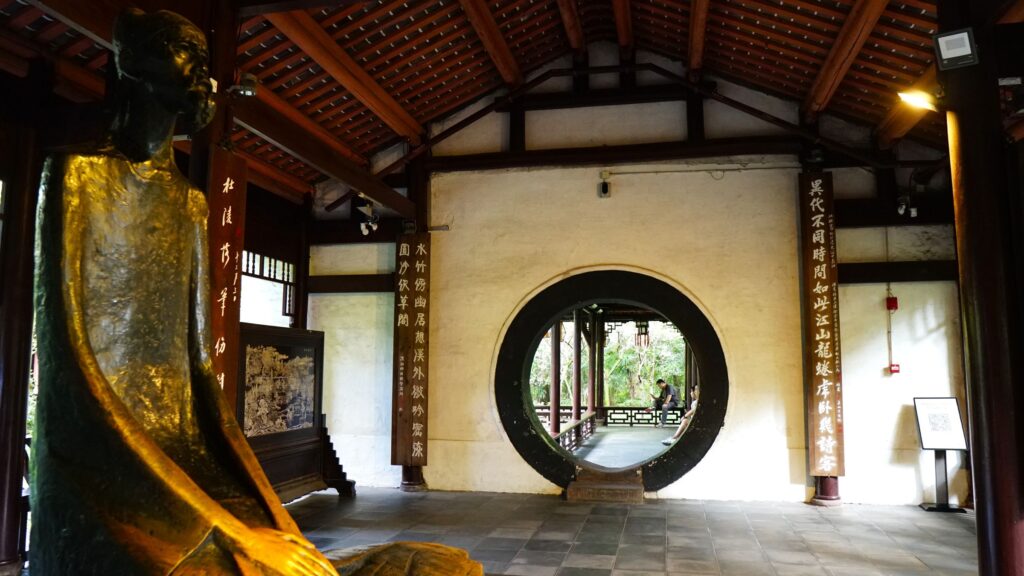
- Features a bronze statue of Du Fu and a famous Qing Dynasty couplet:
“Different times, same land—how many poets have graced these rivers and hills, where dragons curl and tigers crouch in quiet thought? An exile like you, yet your words endure, as does this cottage under moon and breeze.”
(Original Chinese: 异代不同时,问如此江山,龙蜷虎卧几诗客;先生亦流寓,有长留天地,月白风清一草堂。)
📖 Poetry History Hall (诗史堂):
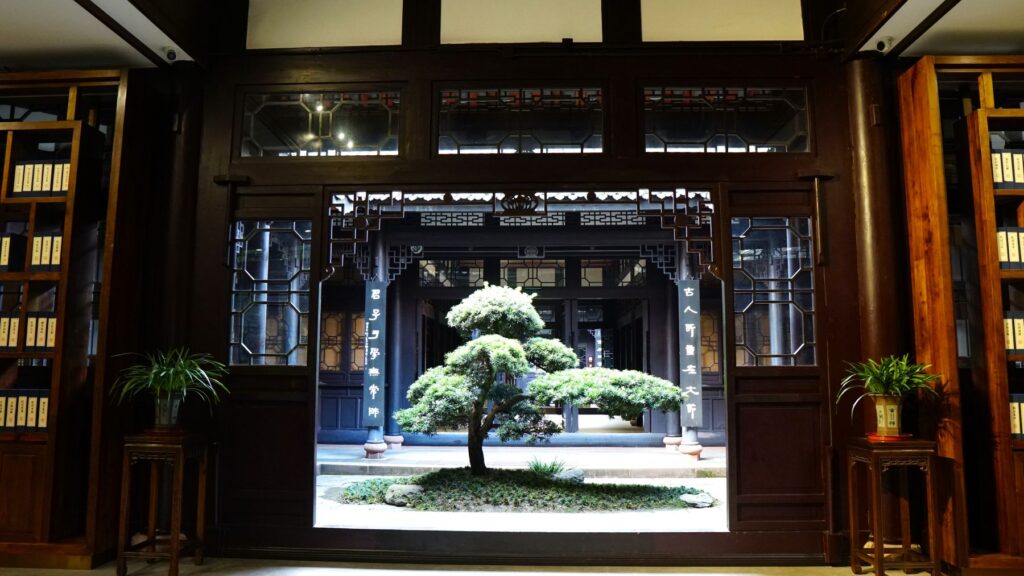
- Du Fu’s 1,400+ poems vividly depict Tang Dynasty life and its decline, earning him the title “Poet Historian.”
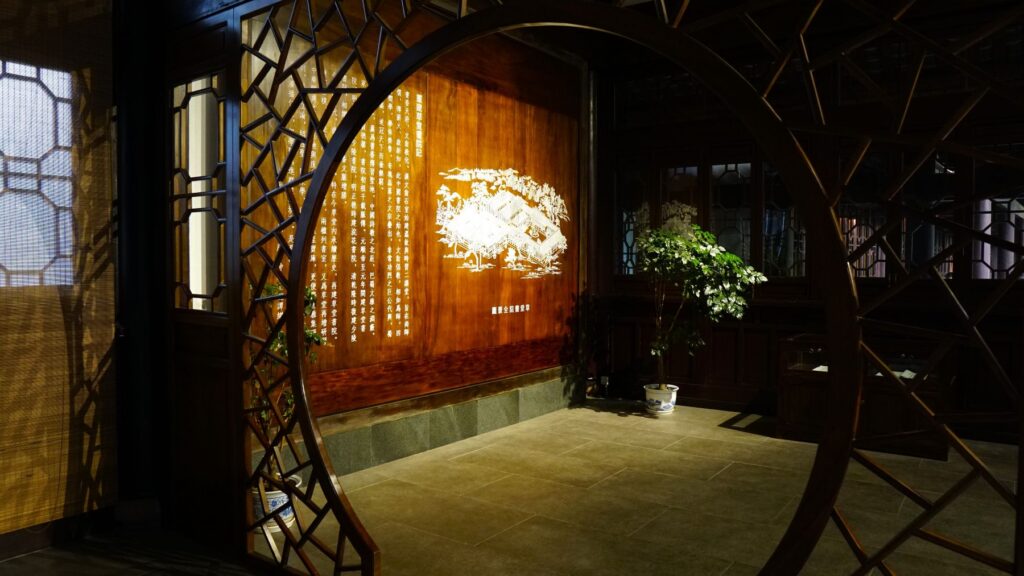
🌿 Thatched Cottage Replica:
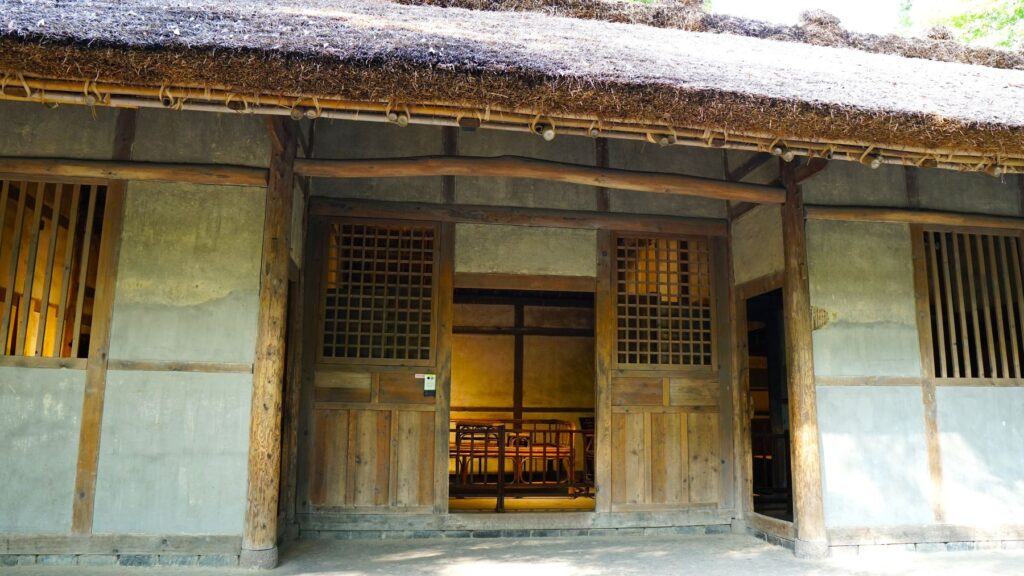
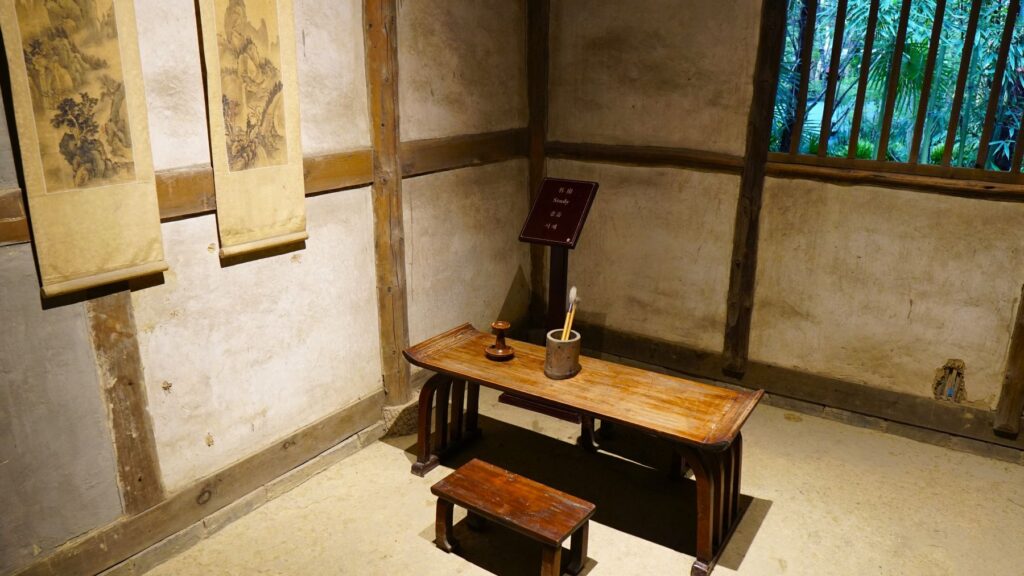
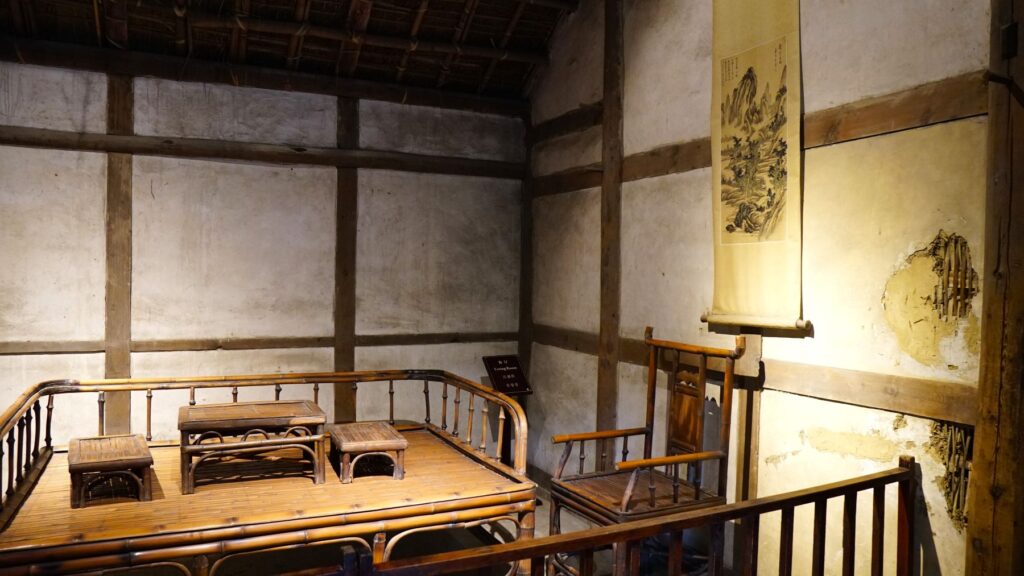
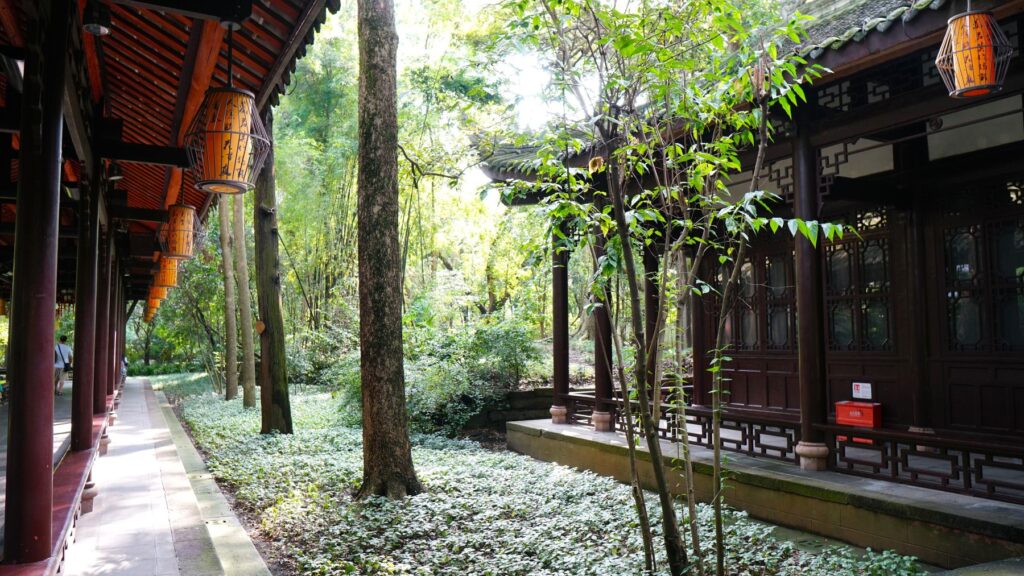
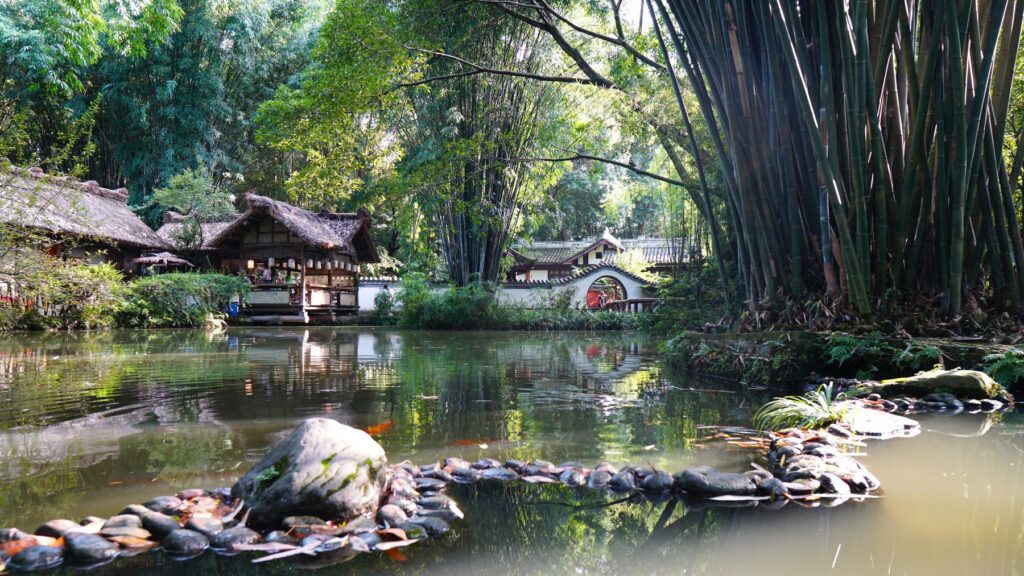
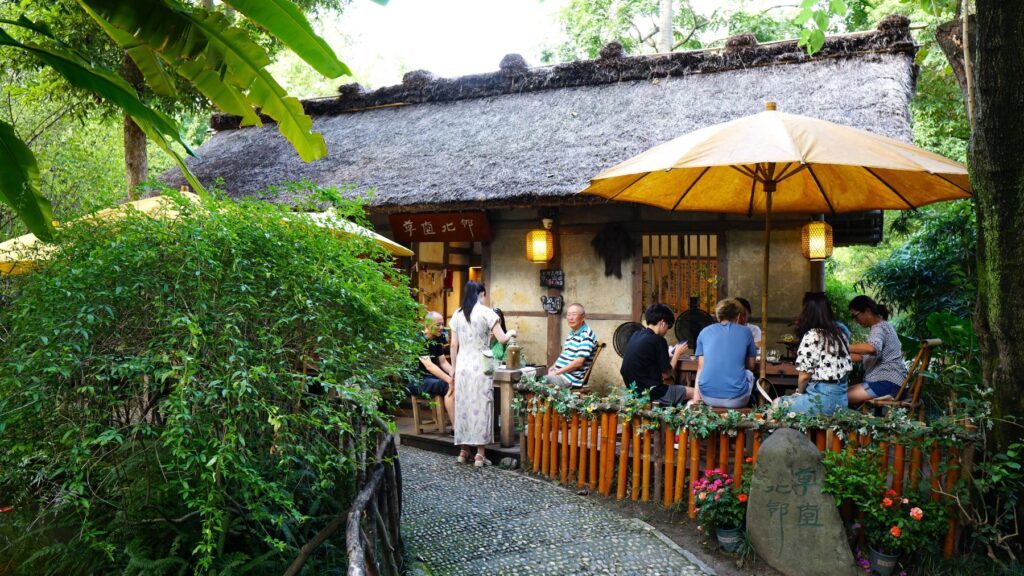
- A rustic recreation modeled after traditional western Sichuan homes, the cottage captures the pastoral charm of Du Fu’s life in exile, surrounded by bamboo groves, flowing water, and peaceful scenery.
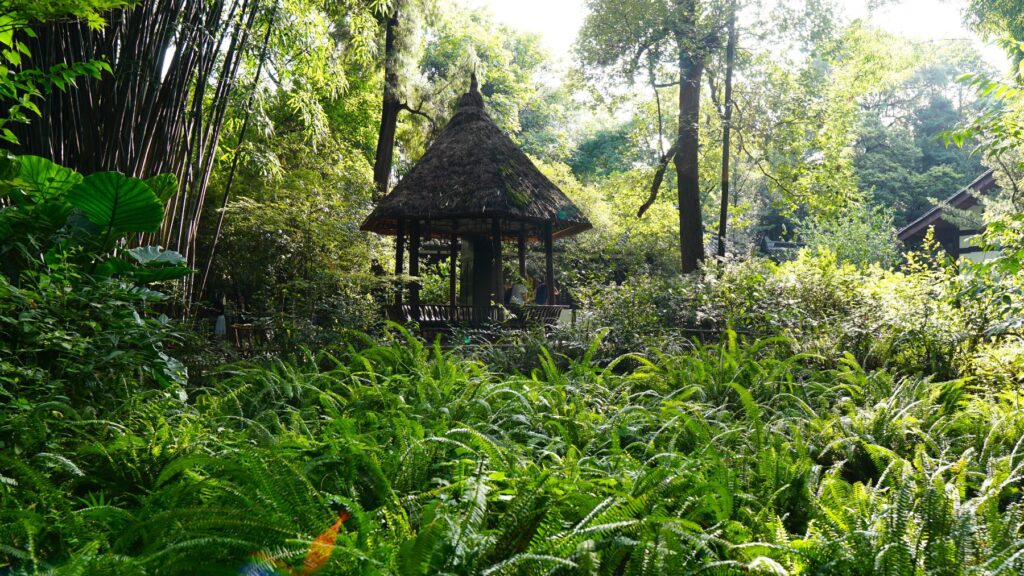
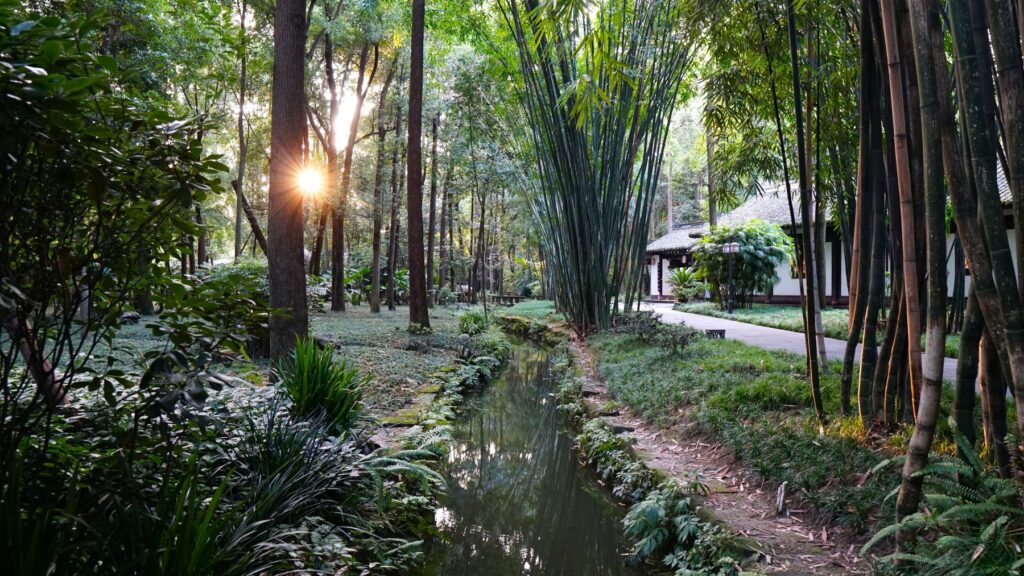
Du Fu settled here because his close friend Yan Wu was a high-ranking official in Sichuan and offered him support during turbulent times.
This is a classical Sichuan-style garden, where history, poetry, and nature intertwine.
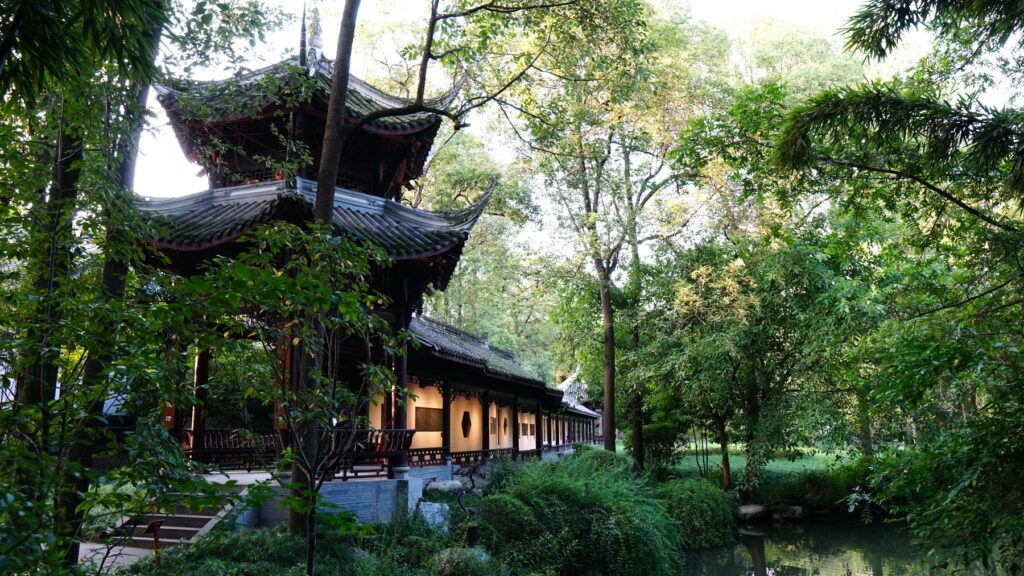
WHY IT STANDS OUT
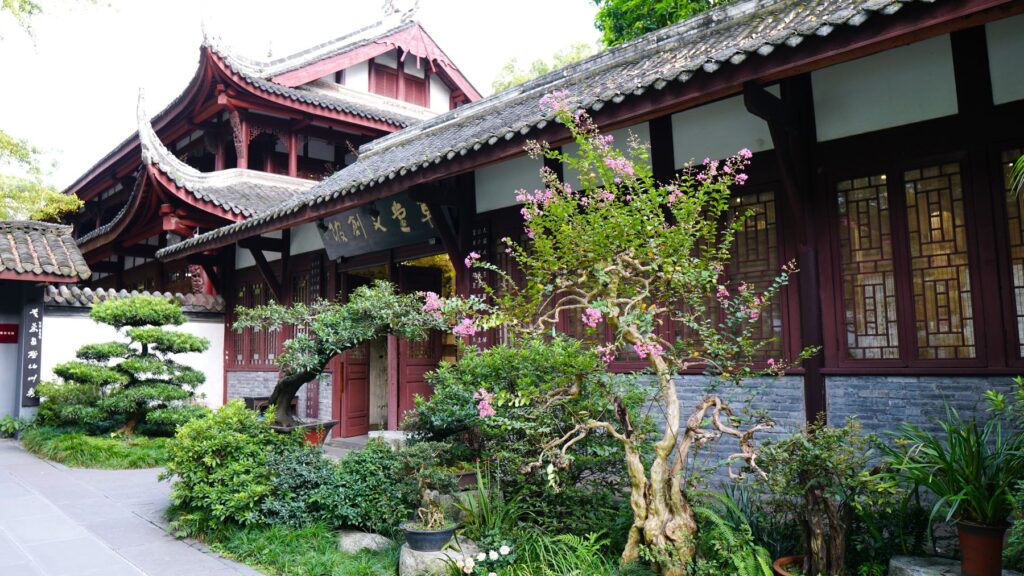
Unlike typical memorial halls, Du Fu Thatched Cottage does not just exhibit—it’s an immersive cultural experience. With its ponds, winding streams, ancient cypress trees, shrines, galleries, a stone pagoda, and Tang Dynasty village ruins, it feels like a living museum.
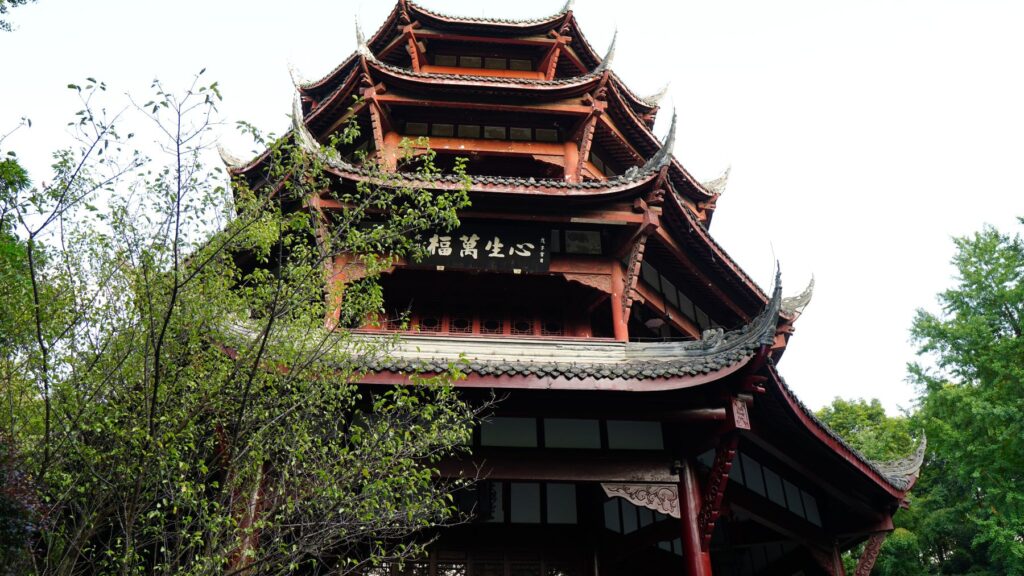
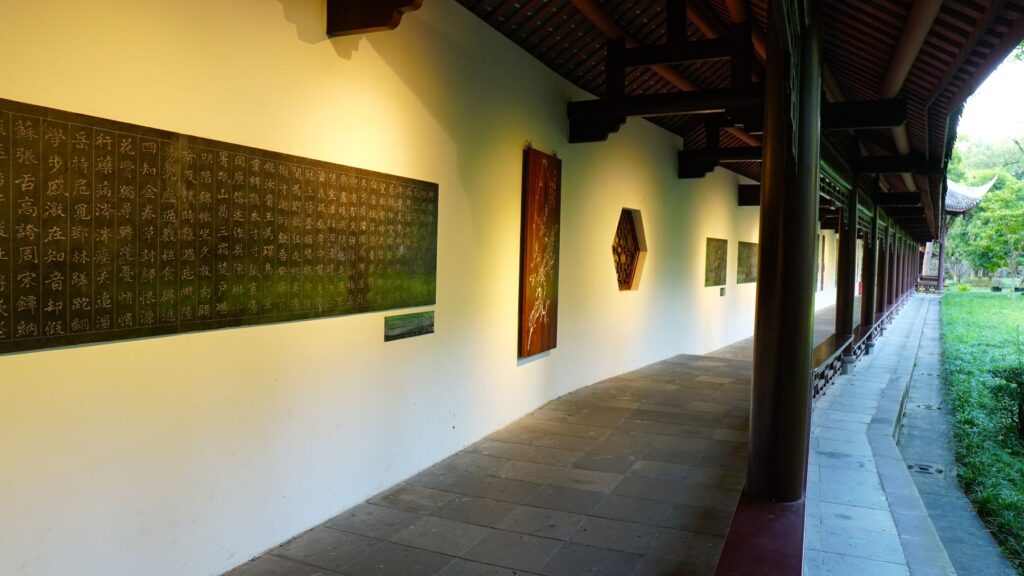
Here, you don’t just read Du Fu’s poetry — you walk through it.
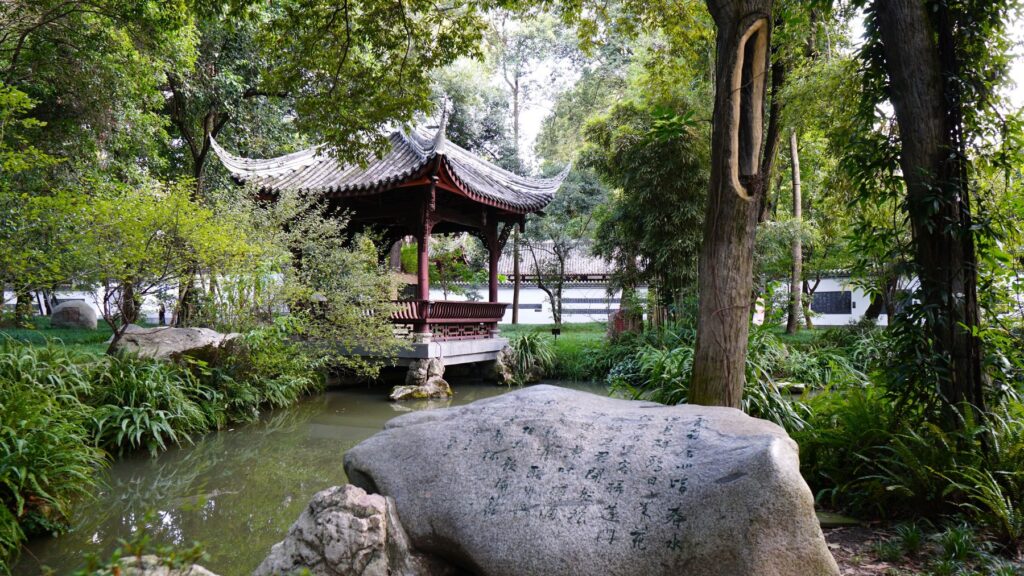
Strolling through the bamboo groves and quiet courtyards, you’ll sense the tranquil rural life that inspired Du Fu’s later works. His poems here shifted from solemn social commentary to fresh, nature-filled verses:
“By bamboo roots, unseen, young birds nestle close;
On sandy shores, ducklings sleep beneath their mother.
The clear river cradles the village in its gentle flow.
In the long summer, all is peaceful in this riverside haven.
My wife sketches a chessboard on paper,
My child bends a needle into a fishing hook.
The breeze carries the pure scent of emerald bamboos,
Rain-kissed lotus blooms sway, their fragrance rising slow…”
You can almost picture him here: sipping tea, playing chess with his wife, or fishing by the river—a world away from war.
VISITOR GUIDE
🚶 Recommended Route:
Main Gate (正门) → Grand Hall (大廨) → Poetry History Hall (诗史堂) → Firewood Gate (柴门) → Minister’s Shrine (工部祠) → Thatched Cottage (茅屋景区) → Tang Ruins (唐代遗址) → Thousand-Poem Stele (千诗碑) → Flower Path (花径) → Gift Shop (文创店) → Du Fu Wall (草堂影璧) → Daya Hall (大雅堂) → South Exit (南门)
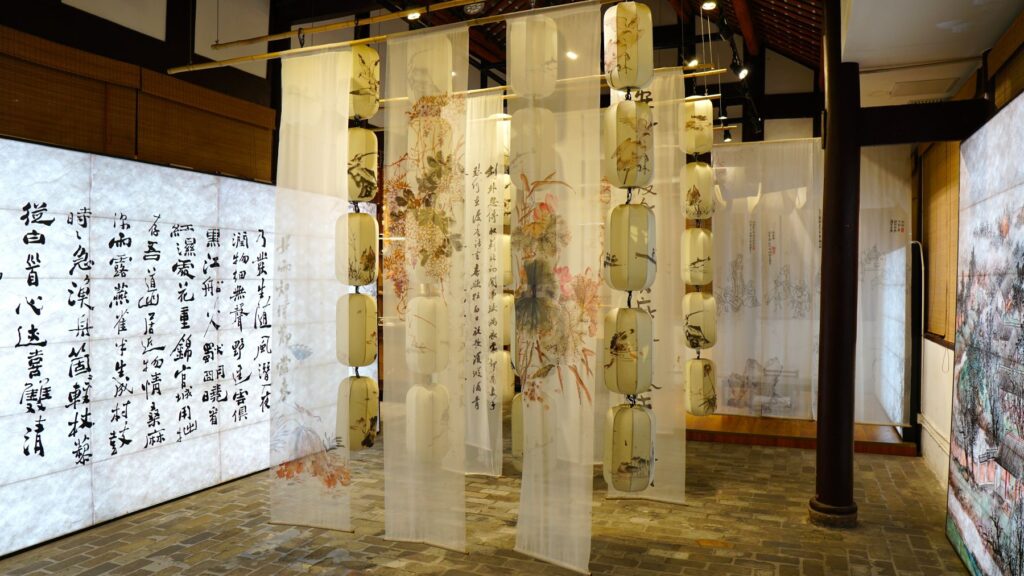
⏰ Hours: 9:00 AM – 6:00 PM (last entry at 5:00 PM)
🎟 Tickets:
- WeChat: Official account “杜甫草堂博物馆” (du fu cao tang bo wu guan)
- On-site: Adults ¥50 | Students ¥25 | Annual Pass ¥100
☕ Bonus: Unwind at the teahouse inside the garden with a cup of traditional Sichuan covered-bowl tea and enjoy the calm.
FROM POETRY TO URBAN PULSE
Just a short metro ride away, you’ll be switching from the tranquil poetic world of Du Fu to Chengdu’s modern heartbeat – the Chunxi Road-IFS-Taikoo Li district
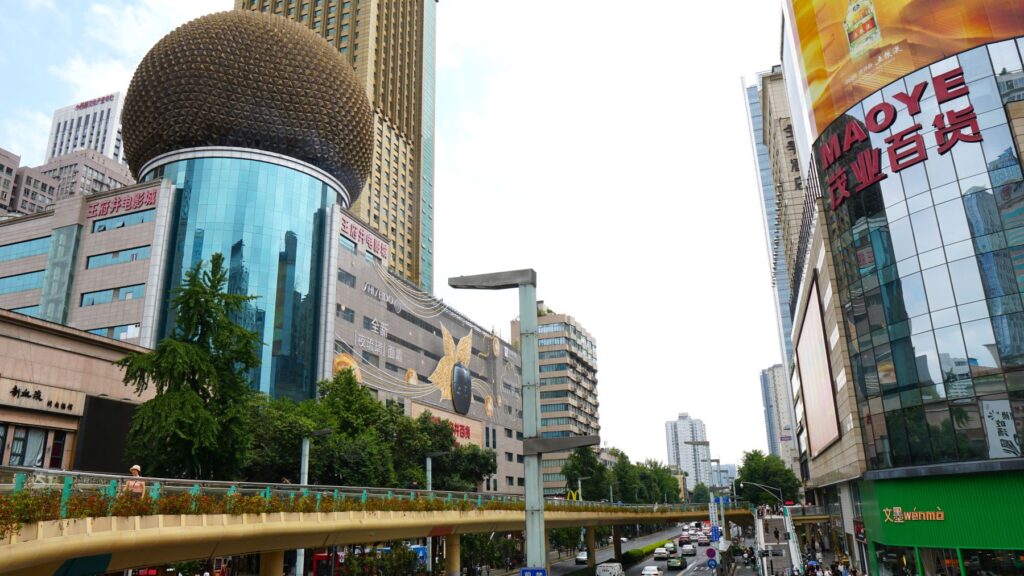
How to Navigate Chunxi Road, IFS & Taikoo Li Without Getting Lost
1️⃣ CHUNXI ROAD
🚇 Let’s start with the root of the confusion: Chunxi Road is not only a busy pedestrian street, but also the name of one of the busiest metro stations in the city. It’s also the shared metro stop for these three spots. That’s why so many people get turned around here—everything flows through this hub.
📜 A historic street – Named in the 1920s, it was Chengdu’s first road officially called a “lu” (路). By 2001, it had expanded into a sprawling pedestrian zone, forming the Chunxi Road–Yanshikou Commercial Circle andeventually becoming one of the top shopping districts in China, right behind Hong Kong’s Causeway Bay and Shanghai’s Nanjing Road at its peak.
✨The name “Chunxi” (春熙) comes from the Tao Te Ching by Laozi — “众人熙熙,如登春台” (“The crowd is bustling, as if ascending a spring terrace”), conveying a warm, lively atmosphere of people gathering like it’s spring all year round.


2️⃣ IFS: THE PANDA CLIMBER
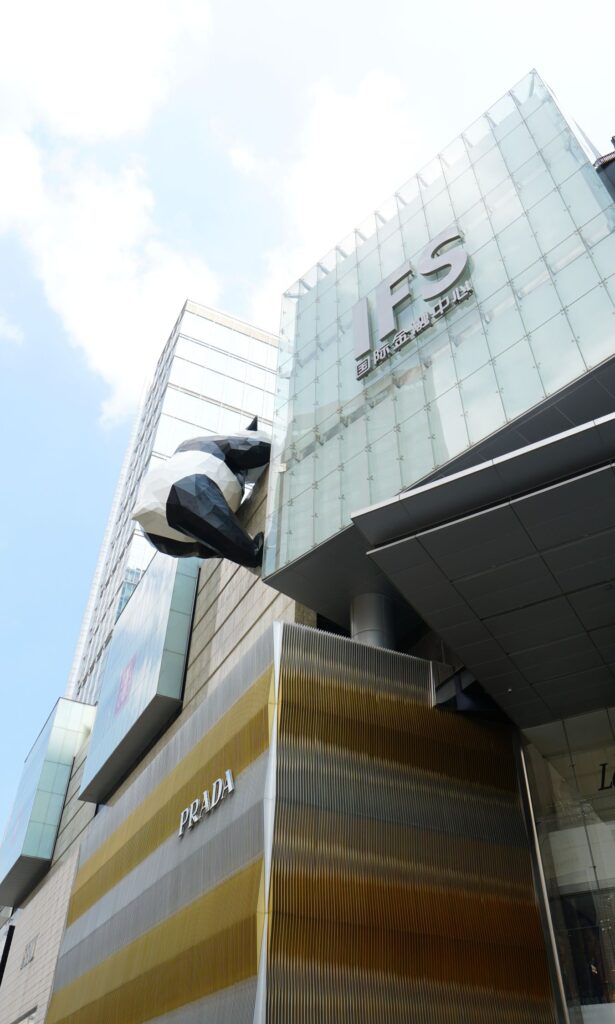
🐼 The panda building! Officially Chengdu International Finance Centre, it is home to the 15m-tall, 13-ton “I AM HERE” panda mascot, which has been scaling the wall since 2014.
💎 Luxury hub: home to global brands like Chanel, Dior, Louis Vuitton, and Fendi.
3️⃣ TAIKOO LI
📍 Just across the street from IFS, separated by Shamao Street (which dates back to the Ming Dynasty and was once a hub for making official hats), you’ll find Taikoo Li, where modern architecture fuses history with high fashion.
🎥 You can walk from IFS to Taikoo Li in minutes. Look out for the massive naked-eye 3D screen outside—best viewed at night!
🤔 Why called “Taikoo Li”?
“Taikoo” is the name of the Swire Group, the developer behind the project. “Li” (里) is a traditional Chengdu term, similar to “lane” or “alley”. The story goes that, over a hundred years ago, Swire tried to choose a Chinese name and mistook the character “大吉” (great fortune) for “太古” (ancient)—and the name has stuck ever since.
🏮 Architecture
The area is a low-rise open-air complex featuring traditional Chinese-style grey tile roofs, wooden fencing, and modern glass storefronts. It’s a beautifully curated space where East meets West, old meets new, and culture meets commerce.
Pro Tips:
🚇 Metro: Line 2/3 to Chunxi Station (Exit C) – direct to Taikoo Li’s core.
🐼 Panda timing: Visit IFS’s panda before 10am or at dusk (fewer crowds, better lighting for photos).
🌃 Giant 3D screen: The animations (like the roaring panda) look their best after dark.
While this area isn’t packed with street food stalls, you can still find some ICONIC SICHUAN SNACKS. Here are some tips:
Guokui (锅盔)
A golden-brown, flaky pancake, freshly baked until shatteringly crisp on the outside, yet soft and chewy inside. It’s stuffed with spiced minced pork—juicy, slightly peppery, and fragrant with onions. Some versions come with beef, pickled veggies, or even sweet fillings like brown sugar.
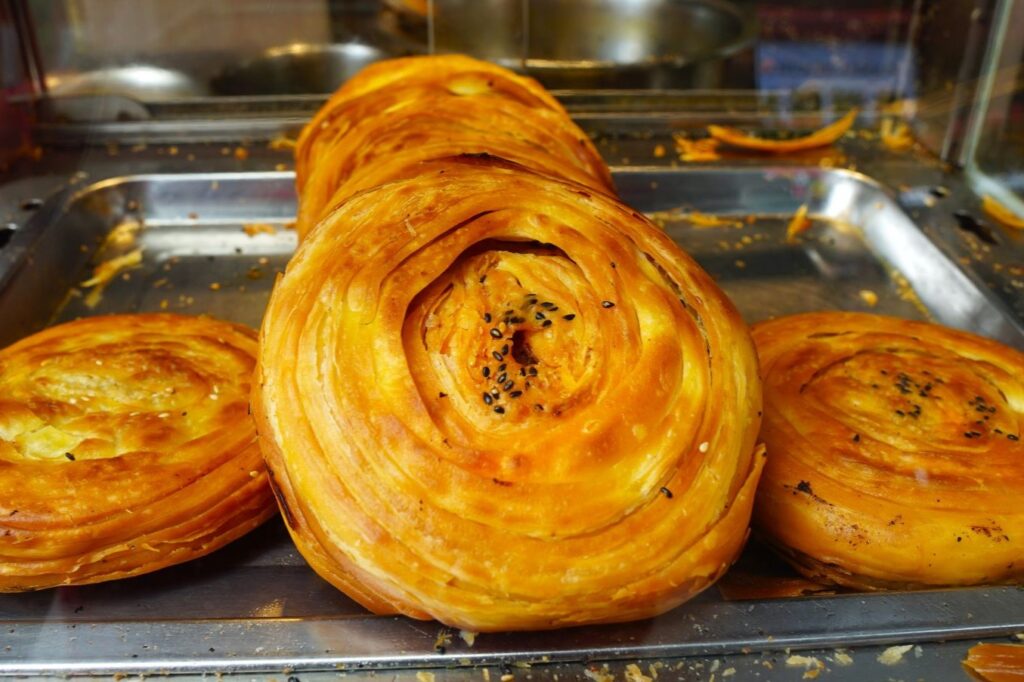
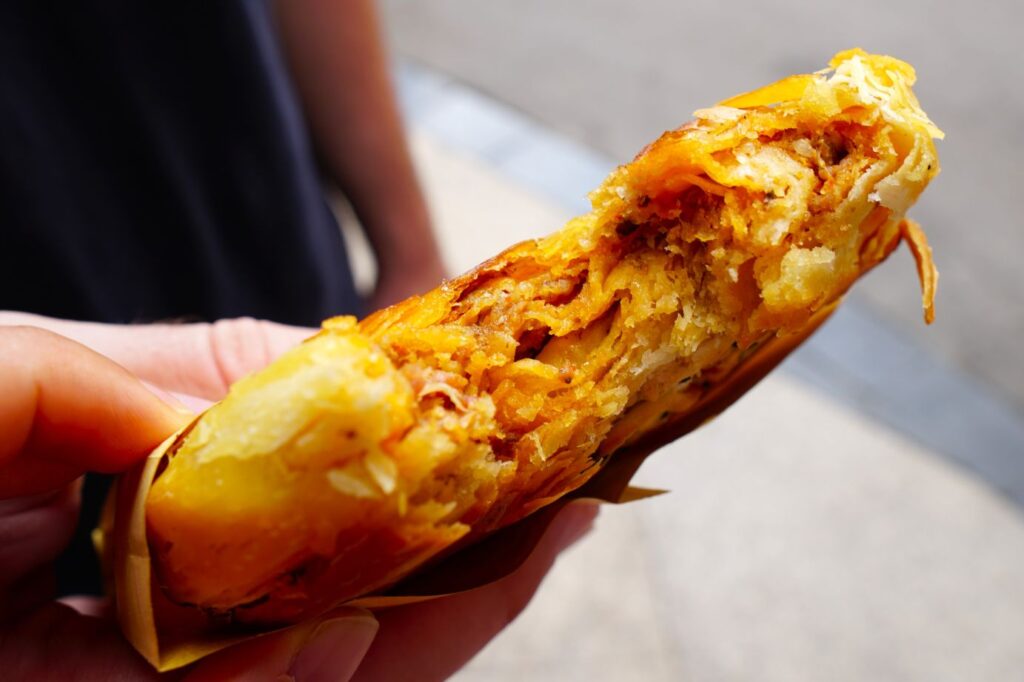
Guokui dates back to the Three Kingdoms period (220–280 AD)! Legend says it was invented as a portable soldier’s ration—easy to carry and long-lasting.
Chengdu Sweet Water Noodles (甜水面)
These thick, sweet-spicy, chewy wheat noodles are drenched in a complex, addictive sauce made with: dark soy sauce, caramelized sugar, and a hint of malt for sweetness, chili oil and Sichuan peppercorns for a hint of heat, and crushed garlic, sesame paste, and fermented soybean paste for a deep umami.
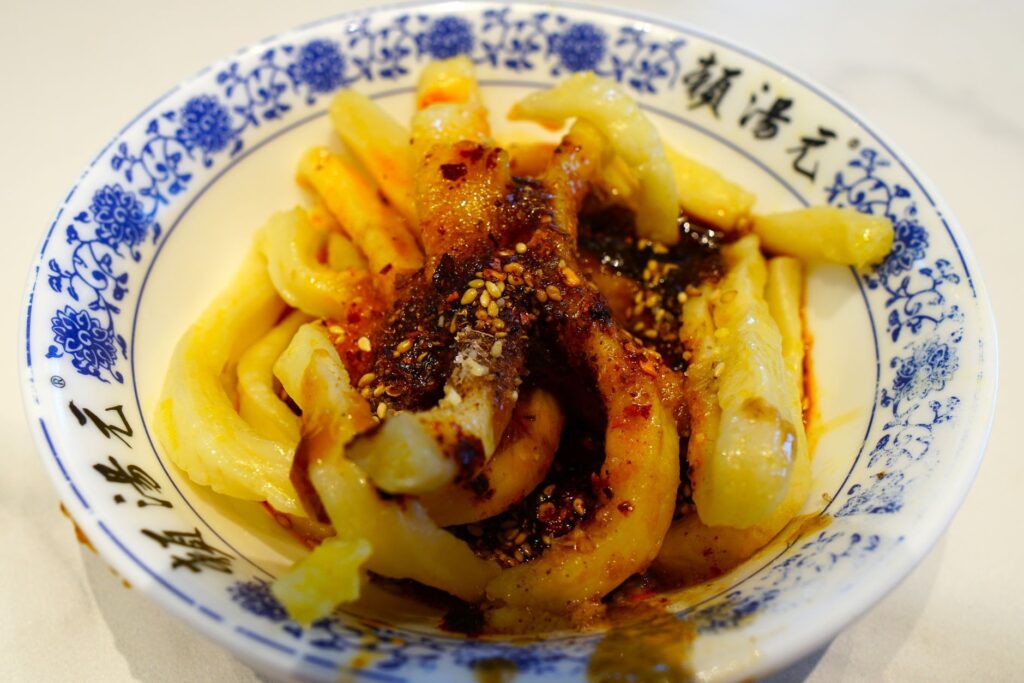
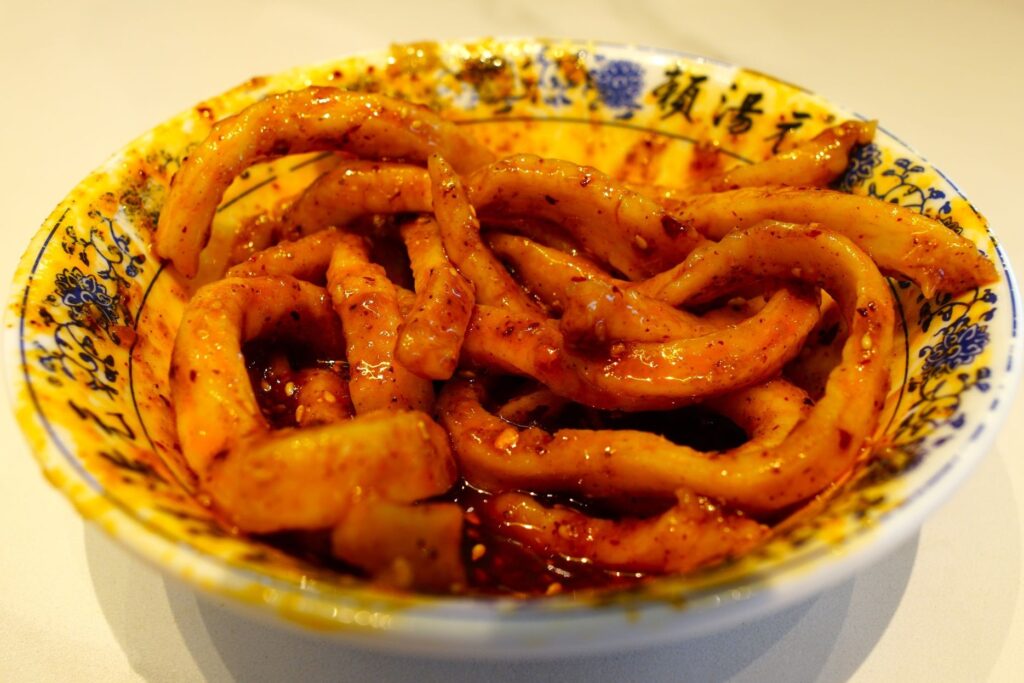
The result is a bold, sticky-sweet, slightly numbing flavor with a satisfying al dente bite. Topped with crushed peanuts for extra crunch!
The noodles are called “sweet water” because they were originally made with water from a specific Chengdu well believed to be magically sweet.
Adorable Sweet Panda Dumplings (熊猫汤圆)
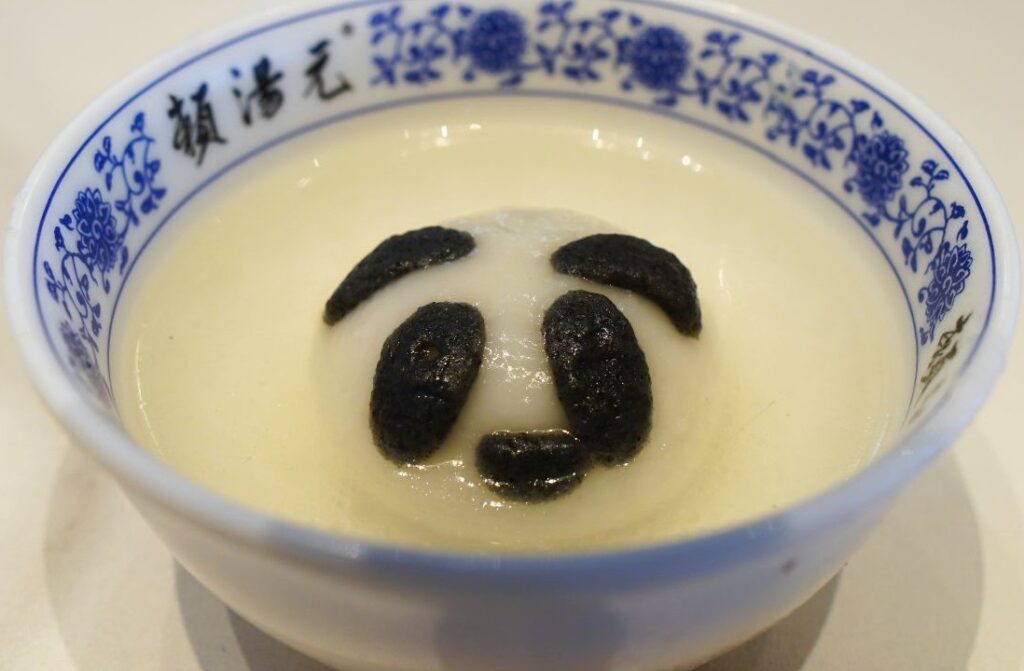
These glutinous rice dumplings are shaped like pandas. Bite into the soft, slightly sticky exterior to find a runny black sesame filling—toasty, nutty, and sweet, with a rich, almost caramel-like depth.
Served in a light, warm syrup for extra comfort.
Other Worth-Trying Chengdu Street Foods:
- Dandan Noodles (担担面): Spicy, peanutty, pork-topped noodles that’ll make your lips tingle.
- Chuanchuan (串串): Skewers of meat/veggies boiled in fiery mala broth.
- Liangfen (凉粉): Jelly-like mung bean noodles in a vinegary, chili-laced sauce—cooling yet spicy.
- Egg Pancake (蛋烘糕): Crispy-edged, fluffy mini-pancakes stuffed with anything from peanut butter to spicy minced pork.
- Bīngfěn (冰粉): Icy jelly with brown sugar and fruit.
- Tángyóu Guǒzi (糖油果子): Crispy glutinous rice balls in caramel.
- Lóngchāo Shǒu (龙抄手): Sichuan-style wontons in chili sauce.
Aside from street food, if there’s one must-eat dish in Chengdu, it’s hot pot—the iconic JIǓGŌNGGÉ (九宫格) NINE-GRID HOT POT.
🔥 Why Nine Grids?
The name “Jiugongge” literally means “Nine Palace Grid”, referring to the hot pot divided into nine squares. The concept is not just for looks—they serve a practical purpose. Different ingredients cook at different speeds, so you use:
- Center grid (大火, high heat): For quick-cooking delicacies like thin-sliced meats, fish, and tripe (15 seconds max!).
- Cross grids (中火, medium heat): For beef, chicken, tofu, and leafy greens—gentler simmering.
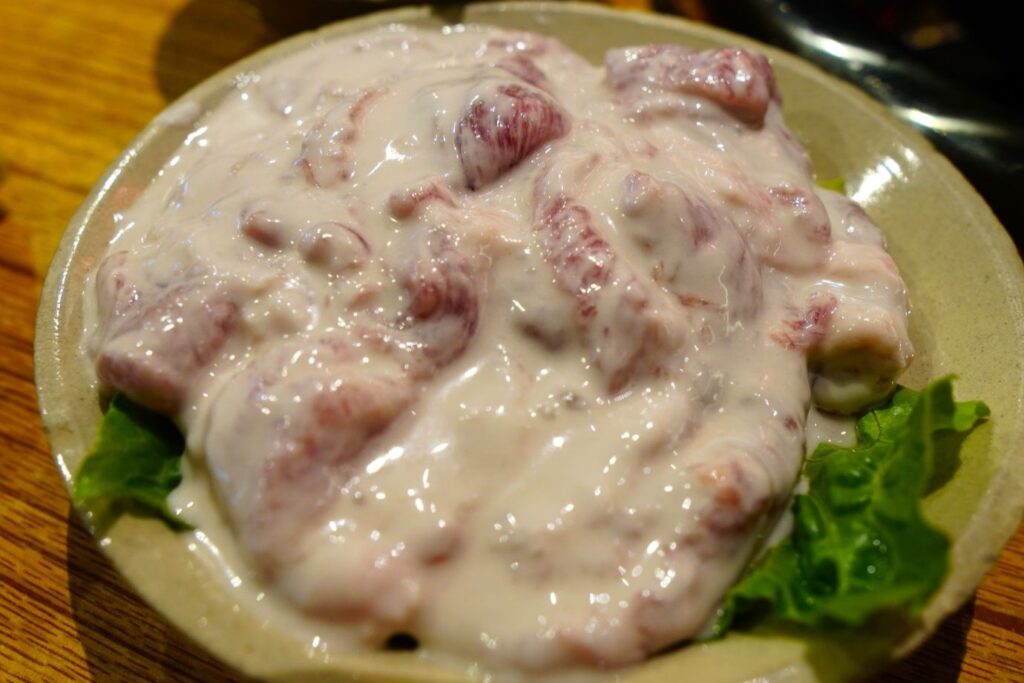
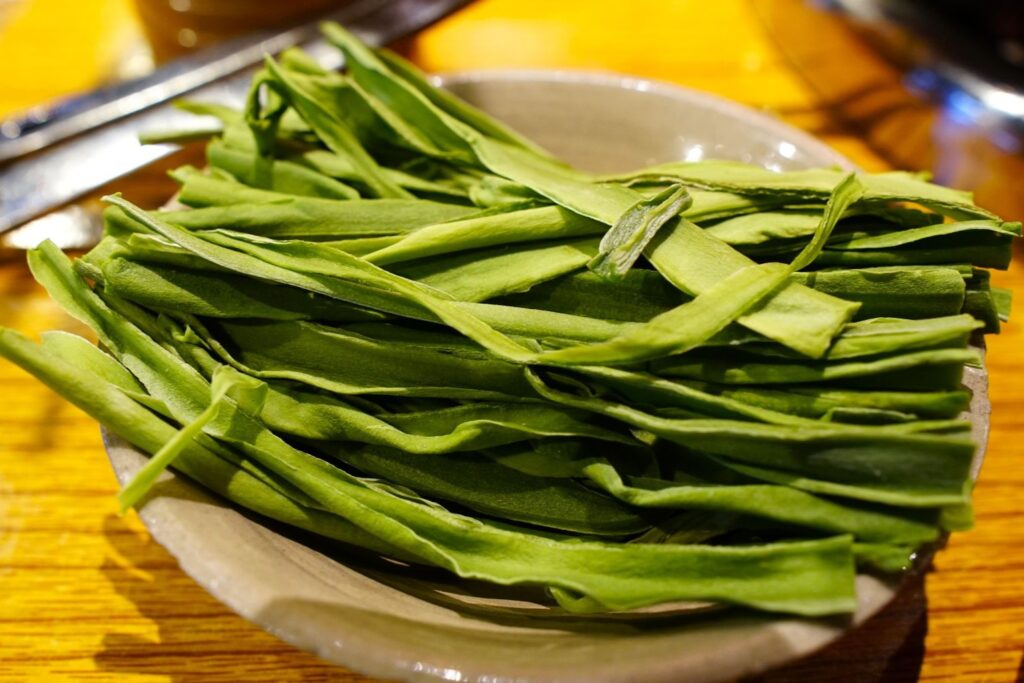
- Corner grids (小火, low heat): Slow-cook meatballs, whole fish, or hearty veggies like pumpkin—letting flavors meld deeply.
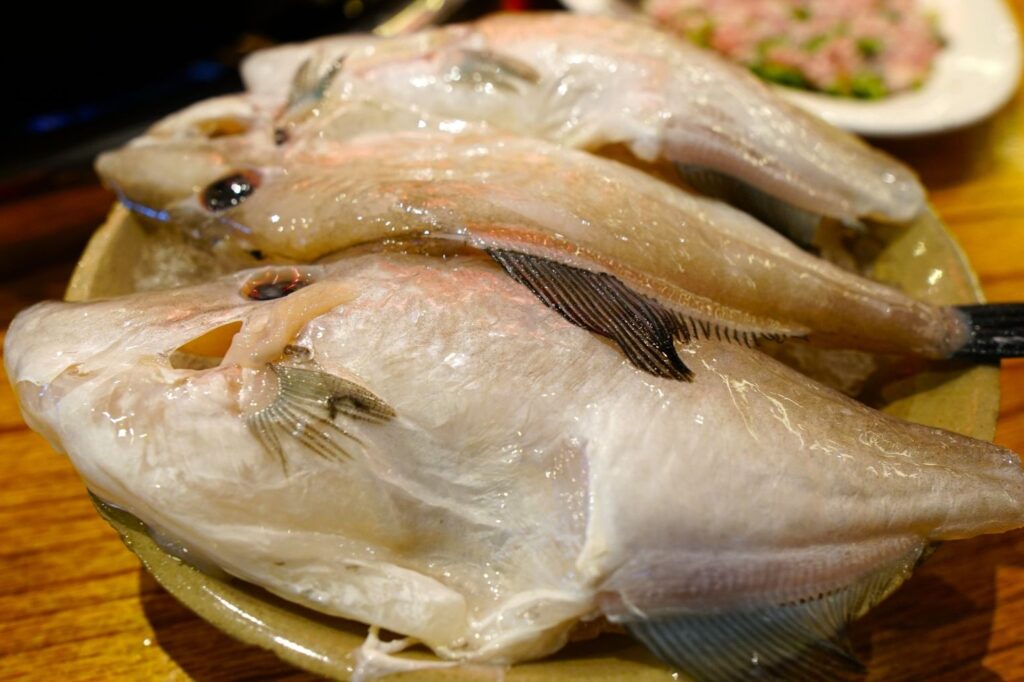
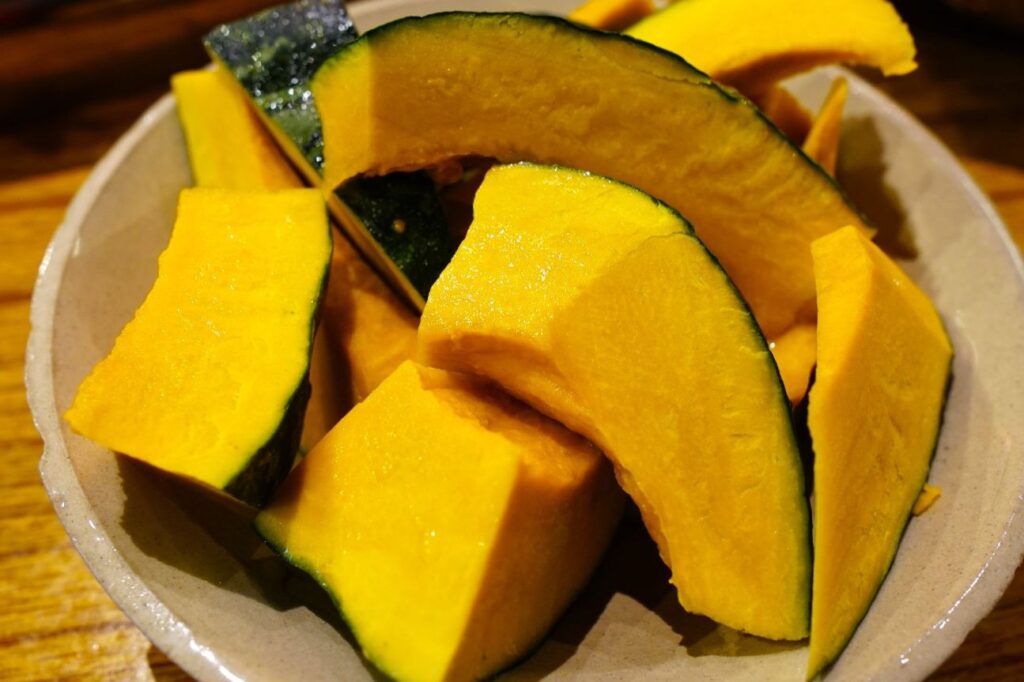
This design lets a single pot cater to different cooking times.
The pot is filled with deep red, molten lava-like beef tallow broth, pungent with Sichuan peppercorns and dried chilies. Even before you drop in the first bite, the aroma of spicy, sizzling red oil fills the air—your mouth waters just watching it bubble.
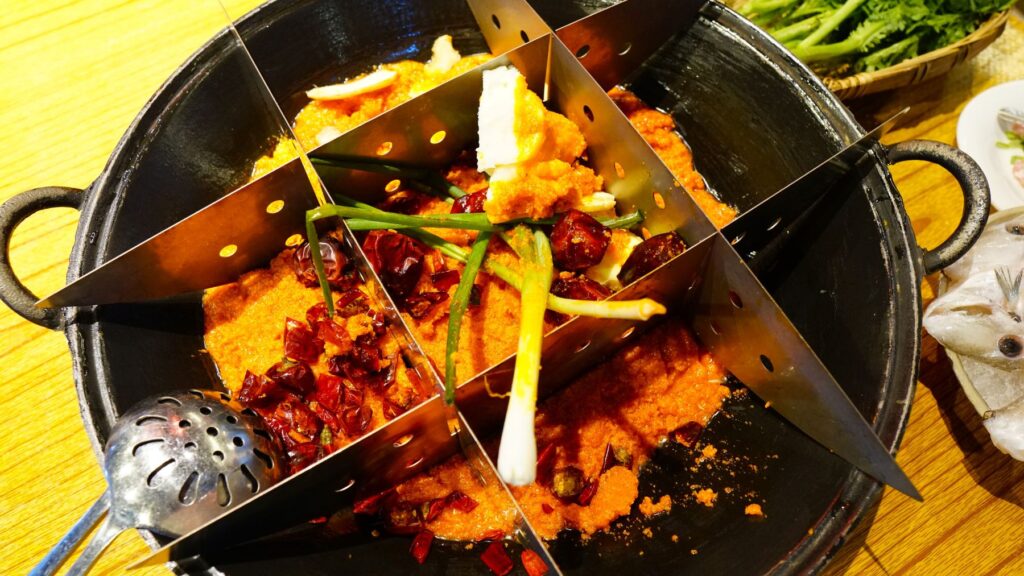
📍 Our Pick: Wǔlǐguān Hot Pot (五里关火锅)
This legendary chain is so popular, peak waits hit 3 hours.
We went for a medium-spicy pot, the perfect balance of burn and bliss, and loaded up on classic hot pot items served in affordable, small plates.
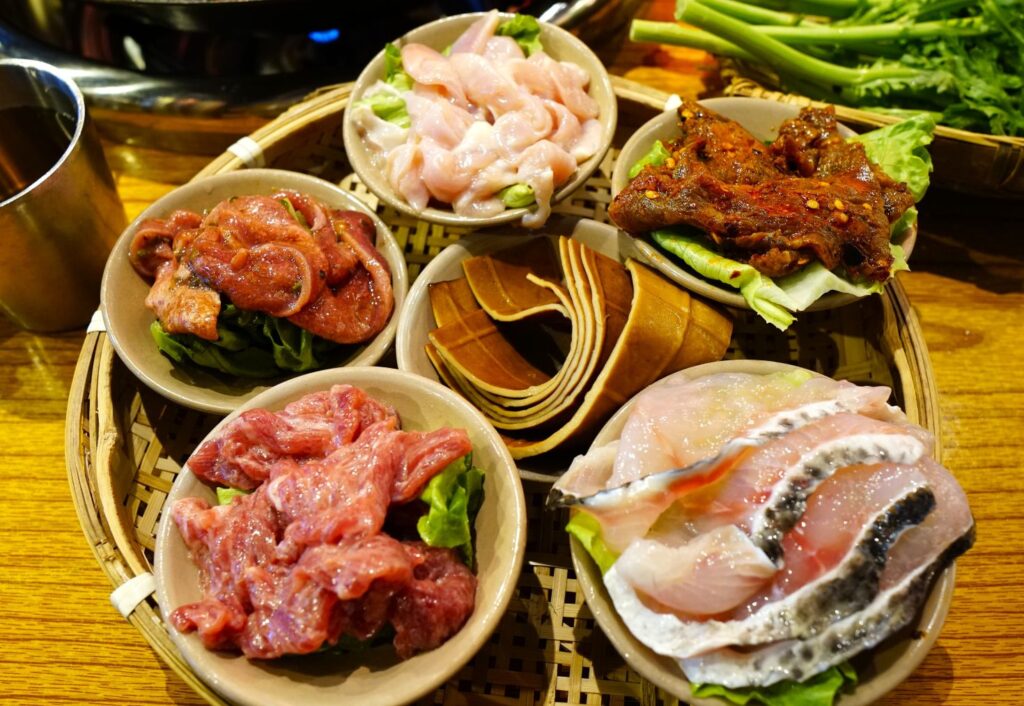
You can’t go wrong here, but here are a few absolute musts:
1. Tender Beef Slices (嫩牛肉)
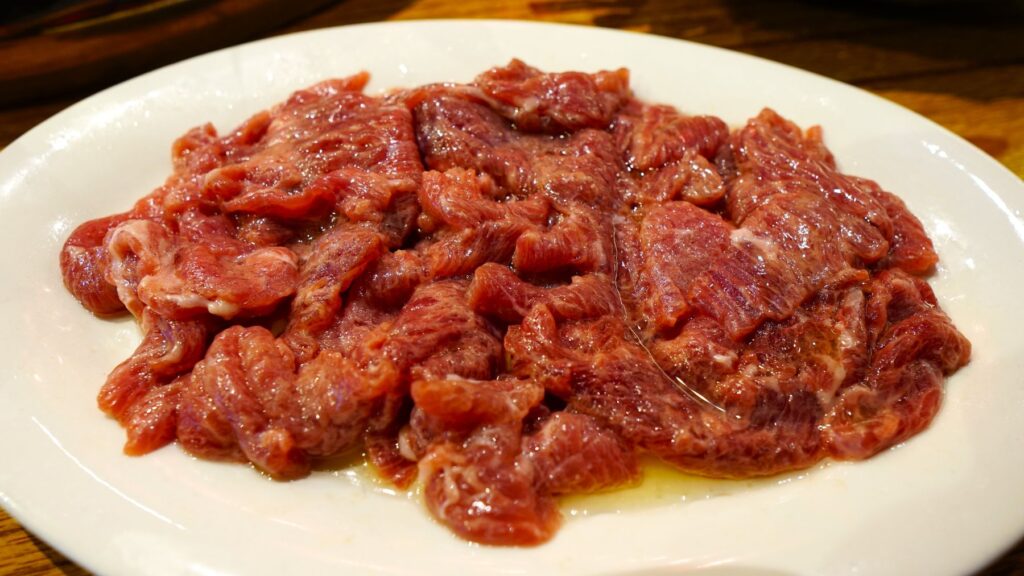
Silky, almost raw-looking slices that cook in seconds in the boiling broth. They melt like butter, with a peppery, beefy punch—best dipped in garlic-infused sesame oil.
2. Fresh Blackfish (现滑黑鱼)
Slippery-soft fillets that plump up in the broth, absorbing spicy, numbing richness while staying succulent.
3. Cilantro Meatballs (香菜丸子)
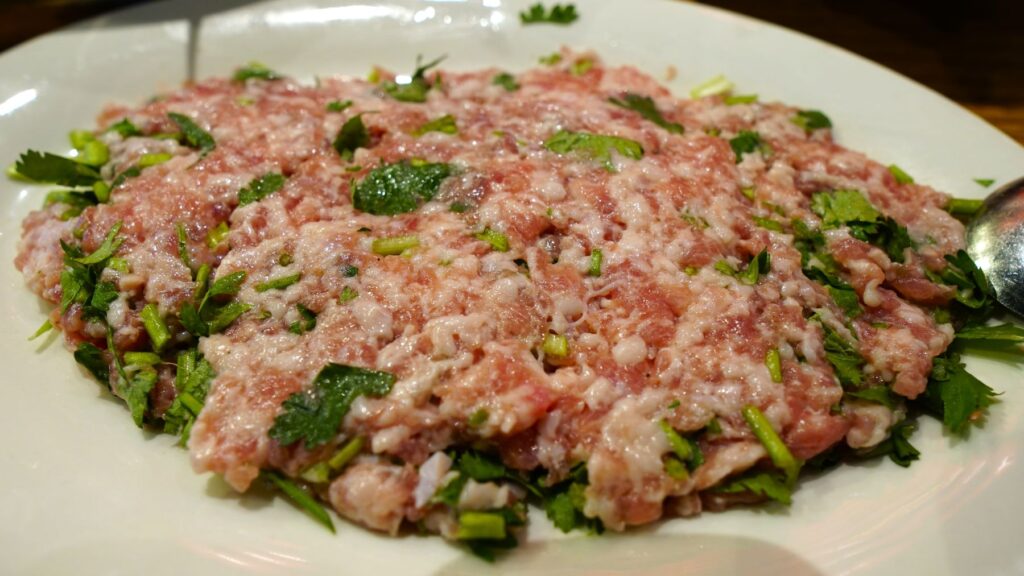
Scoop and roll fresh minced pork mixed with fragrant cilantro. These green-flecked beauties are super bouncy and juicy, with an herbal freshness that cuts through the heat.
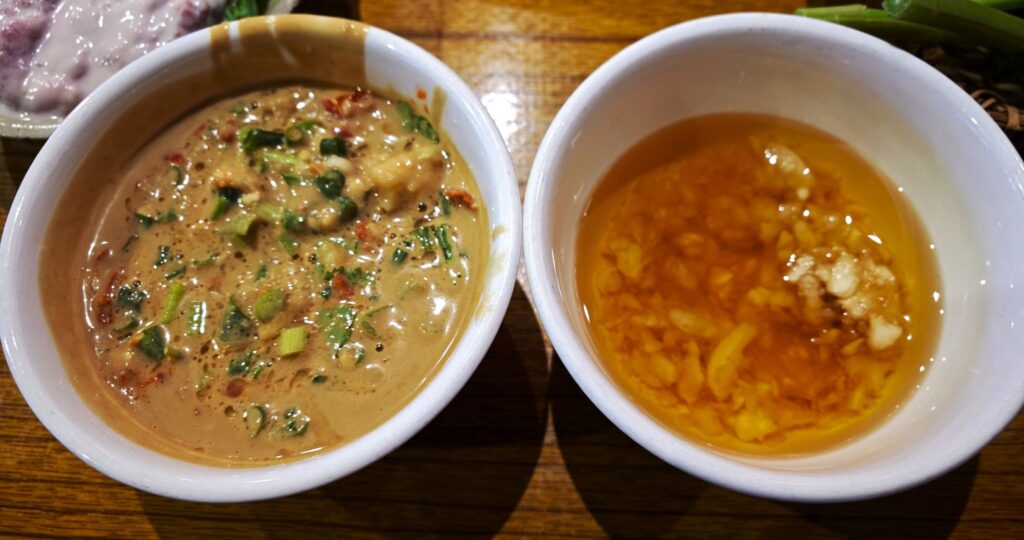
🥢 Hot Pot Dipping Sauces

- Northern Style: A creamy, nutty blend of sesame paste, garlic, cilantro, fermented tofu, and sesame oil that cools down the heat.
- Chengdu Style: A minimalist mix of just chopped scallions, garlic, and sesame oil that absorbs excess grease and brings out the natural flavor of the ingredients!
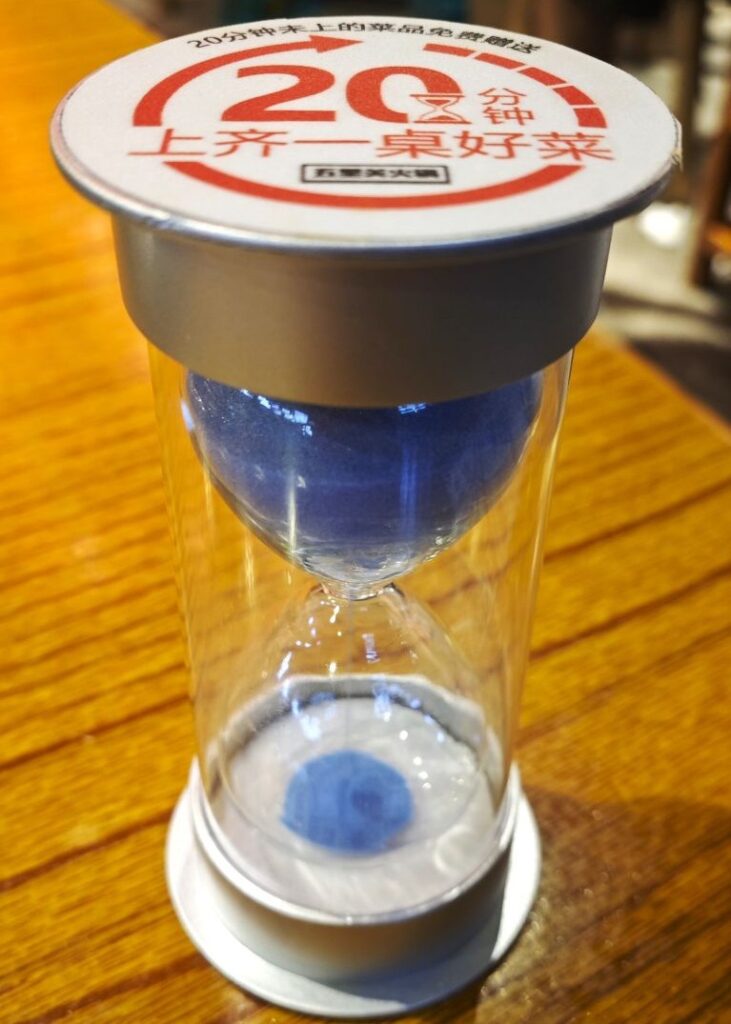
⏳ Speed Service
The restaurant gives you a sand timer—if your full order isn’t served within 20 minutes, you eat for free.
Ready to conquer the heat? Just follow the locals: order a cold beer (or sweet rice wine), embrace the sweat, and dive in! 🍻🌶️

Today’s Chengdu in a nutshell: the rustle of bamboo, the neon glow of Taikoo Li, and the euphoric burn of hotpot. It’s looking back at its past, and leaping into its 21st-century buzz; it’s also finding calm in a poet’s garden, and exhilaration in numbing peppercorns – it’s a full replay in the senses.
If you’ve got some extra time, you can check out the New Century Global Center (near SKP) – said to be the world’s largest building by total floor area. This massive complex houses a hotel, a 5,000 m² indoor beach, and a water park. Not far from it, you’ll find the striking Six Pillars installation. As night falls, the pillars light up, casting sharp lines and flickering shadows — a scene known as “Zen in the Night”.
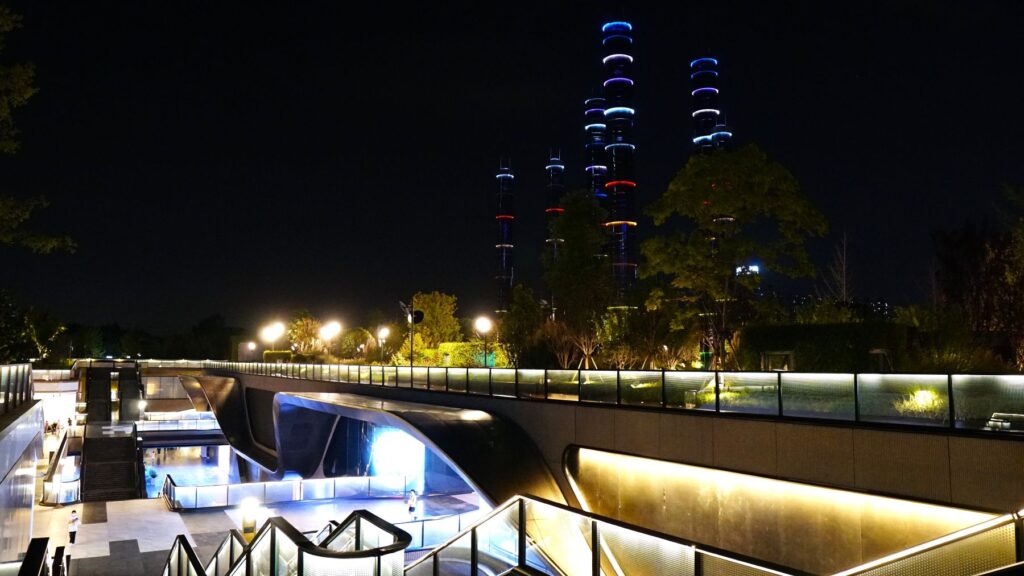
And with that, our trip through Chengdu comes to a close. It’s been a short ride, but we hope these posts have shared a taste of Chengdu’s cuddly pandas, its lush natural beauty – from misty Taoist mountains to glowing waters – its easygoing rhythm of life and rich folk traditions — and of course, the memorable day trip to the Leshan Giant Buddha.
Until next time – let’s keep tasting and keep adventuring! 🍜🌍✨

TAKE ME THERE💔💔
I heard pig brain is a regular ingredient in Chengdu hotpot? It sounds kinda gross to me but then I remembered that in my country we eat shark and dried fish so it’s probably not that weird in theory.
I’m too impatient EVERYTHINGS going in the middle one of the hotpot 💔
People are so obsessed with the way a country or place operates and sometimes they disregard the beauty of the country and history