Munich is full of secrete foodie havens, and on this trip, we discovered Mitani, a cozy, intimate Japanese restaurant. Despite its modest size, Mitani is incredibly popular, and reservations are a must. Phone reservations are only accepted between 5 and 6 PM, and if you miss that window, you’ll need to visit in person—usually at least a week in advance to secure a table.
Restaurant Profile
🏷️ Name of the Restaurant: Mitani Restaurant
📍 Adress: Rablstraße 45, 81669 München
🍜 Style: Japanese Cuisine – Japanese tapas, sashimi, sushi rolls, nigiri, rice dishes (donburi), noodle dishes, hot pot, skewers etc.
💰 Price: around 30 – 50 EUR per Person (incl. Drinks and Tips)
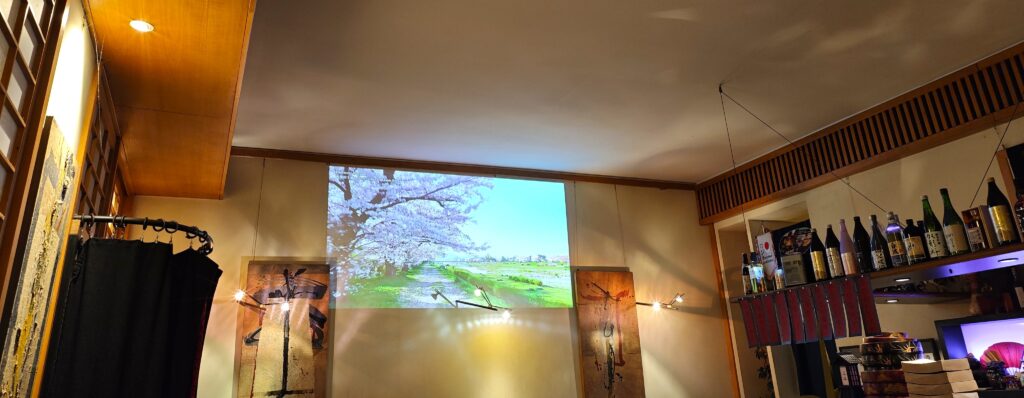
The restaurant is lined with two- and four-seater tables, with a sleek yet traditional interior, dim lighting, and a projected display showing iconic Japanese landscapes – a refined and immersive ambiance.
Before we dive into the food, let’s raise a glass of Asahi Beer—Japan’s legendary brew and a national favorite.
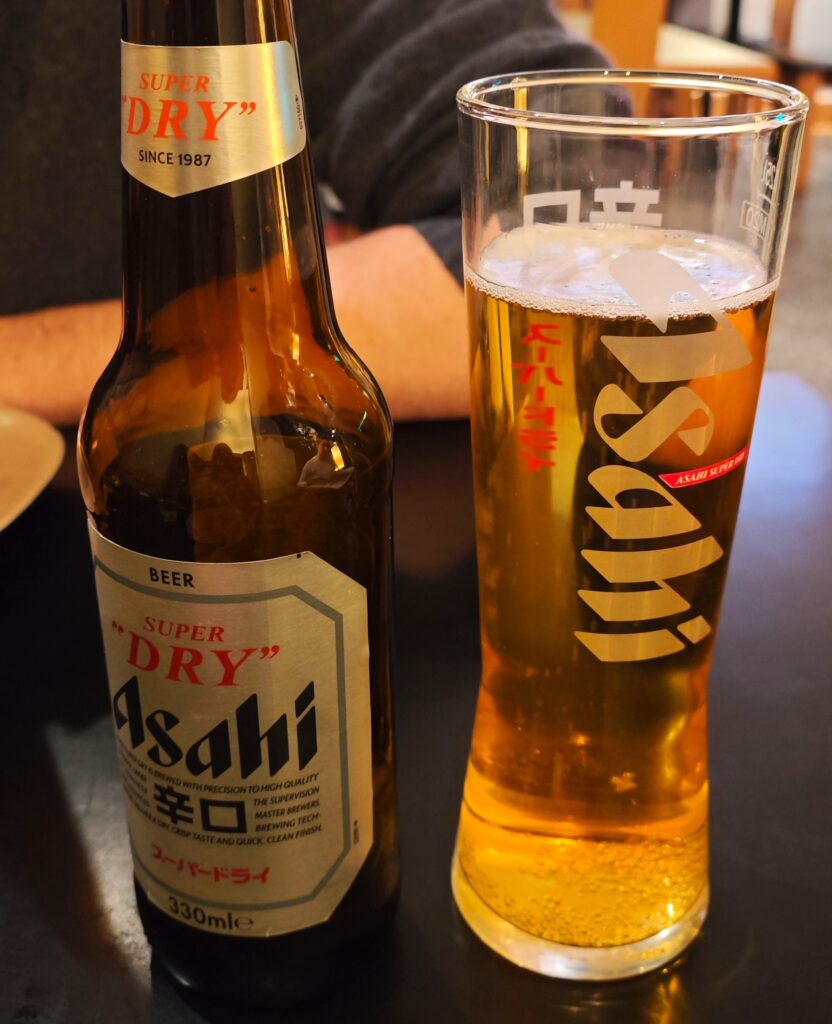
Asahi has a clean, refreshing bitterness—light and approachable. Just as the crispness lingers, a subtle late sweetness emerges, like malted honey.
It’s perfect for anyone with a gentle taste—no overpowering hops, no heavy aftertaste— making it a great companion to delicate Japanese food.
Anyone who’s been to Tokyo has likely spotted the Asahi Beer Hall—the Golden Flame of Tokyo.
By day, this shimmering golden sculpture gleams like liquid gold against city skyline.
It’s home to the Asahi headquarters and a well-known tourist attraction in Tokyo.
Torikara – marinated fried chicken
If there’s one appetizer you must order, it’s Torikara – marinated fried chicken. No exaggeration: glance around the restaurant, and you’ll spot a golden pile of this glory on nearly every table.
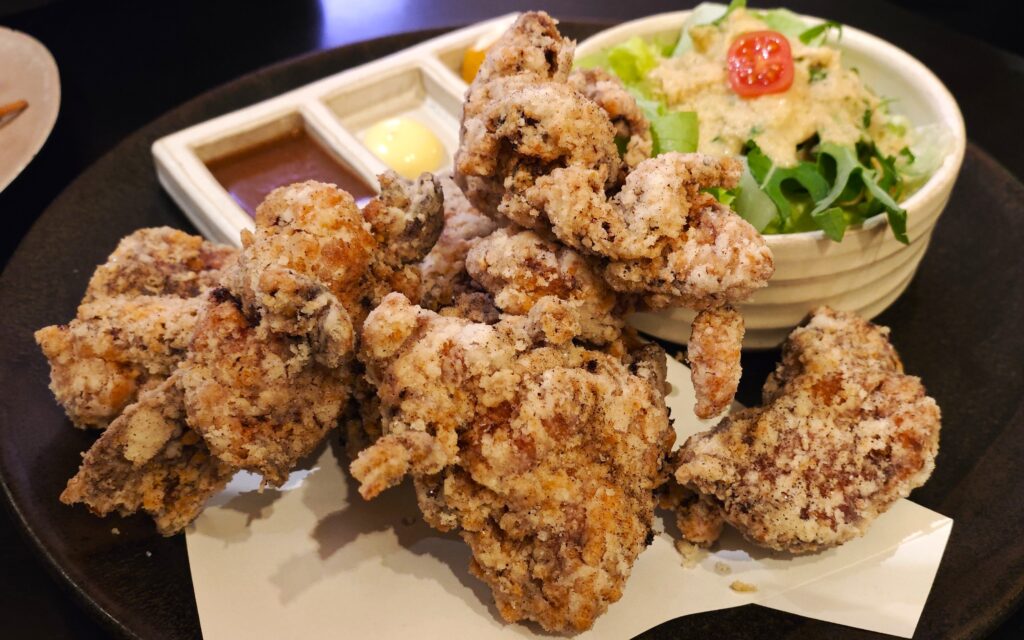
The boneless chicken, served in generous portions, is cloaked in a thin, peppery batter that shatters with an audible “crrrrack” at each bite. And then comes the real deal – the juice. Pierce through that crunchy coating, you’ll get a torrent of savory, steaming-hot chicken juice spill in—so indulgent.
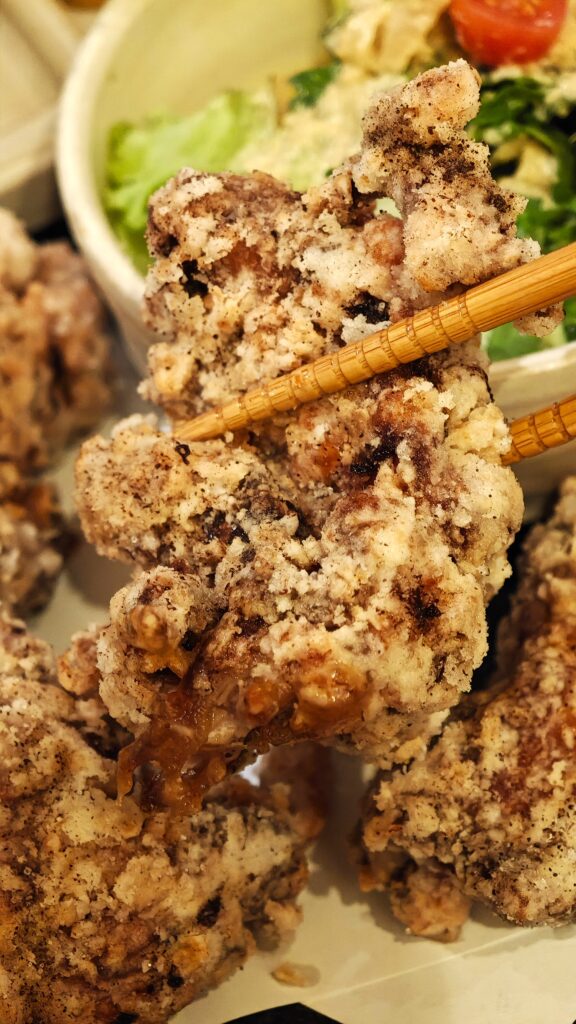
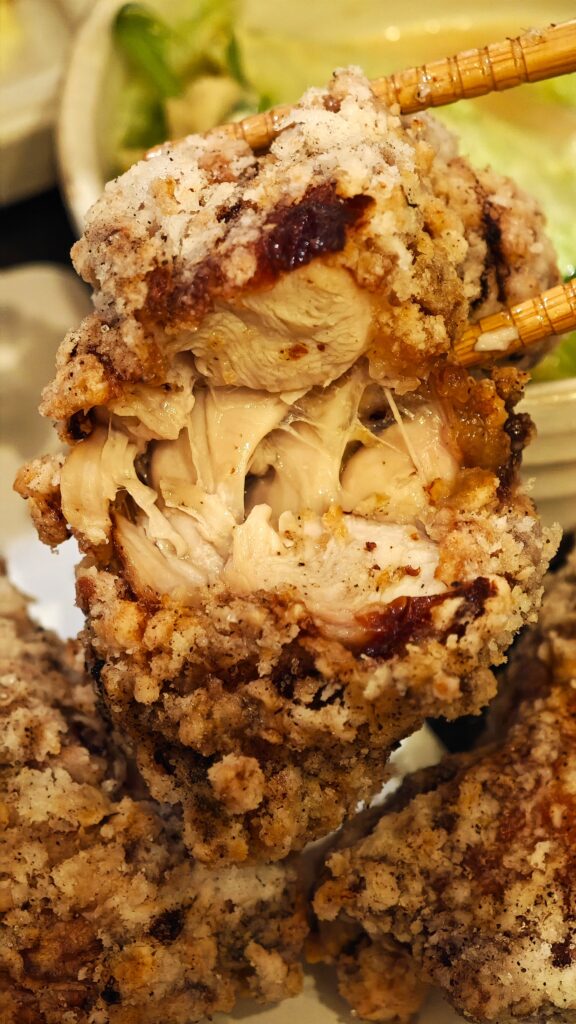
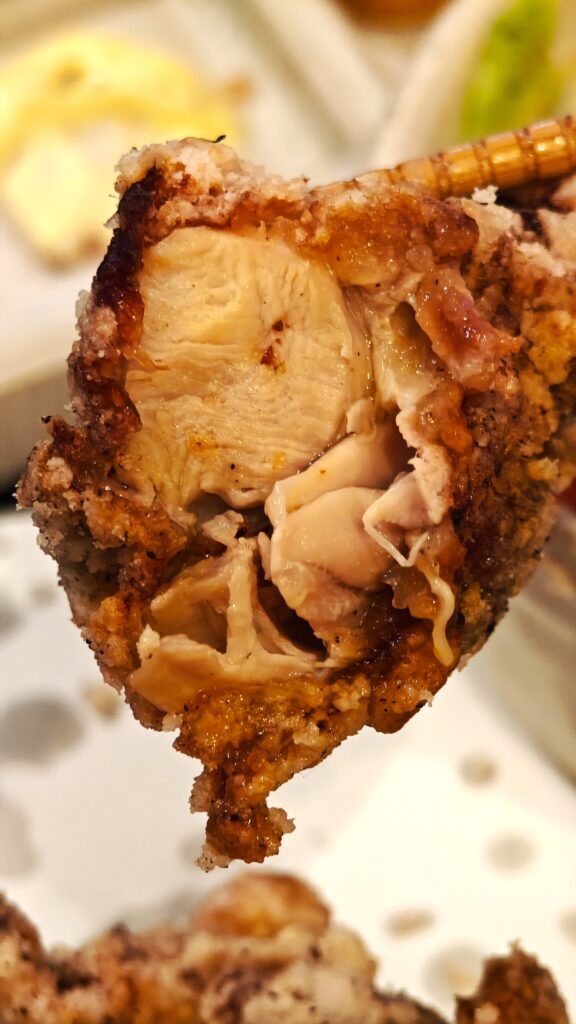
The marinade has a subtle nori (seaweed) taste of the ocean, with a smoky, charred depth. There’s a faint cheesy, umami richness too.
Torikara is served with a flavorful dipping sauce—garlicky, gingery, sweet-savory with a touch of sourness – alongside Japanese mayo, creamy, slightly sweet, and tangy, plus a squeeze of lemon.
A tangy side salad dressed in a gingery, lemon-zapped vinaigrette provides a refreshing contrast.
A La Carte Eintopf – hotpot with thinly sliced beef, vegetables, mushrooms, tofu, and udon noodles.
This luxurious, simmering hot pot is a signature specialty at Mitani, bringing together various ingredients in a bubbling iron pot with a flavorful, umami broth. It’s available for a minimum of two people. You can order it à la carte or as part of a set menu that includes miso soup, sashimi, sushi rolls, and ice cream/hot tea.
But as we came here for the fried chicken too, so we decided to just have the hot pot.
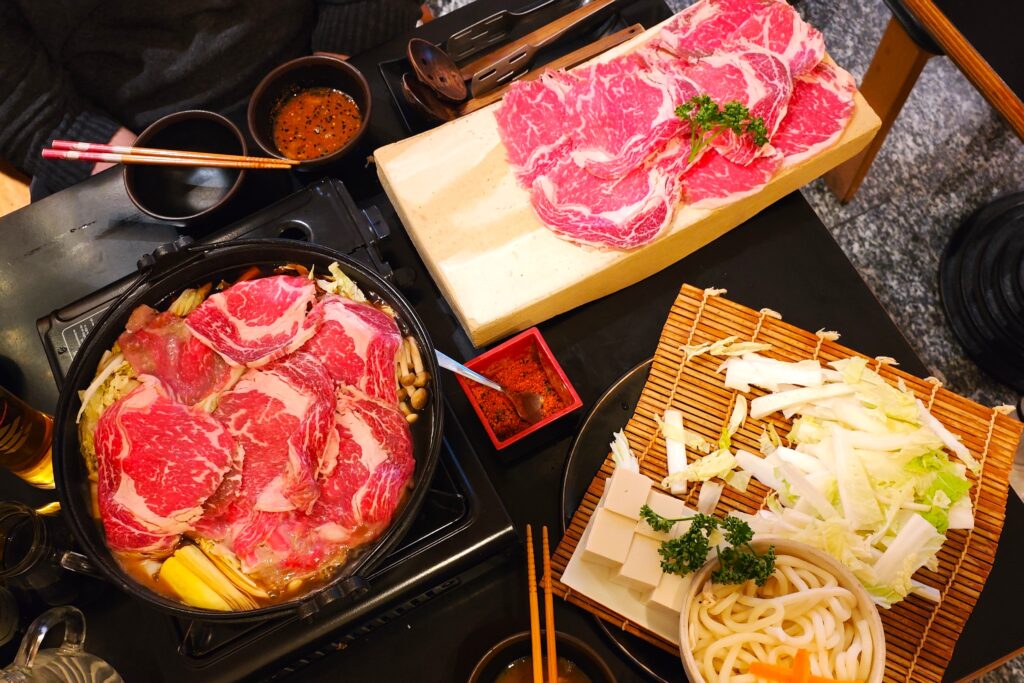
You can choose between two broths:
- Sukiyaki broth (warishita) – A deep, umami blend of soy sauce, sugar, sake, and mirin, giving it a slightly sweet yet bold, salty flavor. Traditionally eaten with raw egg, for silky, velvety dip. We opted for this one, for a more traditional flavor.
- Shabu-shabu broth – A light fish broth, designed to be paired with ponzu sauce (a bright, citrusy mix of soy sauce and lemon).
They bring extra jars of broth and hot water, so you can adjust the intensity and control the saltiness. Mitani recommends turning off the fire while eating to prevent the broth from reducing too much and becoming too salty. But with extra water on the side, you can also keep the heat on.
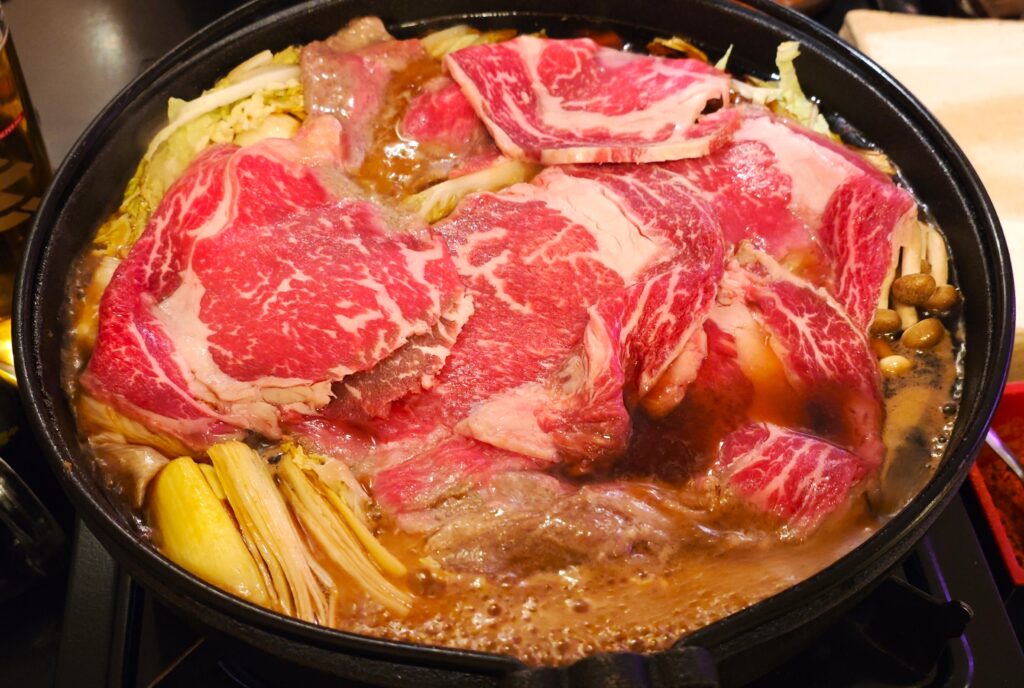
Before the broth starts bubbling, prepare your egg dip—crack a fresh egg into your bowl and whisk it with a splash of broth. This will become your luxurious, velvety dipping sauce for the beef, coating each bite in pure indulgence.
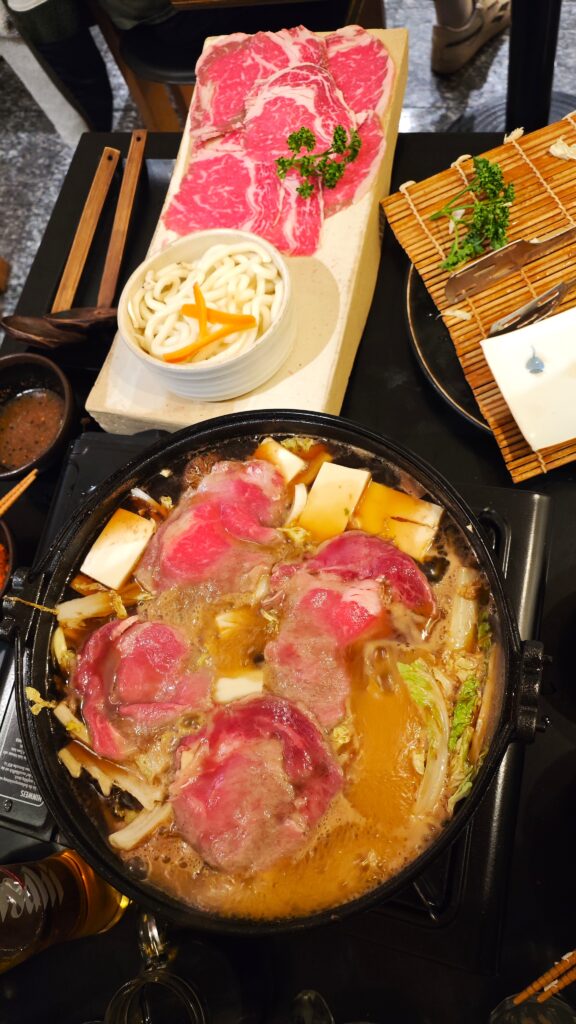
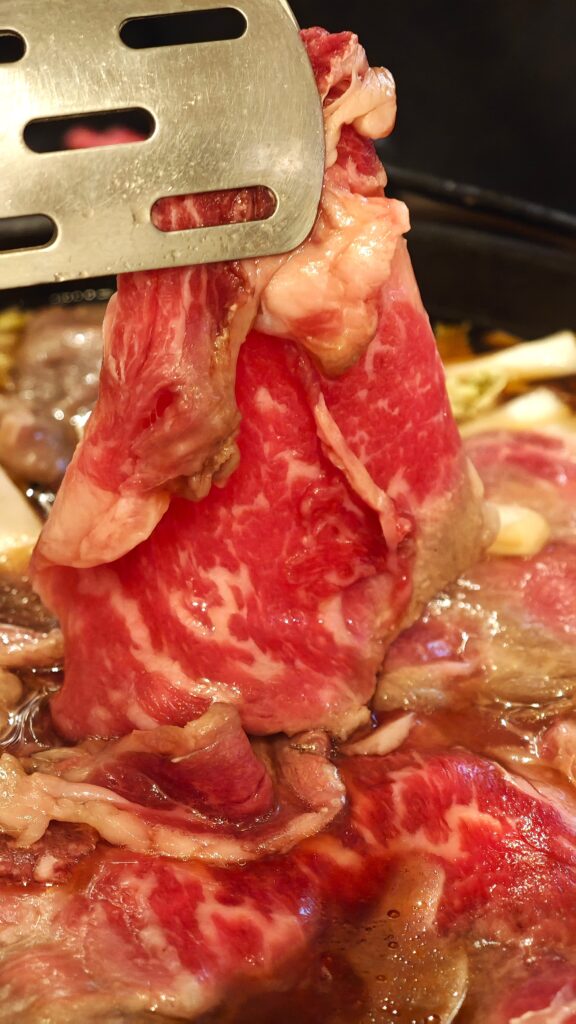
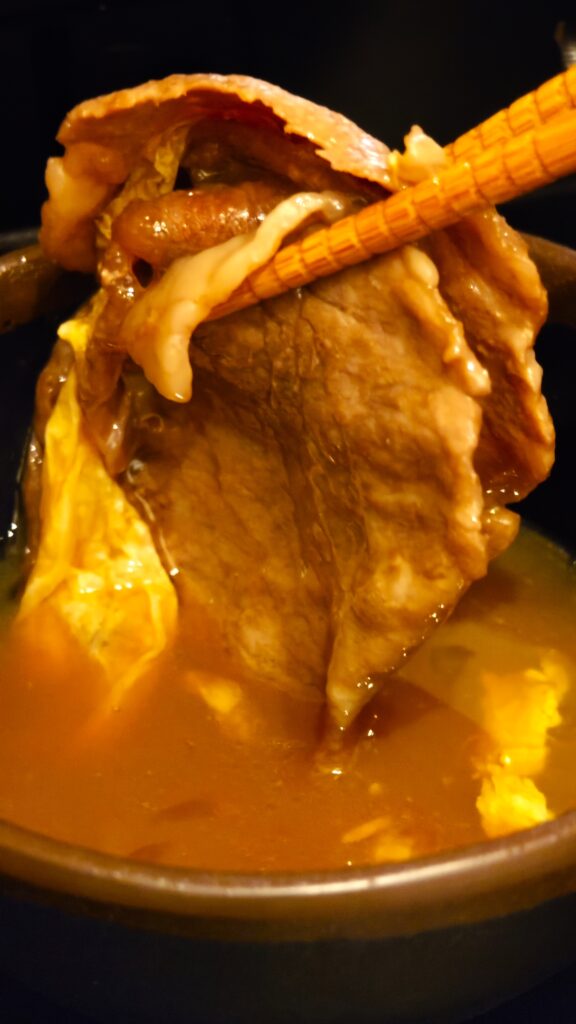
As the broth starts to simmer, it’s time to layer in the ingredients:
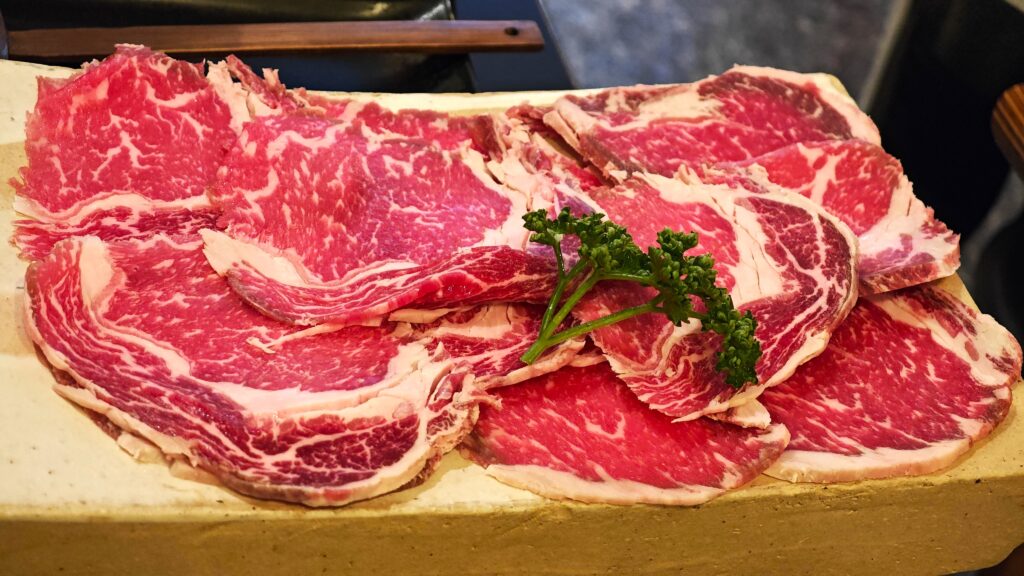
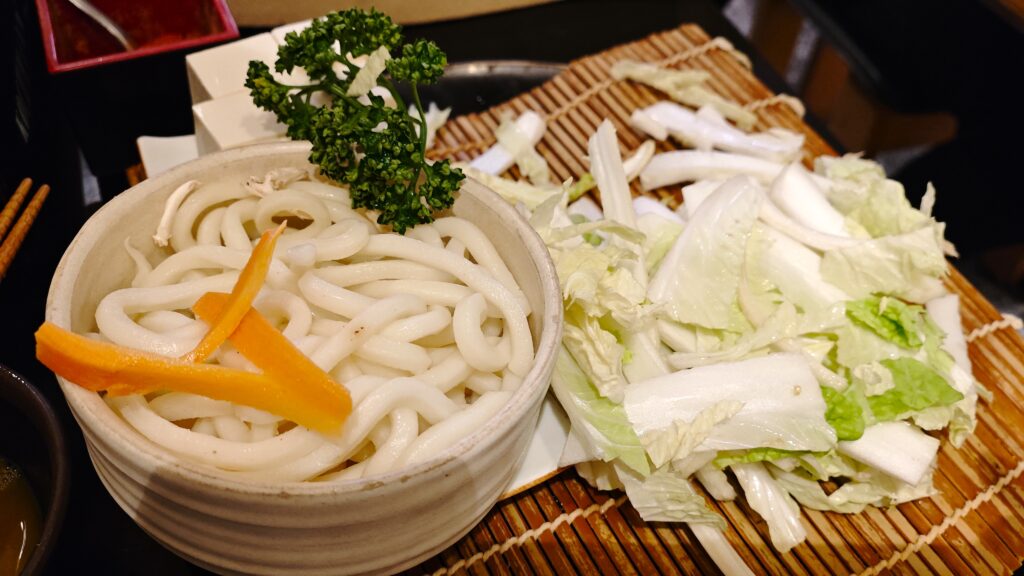
- Mushrooms – Left in for 10 minutes, soaking up the broth and releasing their earthy umami into the soup.
- Vegetables (cabbage, leeks) – Cooked for 5 minutes, adding a fresh, slightly sweet balance as they soften.
- Tofu– Already cooked, it’s soft and soothing, with a gentle soy fragrance.
- Beef – thin slices that melt at the mere sight of heat. 2 minutes until the pink vanishes—leaving you with tender, buttery meat that’s savory-sweet and silkened by its rich, raw egg dip. As the warm, soy-glazed beef slips from the dip, it turns into something cool, velvety, and impossibly rich. The initial sweetness of the sukiyaki broth clings to the meat, but the egg mellows it out, rounding the flavors into a savory-sweet bite. The slick, creamy mouthfeel is lush – like swallowing a cloud, as the meat dissolves into a savory custard as you chew, leaving behind a subtle richness that lingers.
- Udon Noodles – Traditionally, the final act of the meal. Already cooked, these tender strands are ready to absorb the broth’s delicious flavors for a satisfying finish. This flavor-infused udon noodles are an unexpected highlight – pure comfort!
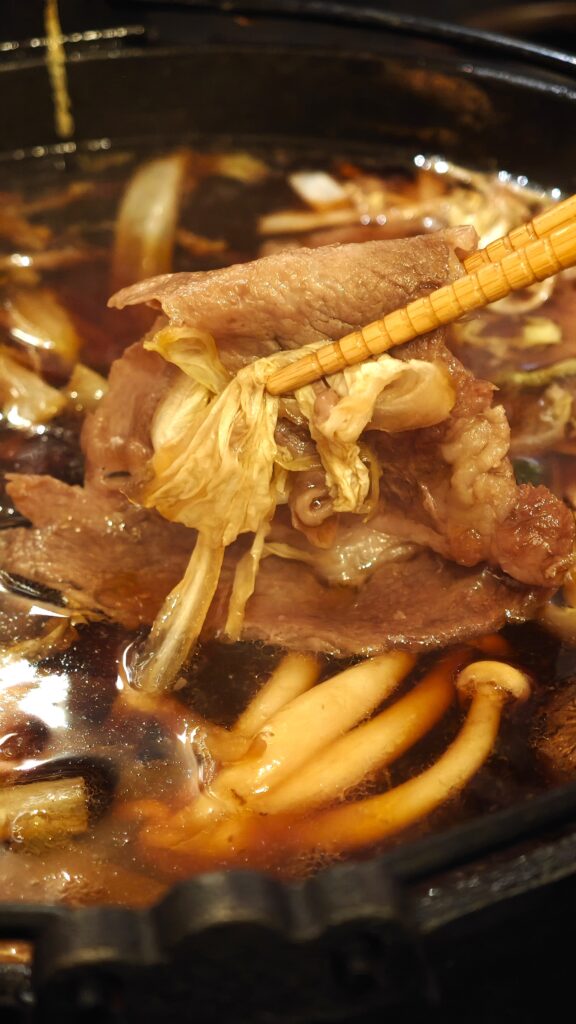
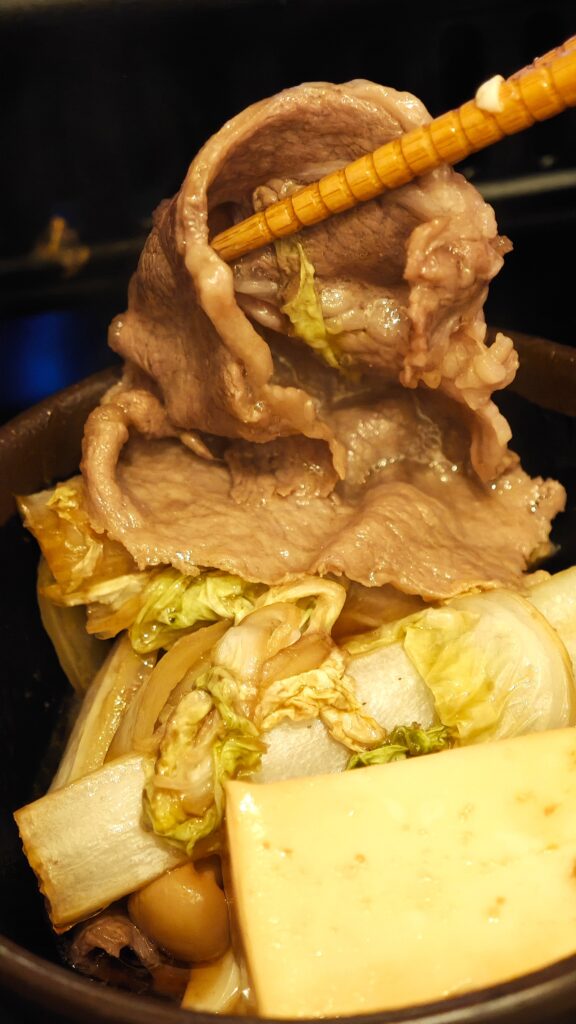
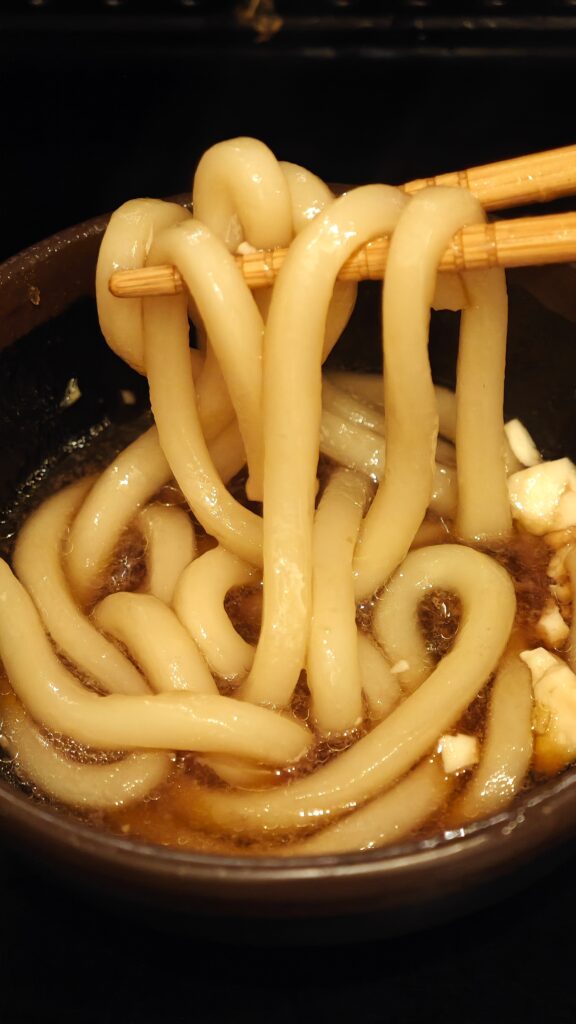
To enhance the flavors, shichimi togarashi—a spicy Japanese seasoning—is provided. A mix of chili pepper, sesame seeds, dried orange peel, and seaweed, it adds a mild heat with a nutty, citrusy kick.
Mitani is literally the place that those in the know swear by. Beyond what we tried, their crispy tempura, sushi platters, caramelized grilled eel donburi, and ginger-glazed squid are also super popular.
With a Tokyo-born owner, attentive Japanese-style service and a dining room where nearly 80% of the guests are Japanese, the authenticity speaks for itself. We felt almost like being in a cultural institution – where the hum of Japanese conversation, clink of sake cups, and comforting scent of dashi filled the air, carrying with them the warmth of the Japan’s backstreet izakaya culture.

I don’t understand why everyone raves about this place. Here’s my experience:
Torikara (Fried Chicken): The seasoning was just okay, and the meat didn’t lock in the juices well. One piece was still pink inside when cut open. We showed it to the waiter, and about ten minutes later they brought us another one.
The sashimi was pretty good — big, fresh slices of raw fish, but the rice balls were a bit loose.
The tempura was average.
Hot pot was way too salty! When it arrived, we got a small pot of sauce and a medium pot of water, but even then we had to ask the waiter twice for more water while eating. The meat was good, but the raw egg quality was poor, the vegetable portion was reasonable.
The miso soup was so salty it made you want to keep drinking water. It costs €3 as a side and only had spinach in it.
I’m genuinely impressed to find Japanese food of this quality in Munich—it’s at least on par with an average local spot in Japan.
This hot pot isn’t always available, so it’s best to mention that you’d like to have it when making a reservation.
Thanks for your post. They have absolutely impeccable service!
We came without a reservation—it was already 8:30pm. The staff said we could sit, but warned us twice that the food might take 30-40 minutes because they prioritize reservations. We thought that was fair, so we didn’t mind. But to our surprise, the waitress quickly brought us a complimentary teriyaki fish dish along with our drinks as an apology. Honestly, when you get a little something extra, it just makes you happy. We were all pleasantly surprised, and the other dishes didn’t take that long either.
Halfway through our meal, the owner sent over a huge California roll to our table—just as we were joking, “Who ordered this massive roll?” The waitress apologized again, saying they didn’t want us to go hungry while waiting. It was such a nice touch.
I’ve tried their eel rice before. The €40 eel rice really didn’t feel fresh at all – it tasted quite fishy and wasn’t fatty or flavorful in the slightest. Honestly, it was no different from the frozen eel I buy at the Asian supermarket for €18 – just heat it up and serve it with rice. €40 for that… you’re basically paying to fill up on plain rice.
Wow, my favorite Japanese place in Munich! You’ve got to try the ginger grilled squid, the sushi platter, and their tempura—it’s the best!
Really nice spot, most guests are Japanese. The hot pot is pretty close to what we had in Japan, although the egg dip thins out quickly and loses that rich, creamy feel with the beef. But generally, I’d say it’s one of the top Japanese places in Munich.
Nice blog, I’m bookmarking it!
Thanks for your post! It’s also one of my favorite Japanese restaurants in Munich. You should definitely try their roasted eel rice bowl – it’s really good!
The way you describe the beef really got me intrigued. I’ll have to try this hot pot sometime. Thanks for the update!