
On the fourth day of our Shangri-La trip, we set out on a ride we’d been eagerly awaiting: circling the breathtaking Napahai Lake.
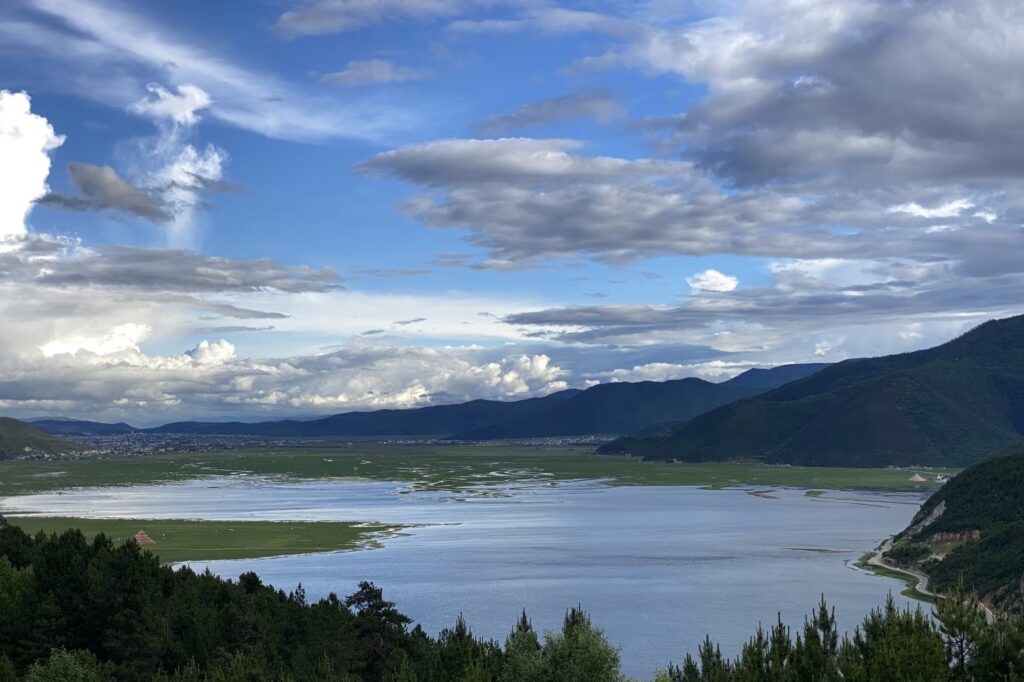
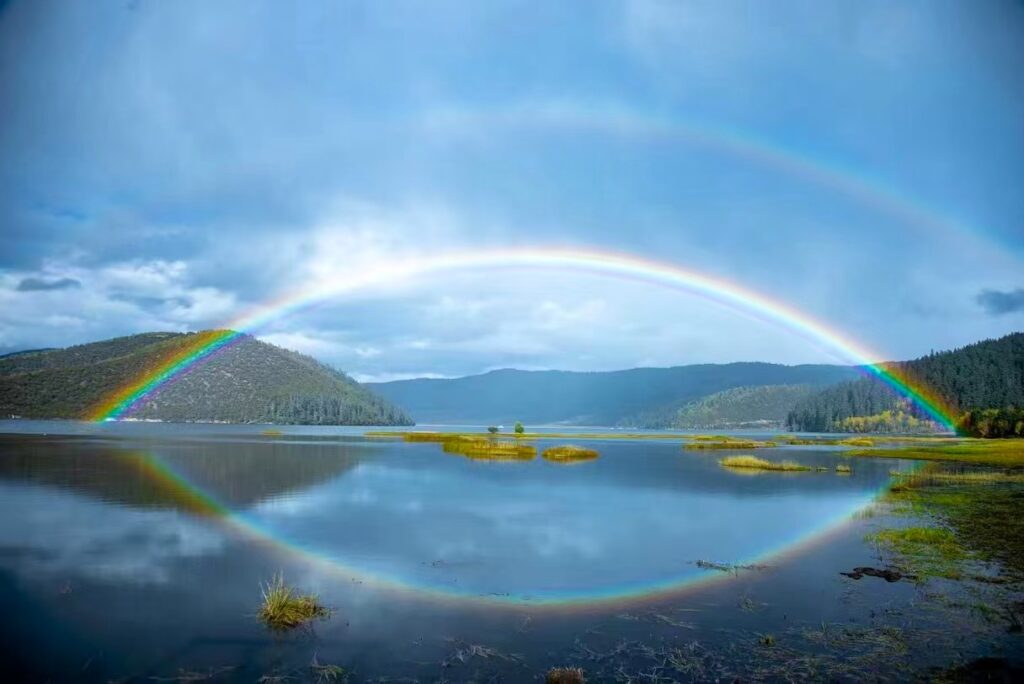
Napahai: The Mountain’s Mirror
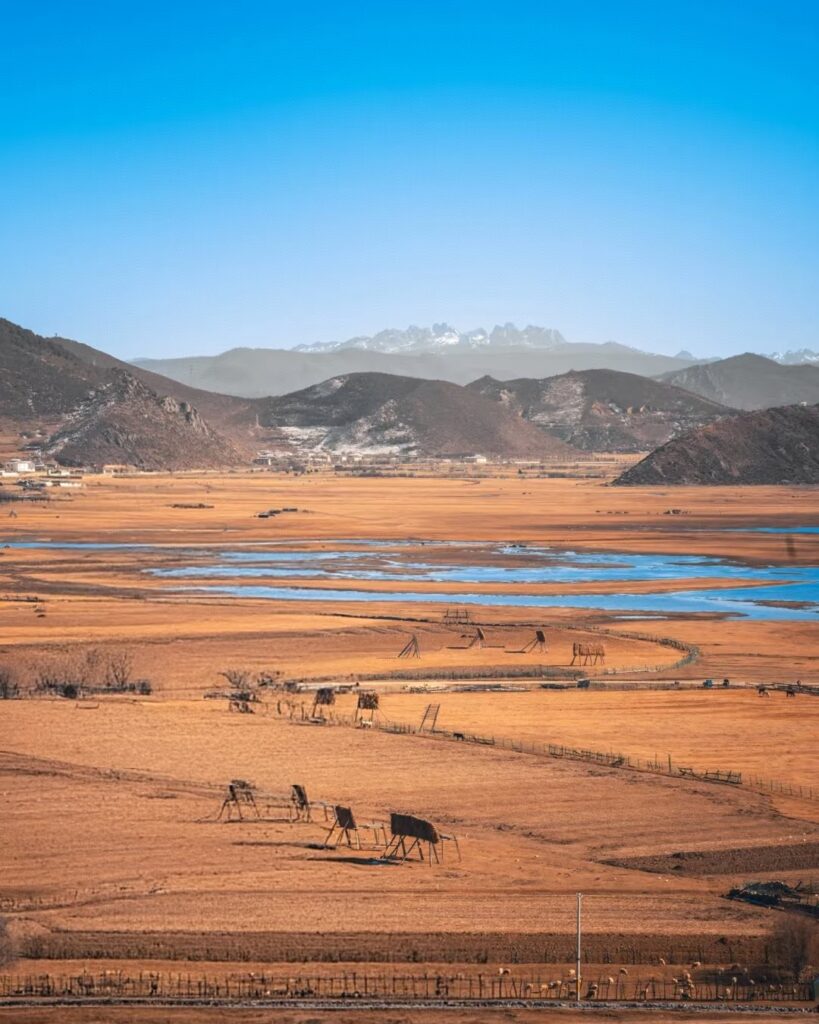
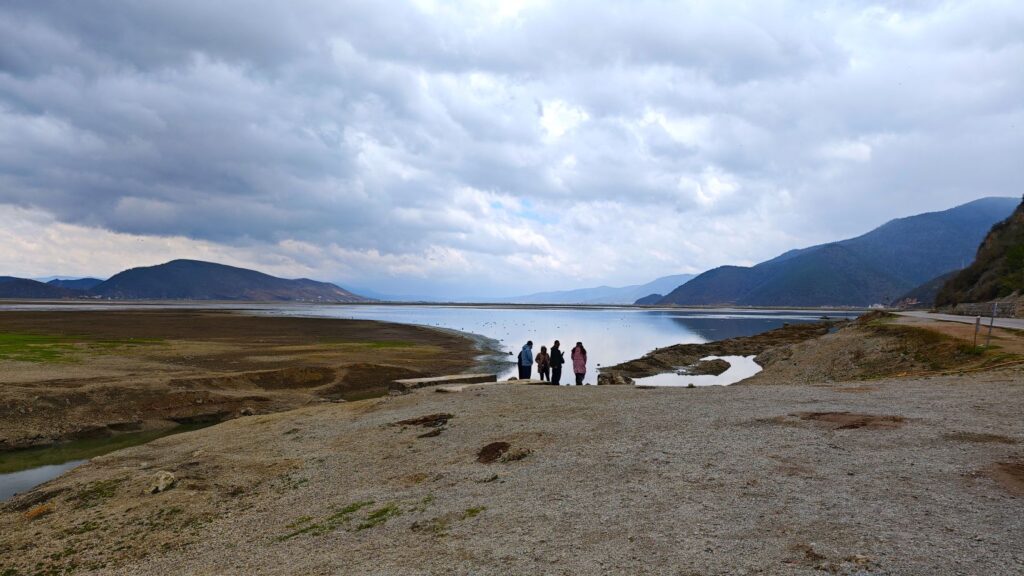
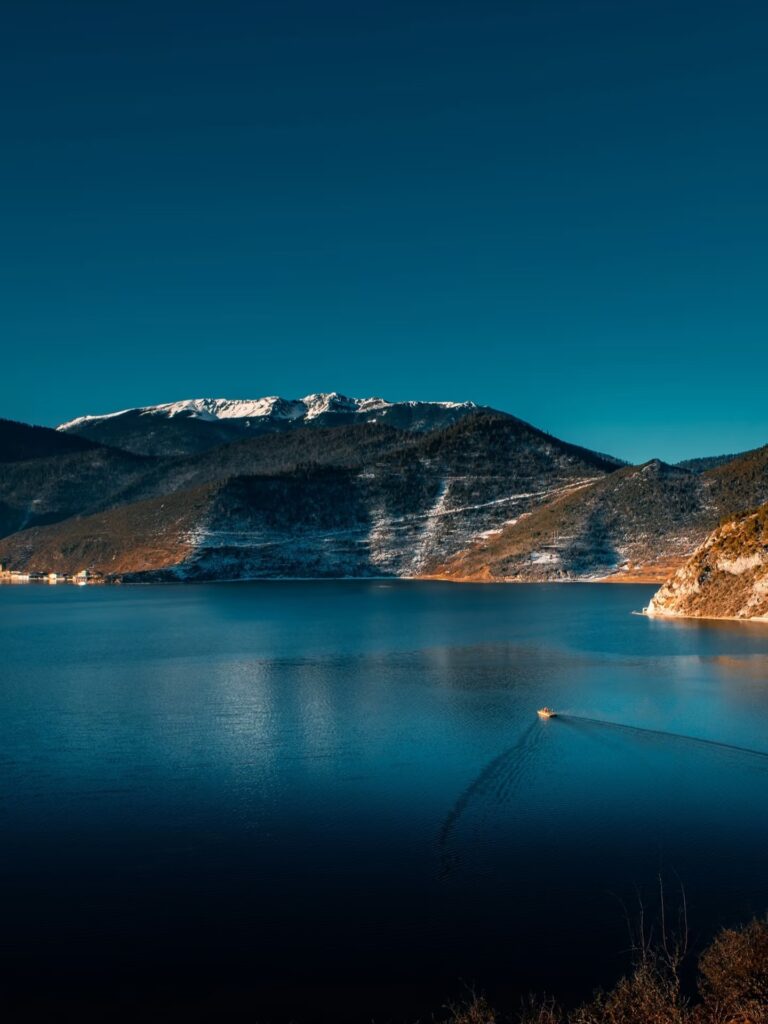
Napahai is a seasonal alpine lake and a protected nature reserve in Yunnan. Just a stone’s throw from the Dukezong Ancient Town, Napa Lake is stunning even on rainy days. The mist and drizzle seem to add a layer of mystery, softening the landscape into a watercolor painting. It’s a sanctuary where the sky, mountains, and water converge.
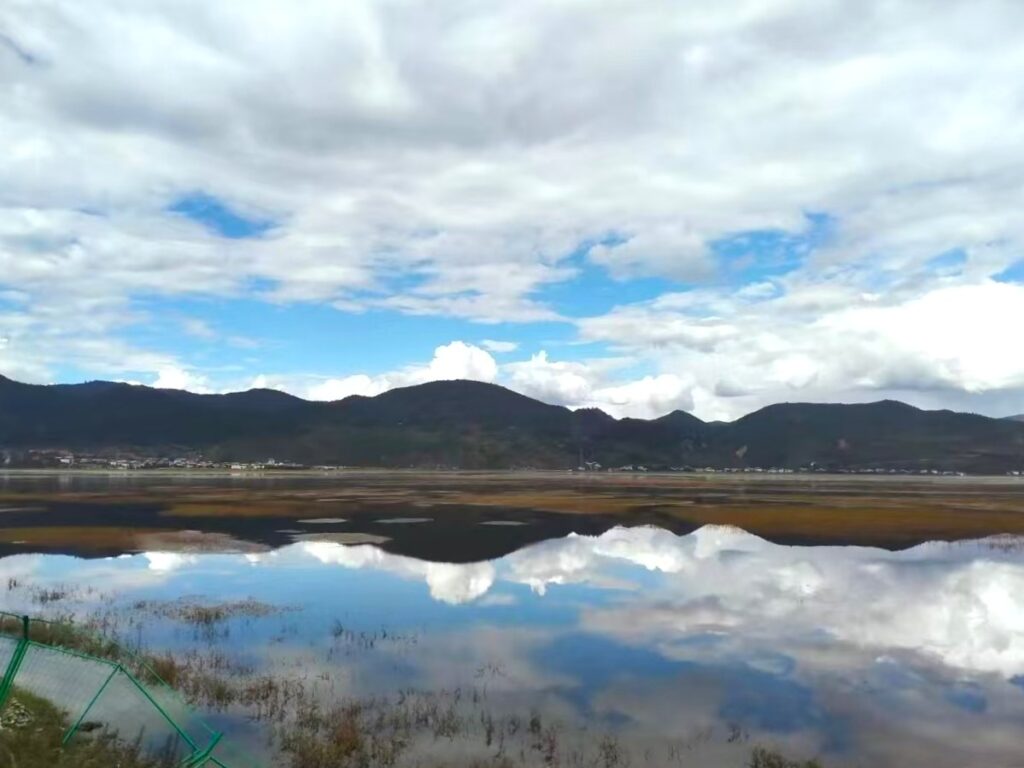
🛵 The Napa Hai Loop Guide: Your How-To
🎫 Tickets: Completely free!
🚗 Transportation Showdown:
- Car Rental (~200 RMB/car): Seating four people. It’s cost-effective for larger groups, keeps you warm and dry, and allows you to stop freely along the lakeside.
- Electric Scooter (58-68 RMB for a full charge, i.e. 120–200 km range): Our choice for maximum freedom! Tip: Let the rental shop know you’re doing the full loop so your scooter comes with a full battery. We rented from Huanhai Rental Shop (环海出租行) near Dukezong Ancient Town.
A little unpaid ad for them: their service was fantastic. We told them it was for the lake loop, and they guaranteed the battery would last the entire trip, promising a free rescue if we ran out of battery! They also provided windproof blankets and raincoats. (Note: No English, so have your translation app ready).
- Bus #12: Departs from “Red Sun Square (红太阳广场)“. It’s cheap but can be crowded and runs at 8:30, 9:00, 10:00, 10:30, 14:00, 14:30, 16:00, 16:30.
- Private Driver: A good option, but be very clear with the driver: you want the “Huanhu Lu” (Ring Lake Road), not any paid tourist spots or horse ranches.
📍 Crucial Navigation Tip:
Do NOT simply navigate to “Napa Hai (纳帕海)”. This often leads you to paid entry points. Always target “环湖路 (Huánhú Lù)” – the Ring Lake Road. The full loop is about 55 km, taking roughly 4–5 hours for a complete, scenic circuit.
📍 The Epic Loop Route: The Can’t-Miss Stops
Start at Dukezong Ancient Town (独克宗古城): Fuel up and begin your journey🎬.
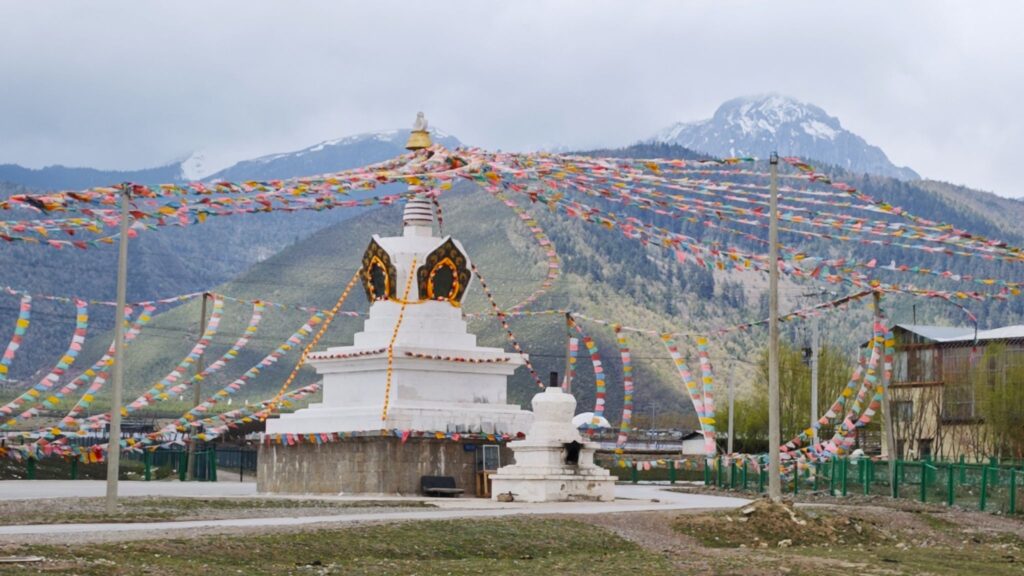
Shangri-La Giant Tibetan Prayer Flags (大经幡)
Your first taste of the region’s profound spirituality.
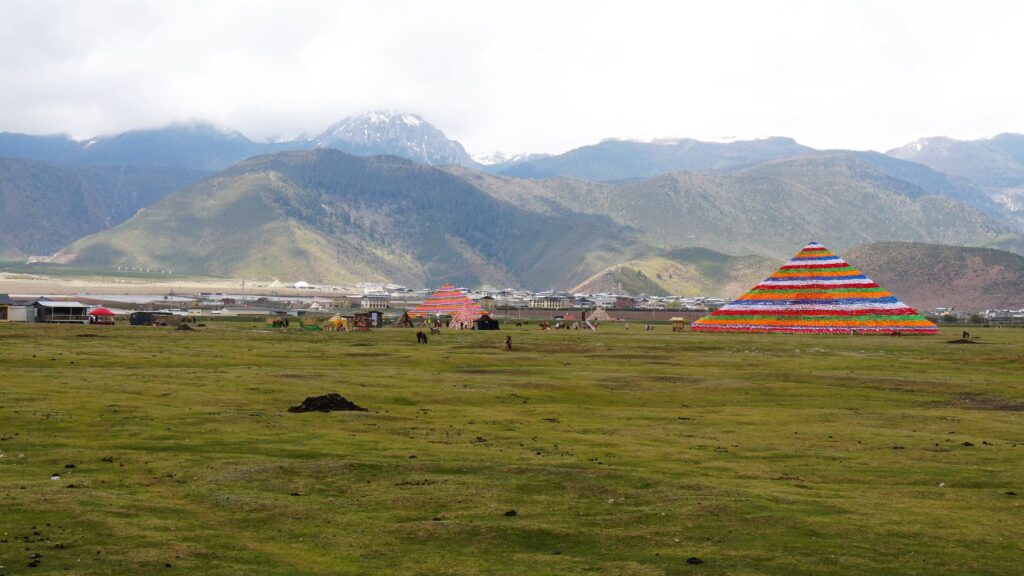
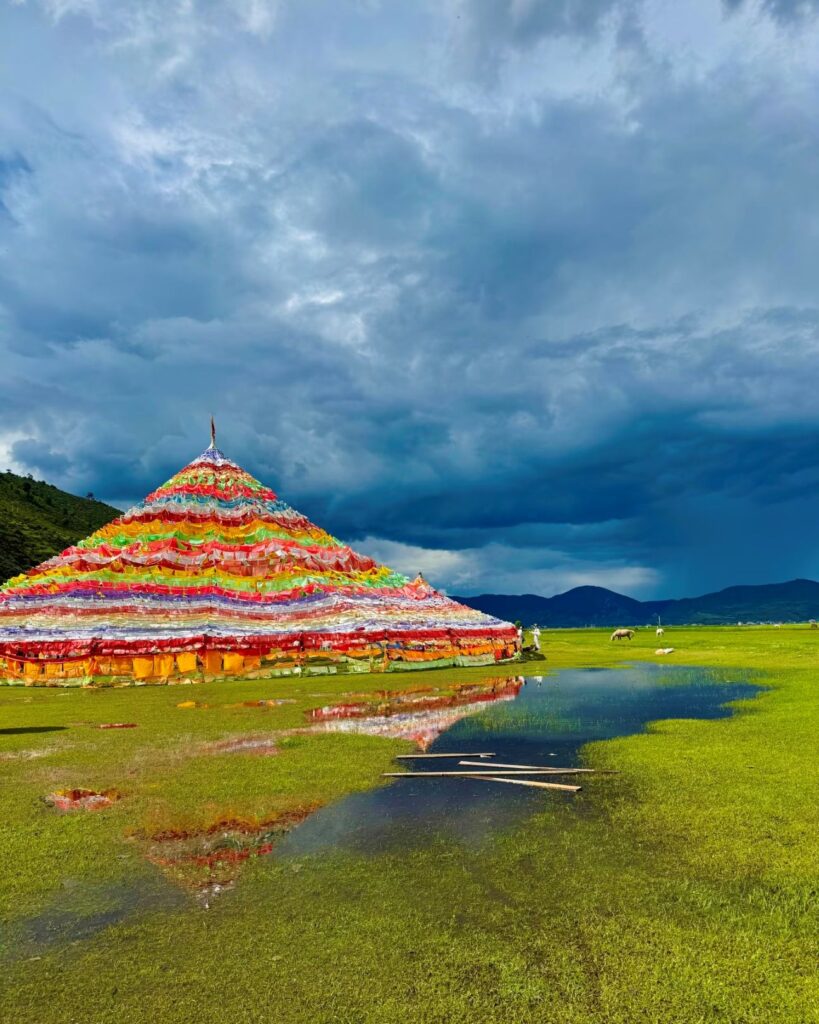
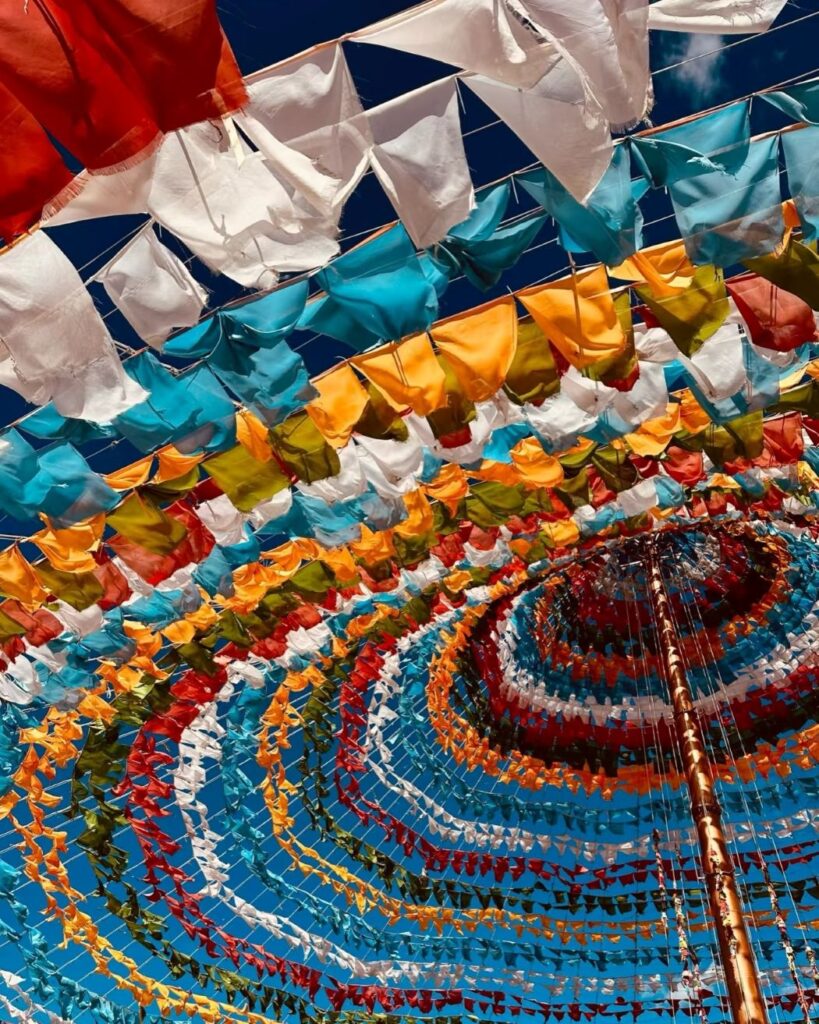
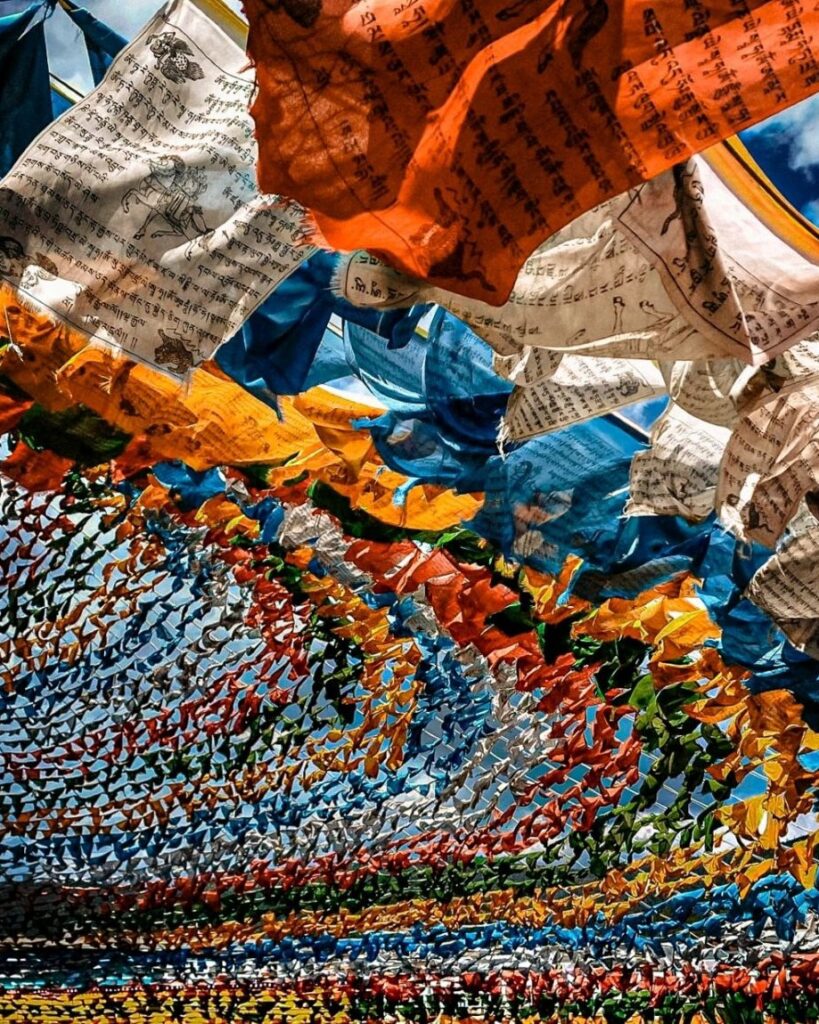
These colorful flags, inscribed with prayers and auspicious symbols, flutter in the wind to spread blessings. Note: entering the inner areas of major flag sites requires a small fee (9–15 RMB).
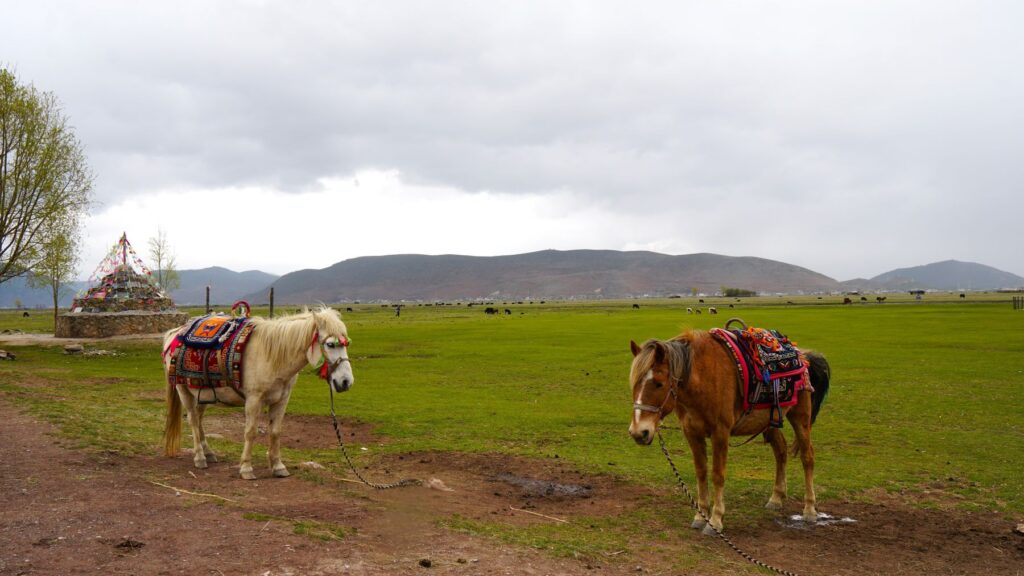
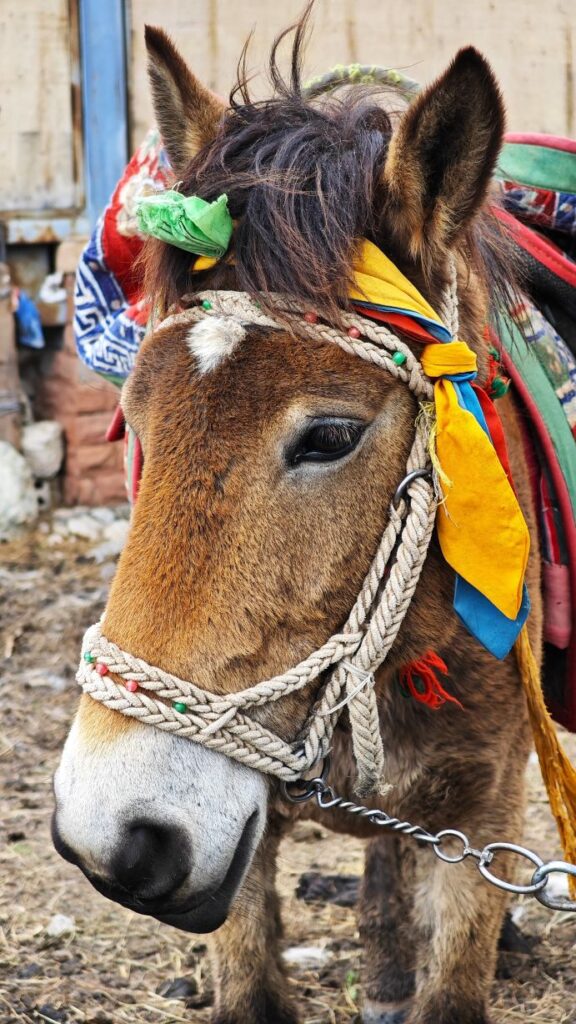
Zinnia Flower Sea Base (百日草花海): Free entry into the wetlands, offering a stunning, cloud-kissed mountain backdrop reminiscent of Xinjiang. From here, you’ll see many horse ranches, where you can enjoy a gallop across the meadow for a fee.
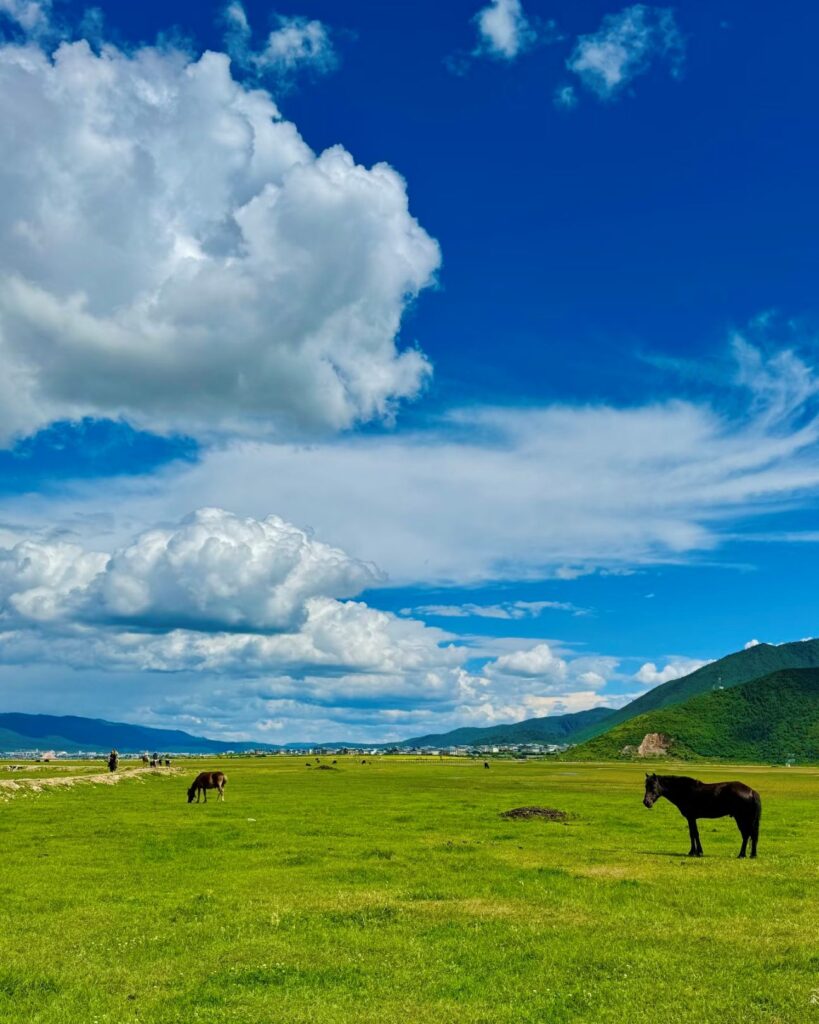
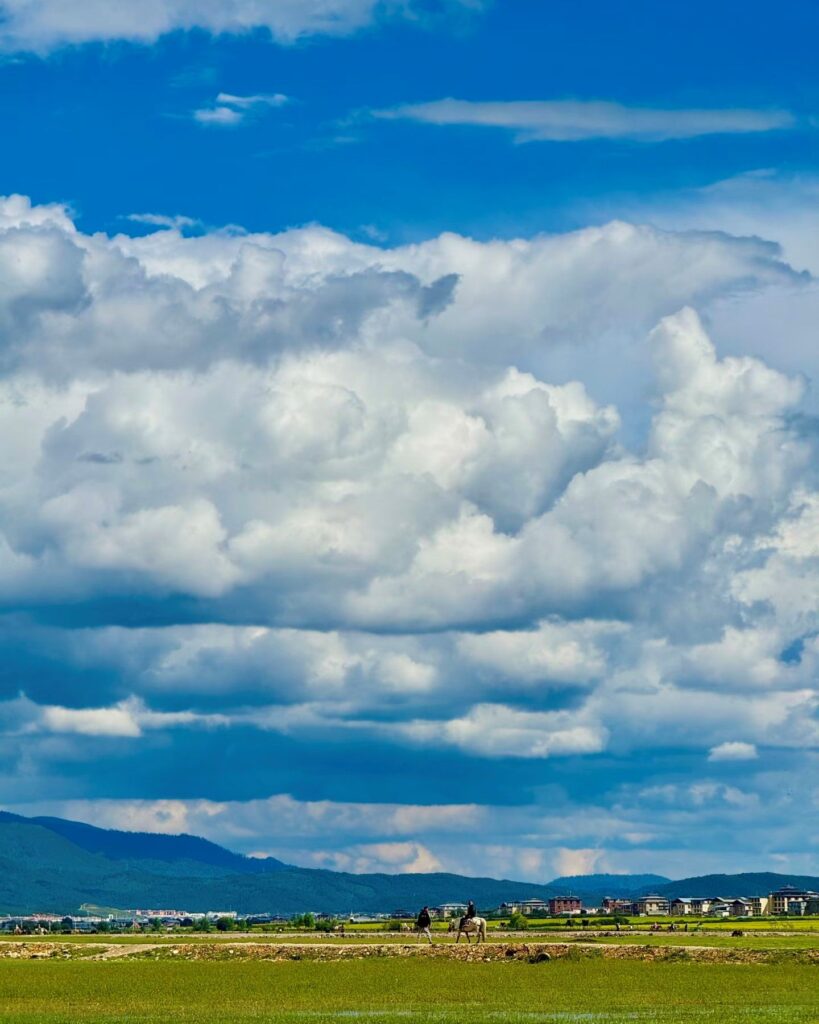
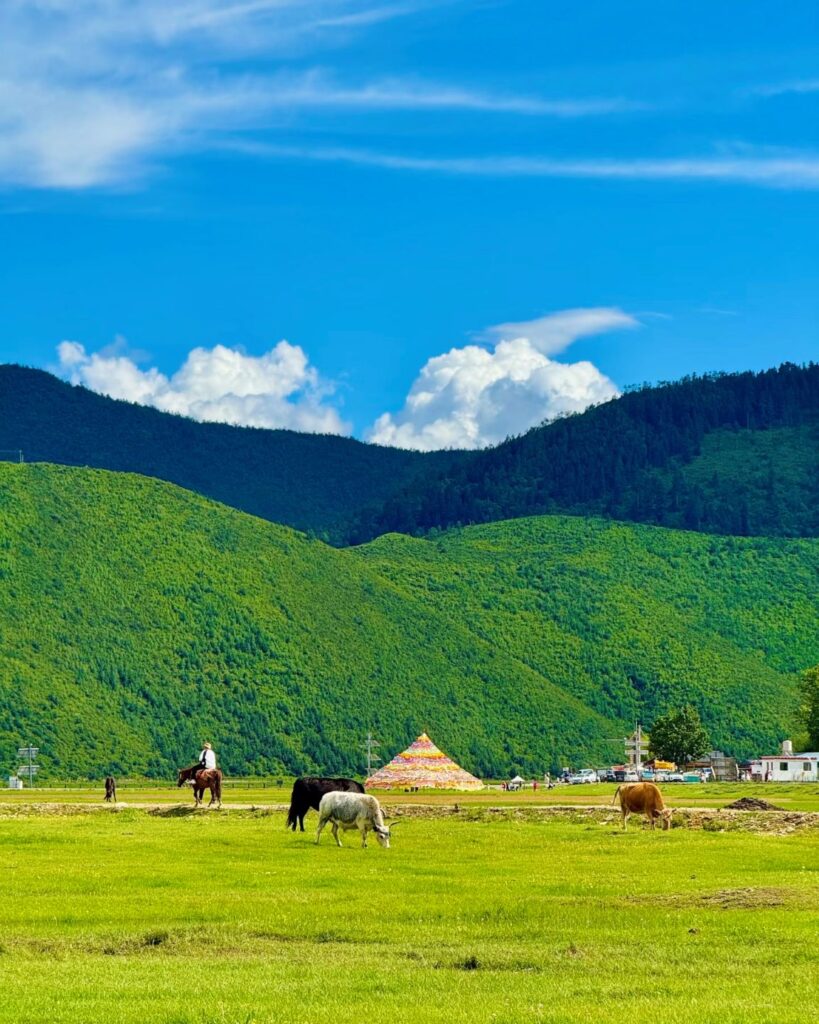
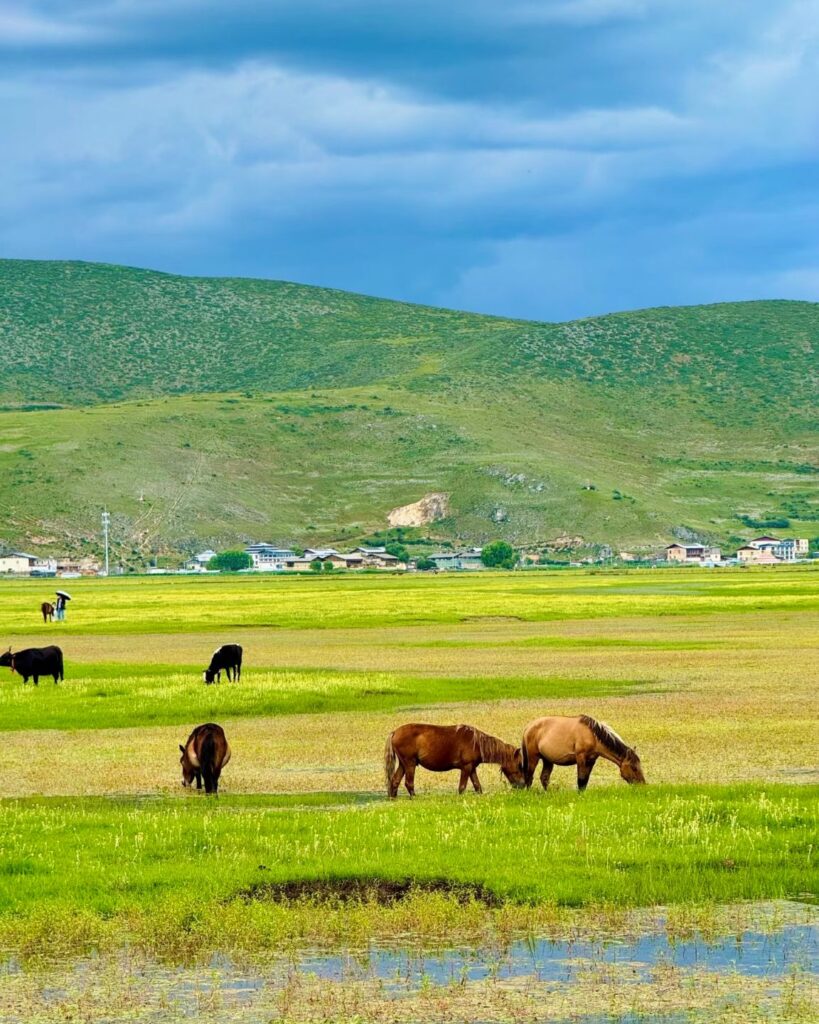
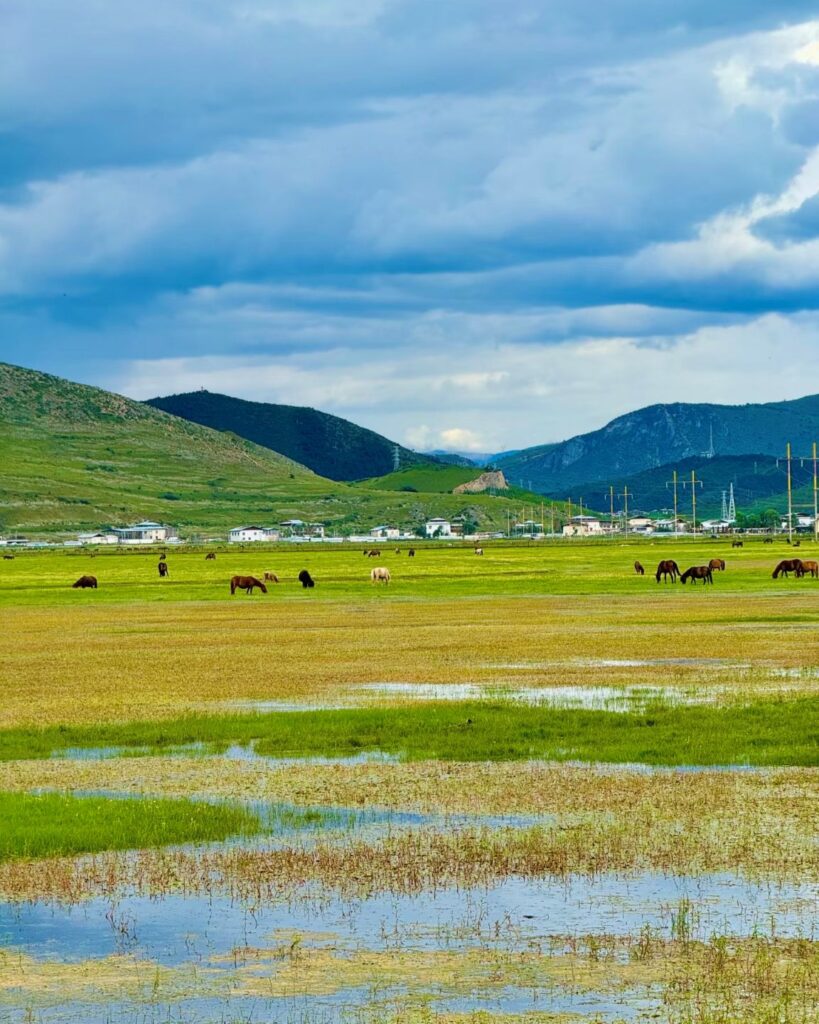
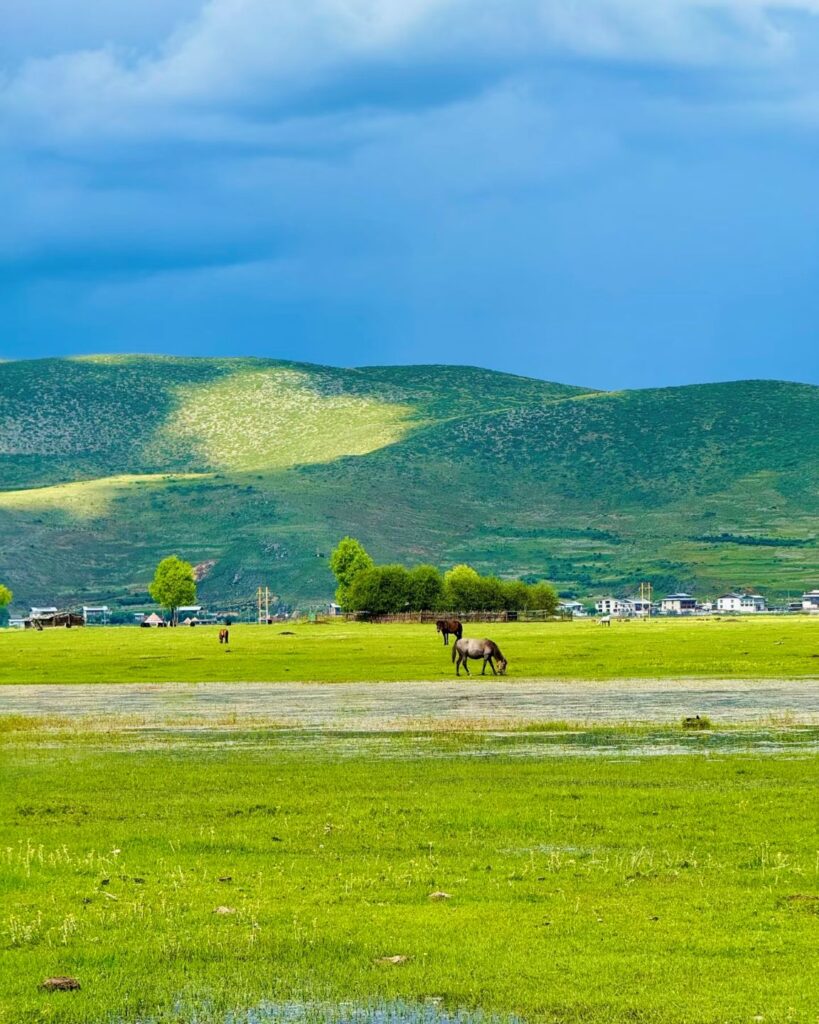
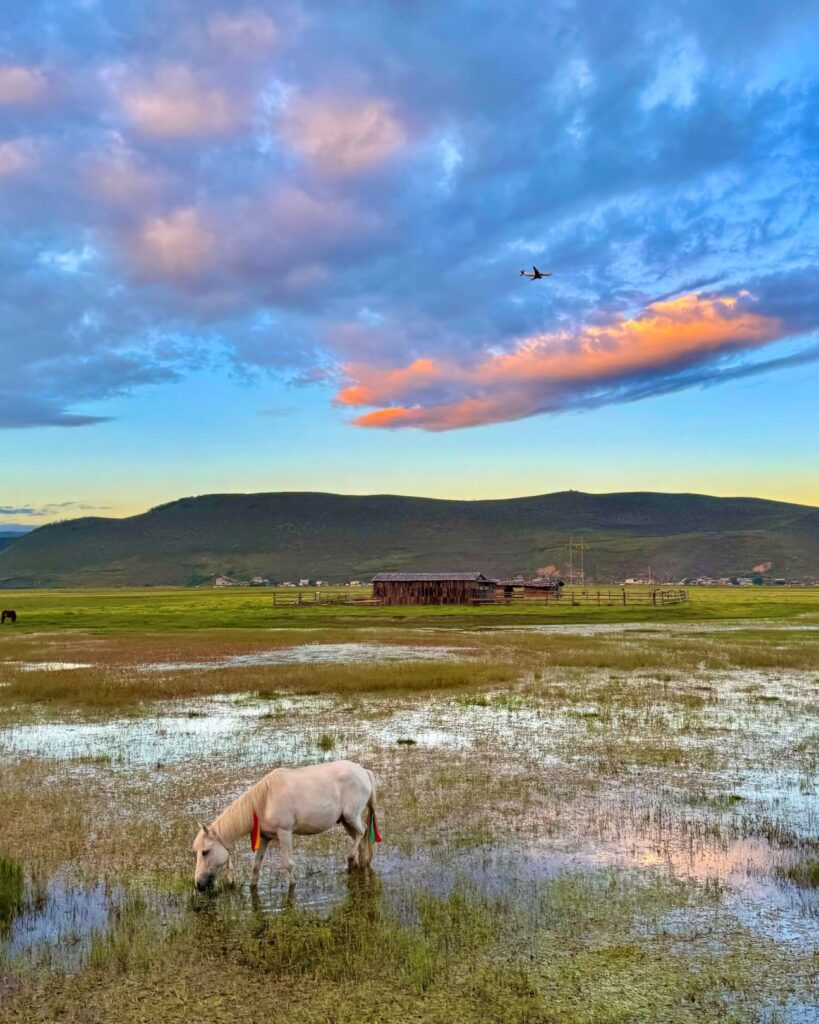
The Route to Shika Snow Mountain: This is where the magic truly begins. The stretch from the grassland to Shika Snow Mountain is indescribably beautiful. We were blessed with a light drizzle; the moon softly illuminated the divine, almost surreal sight. It felt like we had ridden straight into heaven.
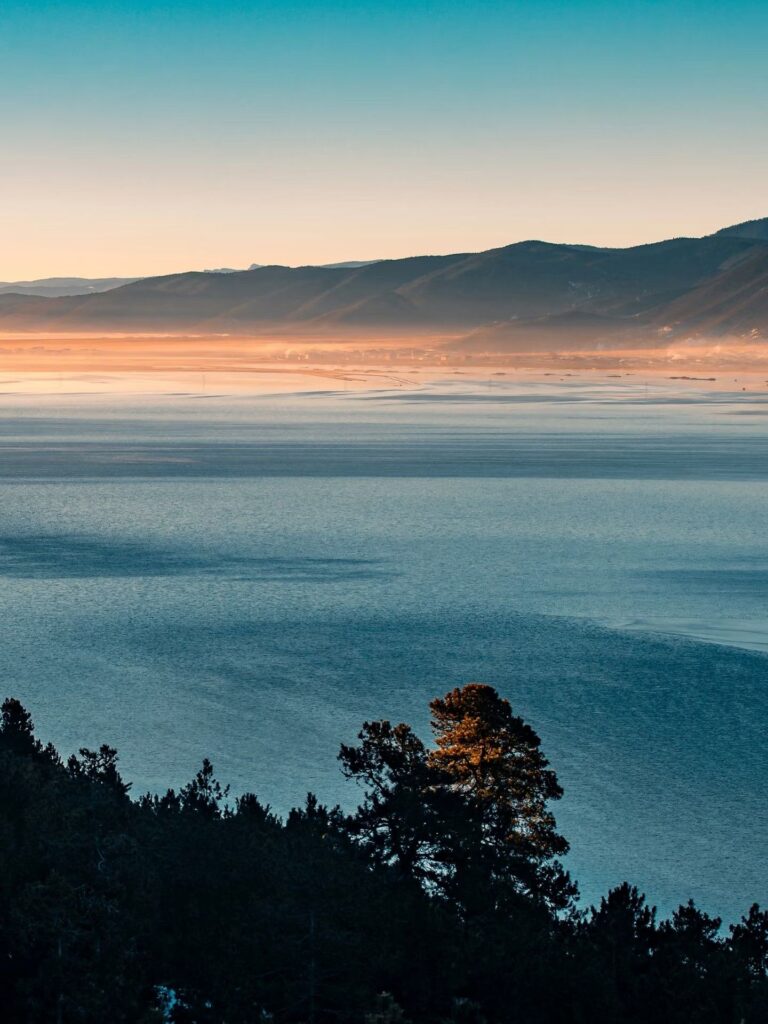
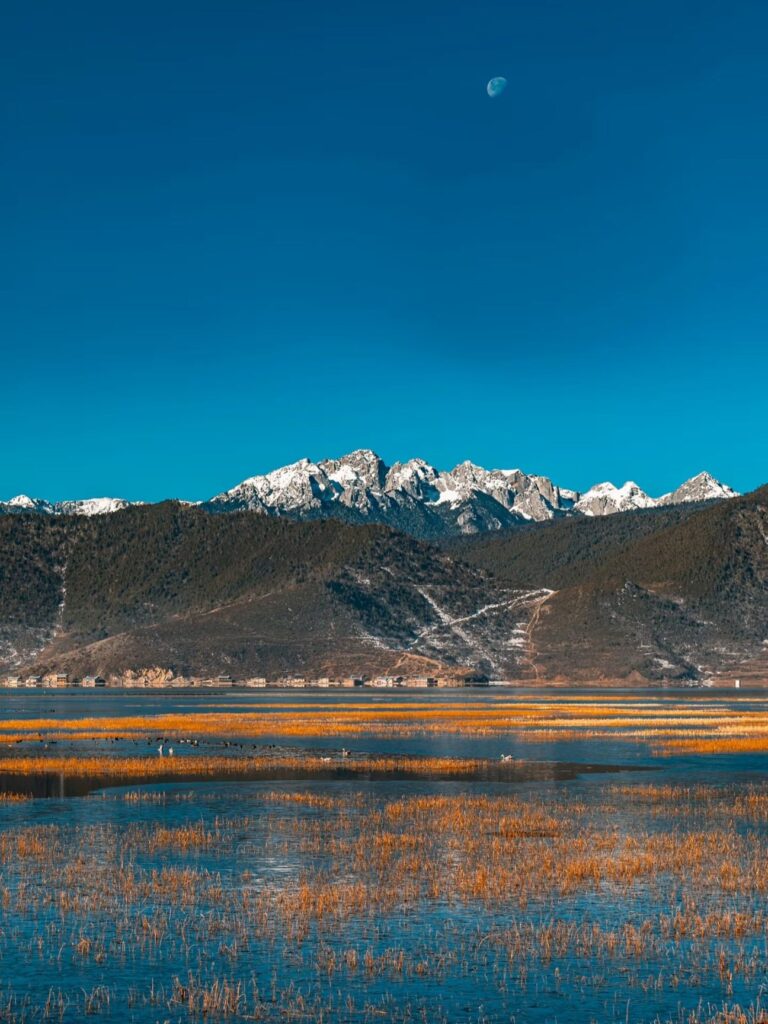
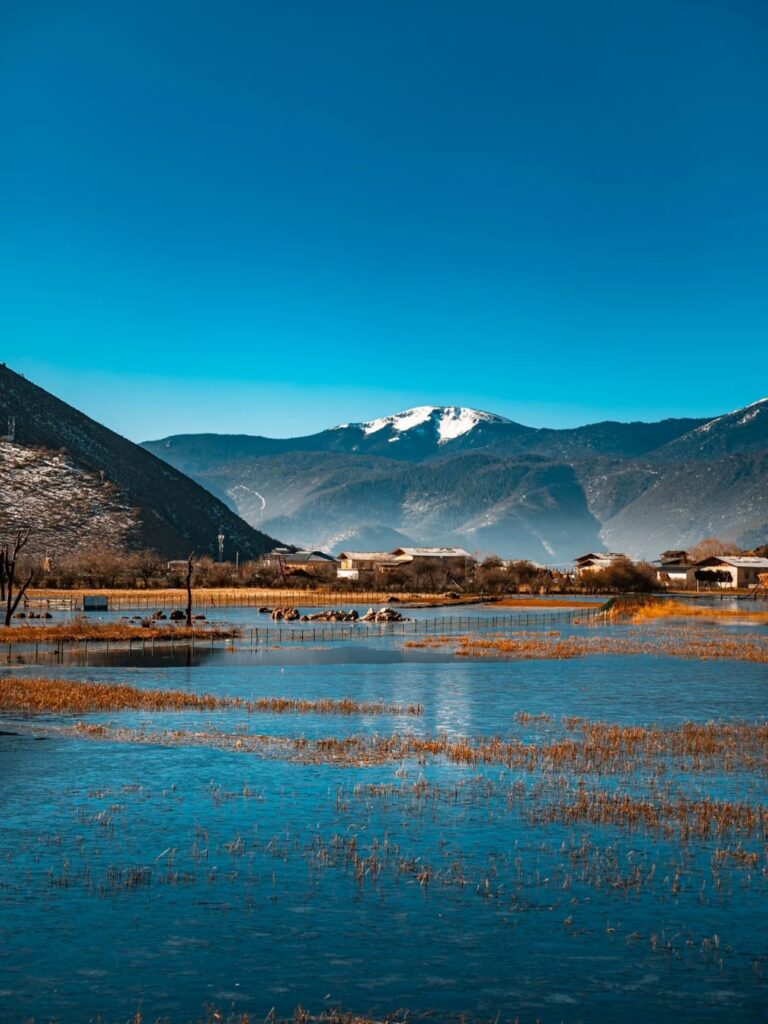
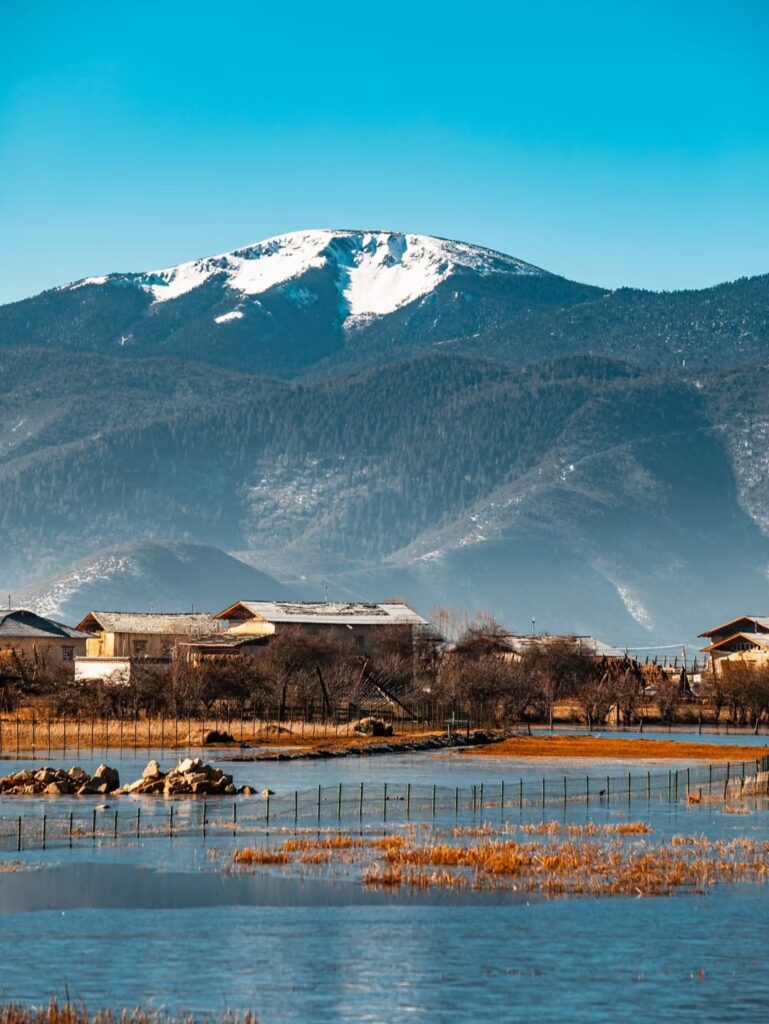
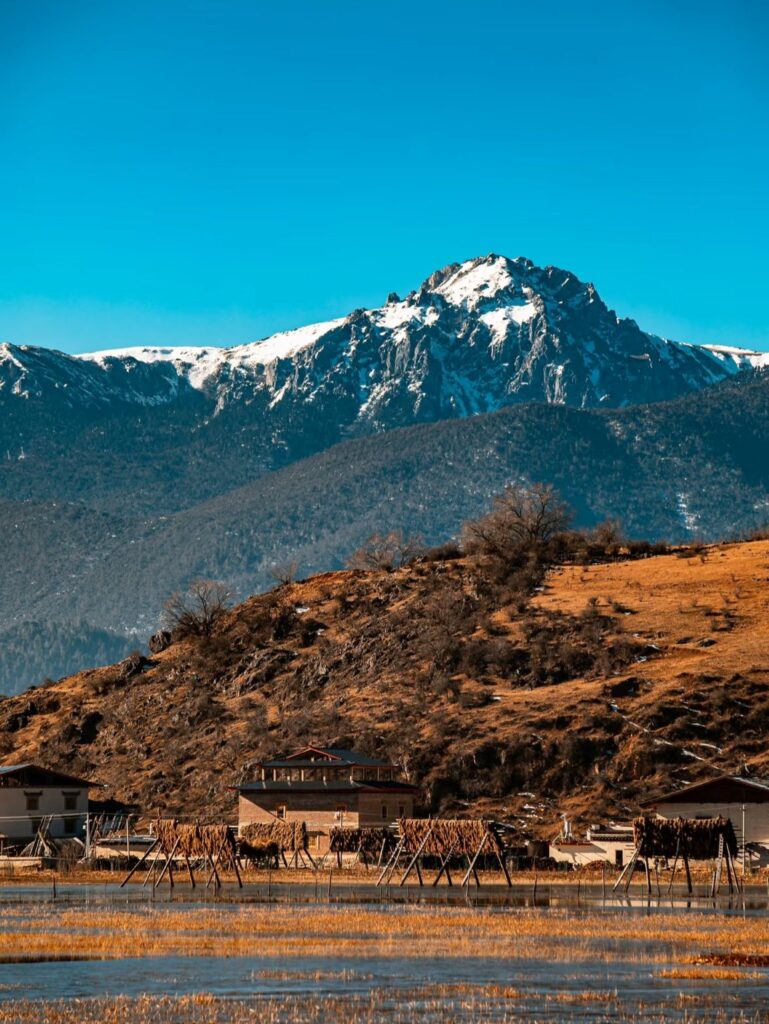
Shika Snow Mountain (石卡雪山) Viewpoint: On a clear day, you can capture the majestic, snow-capped mountains. Look back the way you came for an amazing, wide-angle view of the entire valley and its villages.
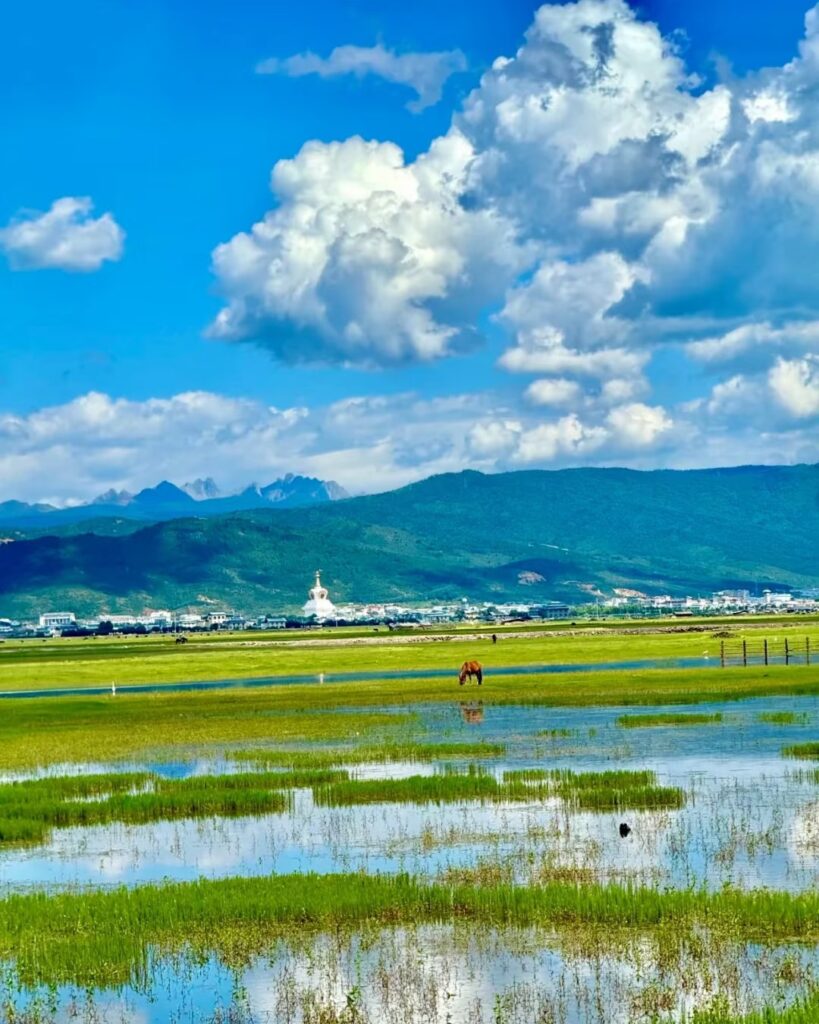
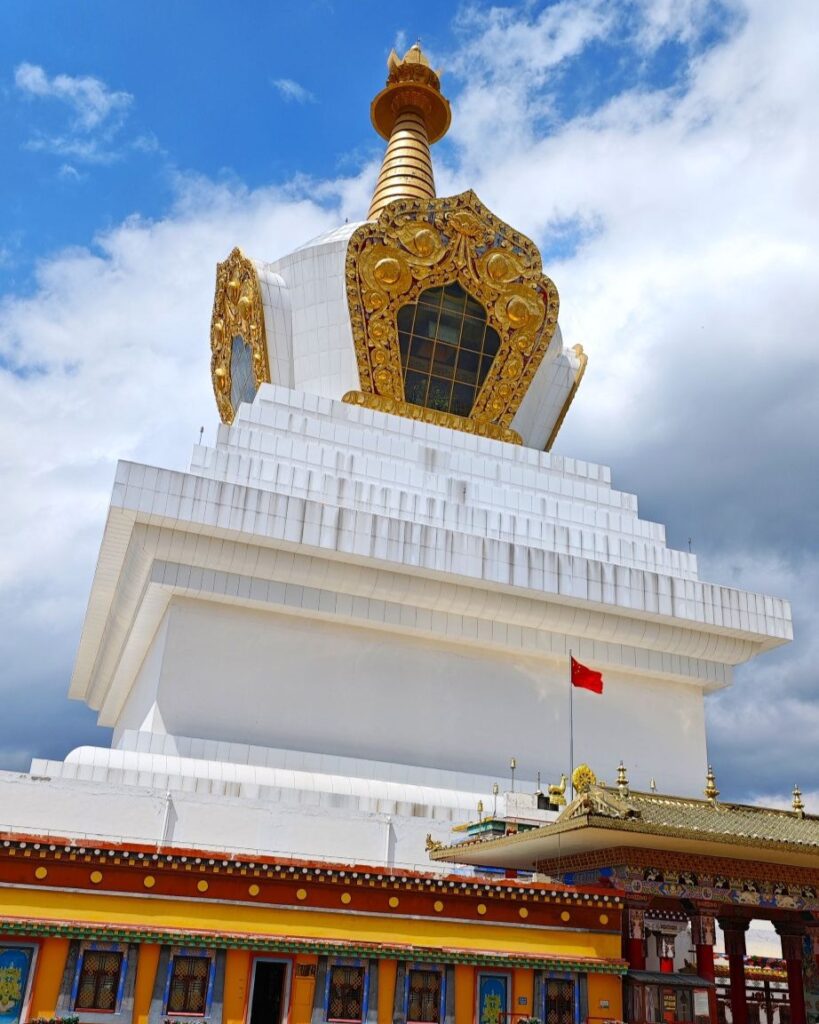
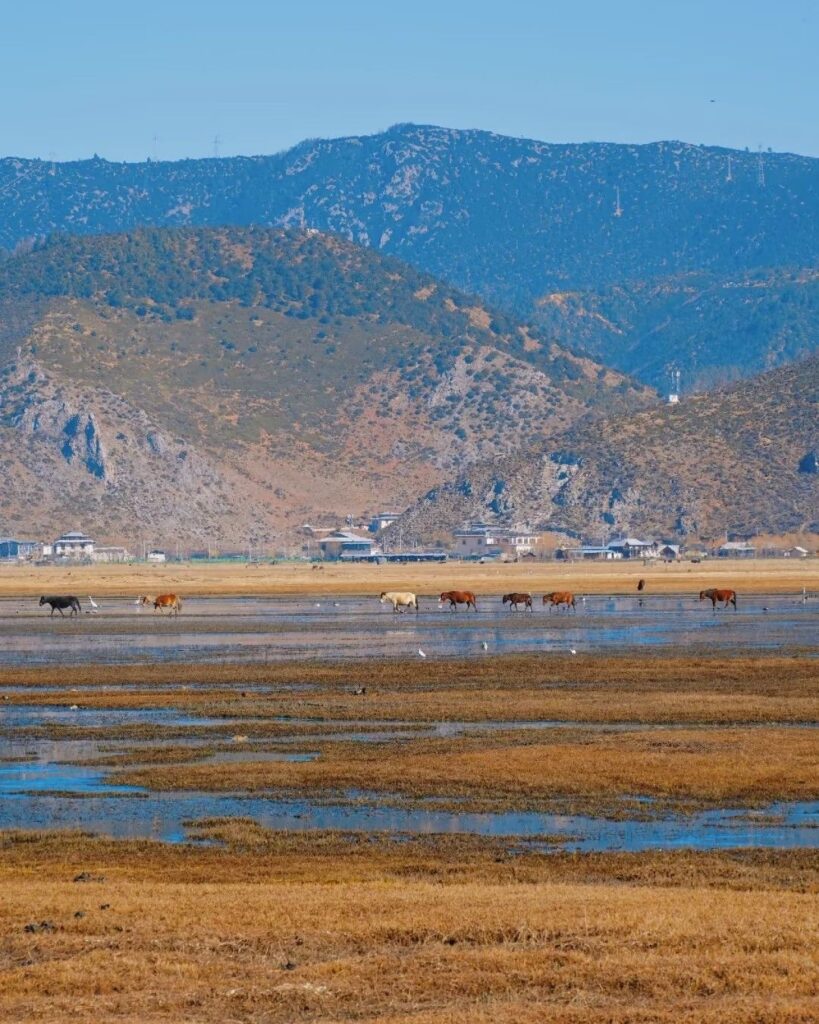
Hamagu Horse Ranch (哈木谷跑马场) & Flower Fields: Vast grasslands unfold here —the sun tears through the clouds in brilliant, golden shafts, illuminating herds of yaks and horses that roam freely with grace.
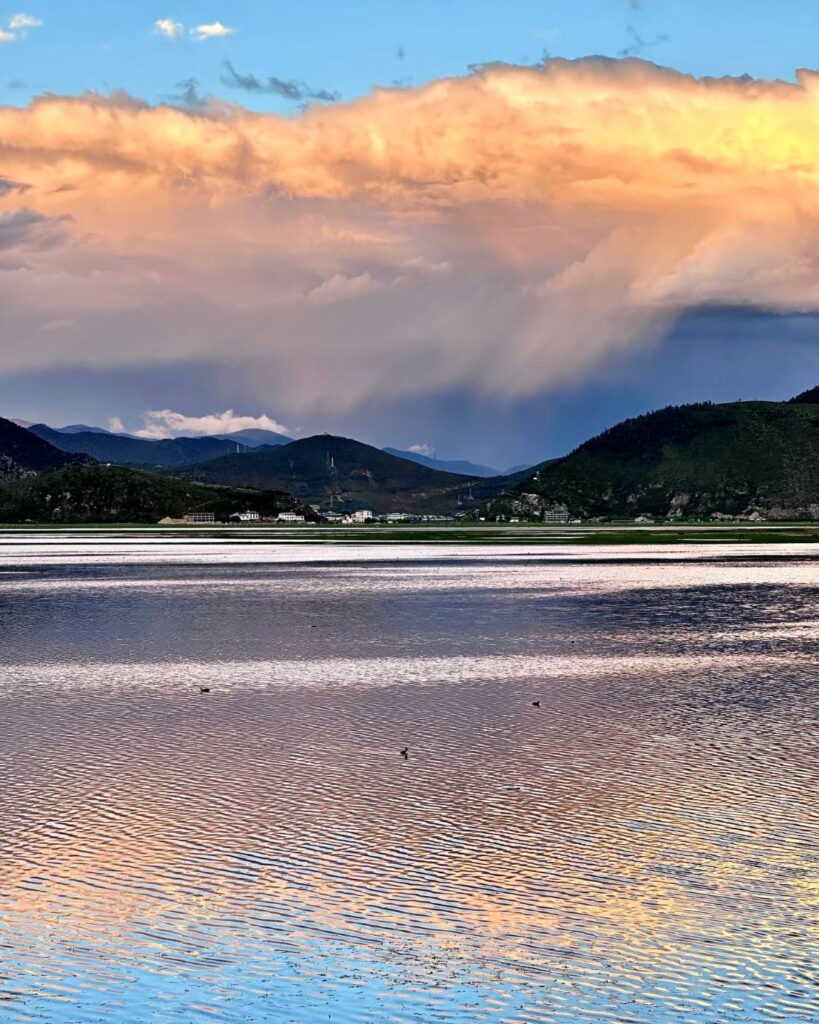
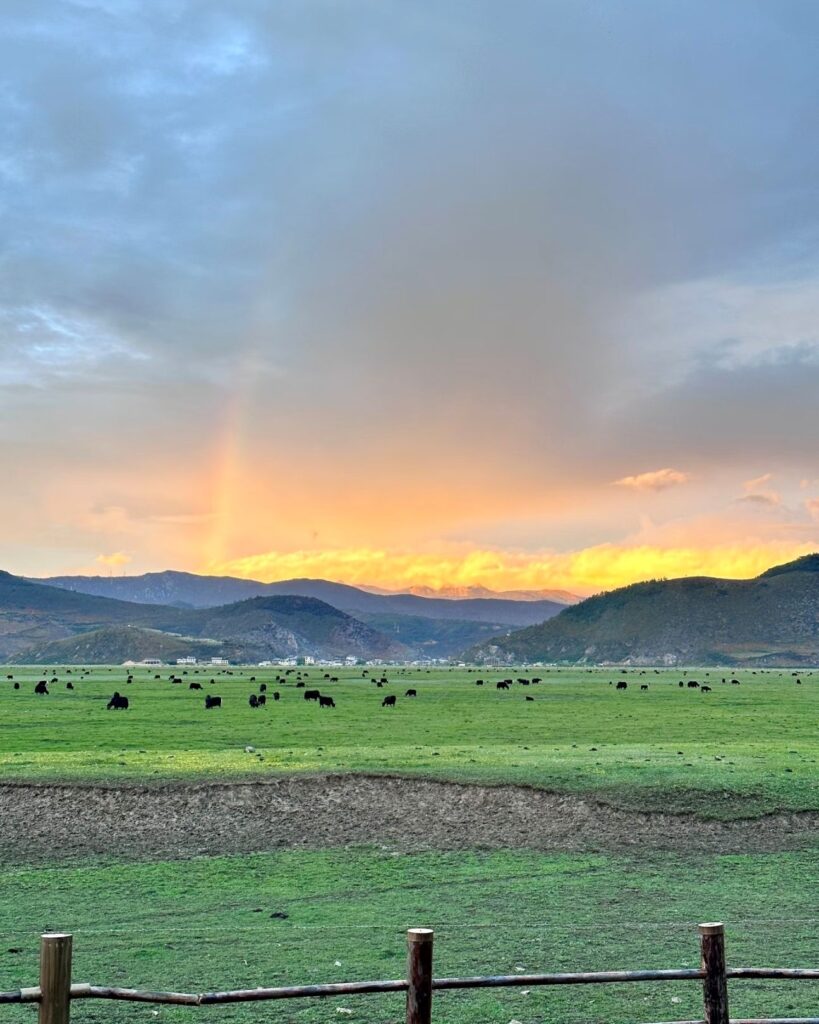
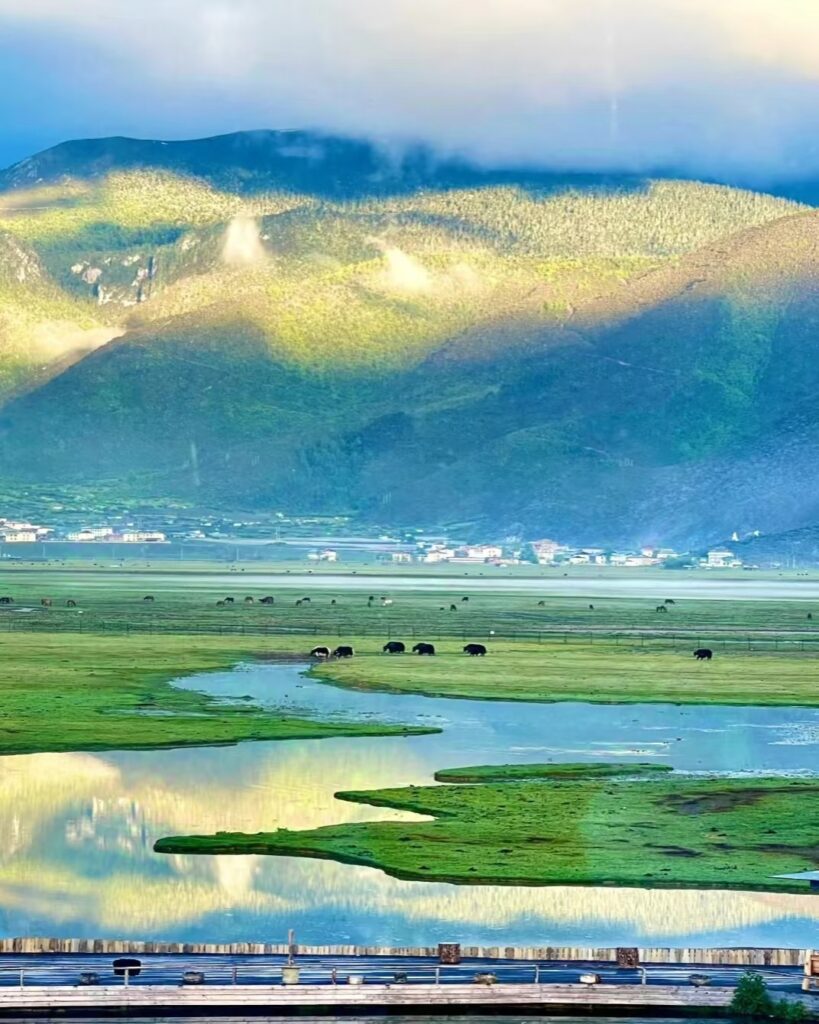
The stretch between the Zinnia Base and Hamagu has gardens requiring a 10 RMB entry.
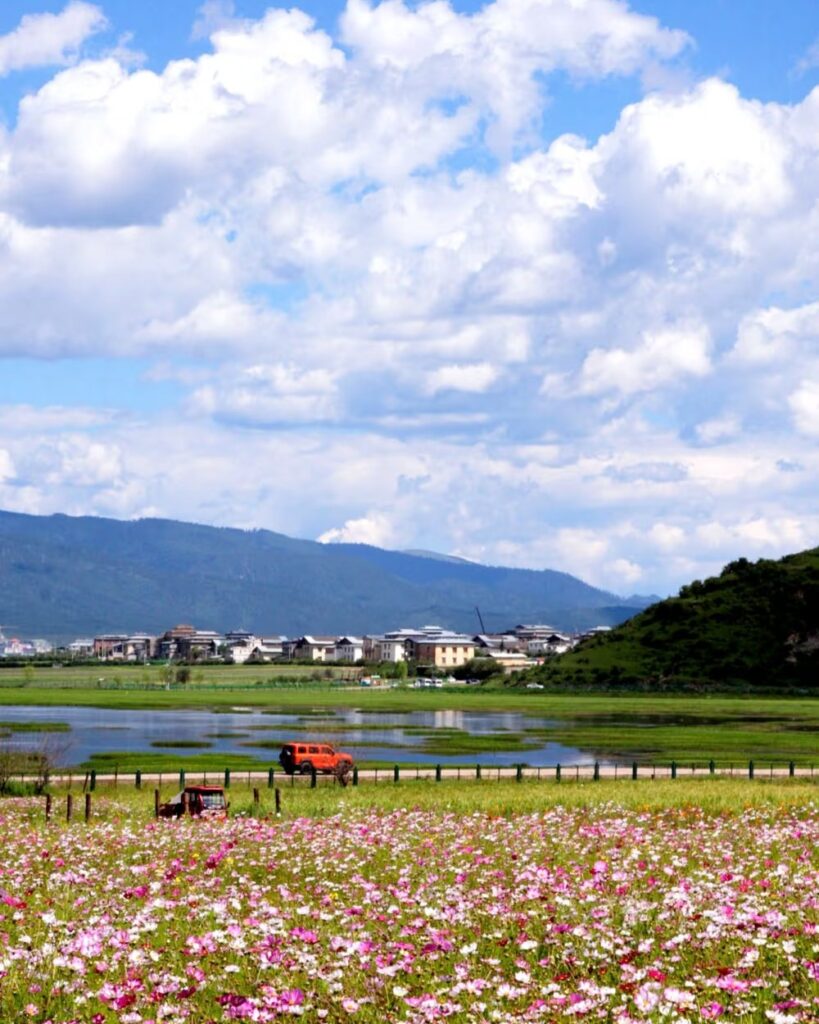
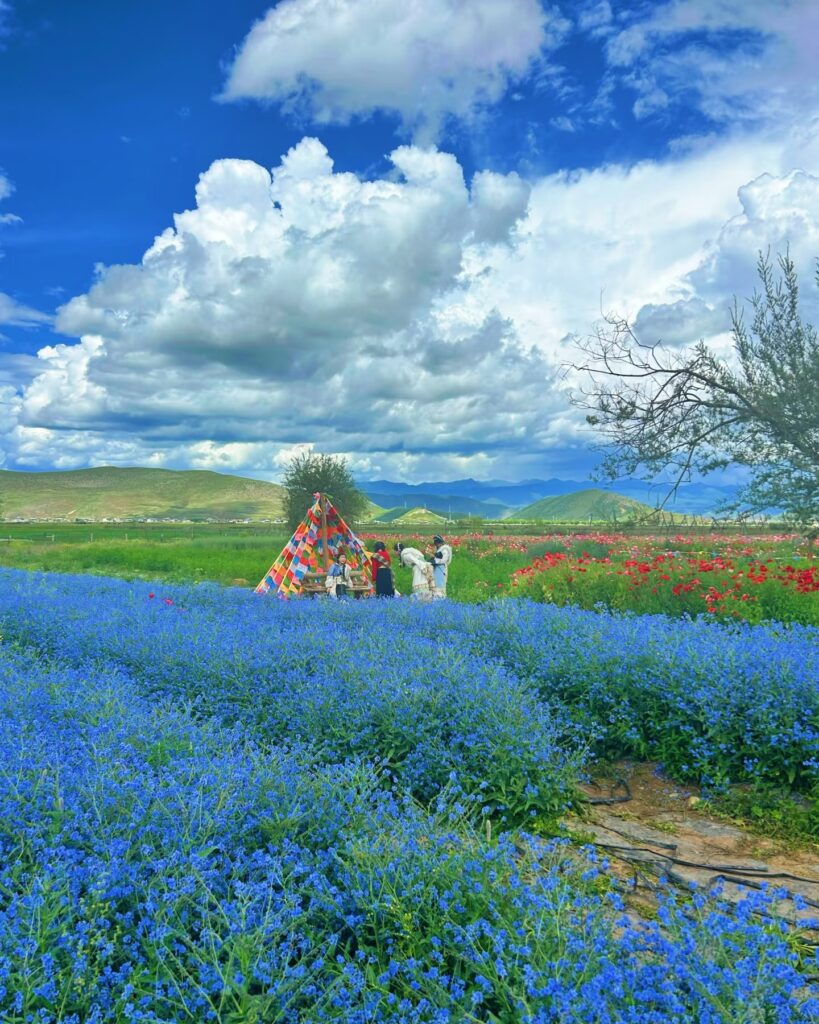
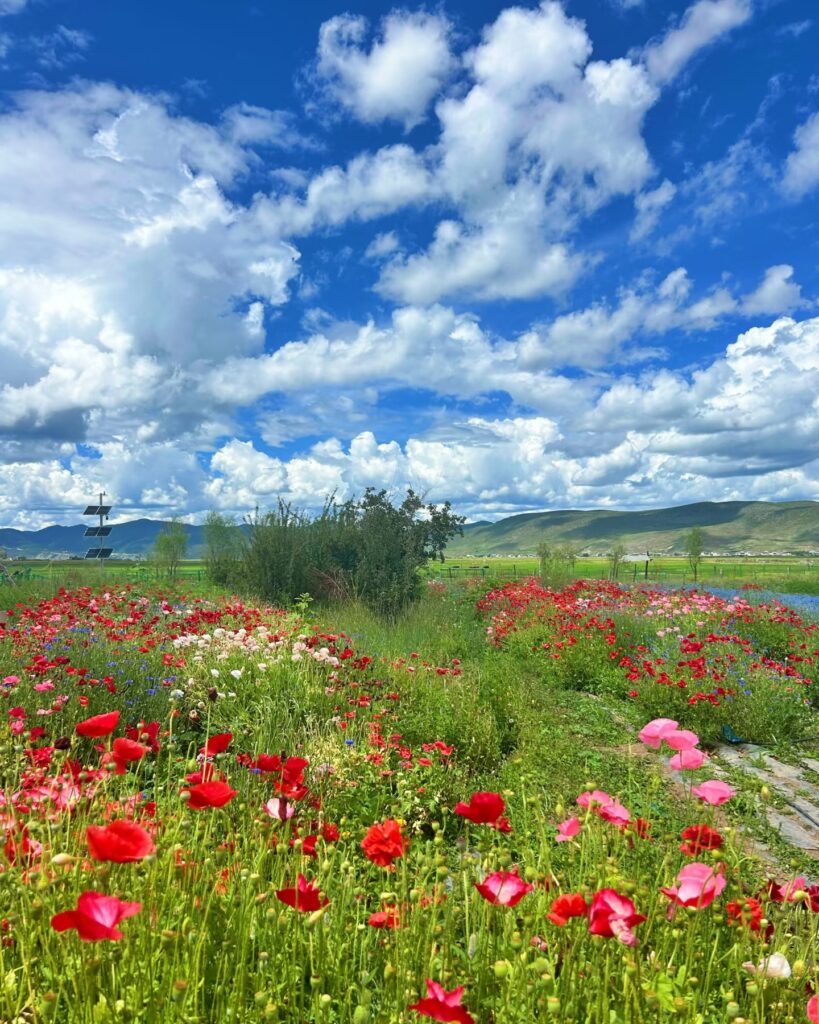
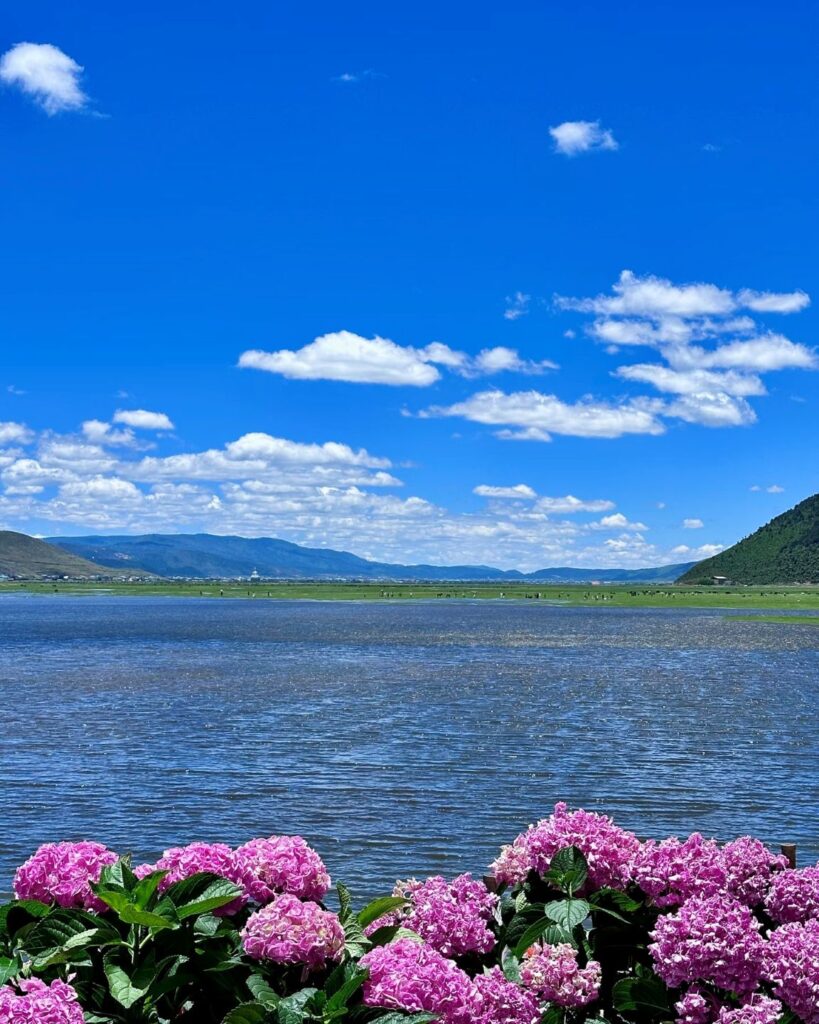
Bazhahei Butter Tea Shop (巴扎嘿酥油茶馆): A local spot to warm up with authentic butter tea. From here, you ride along the lake’s edge, where the water and sky merge into a single, seamless blue.
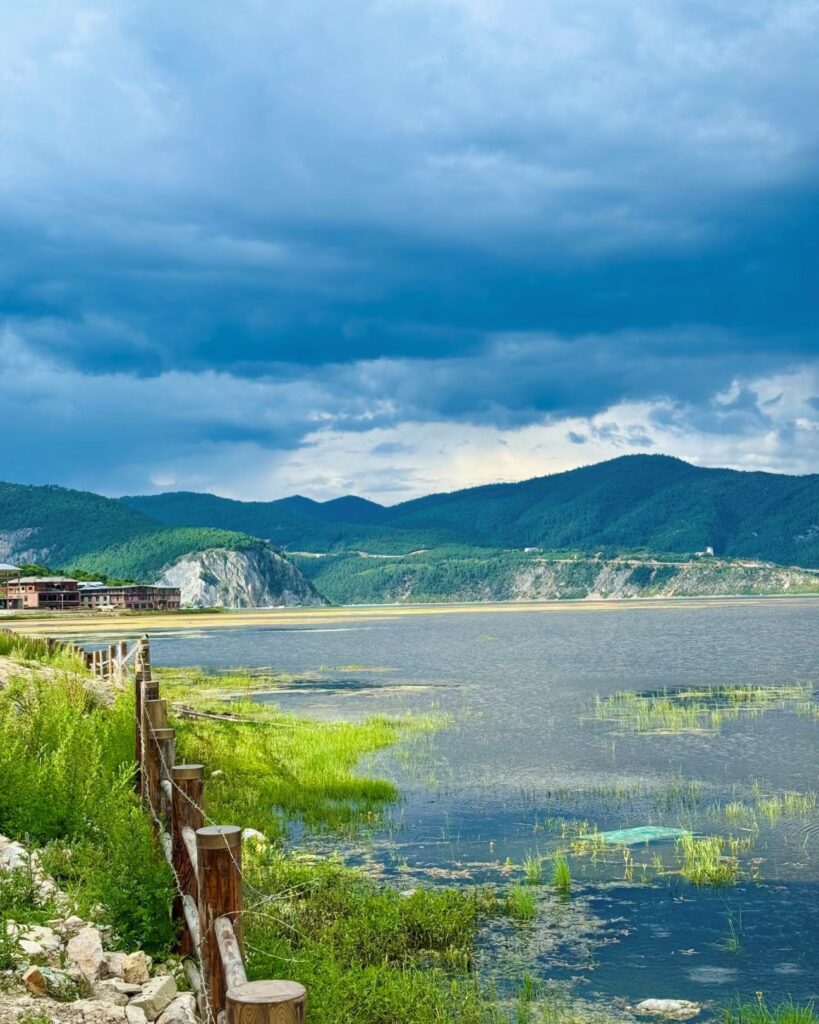
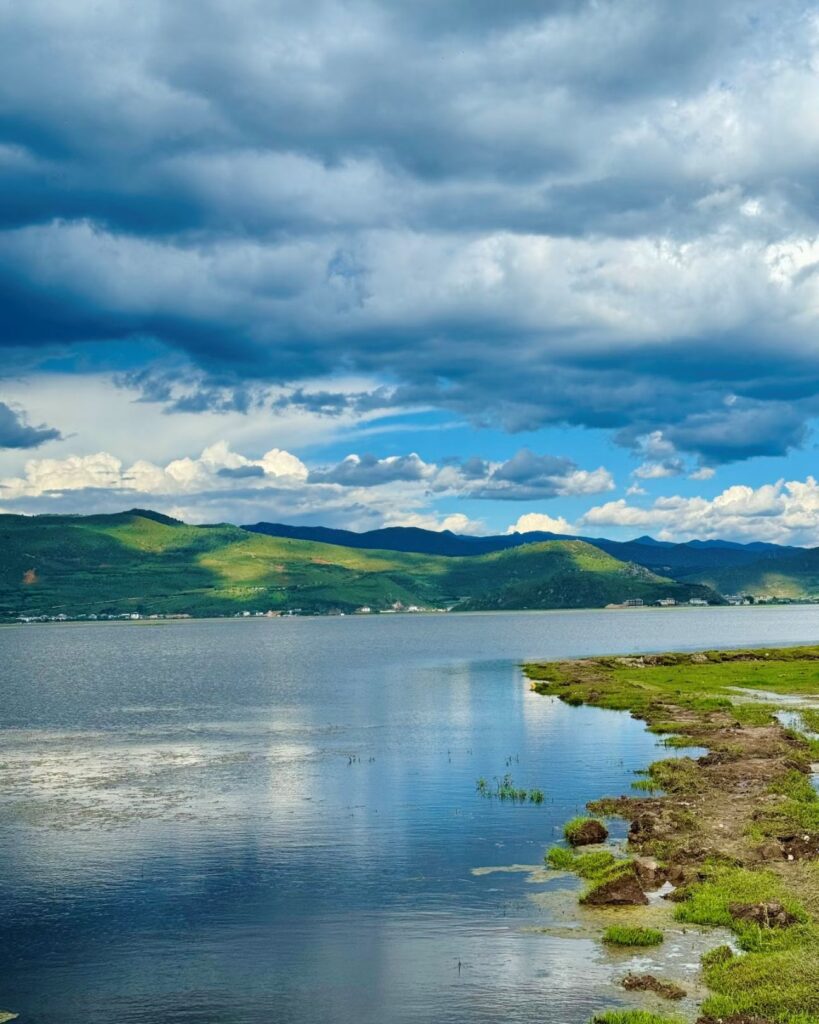
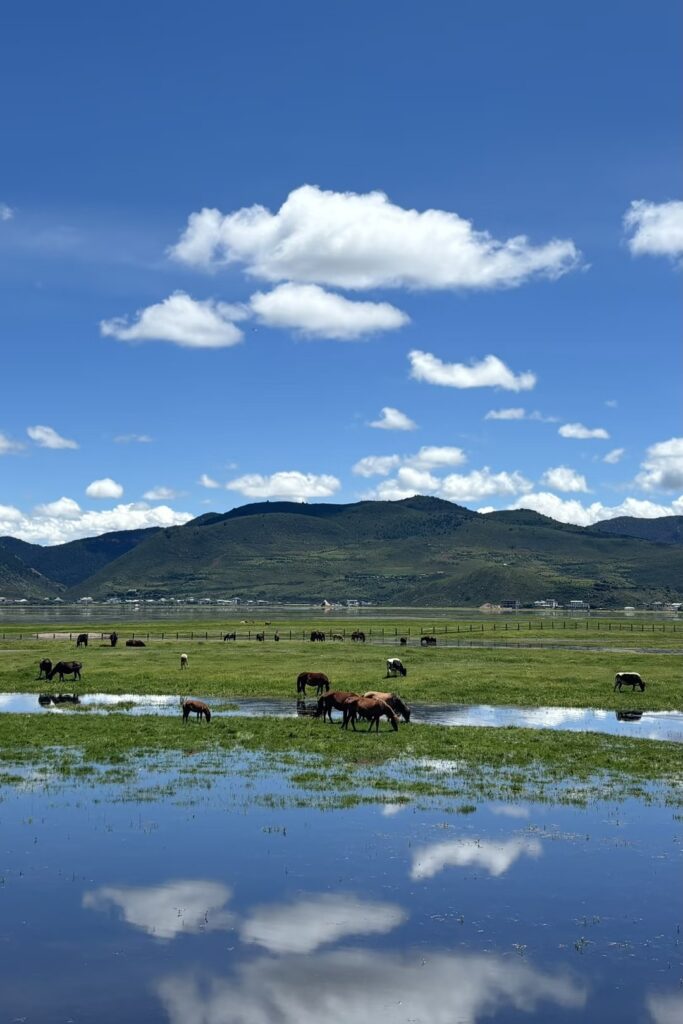
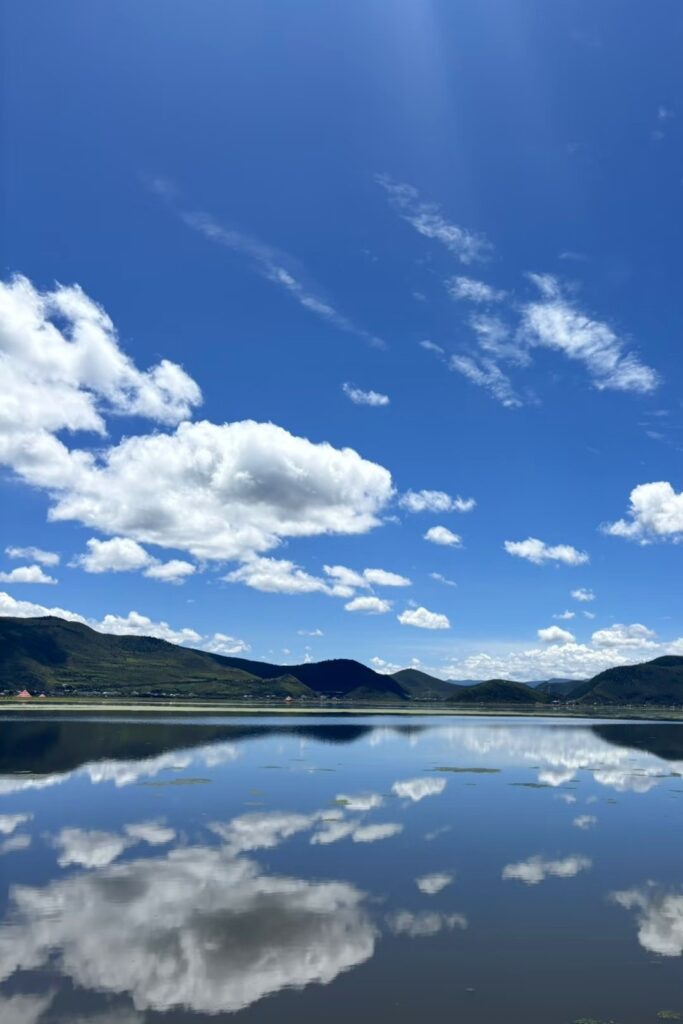
Halfway Boiling Café (半途而沸观景咖啡店): A pitstop for coffee lovers and a chance to rest. The section north of the café lets you get right up to the water’s edge.
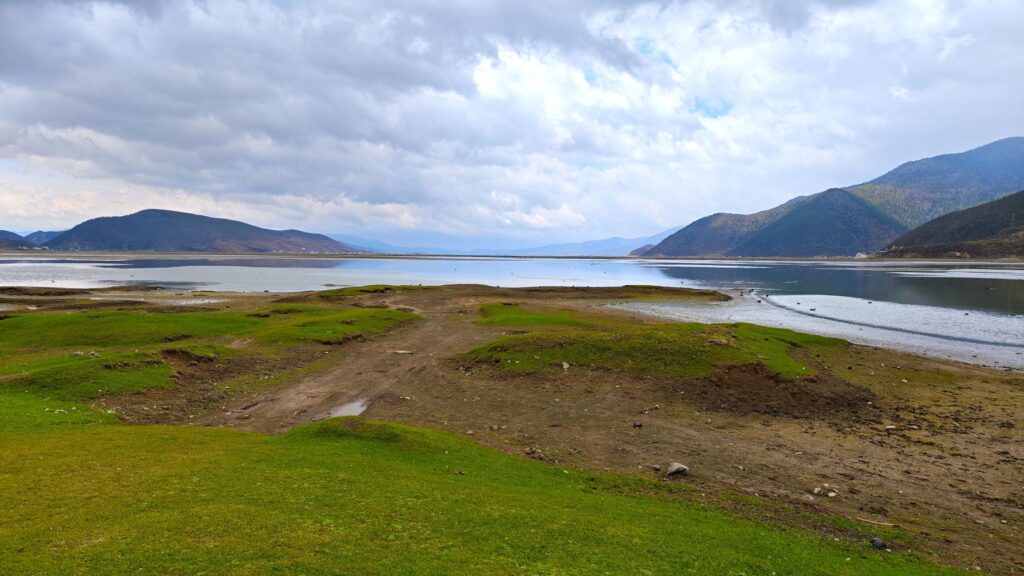
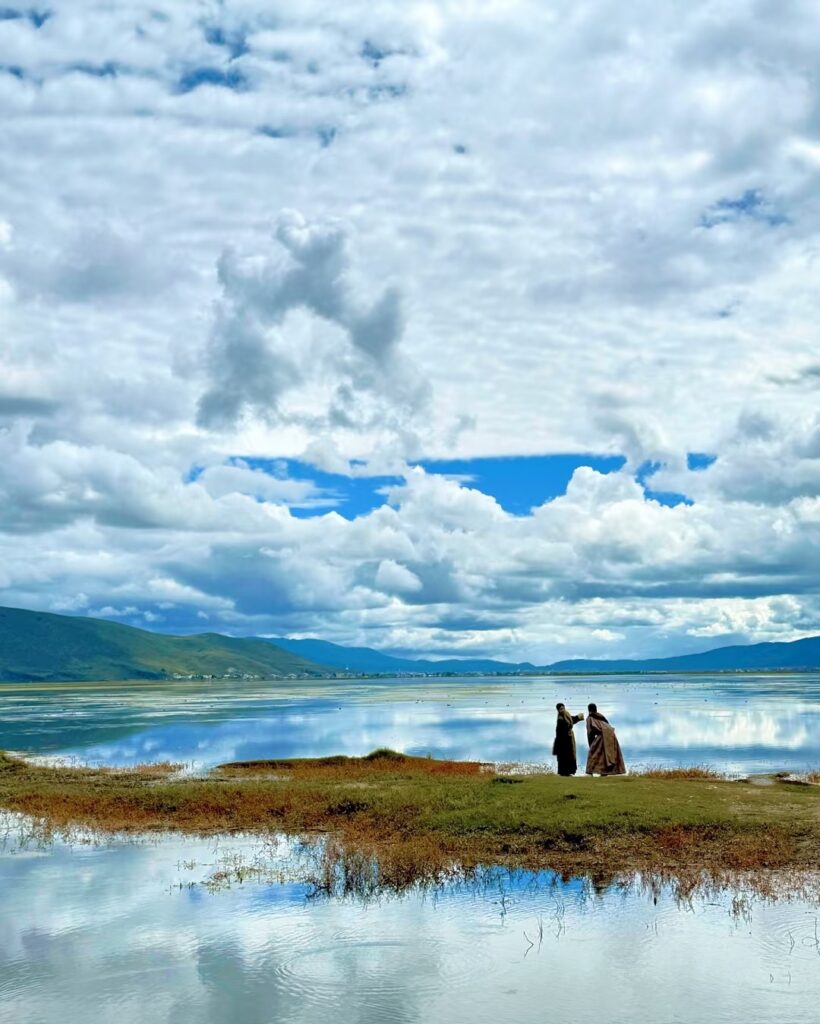
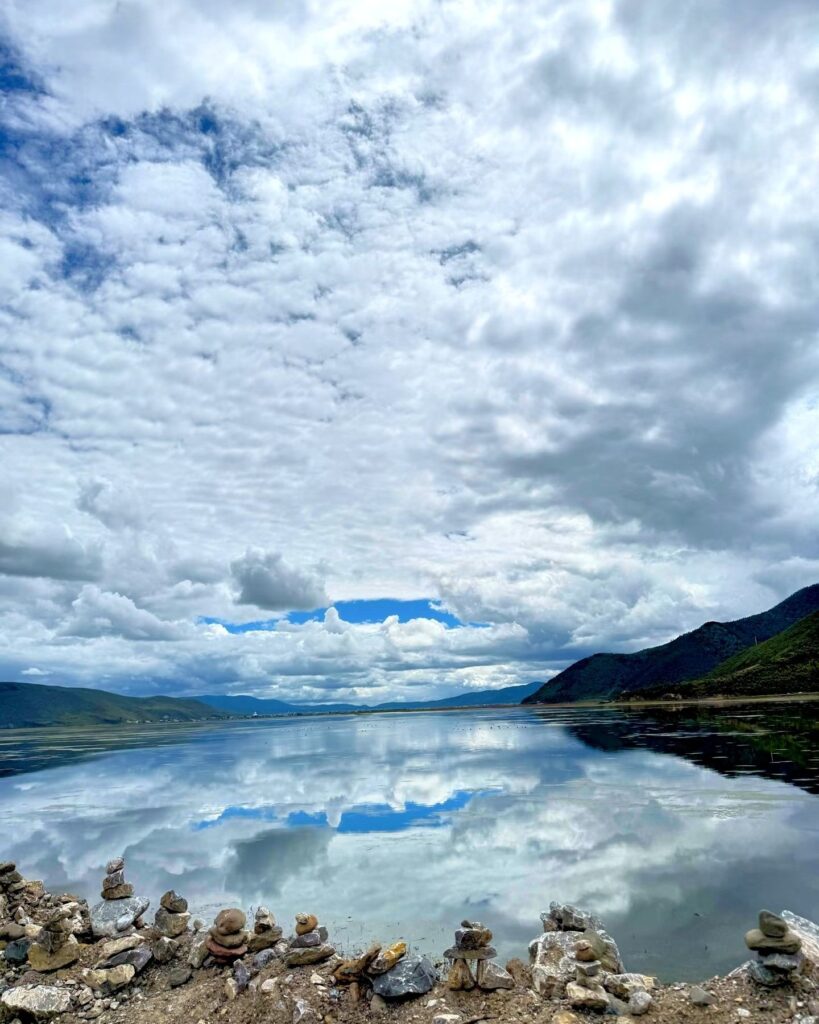
Alpine Botanic Garden (高山植物园) & The “Sky Gate” (天空之门): This is the premier viewpoint. Opposite the Garden, the “Sky Gate” offers a panoramic vista of the entire Napahai.
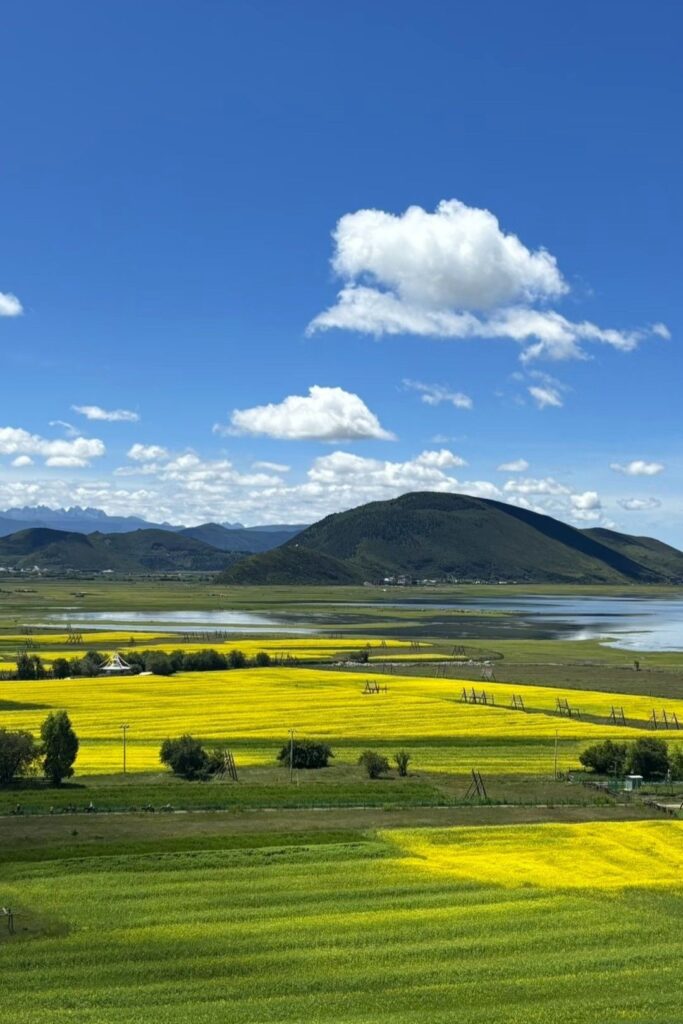
You can see it all: vast rapeseed flower fields, farmlands, the lake, distant mountains, prayer flags, and grasslands all framed together under rolling white clouds.
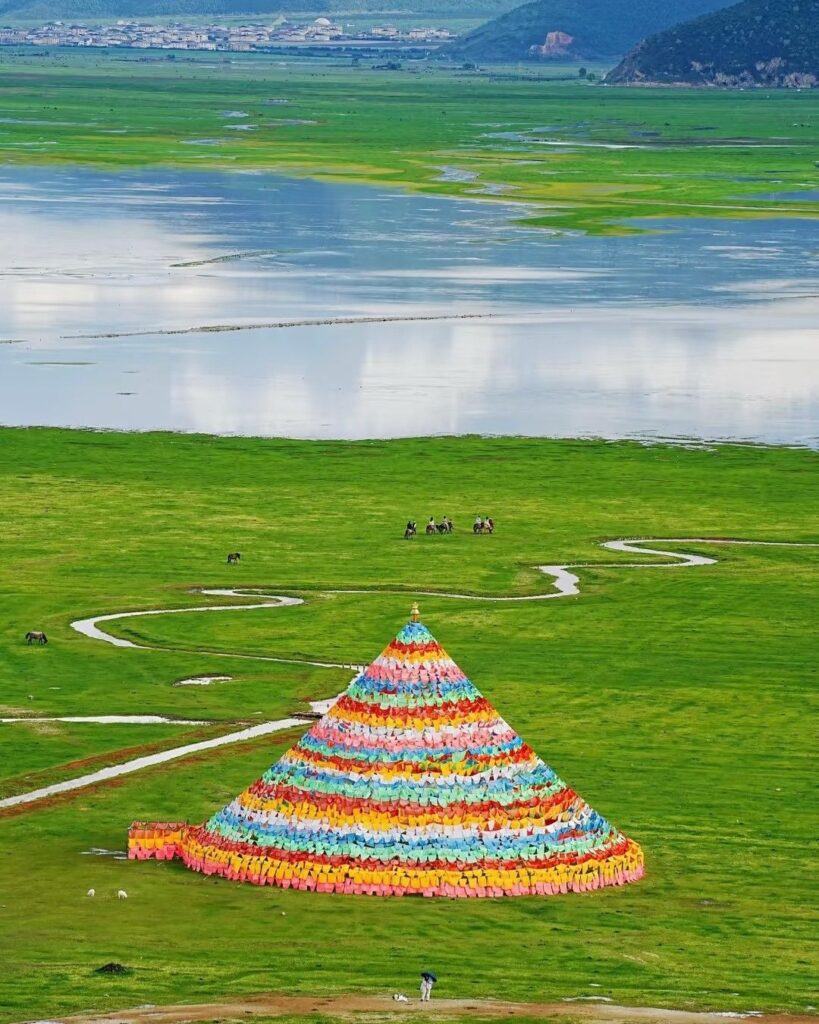
Those prayer flags are printed with prayers and mantras. Tibetans believe the wind carries the blessings etched on these flags across the land, spreading goodwill and compassion. Here, you can also have the famous view of submerged prayer flags in the water.
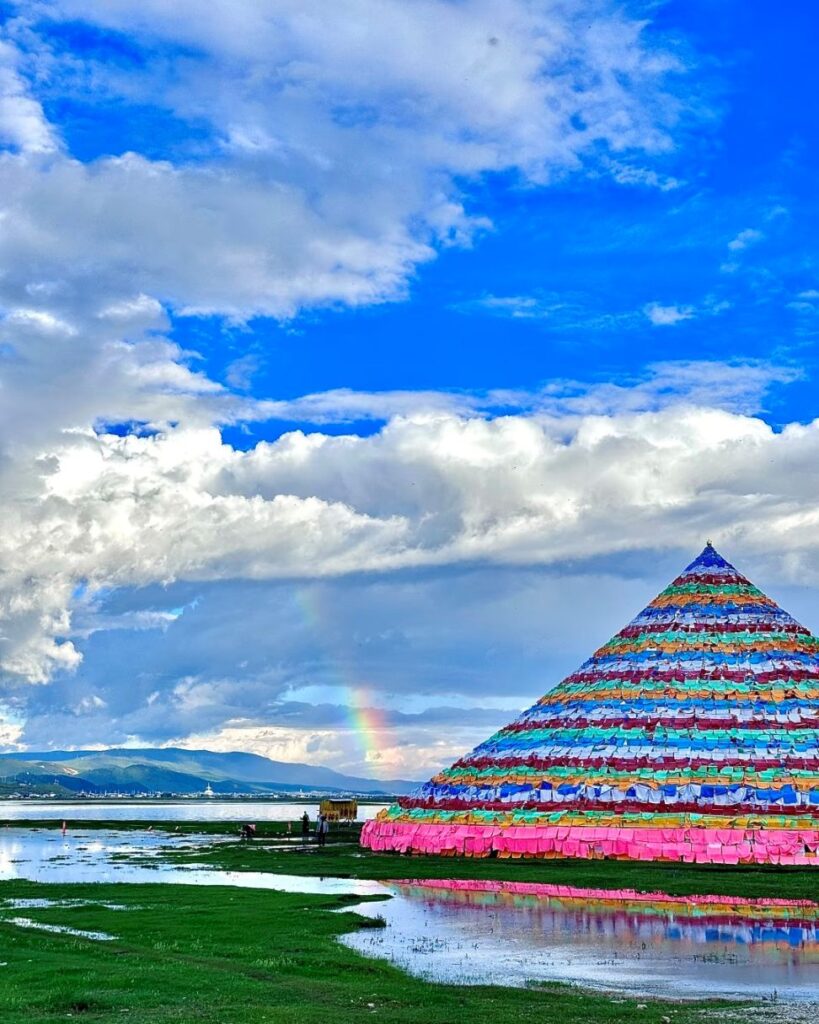
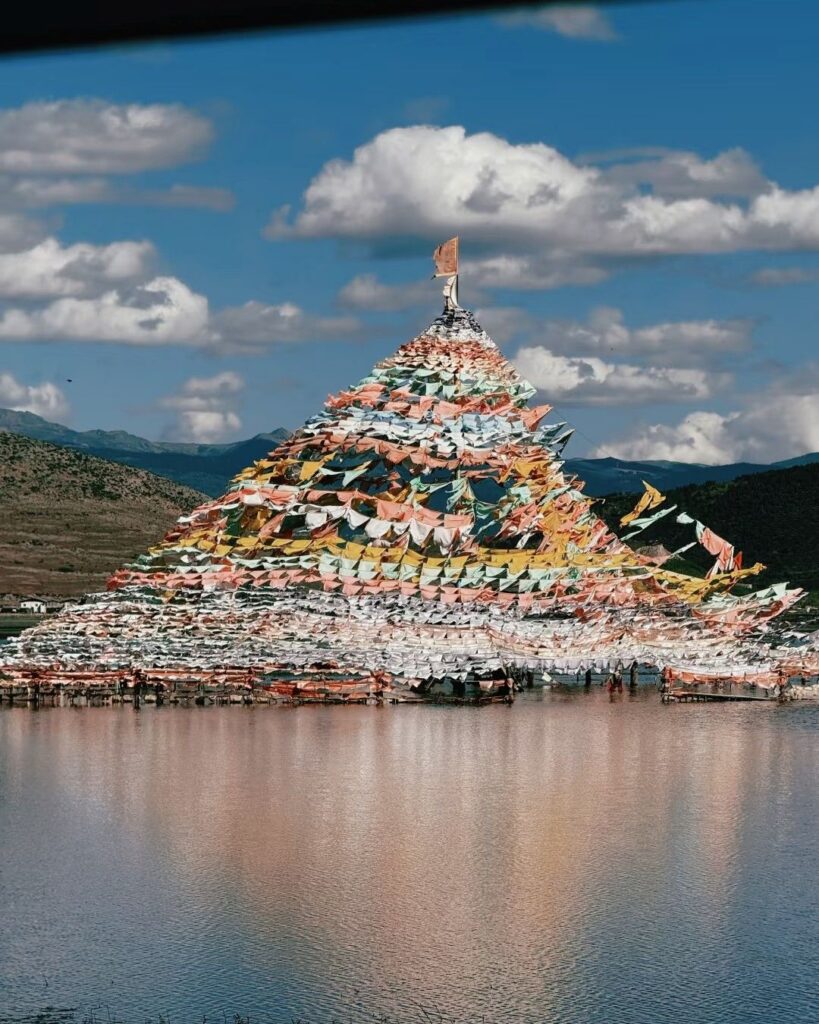
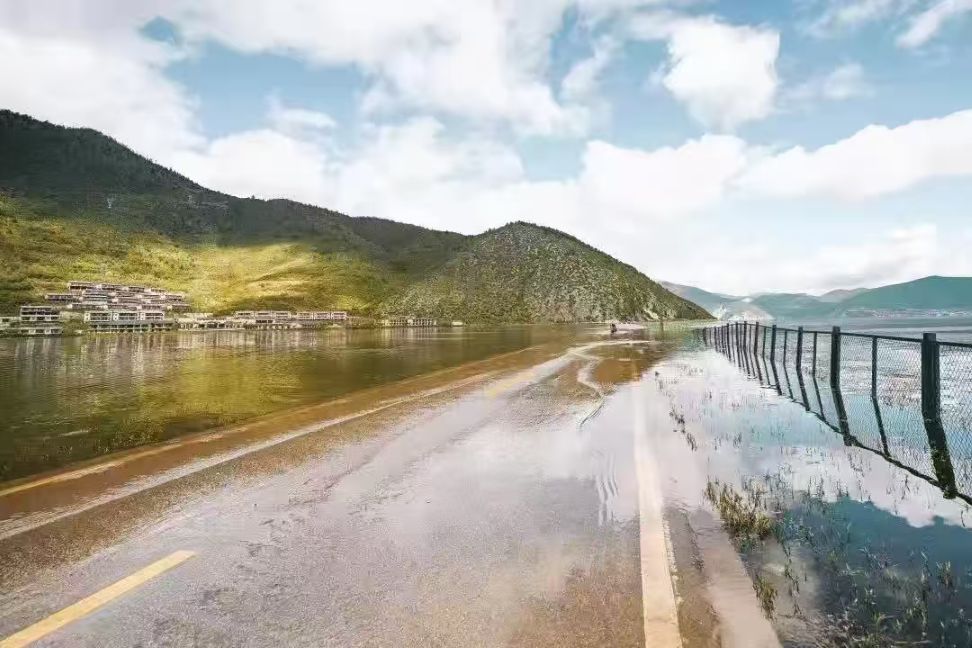
The Water Road: A route where the road appears to float on the water!
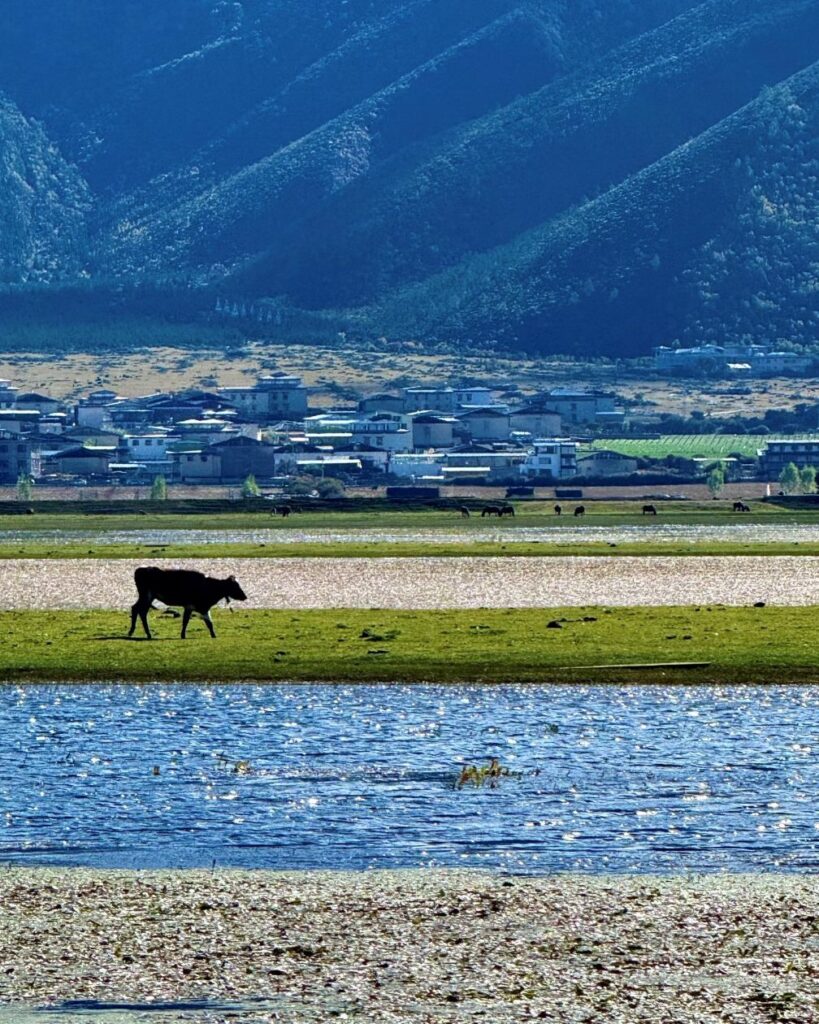
Dala Scenic Spot (达拉景点): Here, the landscape opens up to reveal serene, wide-angle views of meadows, grazing animals, and the glimmering lake waters, with traditional Tibetan houses dotting the foothills.
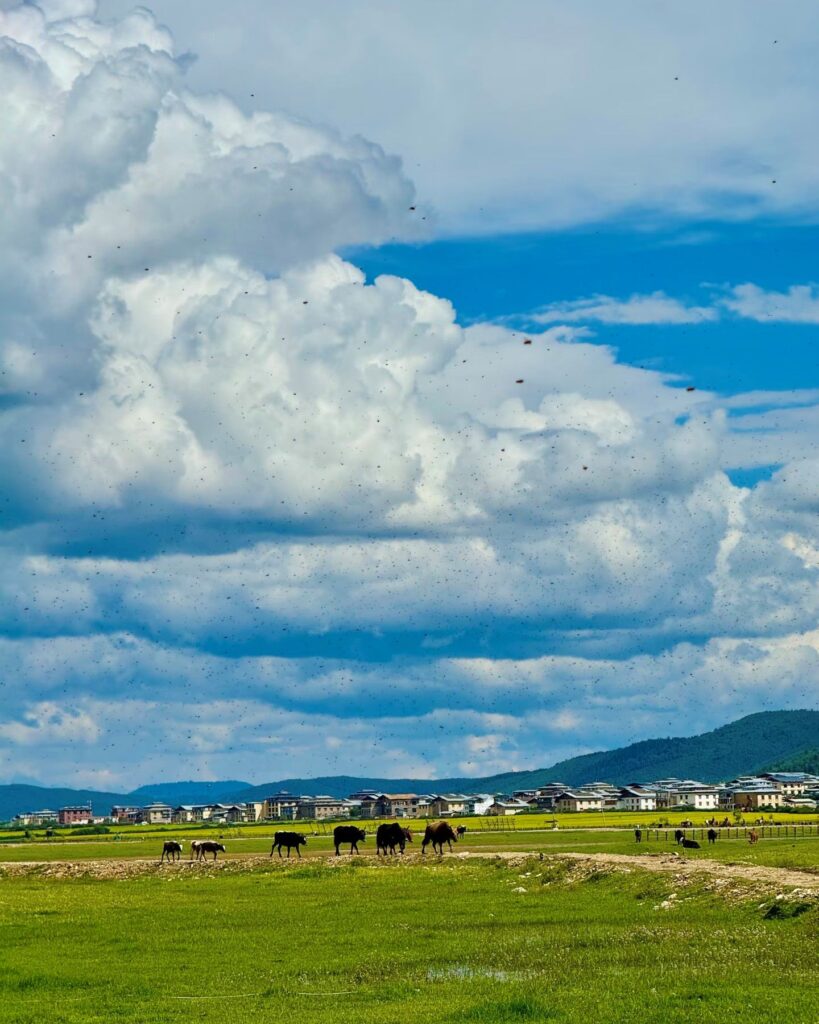
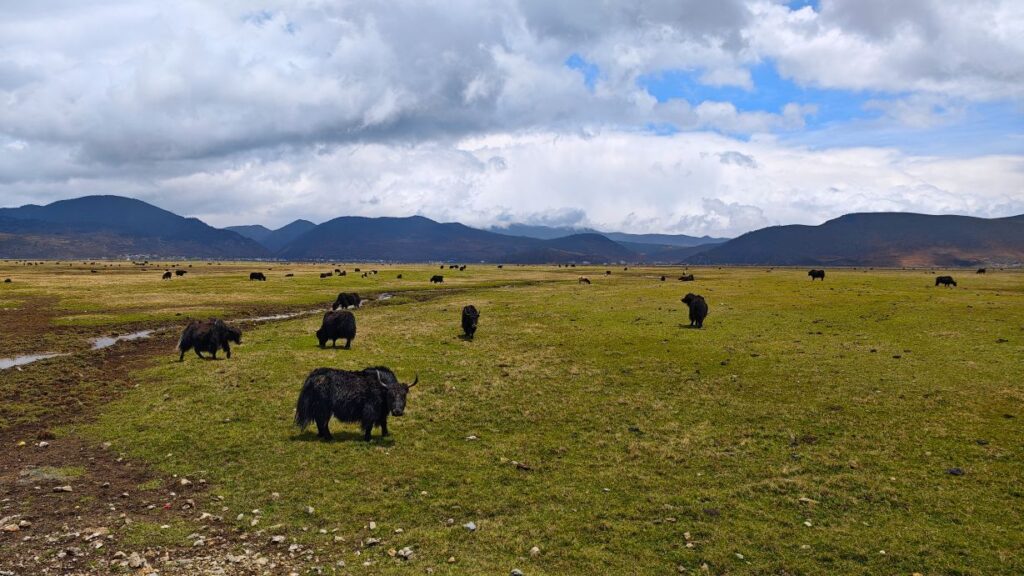
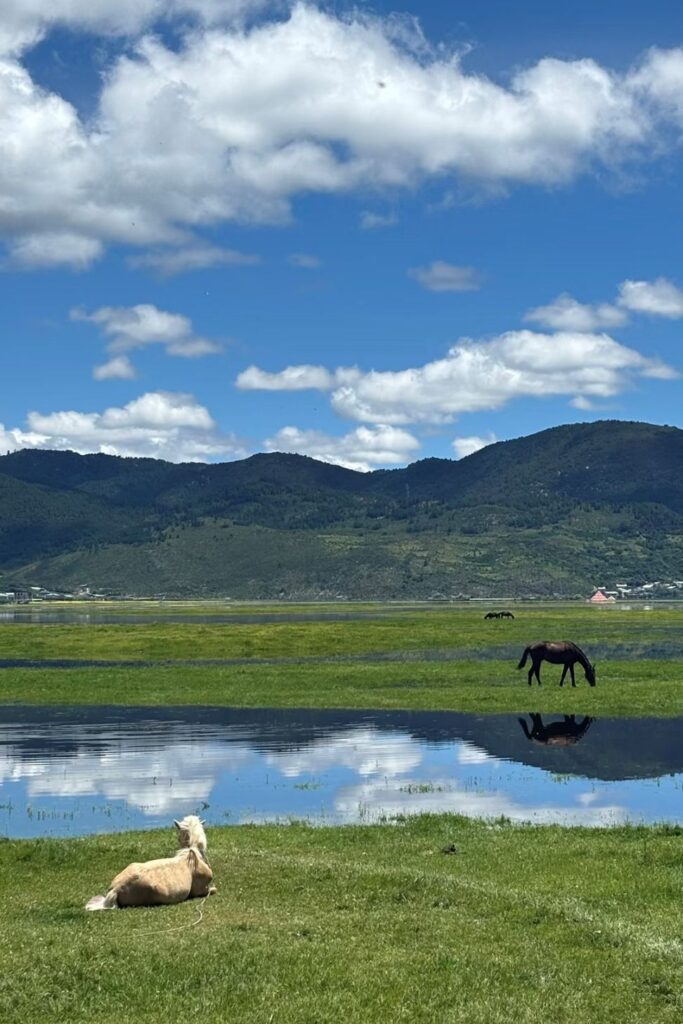
Songzanlin Monastery Viewing Platform (松赞林寺观景台): This spot offers a spectacular view of the Ganden Sumtseling Gompa, the “Little Potala Palace,” perched majestically on the hill across the valley.
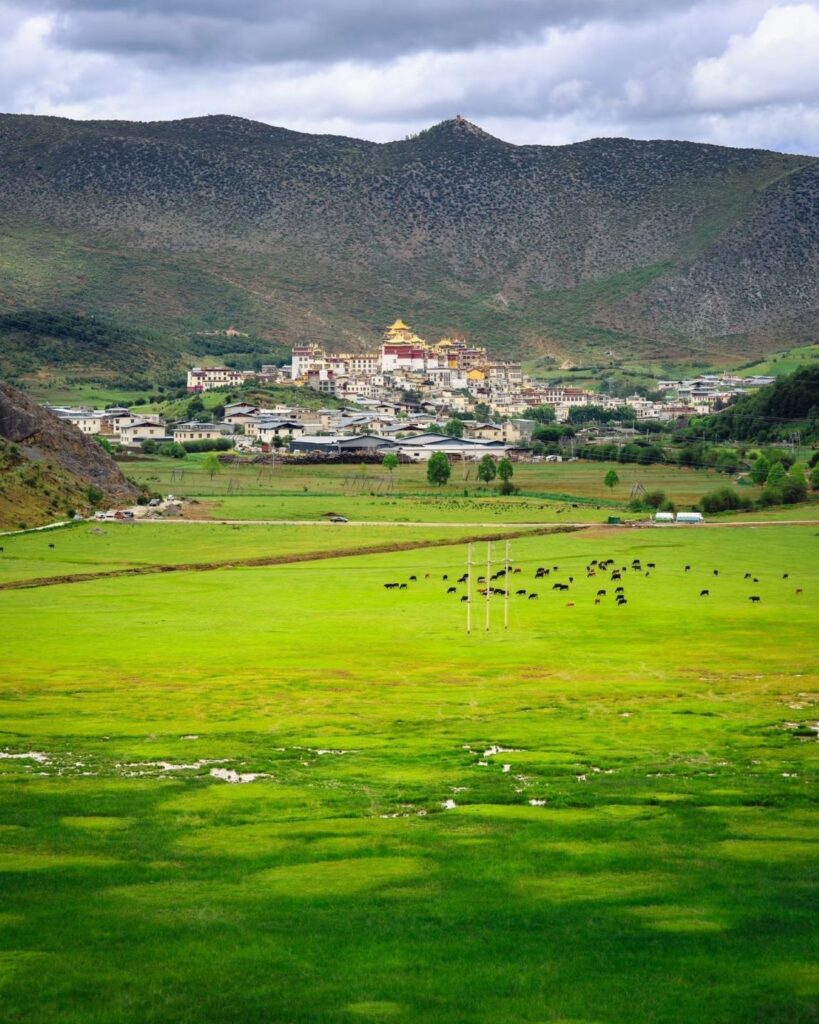
Wangchika (旺池卡): As you complete the loop, this area provides a final, gentle landscape of pastoral beauty before leading you back to the Dukezong Ancient Town.

Return to Dukezong Ancient Town
👉 To find the exact locations, you can copy and paste the Chinese place names into a navigation app like 高德 (Amap).
🌿 When to Go & Pro-Tips
🔴 Best Time to Visit:
April: Perfect for seeing a sea of azalea blooms at the Alpine Botanic Garden.
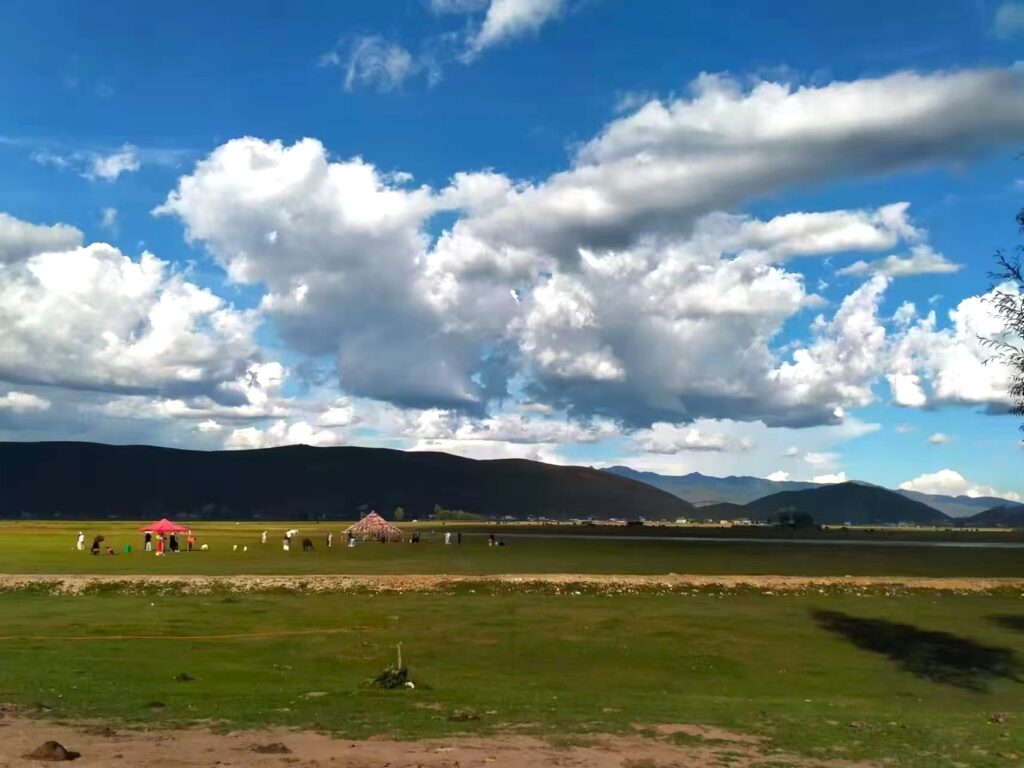
June-August (Rainy Season): The grass is at its lushest green. Rain is frequent but often in short showers. This is also the season for wild mushrooms and matsutake!
September-October: Post-rainy season, the skies are a dazzling, intense blue, and the clouds seem so low you could almost touch them.
⚠️ Essential Tips:
- 📷 Tibetan Clothing Photo Shoot: If you want photos in traditional Tibetan attire, get your makeup and costume done in Dukezong Ancient Town before you head out. The selection and quality are much better.
- 🐎 Horse Riding: You can go horseback riding at many ranches. Always, always negotiate! A starting price of 200 RMB can often be bargained down to 100 RMB.
- 🚫 Avoid Scams: Ignore signs that say “纳帕海景区从此进” (Napa Hai Scenic Spot This Way) or “依拉草原从此进” (Yila Grassland Entrance). These are traps leading to paid areas.
- 🚫 No Drones: It is forbidden to fly drones here due to the proximity to the airport.
- 🏔️ High Altitude Awareness: Shangri-La is at 3200m+. Watch for altitude sickness. Avoid strenuous activity. The UV is intense—use strong sunscreen and prioritize physical coverage (hats, sleeves) unless you want a serious tan and peel. Nights are cold, so bring a jacket.
- 🛵 Road Safety: Cows, sheep, and horses have the right of way. Drive carefully and park thoughtfully.
- 🙏 Respect Local Culture: Entering the large prayer flag arrays costs 9-15 RMB. Always walk around sacred sites clockwise as a sign of respect.
This trip felt less like a simple lake visit and more like a pilgrimage for the soul. A day of breaking free from the shackles of the everyday, to feel the wind whip away the worries, and to reclaim a piece of that forgotten self on the roof of the world.
Shangri-La Tusi Banquet
The freedom of Napahai culminated in the evening at the Tusi Banquet. Tashi Delek!🫶🏻
As an outsider, we confidently say this is a must-do experience, especially for families with kids. It’s an immersive crash course in local culture and hospitality, all wrapped up in one fun night of food, performances, and community.
What is a Tusi Banquet?
Historically, a Tusi was a tribal chieftain recognized by imperial China. A Tusi Banquet recreates the grand, welcoming feasts these chieftains would host. Today, it’s about preserving and sharing Tibetan and local ethnic traditions. It’s a cultural spectacle where you are the honored guest, invited to eat, drink, laugh, and become part of the living heritage for a night. The program includes: a full dinner, live performances, and a lively bonfire party that feels like a high-altitude disco!
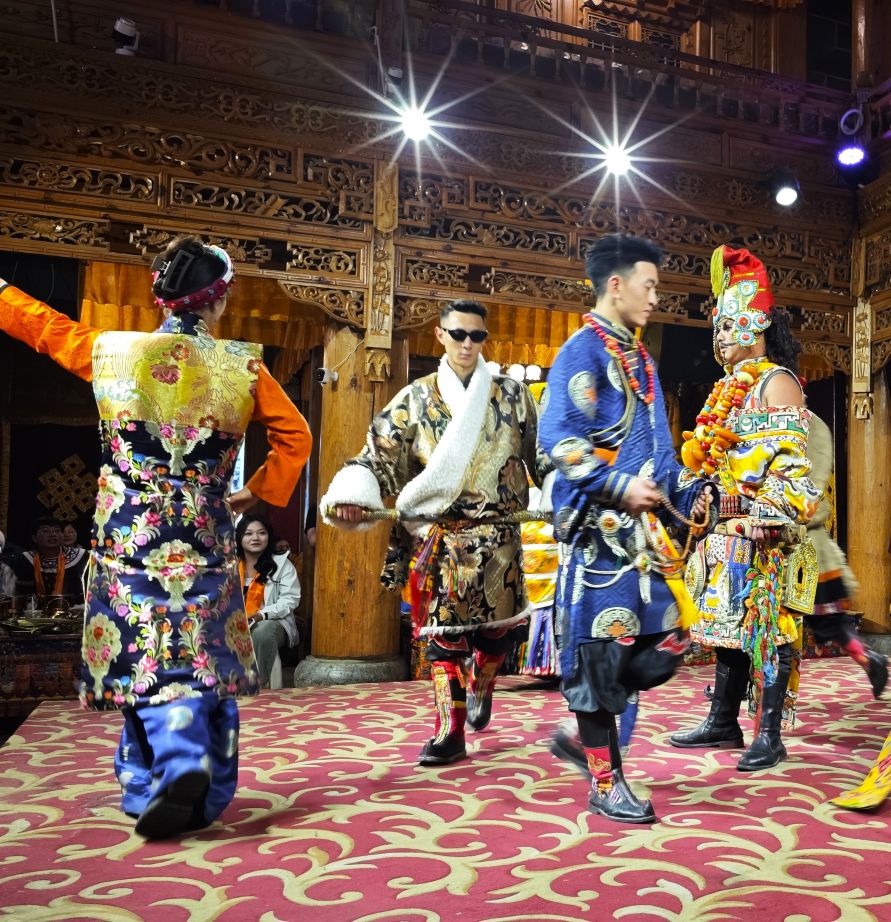
🎭 The Booking
We were recommended the Zhaya Tusi Banquet (扎雅土司宴), one of the most popular in Shangri-La. Reservations are essential! Here’s the lowdown:
- Option 1: Direct Booking: You can call the restaurant directly. It costs 180 RMB per person, but seats are assigned by booking order, so you might end up at the back if you’re late.
- Option 2: Through Hotel Staff: We booked through our hotel for 150 RMB per person. This included round-trip transport from our hotel to the manor. They personally guaranteed us front-row seats — and they delivered! Our guide even arrived early to reserve spots, brought us condiments for the hotpot dinner, explained the evening’s flow, and made us feel like VIP guests.
🕖 The Agenda: Feast, Performance, & Fire
The evening’s schedule:
5:30 PM: The courtyard gates open. Upon entering, you are greeted with a traditional Hada—a beautiful, ceremonial gold silk scarf that symbolizes purity, goodwill, and a warm welcome. It’s a gesture of deep respect.
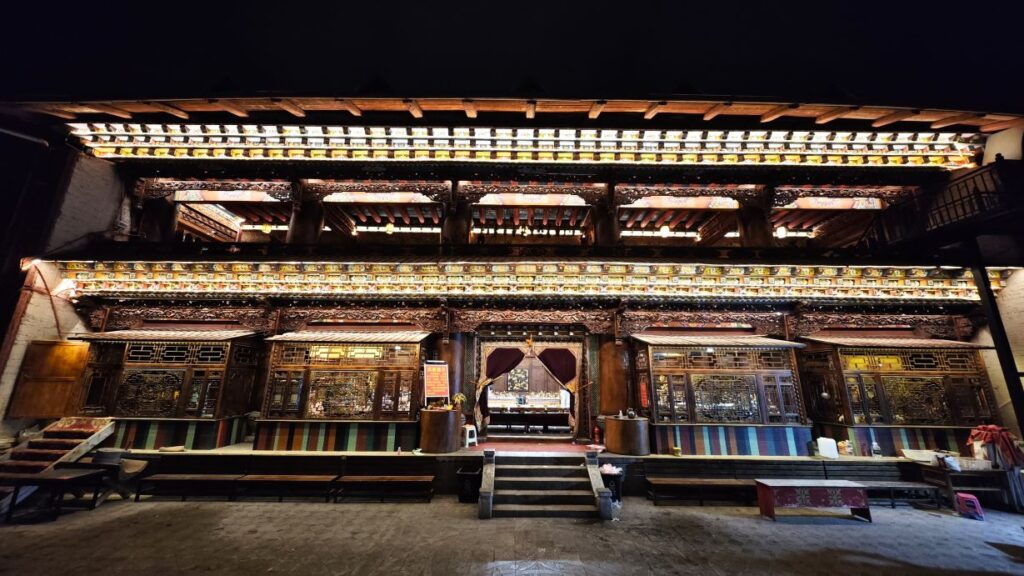
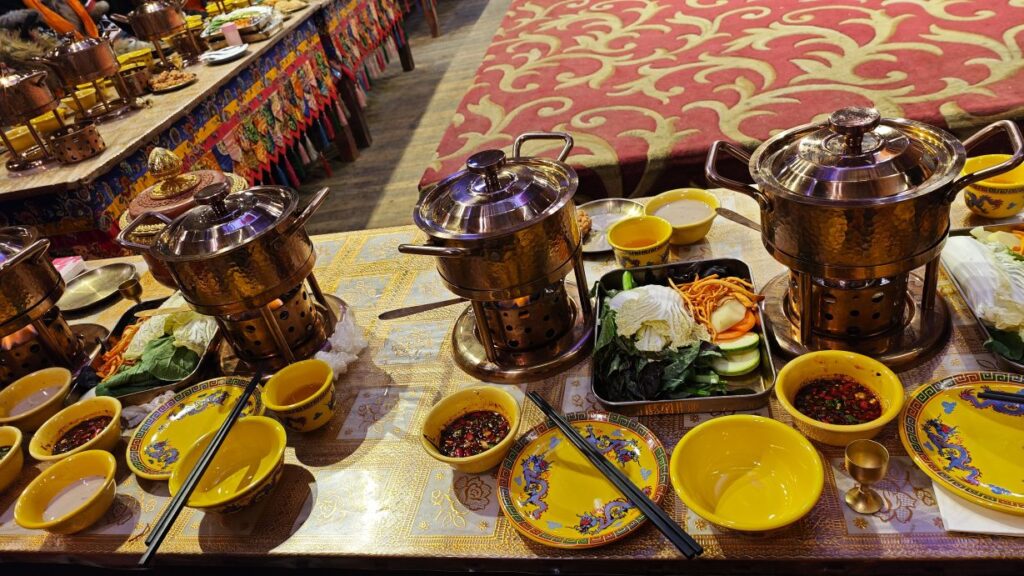
6:20 PM: The feast begins! Long tables seat about six people each, all facing the stage. We had fantastic side seats with a perfect view.
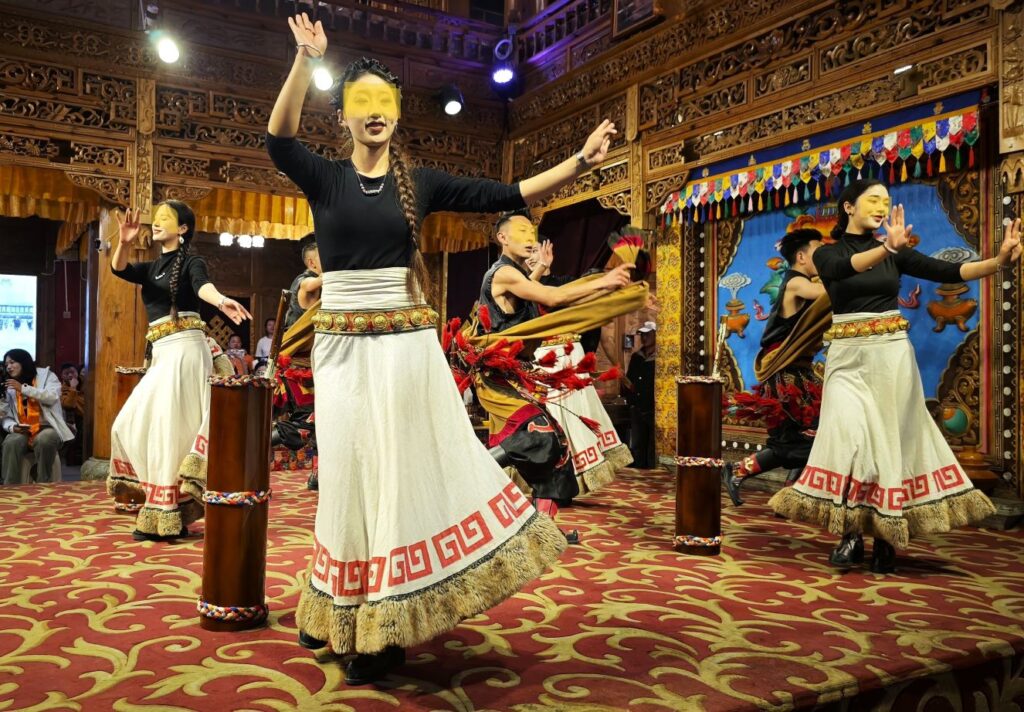
7:20 PM: The cultural performance kicks off!
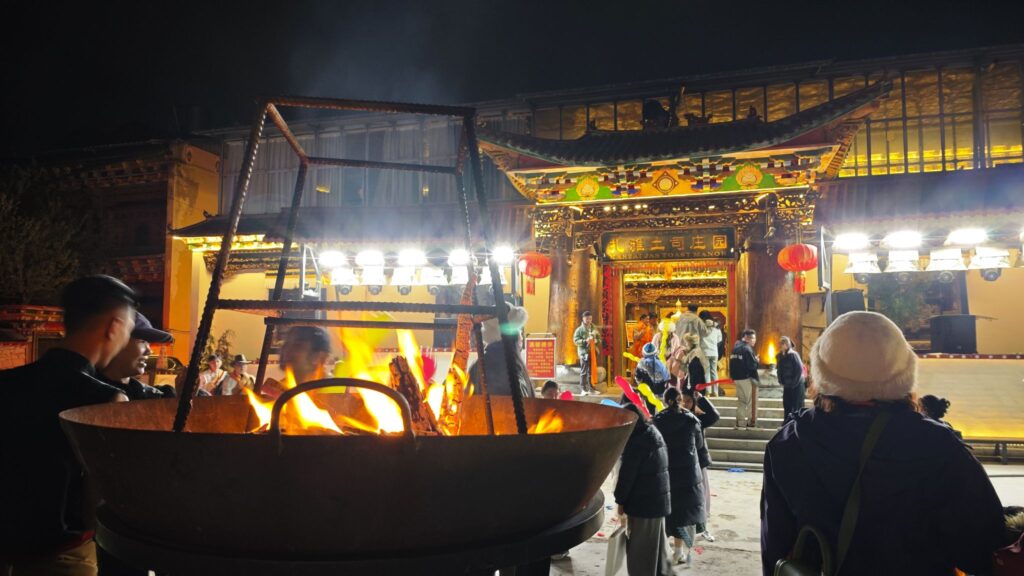
8:20 PM: The bonfire party ignites the courtyard!
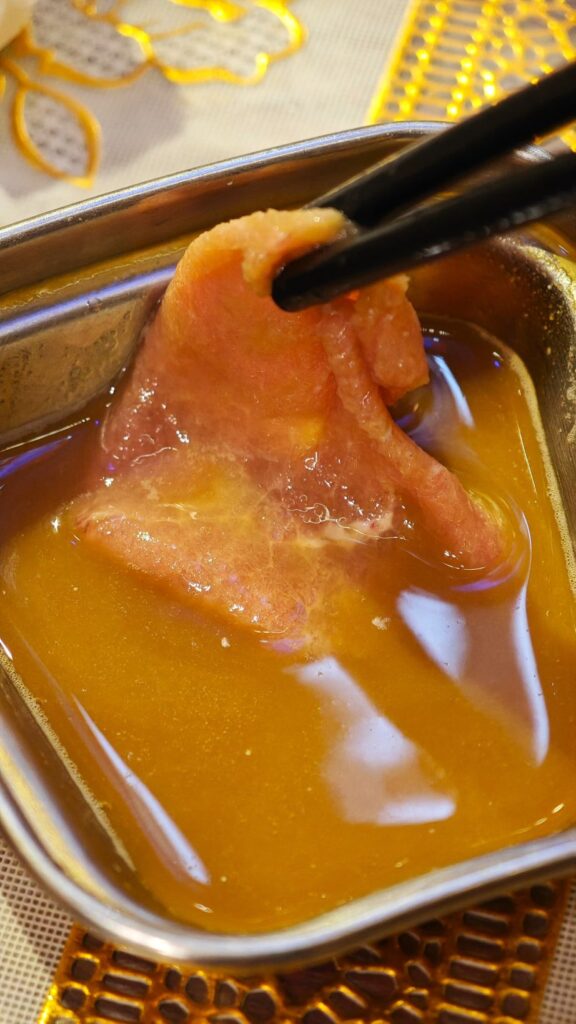
🍲 The Feast: A Hearty Yak Hot Pot
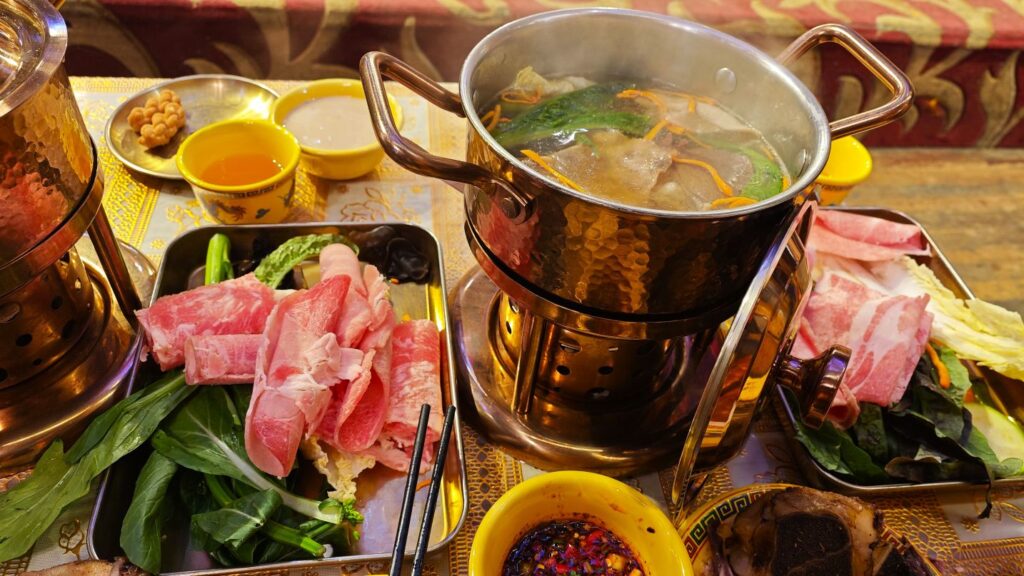
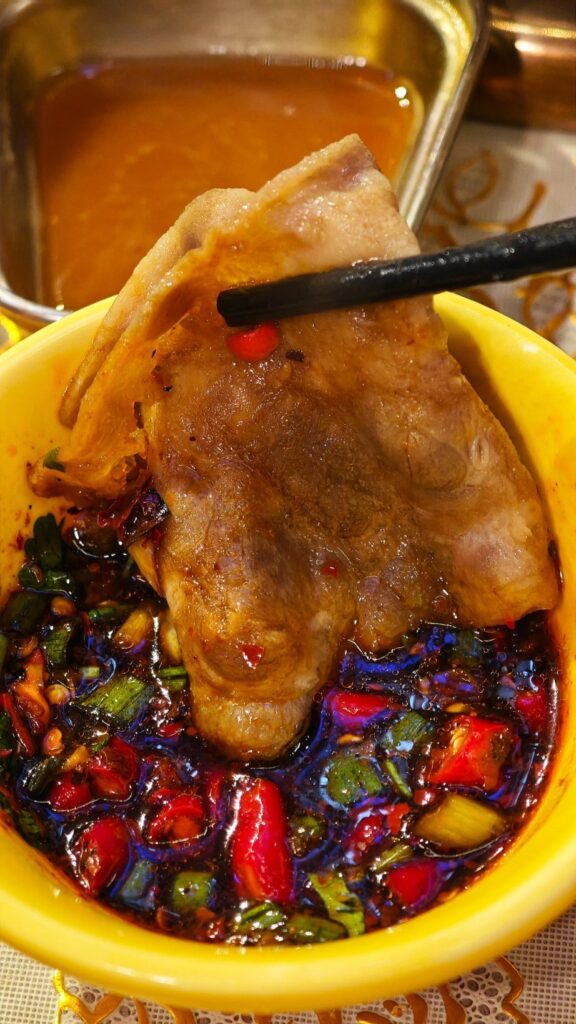
Dinner is Yak Hot Pot with solid flavor. It’s absolutely satisfying and you will leave stuffed.
The pot comes filled with a variety of tender, juicy yak meat, beef balls, chicken and vegetables.
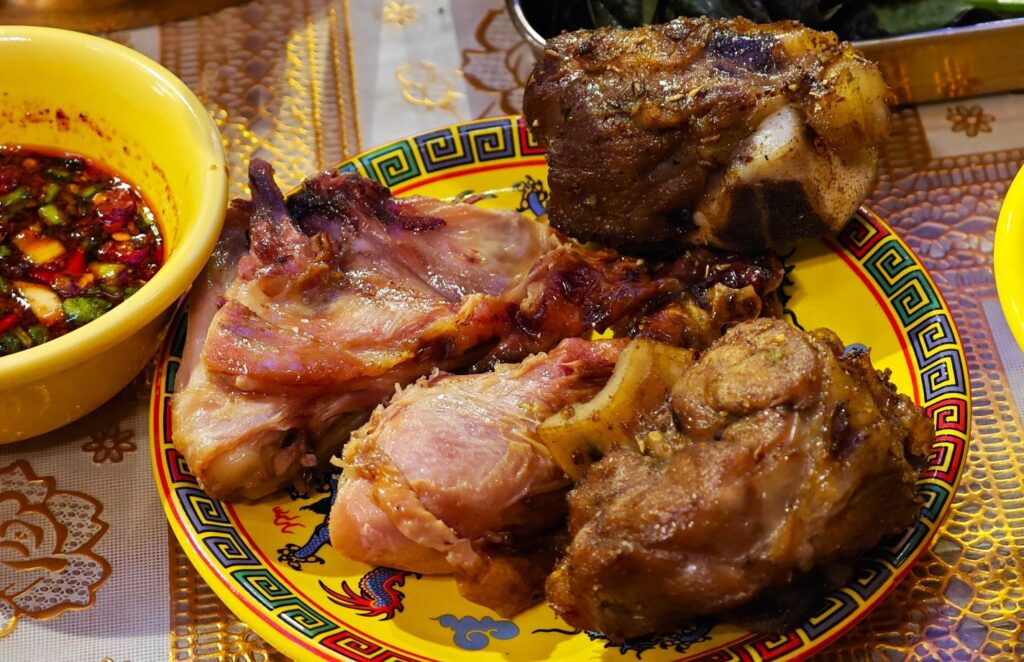
It’s unlimited offering – you can ask for more meat and veggies anytime!
The quality and variety were perfectly fine for the overall experience.
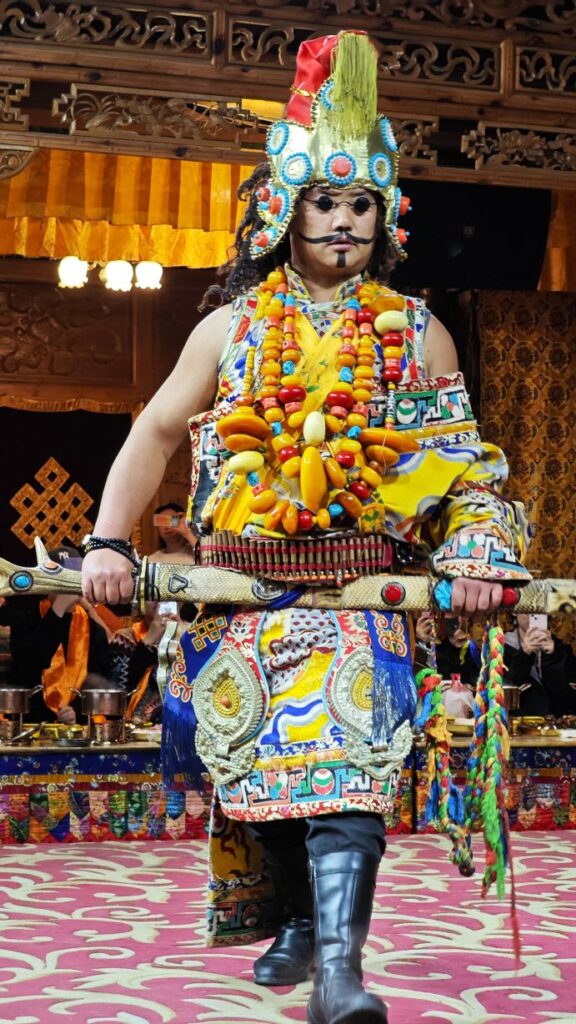
The Performance: The show was the highlight! It featured around ten acts of stunning Tibetan-style dances and songs.
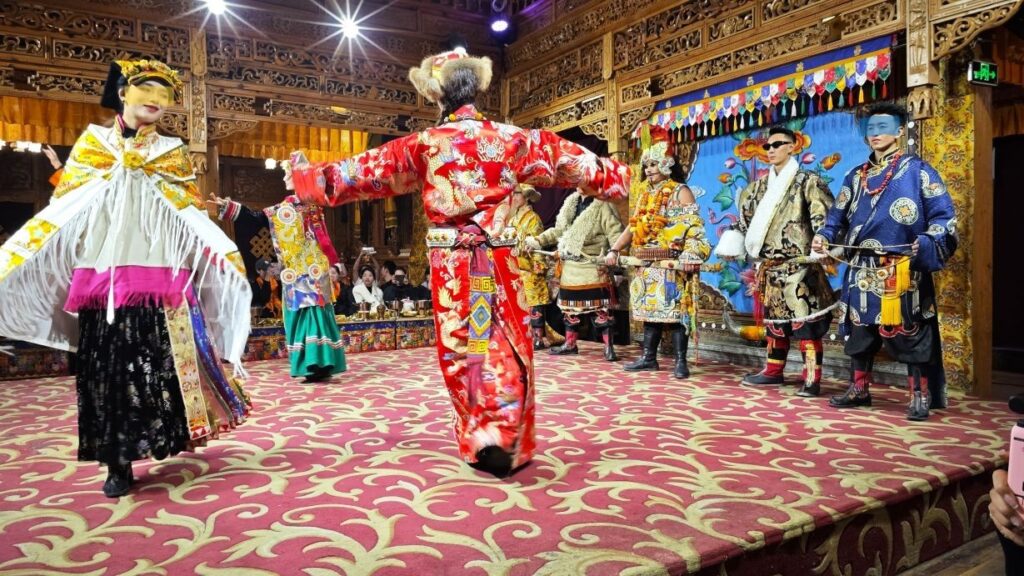
The costumes were vibrant, the energy was infectious, and the host was hilarious, with fantastic crowd interaction. We were even called on stage for a game and won a prize!
The Bonfire Finale: As the evening cooled down, the bonfire heated up. This is where the atmosphere peaked. Everyone poured into the courtyard to dance together—guests, the performers (the handsome Zhaxi and beautiful Zhuoma), everyone! It was chaotic, joyful, and felt like a genuine, high-spirited celebration. It lasted about 40 minutes of warm, high-altitude disco fun.
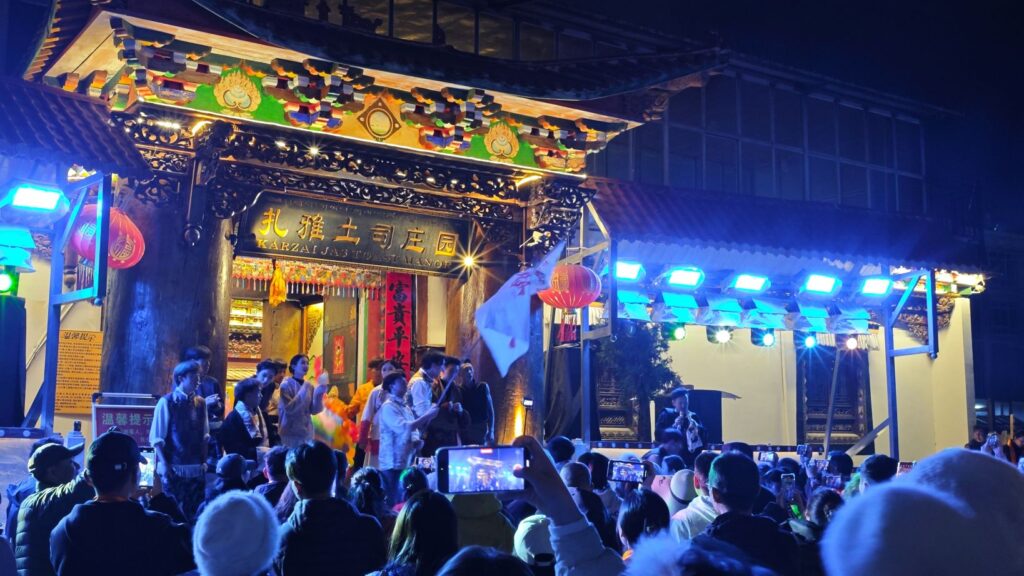
It was the roaring end to a day that began in the quiet Napahai.
The highland air, the frantic beat of my own heart, the shouting and the leaping. After a day spent riding across the open pastures, it felt like every boundary dissolved. The open horizon mirrored an open heart; maybe it was the thin air, but my mind felt scrubbed clean, with no room for anything heavy. There was only an elevated bliss.
In that courtyard, surrounded by the joyful chaos of strangers, we felt a connection that transcended time. We were laughing together as if we had known each other for lifetimes. In that moment, an innocent, primal joy – the kind only a baby would know, and we so easily forget – returned. It felt like a homecoming.
The boundless sky, the spiritual whispers on the wind, and the rhythm of the land seeped into our spirits. Under the star-dusted sky, we felt no longer the same as we were that morning.
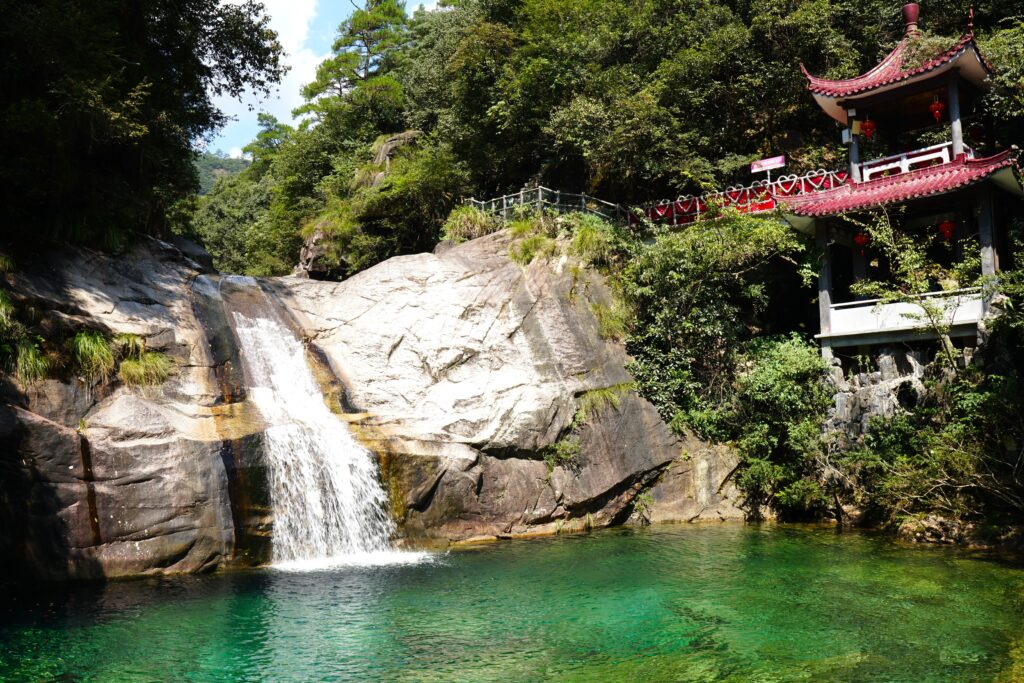
Our Shangri-La adventure isn’t over yet. Next stop — Tiger Leaping Gorge and Baishuitai (White Water Terraces) — where the Jinsha River roars through the mountains and the cascading natural terraces gleam like frozen sunlight – join us as we head deeper into nature’s wild heart.
Thank you for your sharing.
Is it still snowing in early March?
Hiking paradise
Salam & hi ! Is it okay if I ask about your initinerary to Yunnan ?
Salam & hi, yes pls search “shangrila itinerary” on our website, 1st post
Thanks for sharing! I’d heard that to sit in the front row at this tusi banquet, you usually need to book at least two months in advance, but booking through a hotel is actually a really good workaround
Thanks a lot for the tips. We are thinking private driver and tour guide. There are too many scattered places so taking Didi would be difficult. So we are gonna try the scooter rentals, if the weather permits!
Thanks for sharing! E-bike is a brilliant idea! You can stop wherever you want
It’s so beautiful ❤️ how is the breathing when clubbing so high up?