

When it comes to grandeur, few places rival the –
ROYAL PALACE OF MADRID (PALACIO REAL DE MADRID).
Built in the 18th century under the orders of King Philip V, this opulent palace is the largest royal palace in Europe by floor area, boasting a staggering 3,418 rooms. From priceless masterpieces by Goya to the breathtaking frescoes of the Throne Room and the intricately preserved Royal Kitchen, every corner exudes the magnificence of the Bourbon dynasty.
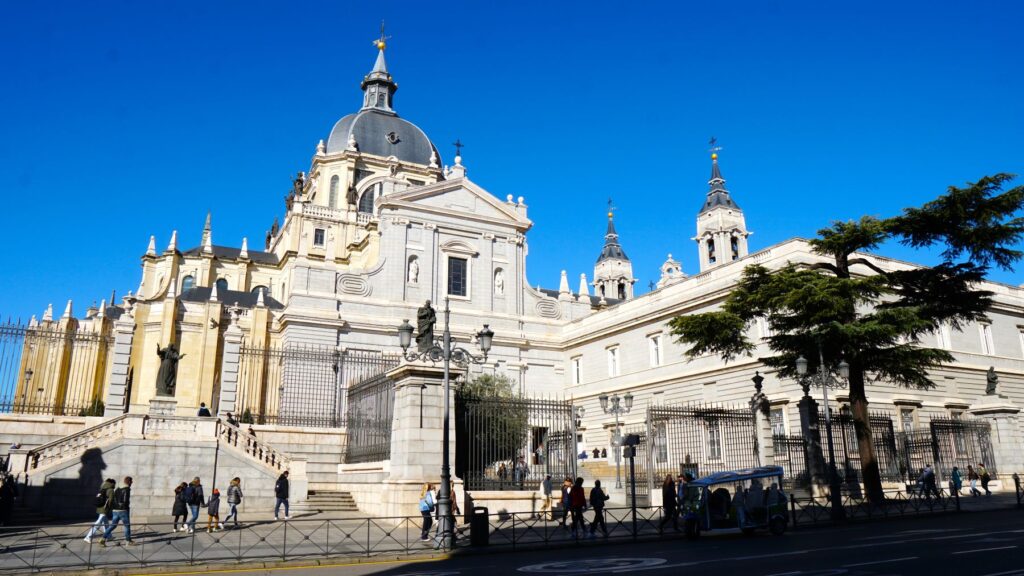
Why Visit the Royal Palace?
As the third-largest palace in Europe (after Versailles and Vienna’s Schönbrunn Palace), the Royal Palace of Madrid is a masterpiece of Baroque and Neoclassical architecture. Construction began in 1738 under Philip V and took 26 years to complete, finally finishing during the reign of his son, Charles III. Today, it remains one of Madrid’s most popular attractions.
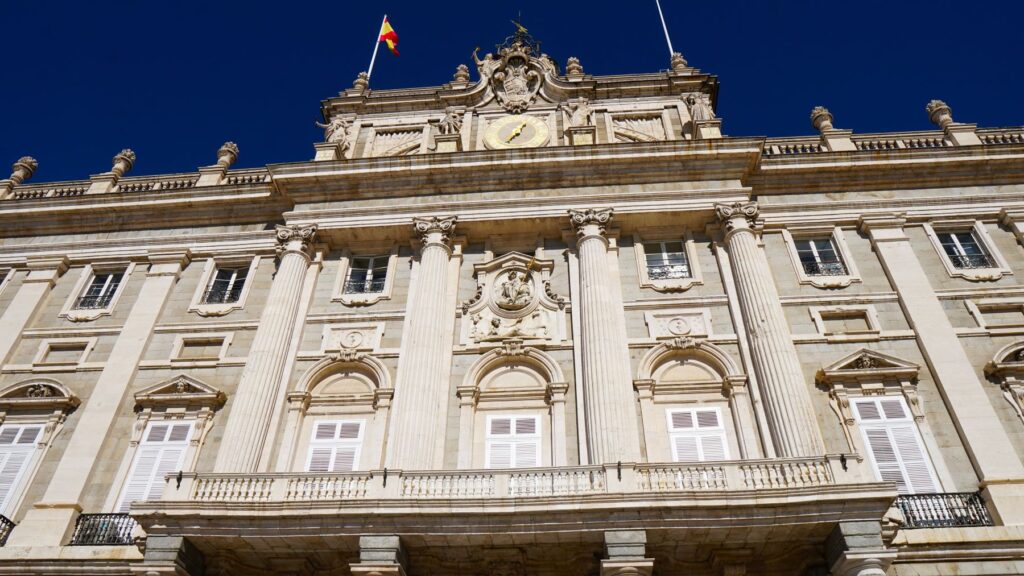
A Palace of Extravagance
Stepping inside is nothing short of breathtaking. While the palace has around 2,600 usable/main rooms, only about 50 are open to the public—each adorned with exquisite frescoes, tapestries, carvings, and lavish furnishings. Among its treasures are rare artworks, historical artifacts, clocks, porcelain, and paintings, showcasing the wealth and power of the Spanish monarchy.
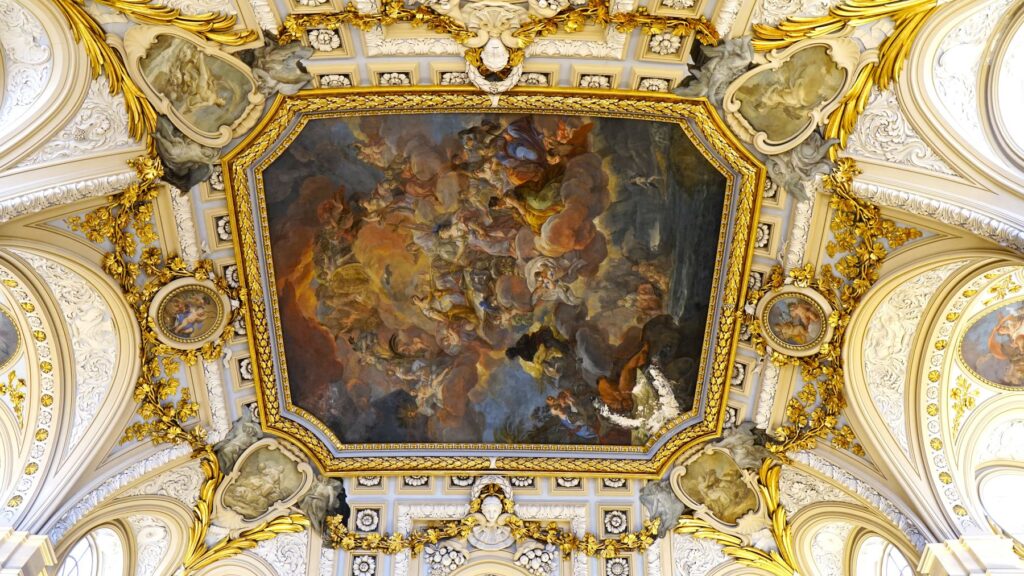
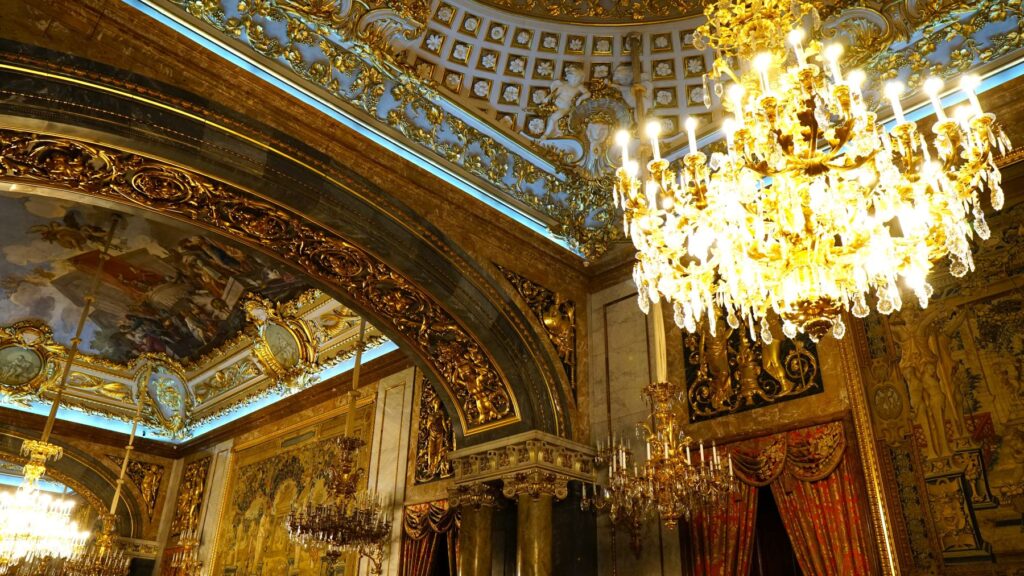
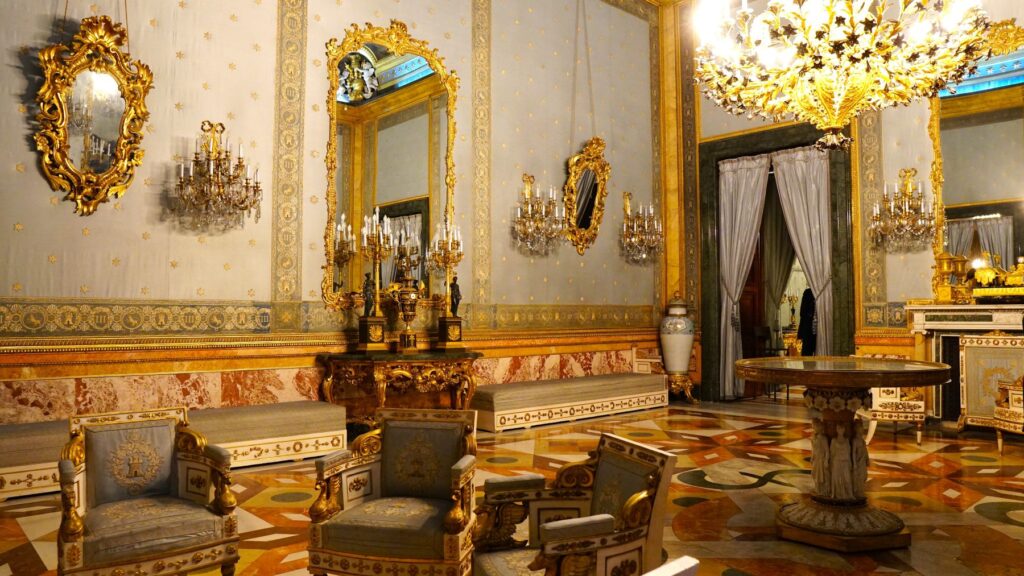
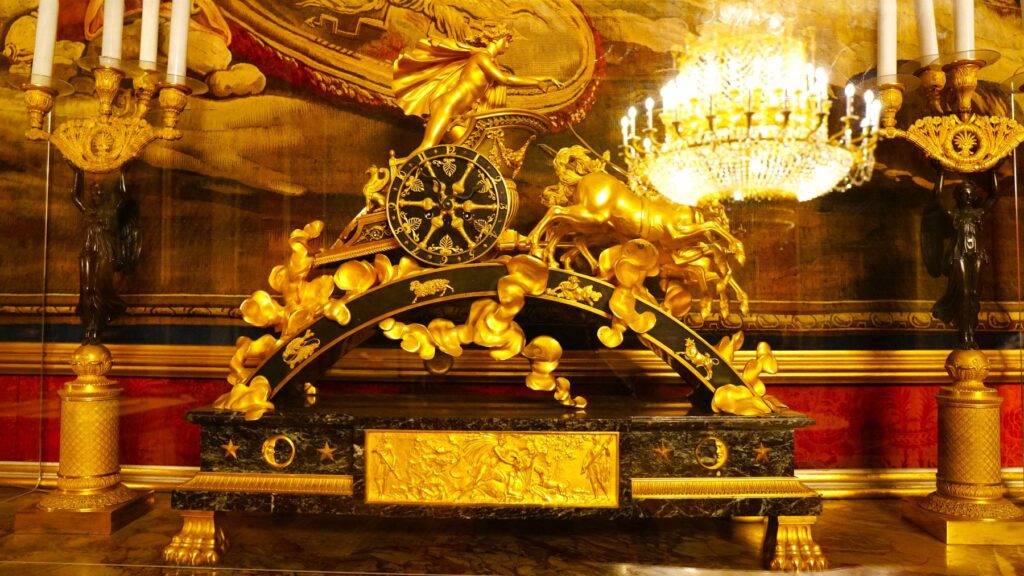
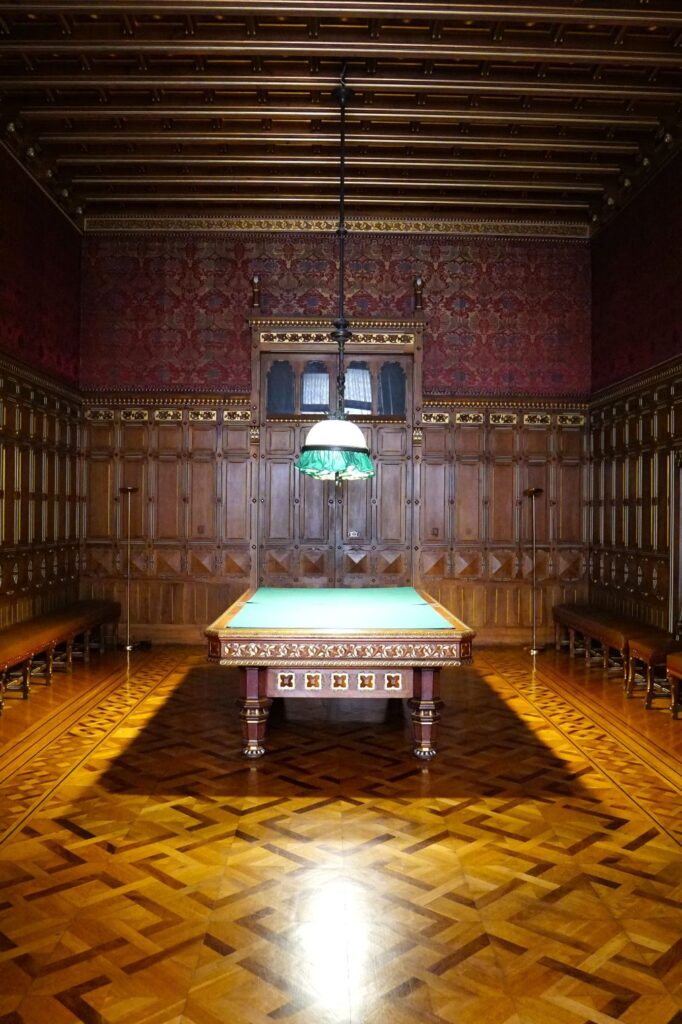
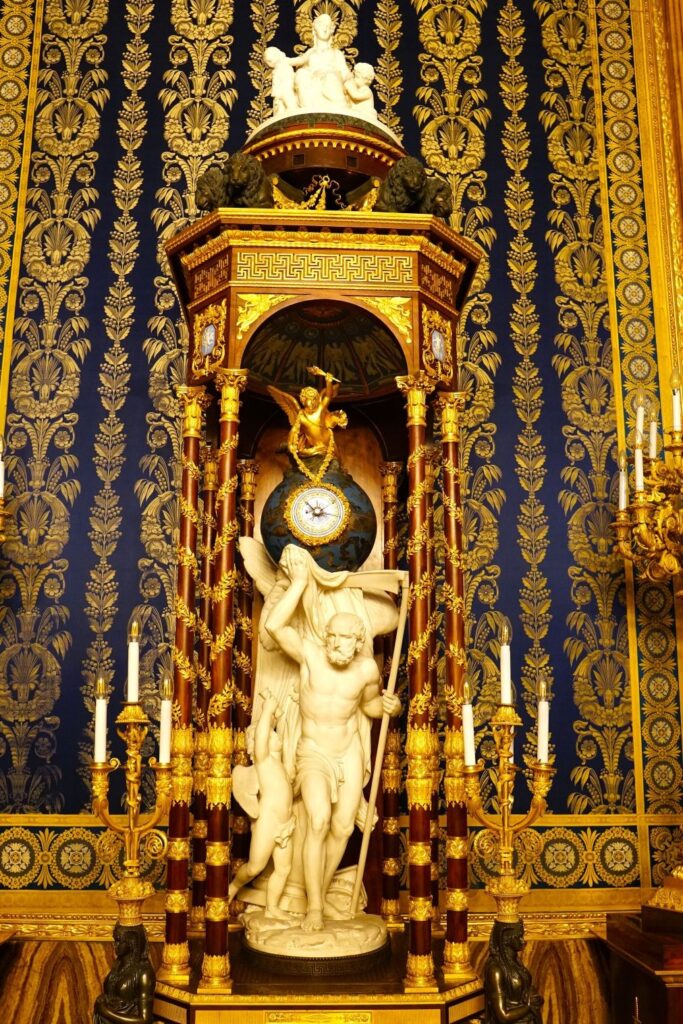
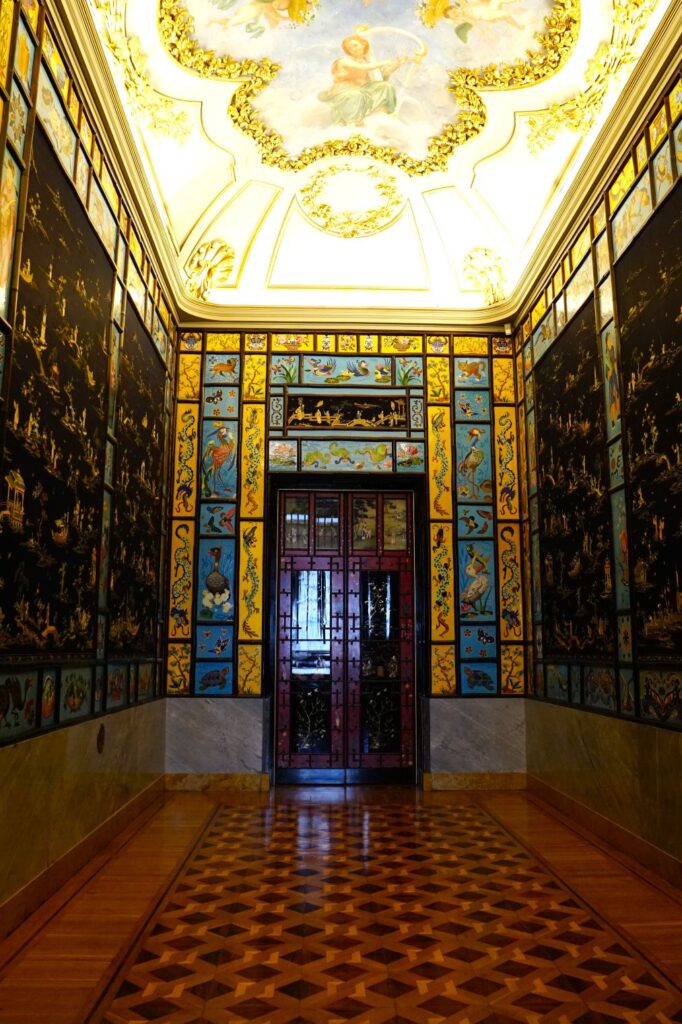
Though it’s the official residence of the Spanish royal family, the palace is now primarily used for state ceremonies, diplomatic receptions, and official signings. Fun fact: If two flags are flying at the entrance, it means the king is inside!
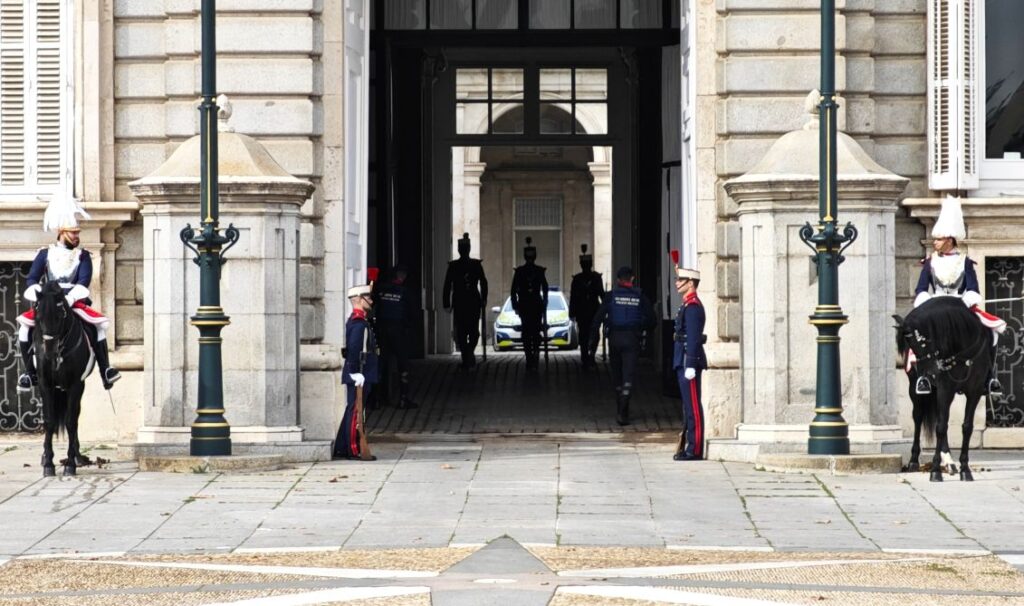
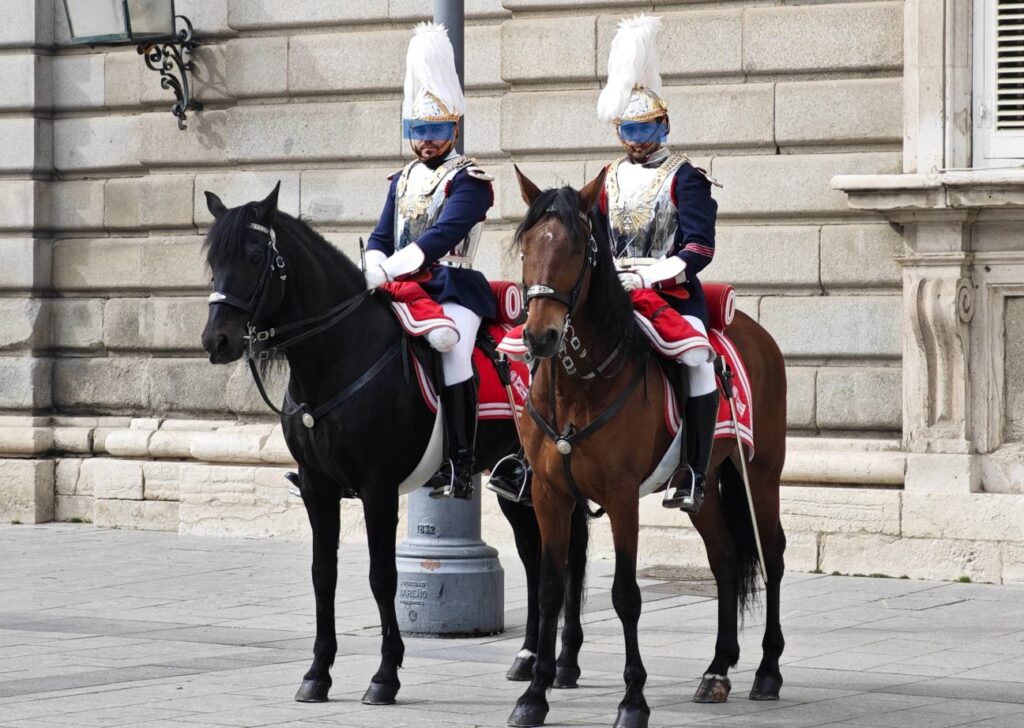
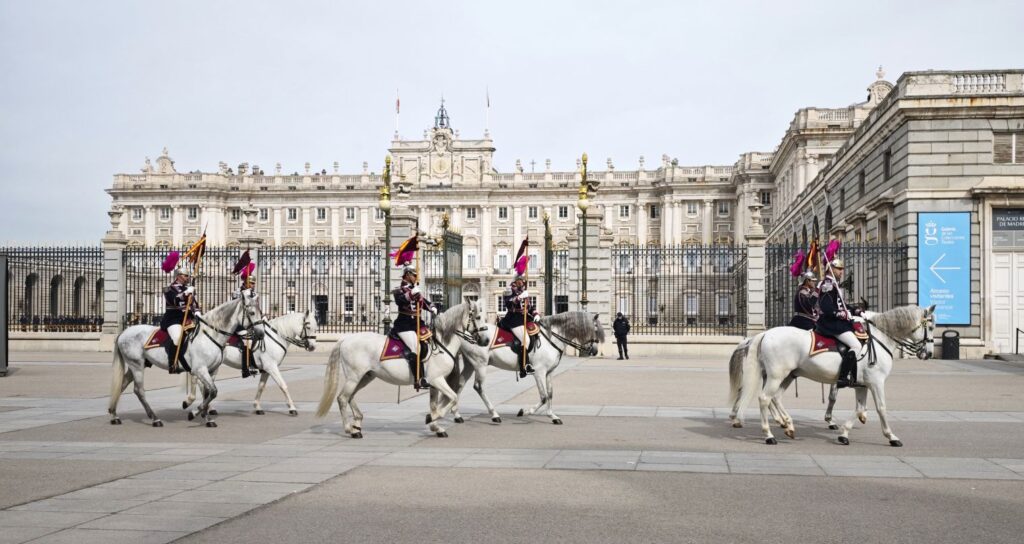
The Tour Route (No Backtracking!) through the palace’s highlights:
Plaza de la Armería – The palace’s main square.
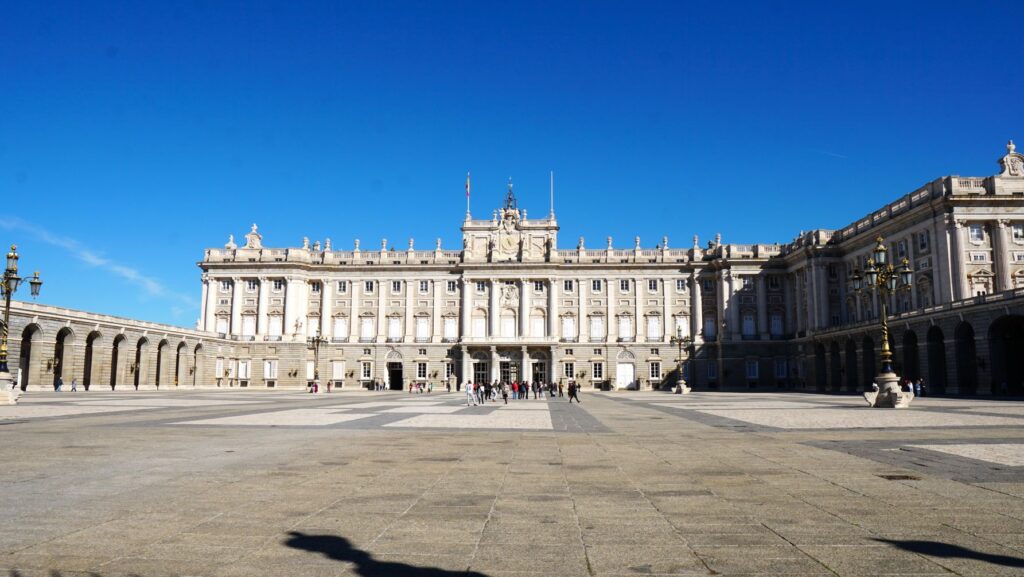
Main Hall – Features a statue of Charles III, the first king to reside here.
👏 Grand Staircase – A Baroque masterpiece with the Spanish royal coat of arms at its center.
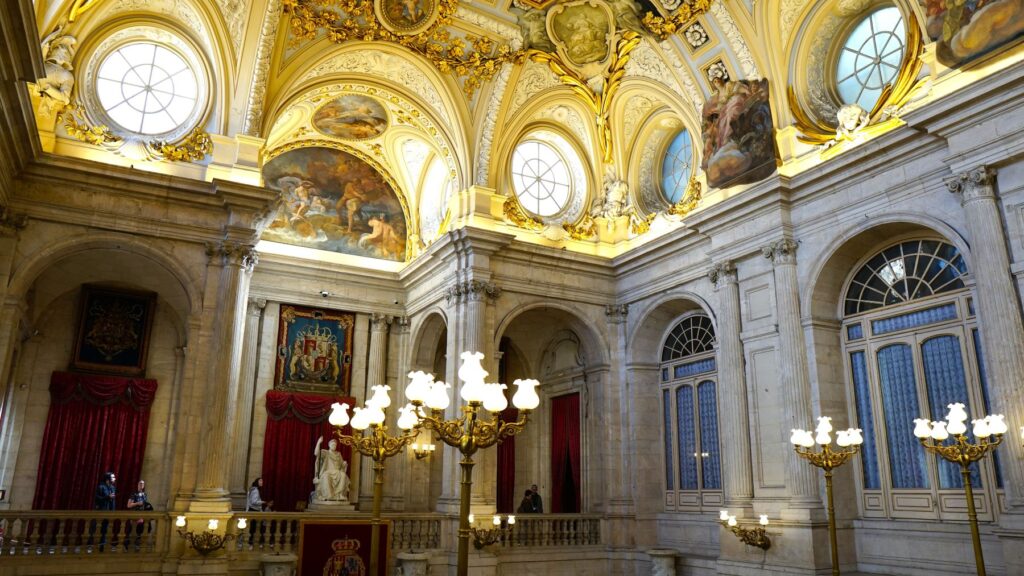
Hall of Halberdiers – Once a gathering place for royal guards; now displays portraits of King Juan Carlos I and his family.
👏 Hall of Columns – Where Spain’s accession to the EU (1985) and King Felipe VI’s coronation (2014) were signed.
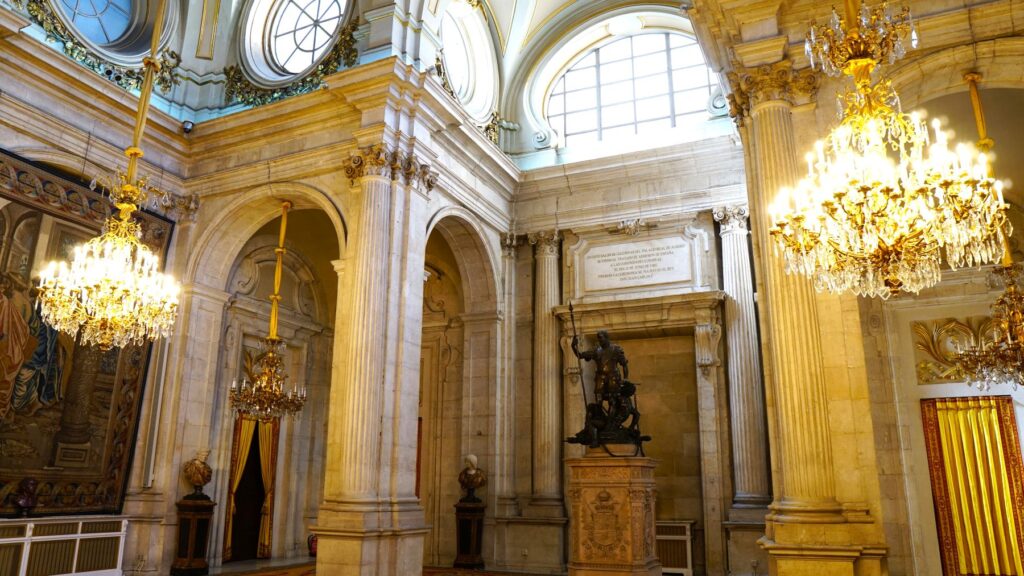
Charles III’s Reception Room – Used for daily meetings and royal lunches; the ceiling fresco depicts Roman Emperor Trajan’s victories.
👏Charles III’s Antechamber – The king’s dining room and a social space for royalty.
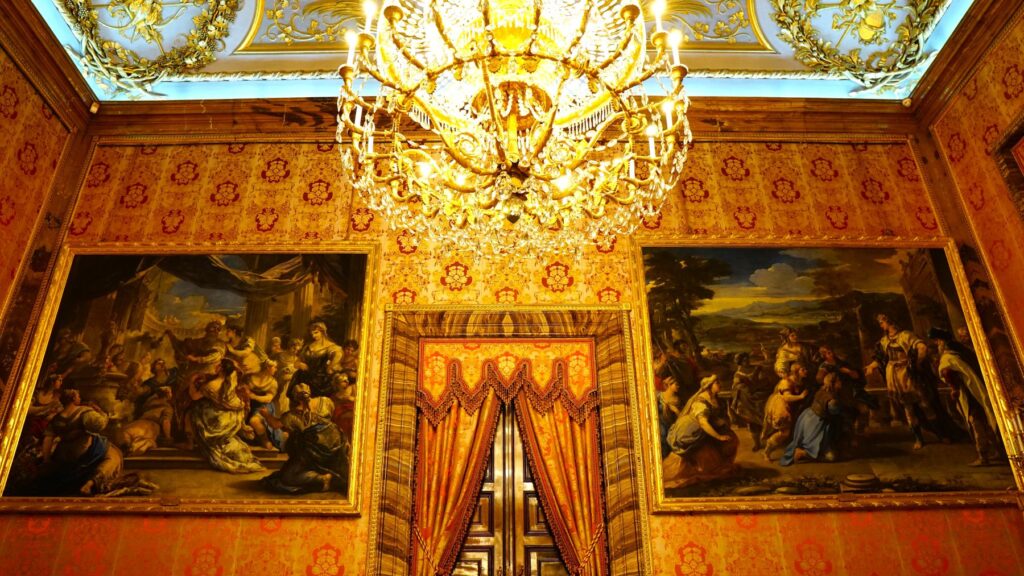
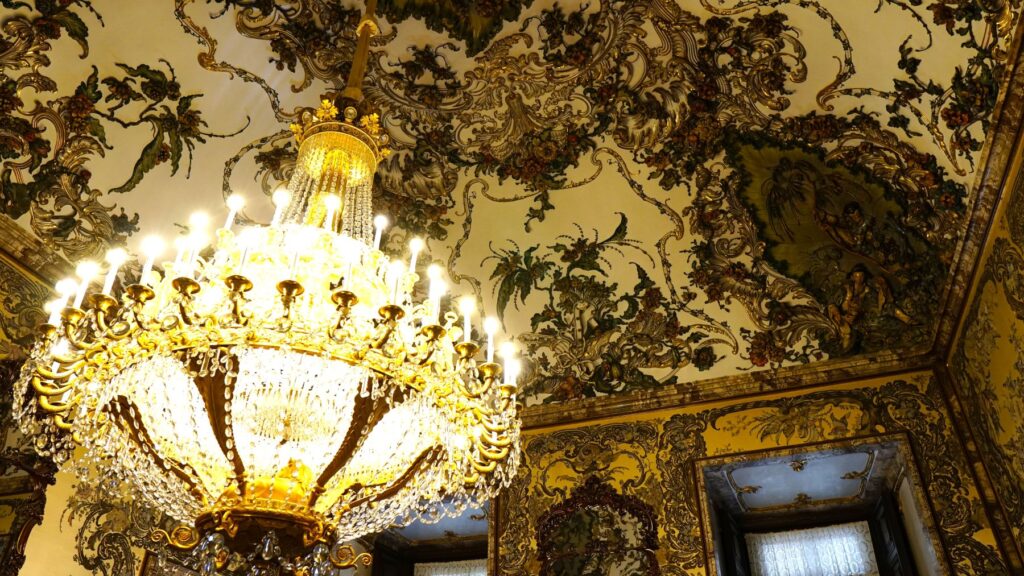
👏 Gasparini Room (Charles III’s Chamber) – A Rococo jewel designed by the Italian artist Gasparini, taking 55 years to complete. The ceiling features Chinese-inspired figures, including the Eight Immortals!
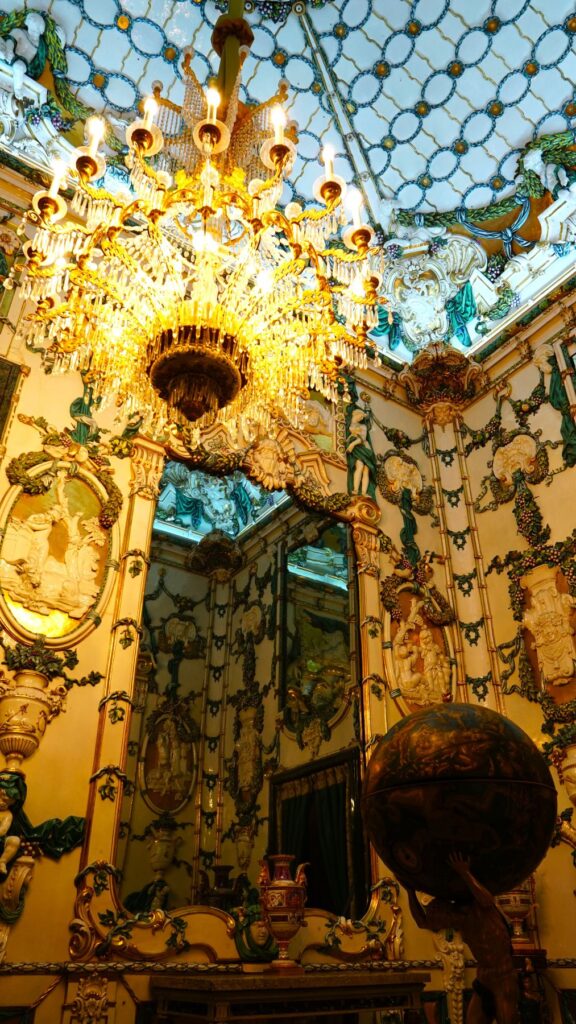
👏Porcelain Room – Entirely decorated with handcrafted porcelain from Madrid’s Royal Factory.
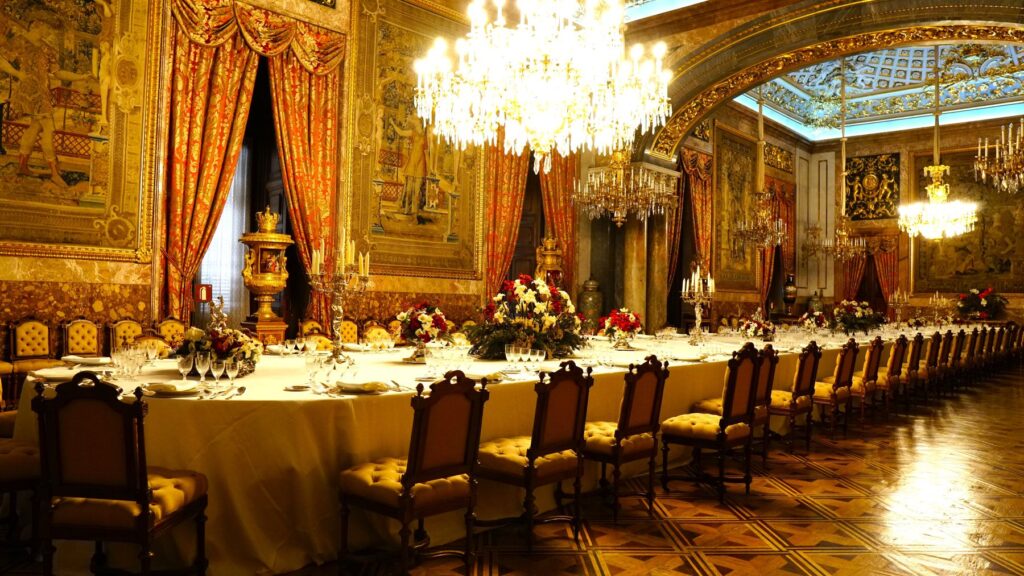
👏 Banquet Hall – Fits 130 guests, with the king and queen’s seats marked by extended chairs.
Dessert Room – Showcases an 18th-century dessert display.
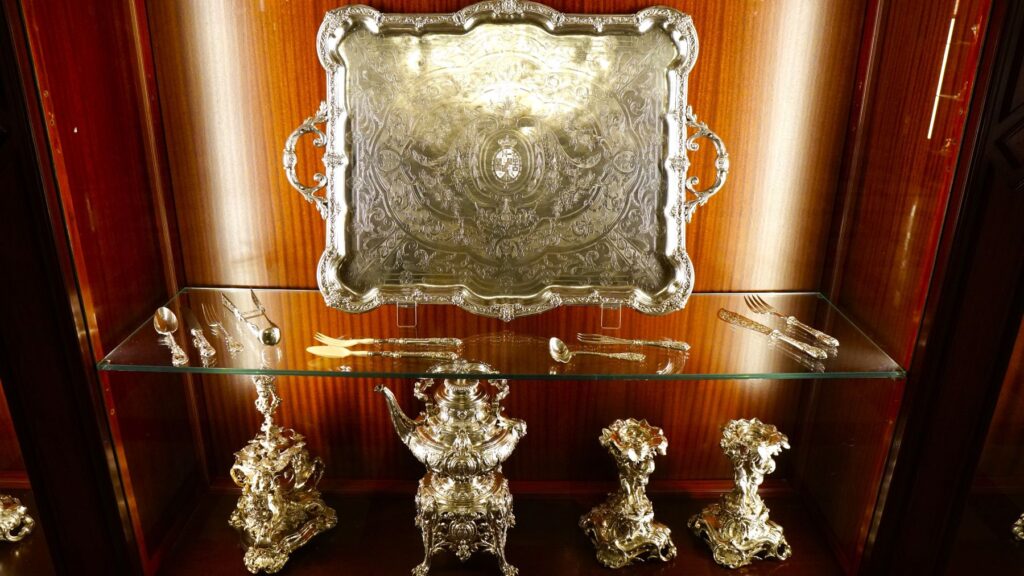
Silverware Room – Houses the monarchy’s luxury silver collection.
Glass & Ceramics Room – Features Madrid-made glassware and imported Qing Dynasty porcelain.
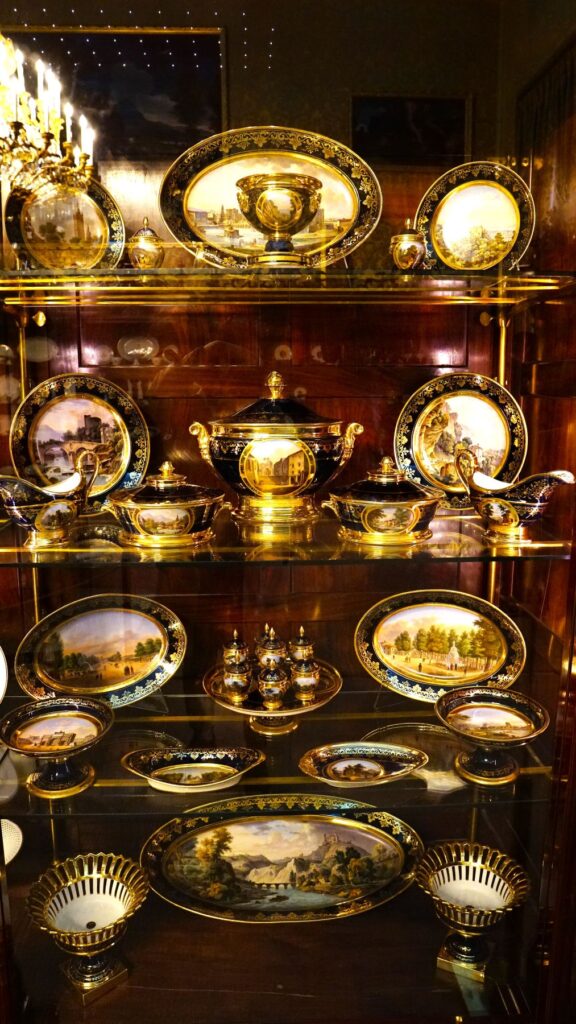
Palace Gallery
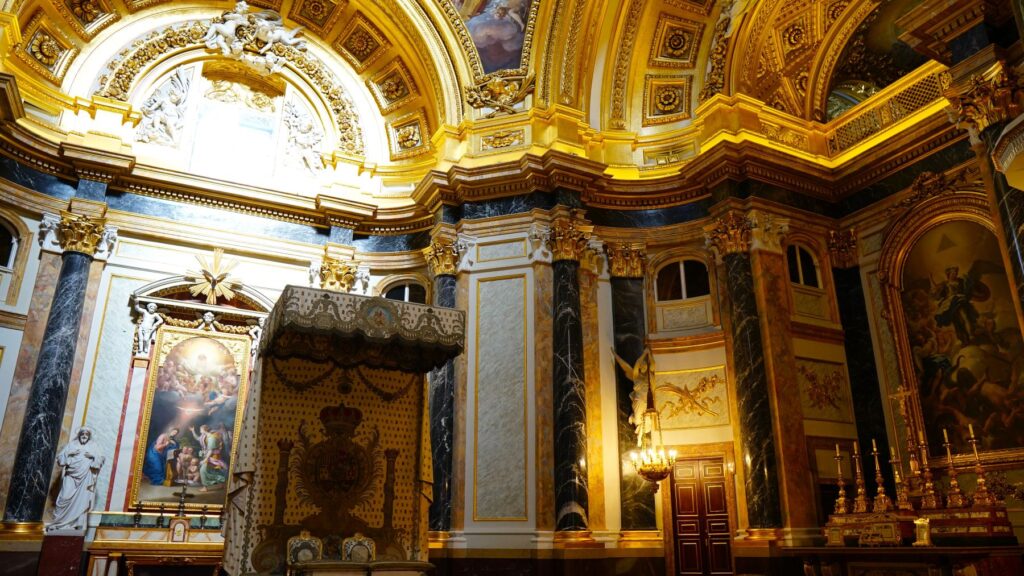
👏 Royal Chapel – Hosts religious ceremonies; the “Coronation of the Virgin” fresco is awe-inspiring.
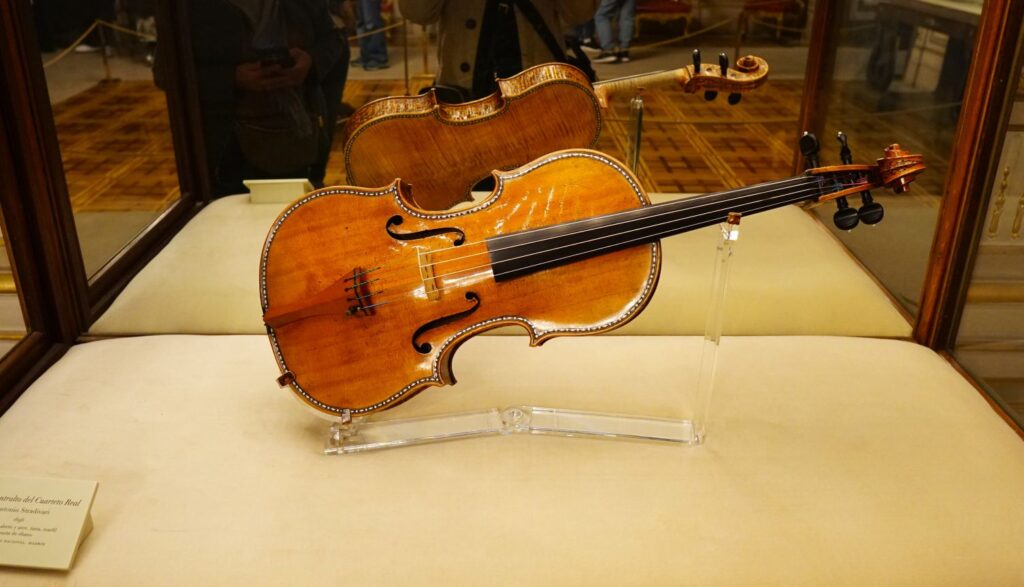
👏 Stradivarius Room – Displays five rare violins by legendary craftsman Stradivari.
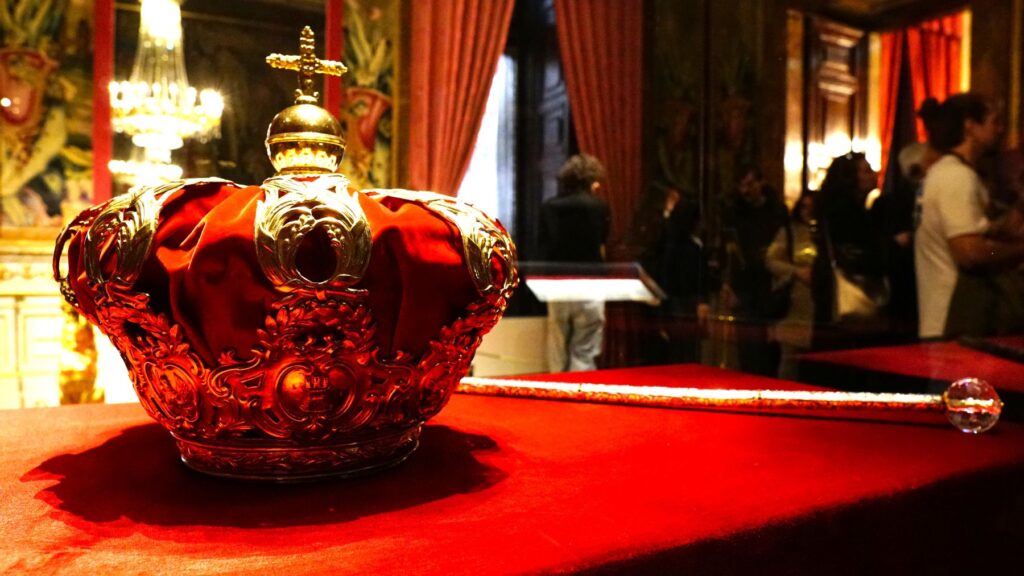
👏 Hall of the Crown – Exhibits Charles III’s crown, scepter, throne, and the Order of the Golden Fleece (Spain’s highest honor).
👏 Throne Room – The palace’s heart, where kings and queens hold official events.
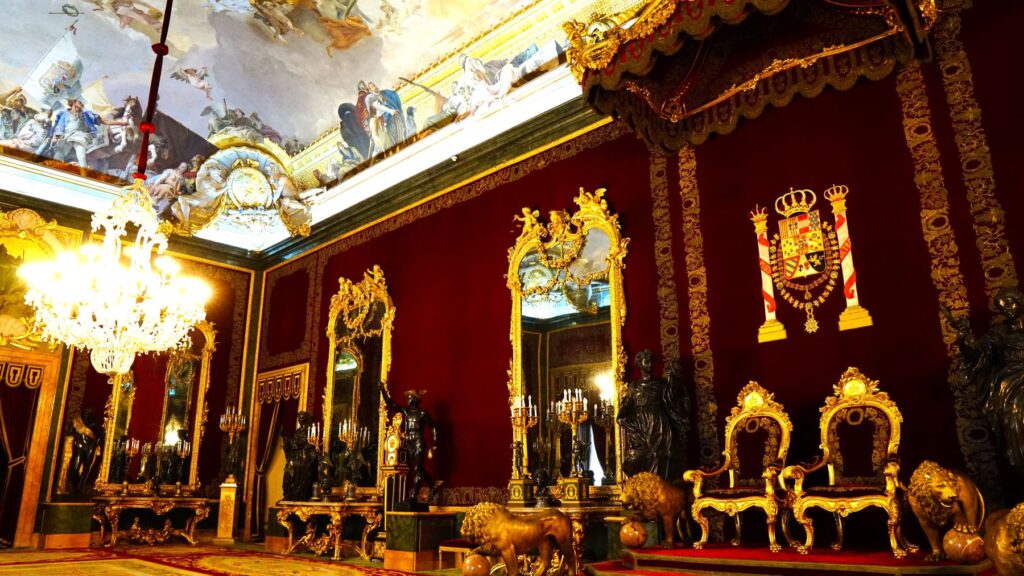
Royal Armory (Accessible from Plaza de la Armería) – A collection of medieval armor and weapons.
Visitor Tips
- 🎫 Tickets: €14 (online), €7 (discounted). Free for EU citizens Mon-Thu (5-7 PM)—expect long queues then!
- 📱 Audio Guide: Download the “Palacio Real Audio Guide” app.
- ⏰ Recommended Time: 2-3 hours (or half a day for a deeper visit).
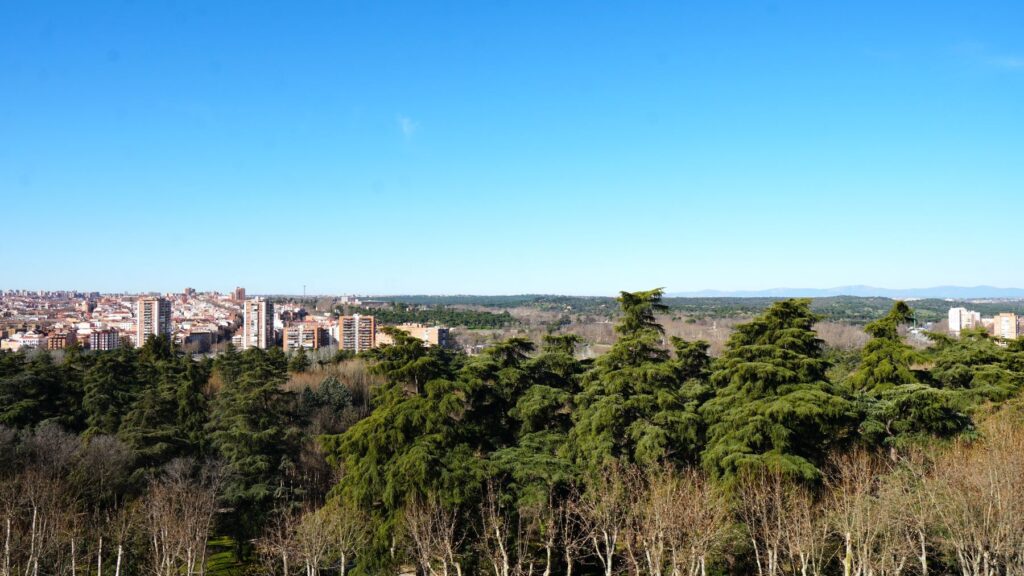
- 🌟 Nearby: Don’t miss the Almudena Cathedral—climb its dome for stunning city views!
ALMUDENA CATHEDRAL
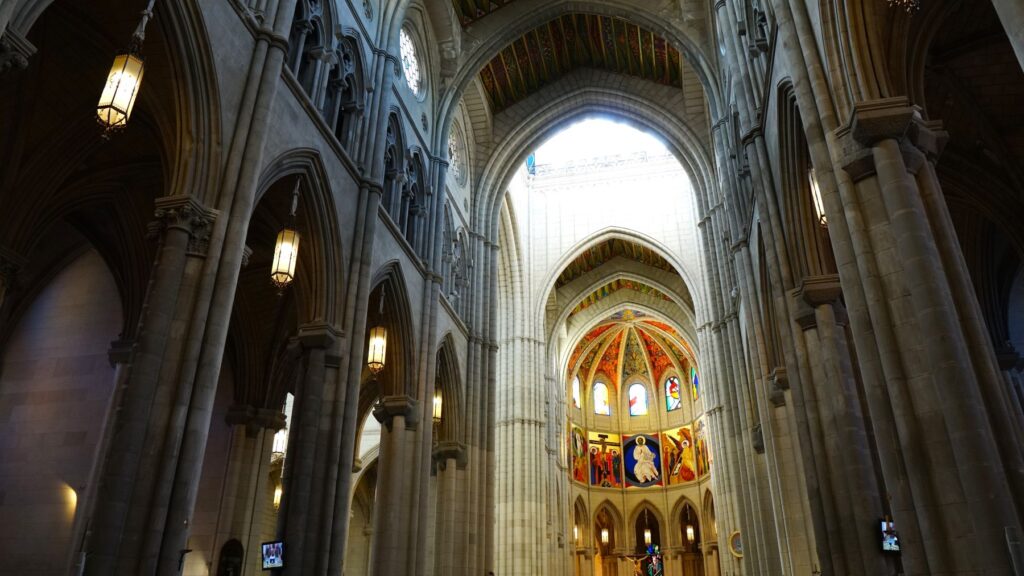
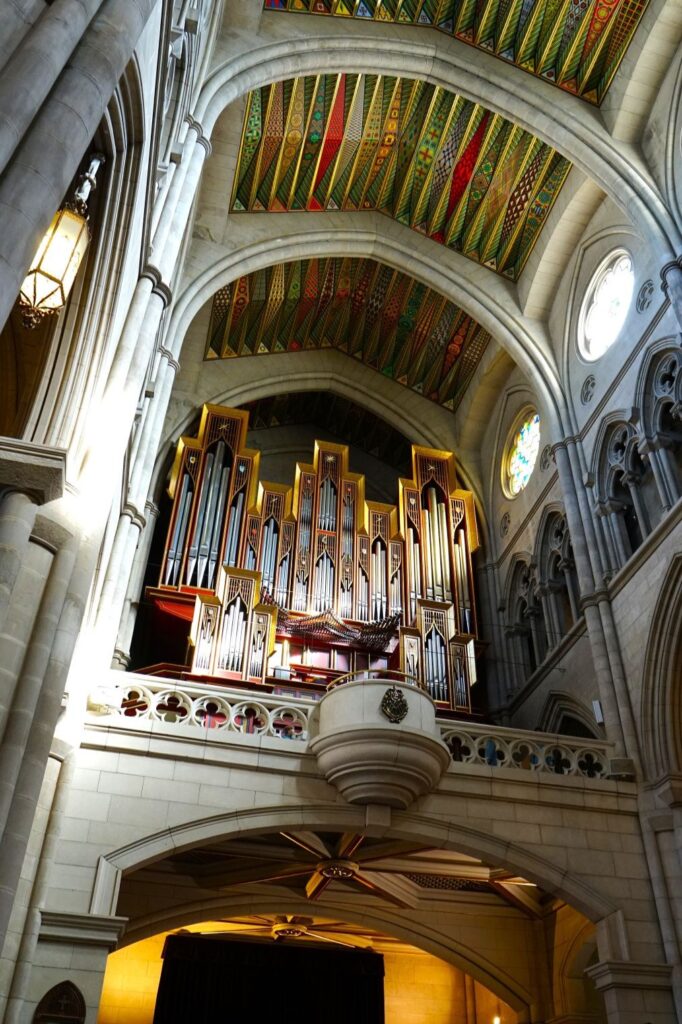
Standing beside the Royal Palace, Almudena Cathedral (Catedral de la Almudena) is a stunning mix of neo-Gothic, neo-Romanesque, and contemporary architectural styles. Unlike Europe’s ancient Gothic cathedrals, this one is surprisingly modern—construction began in 1879 but wasn’t completed until 1993!

Why Visit?
✔ Unique Architectural Fusion – Combines neo-Gothic, neo-Romanesque, and modern styles
✔ Breathtaking Interior – A colorful sanctuary with a striking modern ceiling mural
✔ Rooftop Views – Climb up to the cathedral’s dome (€7 entry) for one of the best vantage points over Madrid, with the Royal Palace as your backdrop. Sunset here is magical✨
✔ Royal Connections – Hosted the wedding of King Felipe VI & Queen Letizia in 2004
Visitor Tips
📍 Location: Right next to the Royal Palace (Calle de Bailén, 10)
⏰ Hours: Mon-Sun 10 AM – 8:30 PM (Museum & Dome close earlier)
🎫 Entry: Free to the main cathedral, €7 for the museum & dome
🚇 Metro: Ópera (Lines 2, 5, Ramal)
EXPLORE MADRID’S CULINARY SCENE
For a satisfying meal in Madrid, you could visit one of the city’s food markets—like the famous Mercado de San Miguel—or choose a local restaurant.
Just a 7-minute walk from the Royal Palace, we chose a restaurant called El Pimiento Verde, known for its Basque cuisine, which blends the soul of northern Spain with the hearty appetite of Madrid.
🥄A Warm House Offering
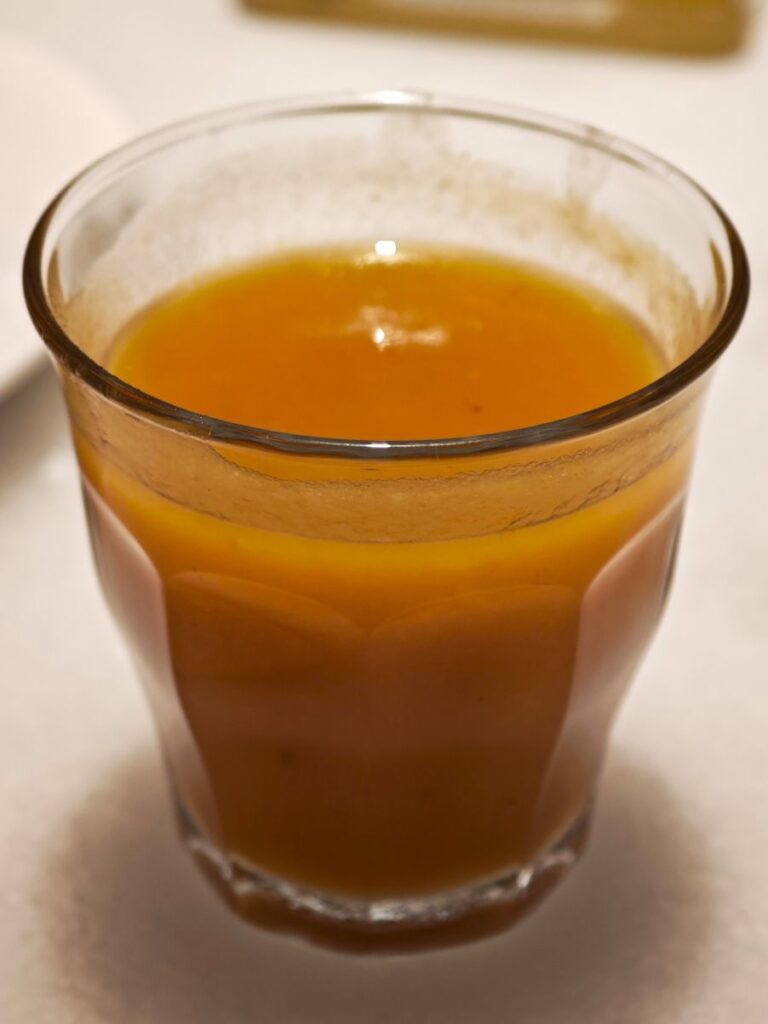
Before diving into the dishes, guests are welcomed with a complimentary drink—a warm, savory, slightly salty orange-colored broth that tastes like a spiced, thickened consommé (likely a Spanish “caldo”) – a perfect soothing start to the meal:
🍴White Asparagus with Mussel in “Brione” Mayonnaise
This starter captures spring on a plate. Served slightly chilled, the white asparagus is juicy, fresh, and surprisingly soft with a gentle bite. This Spanish spring delicacy is grown underground to preserve its delicate flavor—no bitterness, just buttery sweetness.
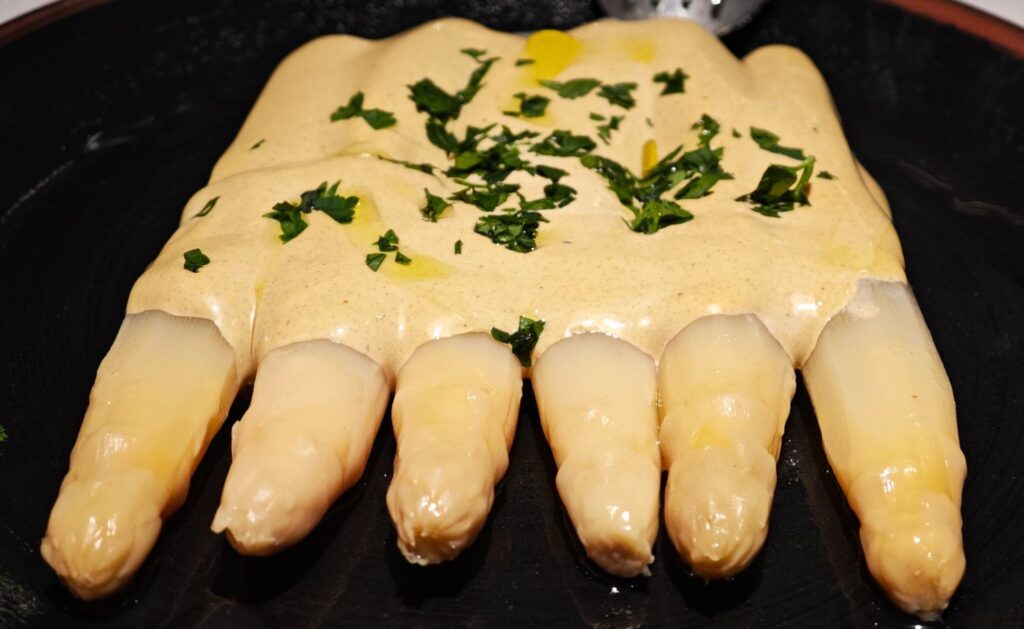
It’s topped with cilantro and paired with tender mussels, all drizzled in a rich, creamy brione mayonnaise sauce.
While not widely known outside of Spain, “brione” here likely refers to a Basque-style sauce, somewhat similar to salsa brava, but lighter, creamy, and with a subtle sourness, and herbaceous depth. The pairing of ocean and garden—mussel and asparagus—is smooth, balanced, and typical of Basque coastal cooking.
🌮 Basque Wrap with Cider-Cured Sausage (2 Units)
Two “Basque wrap” (likely a corn tortilla) cradling smoky, cider-cured sausage—a northern Spanish delicacy marinated in crisp Basque cider. It tenderizes the meat and gives it a subtle fruity-tangy edge. Once grilled or seared, the sausage takes on a charred, smoky flavor, just a touch spicy, and bursting with porky richness.
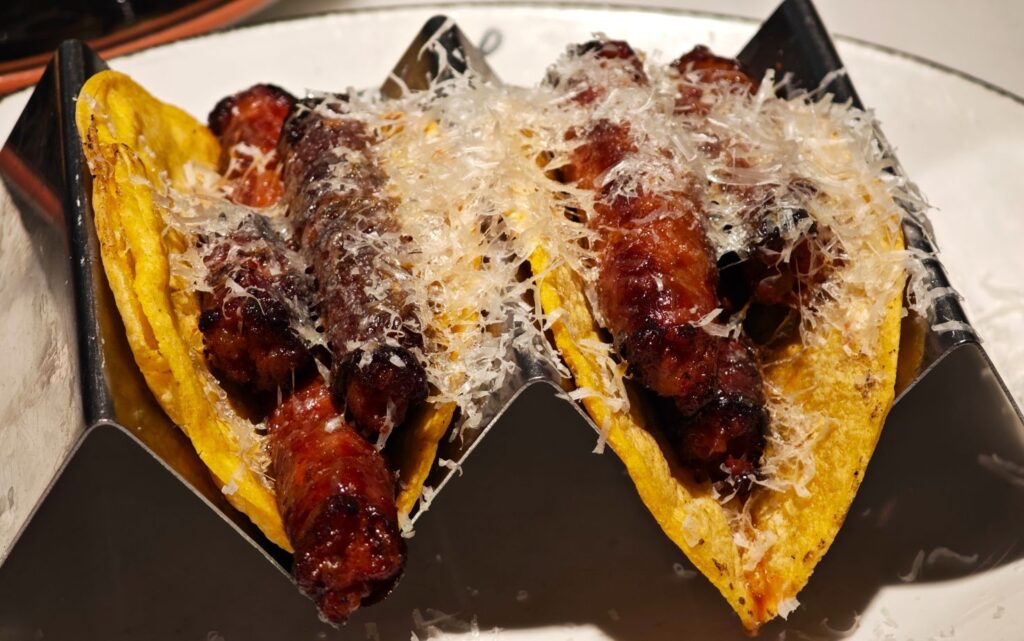
Slightly charred, it’s topped with mild, melty white cheese that’s creamy, nutty, and lightly tangy, so the dish gets a rich, umami layer without becoming too heavy.
🍖 Homemade Meatballs Filled with Foie & Palo Cortado Wine
A delicious marriage of rustic and refined, these succulent pork meatballs blend with silky foie gras at the center, bathed in a Palo Cortado sherry wine sauce (a nutty, caramel-like fortified wine from Andalusia). It falls somewhere between a nutty amontillado and a deep oloroso—dry, complex and full-bodied, lending the dish an intense, salty-sweet, umami punch.
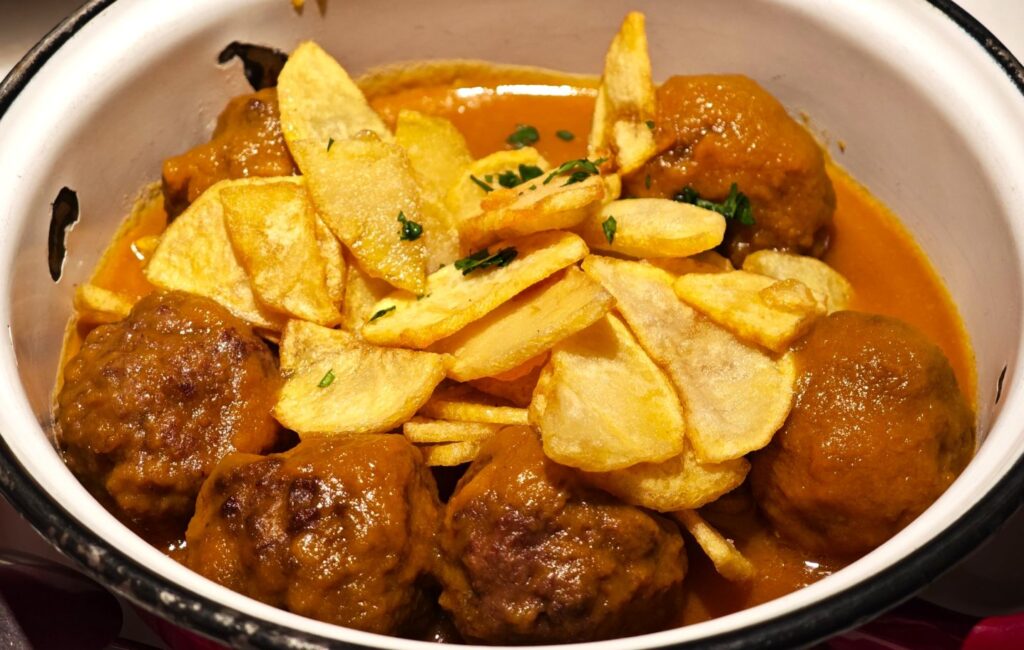
While coastal Spain loves seafood, Madrid’s inland history seems to favor slow-cooked meats (like callos or cocido), and meatballs are staples. This dish, elevated with foie gras and wine, feels like a luxurious update of this tradition.
🐟 National Rod-Caught Hake in Green Sauce
An iconic Basque cuisine, “merluza en salsa verde” is a dish of simplicity and elegance. The hake is sustainably caught by hand-line (rod-caught), resulting in super-fresh, tender fish.
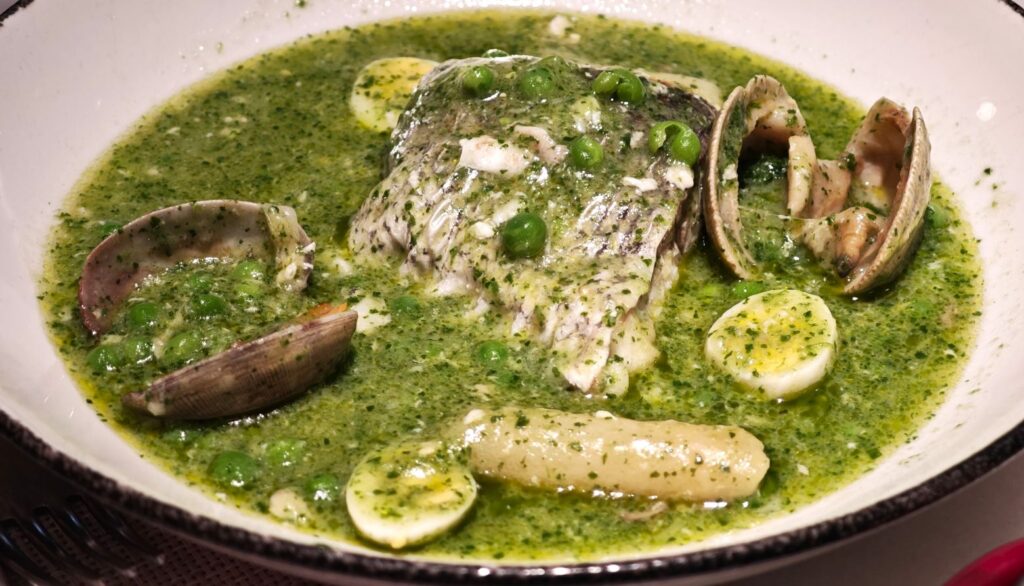
The green sauce “salsa verde” is made from parsley, garlic, and white wine, likely thickened with a bit of flour. Originating from northern Spain, this sauce is all about freshness—never overpowering, so the herbs sing.
The fish flakes like butter, its mild oceanic sweetness lifted by the sauce’s herbal freshness. Served with veggie-sweet, juicy beans, it’s a balanced, soothing dish.
PASSION OF FLAMENCO
From the flavorful Spanish cuisine, let’s move on to another quintessential Madrid experience: to witness a raw, electrifying flamenco show—one of the country’s most iconic art forms.
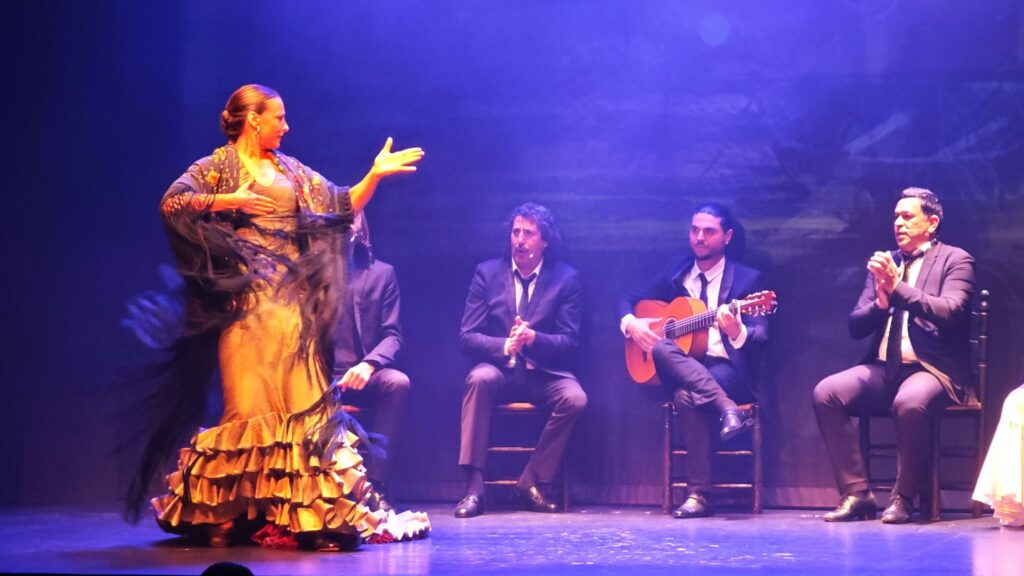
This fiery fusion of guitar, song, and dance traces its roots back to the 15th century, when Roma (Gypsy) communities migrated from India to Spain. Over time, their vibrant musical traditions blended with Andalusian folk culture, giving birth to the spectacle we know today.
More Than Just Dance
Flamenco isn’t just movement, it’s a drama of defiance and pride. Dancers embody a fierce, almost aristocratic arrogance, with sharp footwork (zapateado), hypnotic hand gestures (floreo), and thunderous clapping (palmas). Their expressions are intense, almost confrontational, as if channeling centuries of resistance and passion. The music follows suit:
- Guitars weave intricate melodies,
- Singers wail with gut-wrenching emotion (duende),
- Dancers’ stomps act as percussion, building to a cathartic climax.
It’s a rollercoaster of emotions—challenge, provocation, struggle, and ultimately, liberation.
Our Flamenco Evening
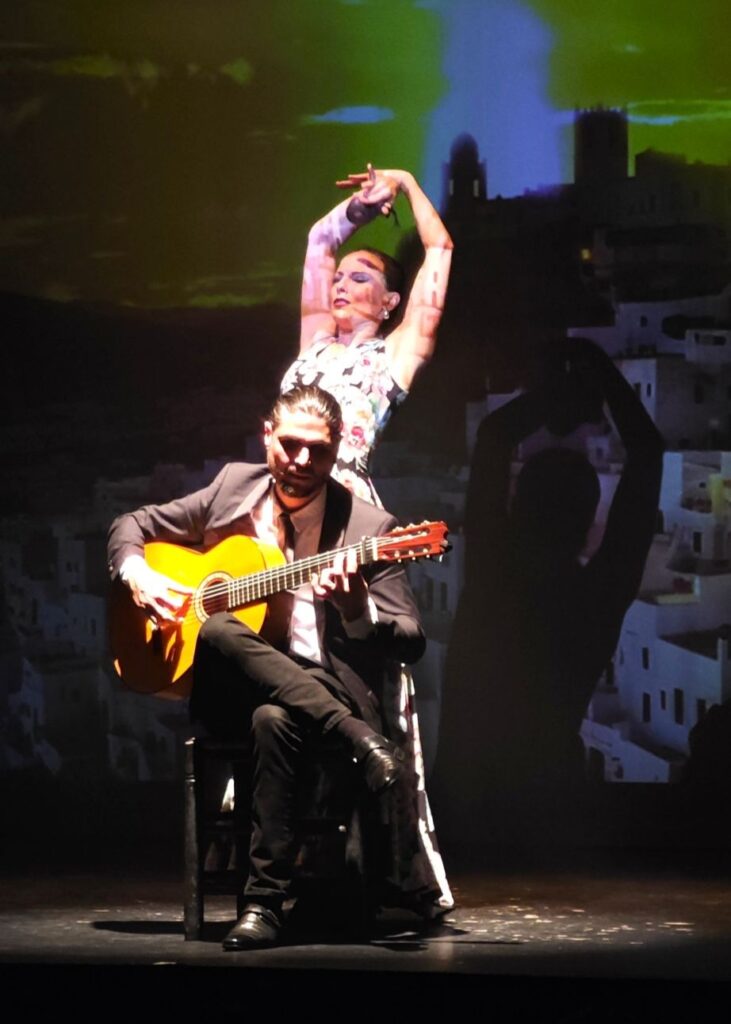
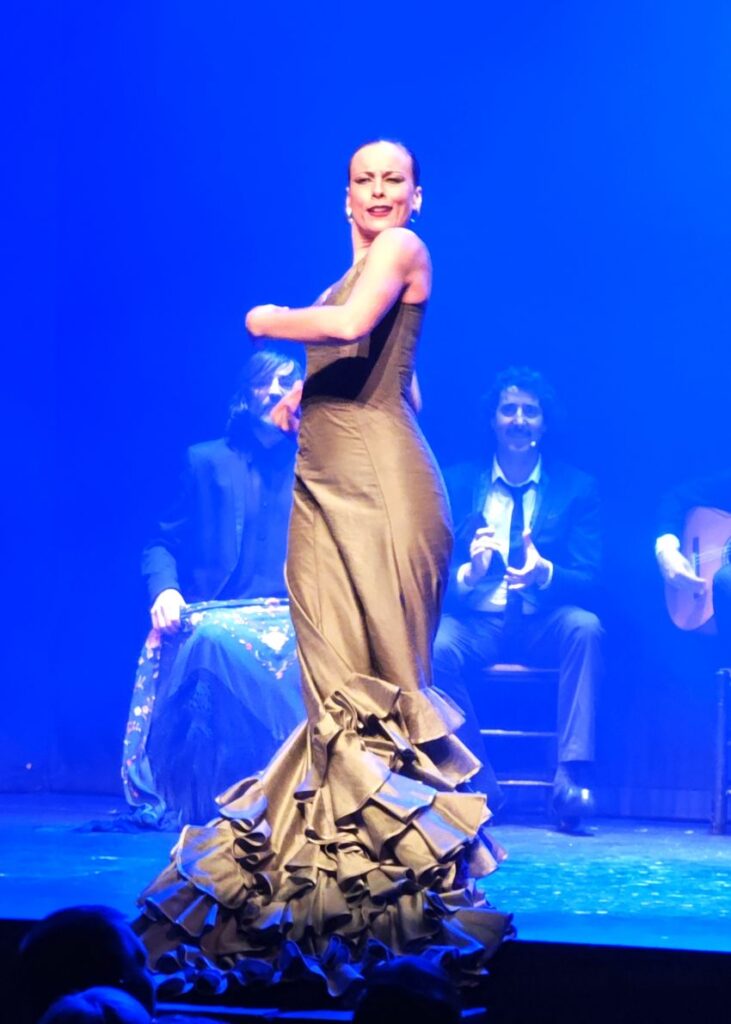
We chose “Emociones”, in a mid-sized flamenco theater in Madrid, for a good balance of intimacy and grandeur. Unlike cramped tablaos (flamenco bars) or big concert halls, this kind of venue ensures every seat feels close to the action—no bad views, just unfiltered passion.
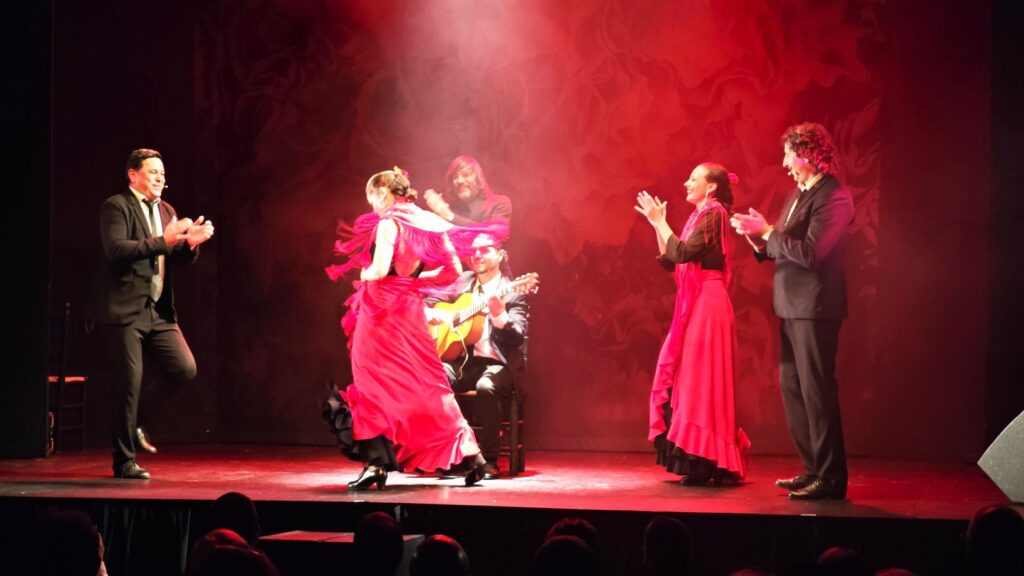
The one-hour performance(🎬) showcases flamenco’s diverse styles, from the melancholic cante jondo (deep song) to the explosive alegrías (joyful rhythms).
Practical Tips
📍 Theater Address: Calle del Pez, 10, 28004 Madrid (close to Gran Via)
⏰ Duration: 1 hour (arrive 30 mins early)
🎟 Tickets: Book online via GetYourGuide (hint: mid-tier seats often offer the best value!)
As the final notes of flamenco fade, we wrap up a day steeped in grandeur, flavor and rhythm. Next time, we’ll head for timeless brushstrokes at the Prado Museum, drift through the greenery of Retiro Park, and end the evening at Barrio de las Letras, alive with taverns and hip tapas spots. See you in the next chapter!

What a piece of istorical and national monument 😍
Que bello, eso se mantiene con el duro trabajo de la familia real 😏😂🔥
Palace luxury at the expense of the gold of America… When will justice be done!!!!😁
The palace completely blew us away! It’s so stunning!
Check out Flamenco show at Cueva de Lola, 28 EUR for one hour incl. show and drinks 🪩🪩🪩
❤ Thank you very much for the guide to the palace…extreme beauty..
Nice restaurant! Thanks for the recommendation!
Flamenco is the dance of mathematics and arithmetic.
Oleeee
Isn’t the palace a bit over the top? Gets me dizzy looking at those walls and ceilings
A flamenco show is the best thing you can do in Madrid!
The royal palace is paid by the blood of innocent people from sout America
Thanks for the recommendation! The restaurant looks great!
The Royal Palace is not the official residence of the Royal Family. They live in a house inside of El Palacio de la Zarzuela.
Madrid is straight out of a fairytale book. Nearby cities like Toledo are also gorgeous but madrid is just epic
That’s one hell of a guide to the Royal Palace, really well done!
I can’t vouch for the accuracy of the info, but with the level of detail, the writing, and the photos, it’s probably one of the best blogs I’ve come across in years.
I’ve watched your video. Looks like you had a great angle. I once saw a similar performance from a VIP seat right up front, and I had to look totally upwards the whole time. Honestly, it was a bit tiring and overwhelming. Next time, I’d also rather watch from a table further back.