Author: 玖伊岚 – Jiu Yi Lan

  • Noodles Bar: A Cozy Spot for Authentic Chinese/Asian Noodles in Frankfurt

    Noodles Bar: A Cozy Spot for Authentic Chinese/Asian Noodles in Frankfurt

    When it comes to go-to Chinese noodle spots in Frankfurt, most will immediately think of The Noodlemaker —and for good reason. It’s a popular spot, known for its delicious flavors and authenticity. But a boutique metropolis like Frankfurt, though small in size, certainly offers no shortage of great and flavorful options. So today, we’re taking you to another cozy little noodle haven called Noodles Bar. It might not be on everyone’s radar, but once you try it, you’ll wonder how you ever missed it.

    With homemade noodles, rich, aromatic broths, and fresh, local ingredients complemented by authentic spices straight from China, if you like authentic Asian noodles, Noodles Bar might just become your new favorite. Let’s dive into some of their best dishes and see why this place deserves a spot on your must-try list.

    Restaurant Profile
    • Name of the Restaurant: Noodles Bar
    • Adress: Fahrgasse 86, 60311 Frankfurt am Main
    • Style: Chinese Cuisine – Homemade Noodles, Dim Sum
    • Price: around 15 – 25 EUR per Person (incl. Drinks and Tips)

    Their menu goes beyond just noodles—they also serve delicious wontons, dim sum and, of course, a selection of cold appetizers and side dishes. In Chinese cuisine, pairing hot noodles with cold appetizers (liángcài, 凉菜) is a beloved tradition, a way of balancing flavors and textures, reflecting the Chinese philosophy of harmonizing yin (cooling) and yang (warming) elements in a meal. Before we delve into the noodles, let’s take a moment to check out some of their outstanding liángcài!

    Mouthwatering Chicken, or Kǒushuǐ Jī (口水鸡), true to its name, is an absolute flavor bomb. This iconic Sichuan cold appetizer features a whole tender, poached chicken leg, perfectly chilled and soaked in a ruby-red sauce. Its incredible succulence is the ideal match for the rich, spicy sauce that envelops it.

    The sauce itself is a masterwork, combining the numbing kick of Sichuan peppercorns with the fiery warmth of chili oil, enriched with garlic, soy sauce, and a hint of black vinegar. It’s spicy, tangy and savory. Toasted sesame seeds and crushed peanuts add a nutty crunch, while fresh cilantro brightens up each bite. With its irresistible combination of málà (numbing and spicy), xiān (savory and aromatic), and just a touch of sweetness, Kǒushuǐ Jī is the ultimate appetizer to get your taste buds buzzing.

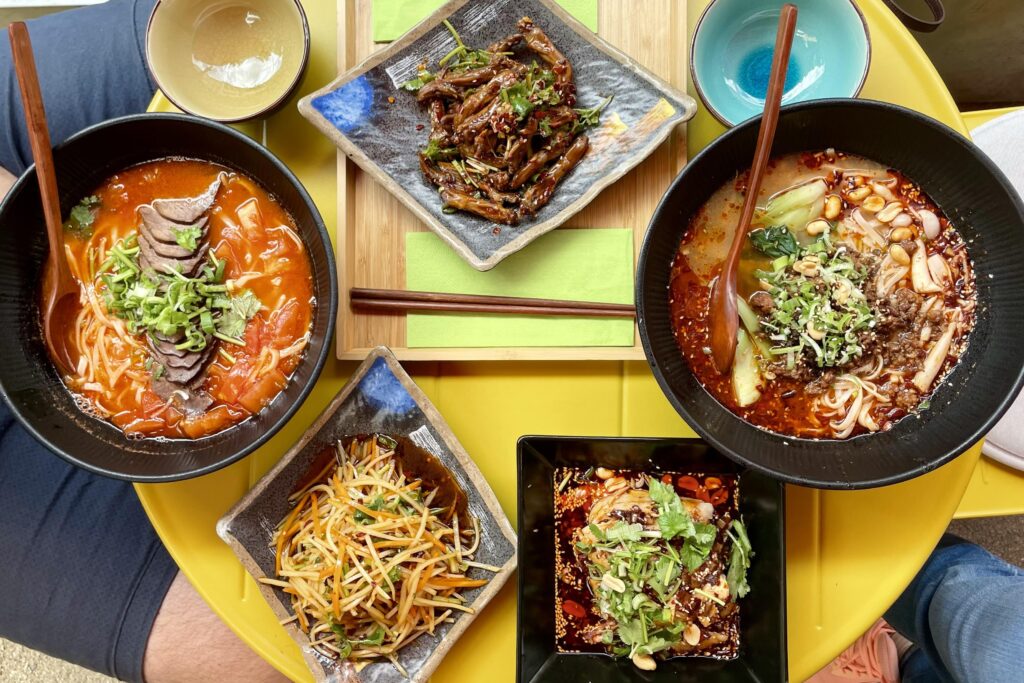
    Málà Yāshé (麻辣鸭舌 or Numbing and Spicy Duck Tongue) is cold delicacy perfect for leisurely snacking with friends. This dish features tender, springy duck tongues braised in a fragrant lǔwèi (卤味) broth – a savory blend of soy sauce, vinegar, star anise, rock sugar, and other aromatics. The result is a deep, rich flavor with a balanced umami and tanginess, accented by a warm, licorice-like note from the star anise and a hint of sweetness from the rock sugar.

    The numbing Sichuan peppercorns and the fiery chili oil create an addictive taste that’s both spicy and tingly. The duck tongues are chewy yet tender, with little bones in the middle that makes picking off the juicy bits both fun and satisfying. Topped with cilantro and dry chili, and served cold, this dish is refreshingly complex and packed with flavor. While it may be an acquired taste for some, it’s a must-try for those who enjoy unique and bold flavors.

    Two summer favorites you’ll find on many tables are Yánshuǐ Máodòu (盐水毛豆), or Salted Edamame, and Suān Là Tǔdòu Sī (酸辣土豆丝), or Sour and Spicy Shredded Potatoes. Both are vegetarian and perfect for those warm, sunny days.

    Yánshuǐ Máodòu (盐水毛豆), or Salted Edamame – a simple yet delicious snack that’s easy to love. These young soybeans are boiled in a lightly salted brine, resulting in crisp, refreshing bites. The light salting enhances the natural, nutty flavor of the edamame, making each pod a burst of savory delight.

    Suān Là Tǔdòu Sī (酸辣土豆丝), or Sour and Spicy Shredded Potatoes—a cold dish that packs a flavorful punch. Crisp, thinly sliced potatoes are mixed with carrot strips and fresh cilantro, then tossed in a tangy, spicy dressing made with vinegar, chili oil, and a hint of garlic – a tantalizing mix of sour, spicy, and savory that delivers refreshing crunch in every bite.

    Now, let’s dive into their noodles. Each one, paired with a unique broth or sauce, delivers a distinct flavor experience. We can’t wait to share our top picks with you!

    First up is 四川担担面or Dandan Noodles, a specialty from Zigong in Sichuan, recognized as one of China’s top ten noodle dishes. Named for the traditional way it was sold—carried in shoulder poles (called 担担Dandan in Chinese) by street vendors—this dish has a history dating back to 1841.

    The sauce is a bold blend of spicy chili oil, savory ground pork, fragrant Sichuan peppercorns, and garlic, all enhanced by pak choy, crushed peanuts, sesame seeds, silky shimeji mushrooms, and tangy Yibin preserved vegetables. The vibrant sauce drapes over the thin, smooth noodles, creating a spicy, savory sensation, with just a hint of tang. Mix the noodles with crisp, aromatic pork and the gently numbing, spicy broth, then take a generous bite—you’ll be treated to an umami-packed mouthful that’s both rich and lingering.

    Má là Niúròu Miàn (麻辣牛肉面), or Spicy Numbing Beef Noodles, is a dish that’s bold and bursting with flavor. Served in a rich, spicy broth infused with Sichuan peppercorns and chili oil, it delivers that iconic fiery and slightly numbing málà sensation that’s simply irresistible.

    These noodles come topped with tender slices of spicy beef for a deep, savory richness. Fresh pak choi, earthy shimeji mushrooms, and a sprinkle of green onions and cilantro add brightness and a refreshing crunch, while a touch of sesame introduces a subtle nuttiness. The peppery broth and aromatic chili oil, soaking into the noodles, veggies and the tender beef, enhance the umami flavor with every slurp, making this meal exciting and utterly satisfying.

    Sichuan Gān Zá Miàn (四川干杂面 or Warmer Nudelsalat) is an intensely flavorful and appetizing dish. The thin, elastic noodles are served dry—without broth—and are generously coated in aromatic chili oil, then topped with minced meat, fresh scallions, crunchy peanuts, sesame seeds, dry chili, and crisp spring sprouts.

    The chili oil clings to the noodles, imparting a spicy kick that’s invigorating and addictive. When you stir it all together, each chew is rich, nutty, spicy, and fresh, with the gratifying springiness of the noodles!

    The minced meat is a real highlight, packed with incredible flavor from its marinade of chopped scallions, ginger, doubanjiang (fermented bean paste), soy sauce, sweet bean sauce, and pepper. This combination gives the meat a deep, savory umami taste with a hint of sweetness and a subtle spice. When stir-fried, the meat becomes fragrant and caramelized, perfectly complementing the spicy, chili oil-coated noodles.

    Fānqié Niúròu Miàn (番茄牛肉面), or Tomato Beef Noodles Soup is a heartwarming dish. It features tender slices of beef slow-cooked in a rich, tangy tomato broth that’s brimming with flavor.

    The smooth noodles are bathed in a luscious tomato soup, paired with fresh soybeans, crisp pak choi, nutty shimeji mushrooms, and a sprinkle of green onions and cilantro. Tomatoes’ vibrant sweetness and zesty tang permeates the soup, wonderfully balancing the rich, savory scent of the beef.

    Simmered to perfection, the beef slices keep their shape and have a melt-in-your-mouth softness without becoming too mushy. With subtle sweetness and earthy undertones, the beef adds depth and umami without being spicy. Addition of cilantro and scallions, along with the sweet-tart tomatoes, makes the soup all the more fragrant, offering a refreshing and comforting bowl. If you’re craving for a milder dish with natural, delicious flavors, this is a must-try!

    These were some of our top picks at Noodles Bar, but we also want to highlight two additional main dishes that add variety to their offerings. While they may not be our most frequent orders, they’re definitely worth trying.

    One of them is Dōngyīn Gōng Tāng Miàn (冬阴功汤面), or Tom Yum Noodle Soup, a twist on the classic Thai dish. At Noodles Bar, smooth noodles are paired with fresh soybeans, mildly sweet shimeji mushrooms, succulent shrimp, tender fish tofu, surimi (a savory seafood product made from white fish), shrimp balls and squid balls, giving the dish a deliciously diverse array of seafood tastes. Coriander and bean sprouts lend a crisp freshness to the velvety broth. Unlike the traditional tangy, fiery Tom Yum, the soup at Noodles Bar leans towards a slightly sweet, coconut milk flavor with a mild spice, offering a comforting and umami-rich experience.

    Hóngyóu Chāoshǒu (红油抄手), or Wanton with Pork Filling in a Spicy Soup, is a Sichuan classic that’s beloved throughout China. Tender wontons, filled with juicy pork and wrapped in thin, light skins, are topped with fresh, crisp pak choi, sesame seeds, and green onions.

    The dish’s signature is its savory broth, seasoned with garlic, soy sauce, and a touch of vinegar, delivering just the right amount of heat and tang, making it addictive from the very first bite. While traditionally a fiery Sichuan dish, at Noodles Bar, the flavors are slightly toned down, with the deep aroma of the beef broth taking center stage. It’s spicy but balanced, rich but not heavy. This makes it an excellent introductory dish for those new to Sichuan cuisine. Scoop up a wonton along with chili-oil broth, sip it up all together, and the pork’s heartiness and the broth’s depth will spread through your palate, creating a mouthfeel that’s robust and indulgent.

    Before we wrap up, we have to recommend 2 homemade drinks at Noodles Bar. Both are crafted to be refreshing, with just the right touch of natural sweetness to keep it decadent yet gentle on the palate.

    The Rose Lychee Black Tea has delicate floral notes of rose and the subtle sweetness of lychee, balancing the bold, robust flavor of black tea. It’s a fragrant drink with delightful floral and fruity undertones.

    The Peach Oolong Tea is a fusion of smooth, aromatic oolong tea with the juicy sweetness of ripe peaches. The roasted, earthy base of the oolong tea pairs well with the fresh, fruity peach taste, making for a light, crisp, and naturally sweet refreshment.

    Noodles Bar may be small, but it’s always buzzing with a steady stream of loyal customers who come for the affordable, mouthwatering noodles and versatile side dishes. They use fresh ingredients, homemade noodles, and slow-simmered broths that are as nutritious as they are flavorful. While the menu may be simple, each dish is a masterclass, rich and authentic, bringing together signature noodle recipes from across various regions. The owner’s warm hospitality and speedy service are also a huge plus. It’s no wonder that Noodles Bar has a devoted following.

  • Lisbon Part 1: Transit Tips, Stays, and Bairro Alto Discoveries

    Lisbon Part 1: Transit Tips, Stays, and Bairro Alto Discoveries

    Welcome to another exciting travel episode of HaoChiBites! This time, we’re heading to Lisbon, Portugal’s vibrant capital that seamlessly blends traditional heritage with striking modernism. Nestled along the scenic shores of the Atlantic Ocean, Lisbon is a city of stunning contrasts, where ancient history meets contemporary charm. Join us as we explore this captivating destination in our upcoming posts.

    How to get to Lisbon

    By Air
    Fly into Lisbon Portela Airport (LIS), Lisbon’s main international gateway. From the airport, you can reach the city center by:

    • Metro: The Red Line (Linha Vermelha) gets you to the city in about 20 minutes. Operating from 6:30 AM to 1:00 AM, every 6 – 15 min (depending on peak/non-peak hours), with fares at €1.65 per trip.
    • Aerobus: Dedicated airport bus service to key locations. More info
    • Taxi or Ride-Sharing: Taxis and services like Uber are readily available.

    By Train
    Scenic train rides from major European cities arrive at the city’s main train stations, Lisboa Rossio, Santa Apolónia and Gare do Oriente.

    By Bus
    Long-distance buses from various parts of Portugal and neighboring countries arrive at Lisbon’s main bus stations, Sete Rios and Oriente. Companies like Rede Expressos and FlixBus offer frequent services.

    Getting Around Lisbon

    Public Transportation

    • Metro: Clean, efficient, and extensive, with four lines (blue, yellow, green, red). Single tickets are €1.65, day passes €6.60. The Viva Viagem Card costs €0.50 and can be recharged with various options incl. single ticket, day pass, or pre-loaded balance (3-40 EUR). It can be used for metro, modern trams, buses, funiculars, and certain suburban trains. More info
    • Trams: Lisbon’s iconic yellow trams are a charming way to get around the city, especially Tram 28, which passes through many historic neighborhoods.

    Lisbon Card

    Offers unlimited travel on public transport and free or discounted entry to many attractions. More info

    Taxis and Ride-Sharing

    Taxis and services like Uber and Bolt are affordable. Taxi base fare is €3-4, with €0.50 per kilometer, plus possible additional charges such as luggage fees (around 1.6 EUR for each piece) or waiting time (around 15 EUR per hour, if taxi is stuck in traffic).  

    Walking

    Lisbon is a walkable city, especially in central areas like Baixa, Chiado, and Alfama. However, be prepared for some hilly terrain.

    Cycling

    Pleasant along the waterfront or through parks like Eduardo VII. However, limited cycling lanes (especially in the center) and narrow, winding older streets can be challenging for cyclists.

    Rental Cars

    Best for exploring outside Lisbon. Within the city, parking is tough and traffic can be heavy—public transport is often a better option.

    Where to stay in Lisbon

    1. Baixa: Lisbon’s downtown area, known for its grand squares, neoclassical architecture, and bustling atmosphere. This area is flat and easy to navigate, making it ideal for walking. Suitable for first-time visitors who want to be close to major landmarks and enjoy a central location with easy access to public transport and shopping.

    • Price Range: €100-€250 per night for mid-range to upscale hotels.
    • Nearby Attractions: Stroll through Praça do Comércio, the iconic waterfront square; take in panoramic city views from the Santa Justa Lift; shop along Rua Augusta, Lisbon’s main shopping street; and relax at Rossio Square, a historic hub with charming cafes and theaters.

    2. Chiado: Chiado is a sophisticated and artistic district known for its cultural attractions, historic buildings, and high-end shopping. The area is more upscale compared to Baixa. Perfect for those interested in culture, shopping, and a more refined atmosphere, with close proximity to both historic and modern Lisbon.

    • Price Range: €150-€300 per night for mid-range to luxury hotels.
    • Nearby Attractions:Visit Carmo Convent, with its historic ruins and museum; explore Rua Garrett, a trendy shopping street filled with cafes and theaters

    3. Alfama: The oldest district in Lisbon, known for its narrow, winding streets, Fado music, traditional Portuguese architecture and local eateries.This area provides a more authentic Lisbon experience. Ideal for those who want to experience Lisbon’s historical, traditional culture, and narrow, picturesque streets.

    • Price Range: €80-€200 per night for budget to mid-range hotels.
    • Nearby Attractions: São Jorge Castle offers panoramic views of the city, while Lisbon Cathedral (Sé) exudes an ancient vibe. Enjoy scenic viewpoints from Miradouros like Miradouro da Senhora do Monte.

    4. Avenida da Liberdade: A broad, tree-lined avenue, Lisbon’s equivalent of the Champs-Élysées, with a mix of high-end shopping, luxurious accommodations, and elegant architecture. It’s less touristy than Baixa and Chiado. Great for those looking for a modern, upscale experience with easy access to shopping, dining, and green spaces.

    • Price Range: €150-€350 per night for mid-range to luxury hotels.
    • Nearby Attractions: Avenida da Liberdade features designer stores and charming cafes, while Eduardo VII Park boasts expansive gardens and lush greenery. Marquês de Pombal Square serves as a major traffic hub with its striking monument.

    5. Parque das Nações: This district contrasts sharply with Lisbon’s historic areas, featuring wide-open spaces, modern buildings, and attractions related to the 1998 Expo. ideal for those looking for a more relaxed, modern environment.

    • Price Range: €100-€200 per night for mid-range hotels.
    • Nearby Attractions: Oceanário de Lisboa is one of Europe’s largest aquariums, while Vasco da Gama Shopping Center offers a range of shopping and dining options. Gare do Oriente is a strikingly modern train station with an adjoining shopping complex.

    6. Bairro Alto: Famous for its nightlife, narrow streets, and bohemian atmosphere. It offers a more relaxed, artistic vibe during the day and transforms into one of Lisbon’s main nightlife hubs after dark. Ideal for those who want to experience Lisbon’s nightlife and artistic side while enjoying a more laid-back daytime atmosphere.

    • Price Range: €80-€180 per night for budget to mid-range hotels.
    • Nearby Attractions: Miradouro de São Pedro de Alcântara offers stunning city views, while the historic Bica Funicular provides a charming ride through the city. Admire the baroque splendor of São Roque Church and for a vibrant nightlife experience, explore the many bars and Fado houses in the area.

    Lisbon, famously built on seven hills, offers spectacular views over the city and the shimmering Tagus River. These hills are home to quaint neighborhoods like Bairro Alto, where we chose to stay for our trip.

    Bairro Alto is a charming and eclectic district, where you can experience authentic local life. It transforms from a peaceful neighborhood by day to a lively hub of activity at night. Its narrow, cobblestone streets are lined with traditional Portuguese houses adorned with vibrant street art, creating a perfect blend of old and new.

    Our apartment hotel was conveniently located close to the famous Church of São Roque. This church is renowned for its simple exterior that belies the stunning baroque interior within. There is no fee to enter the Church of São Roque. However, there may be a small fee if you wish to visit the adjacent Museum of São Roque, which houses religious artifacts and artworks. More info

    Strolling through Bairro Alto, we found the streets gradually coming to life. The area is lush with greenery, and the houses feature typical Portuguese brick patterns, making every corner picturesque. Despite the many stairs to climb, which can be strenuous with luggage, the experience is rewarding. As you ascend, the stairs often surprise you with glimpses of São Jorge Castle, standing majestically against the skyline.

    For those less inclined to tackle the hills, taxis are a convenient and affordable option. Alternatively, the historic cable car offers a charming way to navigate the steep streets for a small fare.

    Walking through sunny squares adorned with blooming purple flowers, we often found ourselves gazing up at the old ruins of the Carmo Convent, each step revealing breathtaking views of the castle.

    Breakfasts were easy to procure from small stores nearby, offering abundant and affordable options for around €10 for two people. For us, it was best enjoyed in second floor of our apartment, where we were treated to a vast open view overlooking the city’s orange rooftops, white houses, and the iconic red bridge stretching across the Tagus River. The gentle tide of the ocean in the distance added a meditative rhythm to our mornings, accompanied by the lively singing of seagulls as the day grew brighter.

    The residential neighborhood is a verdant oasis, with flowers and greenery spilling over the old houses and street art adding a modern touch. Bairro Alto perfectly encapsulates the nostalgic charm of old Lisbon while embracing the vibrant creativity that defines the city today.

    On the hilly path back to our hotel, we encountered one of the highlights of our trip – the Tapas Plate at Taberna do Bairro Alto. Artfully presented, this dish features an array of delicious Portuguese specialties, perfectly portioned for two to share.

    The plate includes a variety of chouriços (sausages), both roasted and smoked, offering a savory and slightly spicy kick. This goes well with the selection of queijos (cheeses): mild, milky Mozzarella, creamy and subtly sweet Ricotta, firm and nutty Aged Curado that crumbles beautifully, and tangy, smooth Sheep Cheese.

    Accompanying these are slices of presunto (bacon) for a deliciously salty note and crunchy toasted bread, ideal for layering with the rich cheeses, savory sausages, and smoked salmon.

    For a refreshing burst, azeitonas (olives), tomate cereja (cherry tomatoes), and crisp alface (lettuce) deliver juicy, vibrant flavors. There are also nozes (nuts) for a crunchy nuttiness, chips de batata doce (sweet potato chips), and sardinhas (sardine fish) adding a traditional Portuguese flair.

    This dish is like a playground for your creativity to bloom – with a bounty of fresh delicacies, you mix and match at your heart’s desire, each mouthful is a new experience, with the promise that the next will be just as unique and exciting.

    The Dourada Grelhada at Taberna do Bairro Alto is simply unforgettable. This dish features a whole bream, expertly grilled and accompanied by a vibrant medley of vegetables—long beans, carrots, broccoli, and potatoes—and a zesty wedge of lemon.

    The fish is astonishingly fresh. Each bite is so juicy and succulent that it felt like the meat is releasing a rich, flavorful fish broth with every chew. The tender flesh is nothing short of heavenly, while the skin, with its delicate crispness in places, intensified the savoriness.

    Lisbon’s exceptional fish freshness is a direct result of its access to the pristine Atlantic waters and its strong maritime traditions. This incredible quality makes every bite both comforting and thrillingly delicious.

    Bitoque de porco is a classic Portuguese comfort dish. This traditional meal features three savory pork steaks, crowned with a pan-fried egg, served alongside crispy fries and a fresh salad.

    The pork is delicately browned and crisped in places, indicating careful pan-frying without charring. The meat is tender and flavorful, with just the right amount of fat to enhance its richness. The egg, with its slightly runny yolk, acts as a luscious dipping sauce for the meat, adding a decadent touch. Paired with crispy French fries and a refreshing salad, this dish offers a satisfying blend of hearty and fresh elements, making every mouthful deeply enjoyable.

    As we wrap up our first chapter of Lisbon, just know this is only the beginning. Next time, we’ll dive into some of the city’s most iconic landmarks— Santa Justa Lift with its stunning panoramic views, the historic Carmo Convent with its evocative ruins, and the grand Praça do Comércio, a breathtaking waterfront square. Best of all, these landmarks are all within a walking distance from each other, making for a fun and easy city exploration. Stay tuned for more!

  • Secret Menu and Rich Flavors: Unveiling Thuy Vietnamese Restaurant in Munich

    Secret Menu and Rich Flavors: Unveiling Thuy Vietnamese Restaurant in Munich

    Today, we’ll take you to a quaint Vietnamese restaurant nestled in a peaceful neighborhood of Munich. Adorned with traditional Vietnamese and Southeast Asian decor, this charming eatery exudes a natural, rustic charm. Its homey ambiance feels like a cozy retreat, whether you’re dining indoors or enjoying the summer breeze under the shade of towering oaks outside.

    This lovely spot offers a gateway to Vietnam’s rich culinary scene, with aromatic herbs, intricate broths, and tantalizing snacks. The menu boasts a wide array of classic Vietnamese/Thai rice and noodle dishes. But for those in the know, the real adventure lies in the “secret” menu, available upon request. Titled “Hôm Nay” (today’s special in Vietnamese), this exclusive selection features many authentic dishes favored by locals and those seeking a true taste of Vietnam.

    Restaurant Profile

    Banh Xeo Chay Hay Man, often called “Vietnamese sizzling pancakes,” is an exquisite crepe made from a batter of rice flour, water, and turmeric, giving it its distinctive yellow hue. The secret to its thin, crispness lies in a high water-to-rice flour ratio and the technique of quickly swirling the batter in a hot, well-oiled pan. This ensures the pancake cooks evenly and achieves a tantalizing crisp delicacy.

    Browned and slightly charred on the outside, the pancake is filled with a delicious mix of shrimp, pork, bean sprouts, and rice noodles. It’s crunchy, tender, and savory, yet incredibly refreshing. Served with an array of fresh herbs like mint, Thai basil, fish mint (rau diep ca), and Vietnamese coriander (rau ram), and accompanied by the tangy nuoc cham dipping sauce, each bite promises an explosion of flavors.

    Wrap the herbs within the pancake and you’ll taste a refreshing coolness from the mint, a hint of anise-like spice from the Thai basil, the fishy, earthy note of fish mint, and the peppery, citrusy zest of Vietnamese coriander. This blend infuses freshness, aroma, and complexity into each mouthful. When dipped in nuoc cham, enhanced with shredded carrots, daikon radish, and chili, you’ll get burst of sweet, sour, and spicy flavors that perfectly complement the savory and herbal pancake.

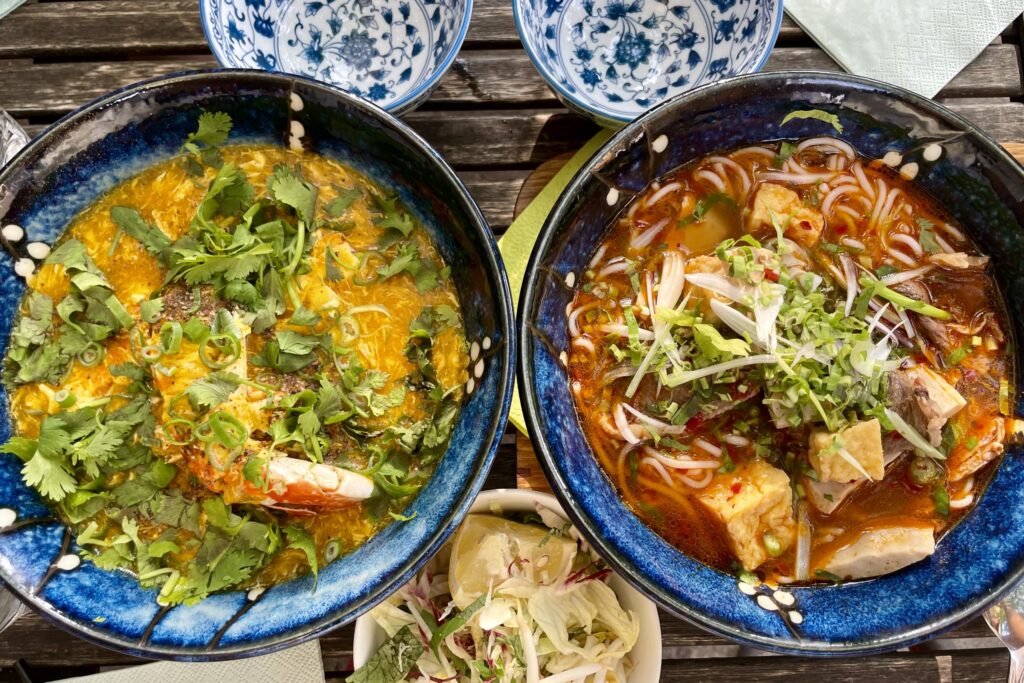
    Bánh Canh Cua (Từ Nhà Làm) + Càng Ghẹ Cua is a hearty Vietnamese dish featuring thick, round rice noodles (akin to Japanese udon noodles) in a luscious, flavorful broth. It’s highlighted by four large crab claws and tender crab meat, garnished with fresh cilantro, green onions, and a hint of pepper.

    The rich, slightly thickened broth is made from simmering pork bones and crab shells, deepened with fish sauce for a savory umami undertone. The addition of crab meat and quail eggs adds an extra layer of luxury with a creamy, seafood flavor. The thick rice noodles maintain their form even after a long soak in the heaty broth, offering a satisfying chew.

    The delicate crab meat, sweet and briny, almost melts in your mouth, while the crab claw meat is exceptionally plump and juicy! Incredibly fresh and springy, it provides a firm, succulent texture and intense flavor bursting with every bite. The claws are pre-cracked for easy shelling, but it can get messy, so better keep extra tissues handy!

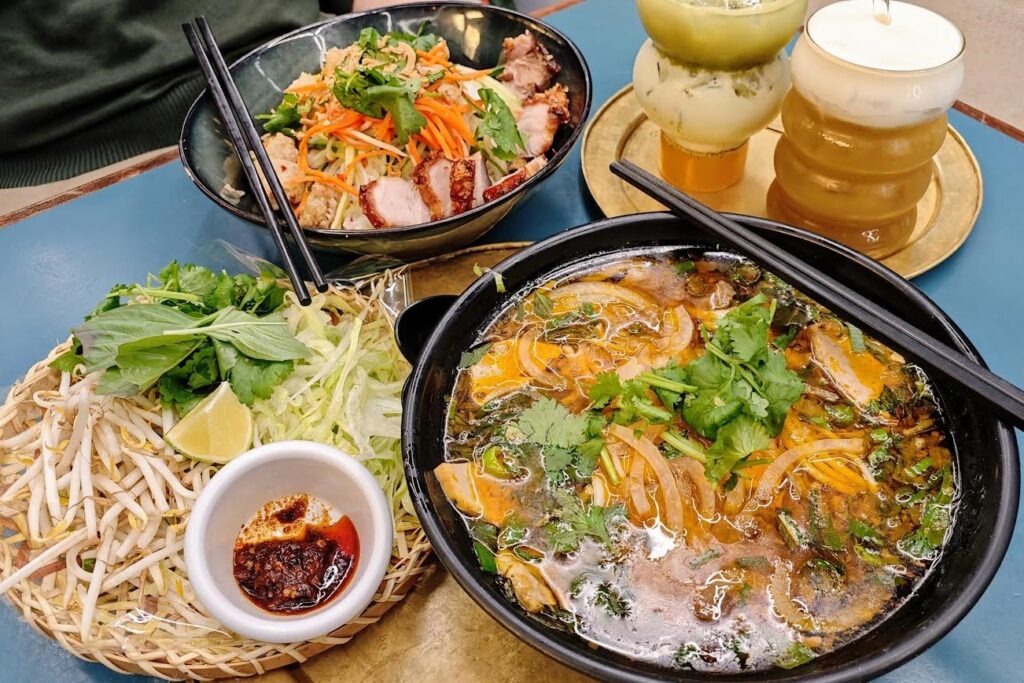
    Bún Bò Huế Đặc Biệt is an outstanding version of the classic Vietnamese noodle soup from the ancient city of Huế in central Vietnam. This dish is known for its rich, spicy broth and diverse flavors.

    The broth, simmered from beef and pork bones with lemongrass and drizzled with chili oil, boasts a fragrant, slightly spicy flavor and a bright red color. The thick, round noodles, unlike the flat ones used in Pho, are firm and elastic, delivering a delightful chew.

    What sets Bún Bò Huế Đặc Biệt apart is its variety of meats, infusing the broth with umami-rich flavor and meaty fragrance.

    Robust beef shank adds a deep, beefy taste, while the oxtail imparts a hint of sweetness with rich, intense beef flavor as the meat easily falls off the bone. Pork knuckle, though soft and mild in taste, enhances the broth with collagen and marrow, its gelatinous skin and cartilage contributing to a rich, viscous mouthfeel. Pig’s blood cubes lend a smooth tenderness to the soup.

    Topped with onions and shallots, the soup also includes airy fried tofu cubes that thoroughly absorb the broth, loaded with juicy aroma. Fresh herbs, vegetables, and a lemon wedge are served on the side, so you can brighten up your bowl to your liking. It’s a dish that excites and comforts at the same time.

    Speaking of Vietnamese cuisine, many often think of its more delicate side, exemplified by Pho or Bun Thang from the north, characterized by their clear, fragrant broth and light, subtly flavored ingredients. While northern Vietnamese dishes tend to be milder, central and southern Vietnamese cuisines are known for their rich, bold, and sometimes spicy flavors. Bún Bò Huế and Bánh Canh Cua are excellent examples of this diversity, showcasing the hearty, flavorful, and intense side of Vietnamese cooking.

    The staff at Thuy is incredibly friendly. Upon learning that I was Chinese, they thoughtfully brought out a translated version of the special menu in Chinese. They explained that many Chinese guests come specifically to enjoy their unique dishes, so they made an effort to create a Chinese version. As I looked at the charming handwritten menu, I was touched by this simple, genuine kindness of the Vietnamese people. It reminded me that the essence of a cuisine lies not only in its flavors but also in the warmth and thoughtfulness of those who prepare it. Perhaps that’s why Vietnamese food, with its rich tapestry of tastes and heartfelt hospitality, continues to enchant food lovers around the world.

  • Thai Boat Noodles: A Taste of Authenticity, Tradition, and Nostalgia at Soi 22

    Thai Boat Noodles: A Taste of Authenticity, Tradition, and Nostalgia at Soi 22

    Step into the vibrant world of Thailand right here in Frankfurt at our latest culinary hotspot – Soi 22. This new Thai restaurant is a must-visit for anyone craving the true taste of Thailand. From the moment you walk in, you’ll be enveloped in the lively ambiance and charming decor that reflects an old tradition uniquely Thai – the boat noodles culture.

    The owner, passionate about bringing authentic Thai experience to Germany, has recreated the unique and historic tradition of “boat noodles” (Kuay Teow Reua). Originating from the Ayutthaya period (1351-1767), these noodles were once sold from boats along Thailand’s bustling canals, when canals were the primary means of transportation in many parts of Thailand. Vendors would paddle their boats along canals, preparing and selling bowls of noodles to people on the banks or other passing boats.

    With the decline of canal transport, boat noodle markets have made their way to land-based stalls and restaurants, evolving into vibrant cultural and recreational hubs. Soi 22 beautifully mimics this traditional flair with decor like barber shops and massage parlors, creating an atmosphere that transports you straight to a charming miniature version of a Thai boat noodle market.

    Restaurant Profile

    Before diving into the food, let’s introduce you to two indulgent yet refreshing Thai iced tea creations.

    Thai Ice Tea with Lemon, made from a blend of black tea and spices such as anise and tamarind, has a deep, ruby-red hue. The addition of a slice of lemon enhances its bright, lemony sweetness with a subtle tang.

    Thai Ice Tea with Milk offers the creamy, indulgent side of the Thai iced tea. The tea blend with spices gives it a deep amber color that remains visible at the bottom where it hasn’t been mixed fully with milk. It creates an appealing contrast of creamy white on top and rich golden tea below. A sprinkle of cinnamon on top adds a touch of warmth that complements its luscious, milky flavor.

    Though not meant for cooling the thirst, these sweet, refreshing treats are perfect for balancing the bold, spiced Thai flavors, making them a hit for those who love rich, dessert-like drinks.

    Soi 22’s carefully selected starters bring the authentic flavors of the Thai night market right to your table, featuring popular local snacks like crispy wontons and crispy pork fat. You won’t want to miss the A1 Grilled Pork Balls and A4 Steamed Spicy Prawn Wontons— the absolute must-try dishes at Soi 22.

    A1 Grilled Pork Balls features nine freshly handmade pork balls, served on three skewers and topped with cilantro and a slice of red bell pepper.

    Expertly crafted, the meat balls taste incredibly fresh and bouncy, offering a satisfyingly firm texture. The slightly charred surface adds a delightful chewiness and smoky flavor. Generously dip them in the sauce for a blend of smoky, tangy, sweet and subtly spicy notes. It wonderfully enriches the savory, umami-packed meat balls, adding tantalizing layers of taste to every bite!

    A4 Steamed Spicy Prawn Wontons is a dish that had the diner next to us exclaiming “seafood paradise!” And we wouldn’t disagree.

    This exquisite dish features three meticulously crafted wontons, each generously filled with two succulent black tiger prawns. Bathed in a dark, aromatic fish sauce and topped with cilantro and fresh chili, these wontons are a true taste sensation.

    Each wonton bursts with natural sweetness of juicy prawns, perfectly complemented by the bold spices. The delicate steamed wrapper is soft and slightly chewy, melting in your mouth and beautifully contrasting with the firm, plump prawns inside.

    The accompanying spicy, tangy, and slightly sweet fish sauce enhances the overall flavor. Be warned, the sauce packs quite a spicy punch, but it’s this heat that makes the dish so invigorating. Take a bite, and you’ll be hit with an exhilarating blend of textures and flavors—the tender prawn filling, the soft wonton wrapper, and the spicy, umami sauce.

    For those who find the spice level too intense, the sweet Thai drinks can be your remedy here. But trust us, every spicy, flavorful bite of these wontons is worth the heat. It’s truly a piece of seafood paradise.

    Now, let’s dive into the main event—Thai boat noodles! These come with a dark, luscious broth, known for its rich and intense flavors, thanks to a blend of spices, herbs, and sometimes even pig or cow blood for added depth and thickness. At Soi 22, they stick to tradition with a moderate portion of broth, just like in the old days when rickety boats were prone to spillage. But don’t worry— if you want more, you can get extra broth at no extra charge.

    For your noodle bowl, you can choose from a variety of ingredients, including tender beef, flavorful beef balls, and a selection of offal. Each dish is accompanied with Thai basil and crisp bean sprouts for a burst of freshness and crunch.

    You can enjoy your noodles with or without broth, and pick from egg noodles, thin or thick rice noodles.

    For an extra kick, you can add chili flakes, pickled sour chili, fish sauce, and sugar. The Thai chili flakes pack a serious punch, so sprinkle with caution!

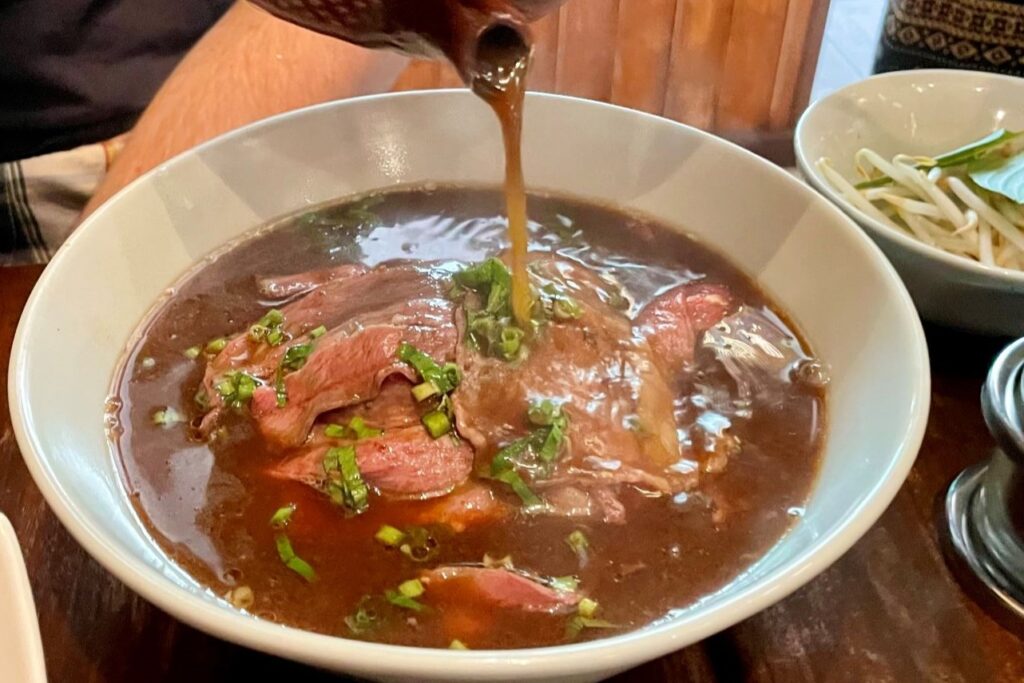
    N6. Nam Tok Wagyu A5 Sliced Wagyu takes Thai boat noodles to a whole new level. This dish features premium A5 Wagyu beef, sliced thinly and served raw, flaunting its rich marbling and vibrant red color. It’s a feast for the eyes and the palate, promising a succulent, beefy sensation.

    Generously layered over the noodles, the raw Wagyu is cooked right at your table. Watch in awe as the staff pours hot broth over the beef, transforming it into juicy tenderness right before your eyes. This theatrical cooking process ensures the Wagyu’s buttery richness is preserved at its freshest, elevating the dish to luxurious heights.

    The dark, robust broth, infused with a complex blend of spices, herbs, and a hint of tanginess, superbly complements the rich, savory Wagyu. Fresh Thai basil and crisp bean sprouts add a refreshing crunch and balance to the rich flavors.

    Be sure to stir the noodles right after adding the broth, as the thick, flavorful concoction can make the noodles mushy if left still for too long. Each mouthful delivers a tantalizing mix of tender beef, rich broth, and vibrant toppings — a lavish twist on traditional Thai boat noodles that is sure to impress.

    N5. Nam Tok All-In is the epitome of authentic Thai boat noodles, uniting a delectable assortment of beef components in one bowl. This dish features sliced beef, braised beef, beef balls, tendon, liver, and tripe, delivering a genuine taste of traditional Thai flavors.

    The rich, thick broth deepens the savory flavors of the tender sliced and braised beef, with the braised beef adding an extra layer of melt-in-your-mouth goodness. The beef balls are chewy, firm, and bursting with flavor. The tendon, soft and gelatinous, fully absorbs the richness of the broth. The liver offers a bold, earthy flavor that adds complexity, while the tripe is chewy and slightly spongy, providing a unique texture.

    Enjoy this dish with the robust broth and fresh veggie toppings like Thai basil and bean sprouts. Each spoonful is intensely flavorful, with a refreshing crunch and brightness that balances the rich savoriness.

    The variety of beef cuts are staples in classic Thai boat noodles, making it a top choice for those craving an authentic taste of Thailand.

    The only dessert offer at Soi 22 is the E1. Original Khanom Thuay, and it’s nothing short of extraordinary. This steamed coconut pudding has a smooth texture and a rich, layered flavor.

    Khanom Thuay consists of two layers: a silky, slightly salty coconut custard on top and a subtly sweet, steamed rice flour base below. The bottom layer is tender and smooth, while the top layer is luxuriously creamy, bursting with aromatic coconut flavor.

    Each bite blends sweet, savory, and creamy notes with a light, melt-in-your-mouth quality. For the best experience, use the bamboo spoon to gently scrape from the edges, ensuring you get both layers in every bite. This indulgent dessert will impeccably round off your meal at Soi 22.

    At the end of our meal, we were treated to a sweet surprise not listed on the menu: Palm Sugar, Milk, and Coconut Dessert, a complimentary goodie on the house. This dessert features a soft, cake-like base that’s lightly spongy and sweetened with palm sugar, giving it a warm, golden color and a rich, earthy sweetness.

    Crowned with shredded coconut, it lends an enjoyable chewiness and a hint of nutty flavor, highlighting the dessert’s subtle tropical notes. The coconut’s slightly fibrous texture contrasts nicely with the soft, airy base, combining the indulgent sweetness with a pleasantly light touch.

    The atmosphere at Soi 22 is infectious, as every guest seems to revel in delicious food and joyful mood. The staff greets every guest with traditional, heartfelt gestures—hands pressed together and a gentle “sawadika” (hello in Thai), a subtle bow that speaks volumes of their grace and humility. In quieter moments, the owner himself would take the time to chat, sharing stories about each dish, from its origins in Thailand to the influences from neighboring countries. His passion for the cuisine and the restaurant was palpable.

    Soi 22 is undoubtedly a taste of authentic Thai fare. More than that, it’s an immersion into a slice of Thailand’s soul, where simplicity and authenticity shine brightest, steeped in tradition, warmth and a sprinkle of nostalgia.

  • Chagiya Grill: Ultimate Korean BBQ Bliss in Munich

    Chagiya Grill: Ultimate Korean BBQ Bliss in Munich

    Today, BBQ lovers, prepare to be amazed! We’re about to introduce you to the absolute must-visit Korean BBQ spot in Munich. This gem has earned rave reviews from everyone we know, standing out as one of the best BBQ destinations in the city.

    Restaurant Profile

    Step inside and you’ll be greeted by a vibrant yet elegant setting. The ambiance is casually chic, with just the right amount of space between tables to make your dining experience feel intimate and special. This restaurant hits every high note: top-notch ingredients, unbeatable value for money, tantalizing variety with so many customization options, crafting flavors that’re are out of this world!

    Service is an integral part of the entire experience. The staff are not just waiters or waitresses; they’re your personal BBQ guides, keen to tailor the experience to your preferences. They’ll even show you photos from their own phones to give you a sneak peek of what to expect.

    As soon as we glanced at the menu, we were instantly thrilled by the incredible variety of offerings. We knew the staff’s patient consultation would be invaluable in guiding us through the options. This is more than a Korean BBQ place; it’s a global culinary fusion. They serve the fine cuts of meat, celebrated not only in Korea but also in Japan, Beijing, Thailand, Taiwan, and Vietnam, each with its own unique marinade and style.

    You can choose from pork, beef, lamb, chicken, and seafood with two main sets. The standard composition, priced at around 35 EUR, lets you enjoy 300g of three different meat and seafood types. For those with a bigger appetite, the extended composition, at around 40 EUR, offers 400g of four different types.

    Wagyu beef is also available for an extra charge. Although it’s not listed on the menu, you can request it—20 EUR for 100g of premium Wagyu from Japan. They also offer Australian Wagyu, which can be included in your set for about 5 EUR on top of the composition price.

    At Chagiya, the beef cuts are from Black Angus Beef, known for its rich marbling and tender texture. Different cuts from different parts of the body offer unique tastes and textures. To enjoy the variety, we sampled different meat types, but made sure to keep beef front and center. For the two of us, we decided on two extended sets with Australian Wagyu included.

    The Australian Wagyu, with its excellent marbling, promises buttery, rich, beefy flavors. The menu sets start with No. 1.1 Classic Seoul-Style Kalbi Short Ribs, featuring high-marbled short ribs from the front back area, sliced with bone for supreme juiciness. Next up is No. 1.6 Japanese Chuck Yakiniku Bliss, which includes large cuts of chuck rib meat from the shoulder area, known for its intense beefy flavor. No. 1.7 Imperial Beijing Flat Iron (Burgmeisterstück) offers thick slices of flat iron steak, prized for its robust taste and often considered one of the best for grilling.

    For a spicy and aromatic delight, we chose No. 1.8 Thai Peppery Pinnacle, which consists of flat iron steak pieces seasoned with pepper sauce, onions, cumin, and a touch of coriander. Next in line was No. 2.2 Duroc Jeop Sal, featuring thick slices of Duroc pork belly, known for its succulent and juicy texture, with a rich and slightly sweet flavor. No. 4.1 Kimchi Dak-Bokkeum brought a bold and tangy flavor with its chicken meat marinated in a spicy Korean kimchi sauce, offering a hint of heat. Finally, No. 5.3 Scallops presented four large-sized scallops, bringing a sweet, oceanic flavor that perfectly complemented the hearty meats.

    For two people, two extended sets at Chagiya are more than enough, leaving you thoroughly satisfied. If you’re inclined towards the standard sets and still want to explore more, we highly recommend trying the M1 Korean Seafood Jeongol Pancake with Leek and Spicy Sauce. This popular dish is a delicious medley of shrimp, octopus, and crispy leeks, topped generously with sesame seeds.

    The soul of this pancake is in its dipping sauce. It combines the deep flavors of soy sauce, a tangy hint of vinegar, and the nutty notes of sesame oil. Minced green onions infuse it with freshness, while chili lends a spicy kick. The pancake’s starchy texture softens the briny sweetness of the seafood and the pungent aroma of leeks. Paired with the savory sauce, it delivers umami richness in every bite, making for a solid foundation before diving into the BBQ feast.

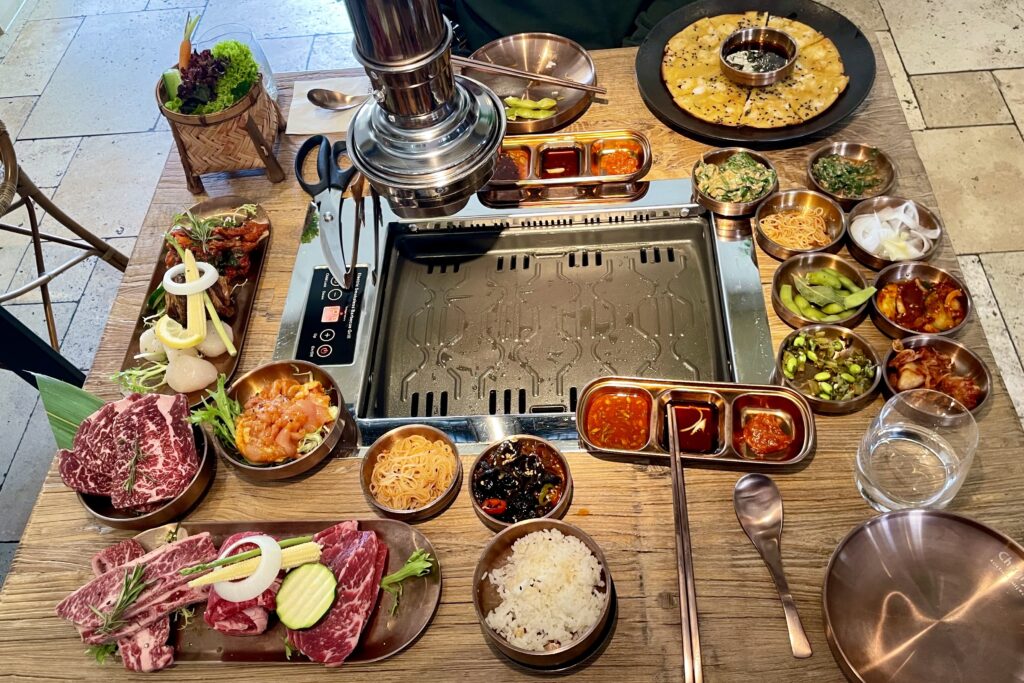
    Once we placed our order, the staff promptly served an array of delectable side dishes. These included fresh spinach in sesame paste, tangy and slightly spicy rice noodles, salted edamame in shells, pickled mustard greens with edamame, savory wood ear mushrooms in a spicy sauce, kimchi, zucchini, pickled radish, fresh salad with carrots and cucumber, and steamed rice topped with sesame seeds.

    All these banchan are complimentary and can be refilled free of charge. Seriously, just indulging in these delicious sides can leave you feeling full and utterly satisfied. This unlimited refill policy is a game-changer that will transform your BBQ experience.

    The variety of vegetarian banchan ensures that the BBQ never feels heavy, allowing you to balance rich meats with fresh veggies. And you get to fully enjoy Korean BBQ the authentic way, known as Ssam (쌈):  wrapping succulent meat in leafy greens such as lettuce, adding BBQ sauce, and piling on different flavorful sides for that ultimate mouthwatering bite. Each mouthful is an exciting, perfectly balanced burst of flavor.

    While you’re savoring the side dishes, the main event—the BBQ platters—arrive at lightning speed. The staff quickly gets the BBQ equipment ready for you, with the stove embedded right in the middle of the table. With a grill plate at the center, you can place your meat and other ingredients on top, flip and grill at your own pace. The enticing aroma and the sizzling sounds make the grilling incredibly fun and engaging.

    The BBQ set is a complete package, even with a smoke extractor hanging above. The staff adjusts it to the right spot to soak up the grilling smoke, so you won’t leave smelling like BBQ. Each table is equipped with scissors and tongs. In Korean kitchens, scissors are beloved for their versatility, perfect for cutting meat into manageable pieces. Here’s a pro tip: use the scissors to cut the meat either before grilling or after it’s cooked to avoid cross-contamination. And it’s best to use the tongs rather than chopsticks to flip the raw ingredients, just to keep things sanitary.

    Let’s fire up the grill—the moment the meat hits the hot surface, the crackling sound and aroma is irresistible. The high-quality beef showcases exquisite marbling, with the fat gently melting and enhancing its juiciness on the grill. The smell is deeply enticing, with hints of caramelization and a savory sweetness from the rendered fat.

    As the meat grills, its surface crisps to a brownish perfection, creating a tender inside and a crispy outside. Accompaniments like onions, baby corn, asparagus, and rosemary enhance the natural savoriness of the protein and add vibrancy to the grill plate.

    There are three dipping sauces: a thick, spicy paste combining fermented soybean and chili, offering a dynamic flavor profile of nutty, garlicky, sweet, and spicy notes; a dark, sesame oil-based sauce with salt and black pepper for a mild, nutty taste and subtle savory flavor; and an extra-spicy variant for those seeking more heat. Each sauce elevates the umami richness of the meat with a spicy-savory kick and subtle nutty undertones.

    All the meat types are delicious—whether it’s tender chicken, juicy pork belly, or plump scallops—but the beef simply reigns supreme. Bite into its juicy succulence, savor the luxurious, robust beefiness with caramelized charr that completely engulfs you in its richness and intensity – a true taste of heaven.

    Try it the Korean way: wrap the meat in lettuce leaves and layer a few sides for an explosion of flavors and textures – the wood ear mushrooms add a chewy, earthy flavor, while rice noodles provide a soft, starchy element that absorbs the flavors of the meat and sauces. Zucchini contributes a slight sweetness and crunch, complementing the tanginess of kimchi, which gives a spicy and fermented kick. Onions offer a subtle sharpness, balanced by the mild sweetness of edamame and the refreshing coolness of cucumber.

    Indulge in the juicy, hearty meat, paired with vibrant accompaniments and enriched by the dipping sauces bursting with spicy-savory depth, nutty richness and a fiery punch. Enveloped in a crisp freshness of the lettuce, each mouthful ignites a gratifying taste sensation that captures the very essence of Korean BBQ dining.  

    Korean BBQ is an ancient tradition, tracing its roots back to the Goguryeo Kingdom (37 BCE to 668 CE) with Maekjeok, a type of grilled meat. It evolved over the centuries from Seolya Mijeok, a snowy night delicacy in the Goryeo Dynasty (918 to 1392 CE), to Neobiani Gui (thinly sliced grilled beef), a royal treat in the Joseon era (1392 to 1910), before becoming a popular choice for communal feasting.

    Although no longer a symbol of royalty nowadays, the Korean BBQ retains its festive character. I fondly remember it as a popular post-exam celebration from my school days. In our cramped dormitory, the home-style BBQ grill dominated the center, claiming much of the available space. Yet, we didn’t mind. It was an indulgent moment in our teenage days – a long-awaited reward after the toughest exams. We embraced the grilling aroma that filled every corner of our dorm, itching neighboring classmates to join.

    Those days of marathon study sessions, daily struggles and endurance distilled into a moment of fervent satisfaction. As we bit into the palm-sized lettuce wrap of pork belly – relishing the rich, fatty flavors with a firm chew of juicy meat – was it the comfort of the food, or the optimistic spirit and hopeful anticipation unique to student years? Our faces glowed with contentment. We were seventeen that year. Now, revisiting the Korean BBQ in Munich, it still stirs in the recesses of memory an unfinished nostalgia, for the youthful bliss and heartening camaraderie.

  • Northeastern Chinese Flavors at True Tasty: From Ice Flower Dumplings to Grilled Delights

    Northeastern Chinese Flavors at True Tasty: From Ice Flower Dumplings to Grilled Delights

    If you’re on the hunt for delicious street food with the warmth of homemade flavors, look no further than True Tasty. Unassumingly located in the heart of Frankfurt, this charming eatery has become a favorite among those who appreciate authentic Chinese eats. My previous visit had me raving about their lip-smacking dumplings and savory beef pies, but there’s so much more to explore. This time, we’re excited to introduce you to a few more of their must-try dishes that embody the irresistible charm and comfort of homemade cooking, which we absolutely adore.

    Restaurant Profile

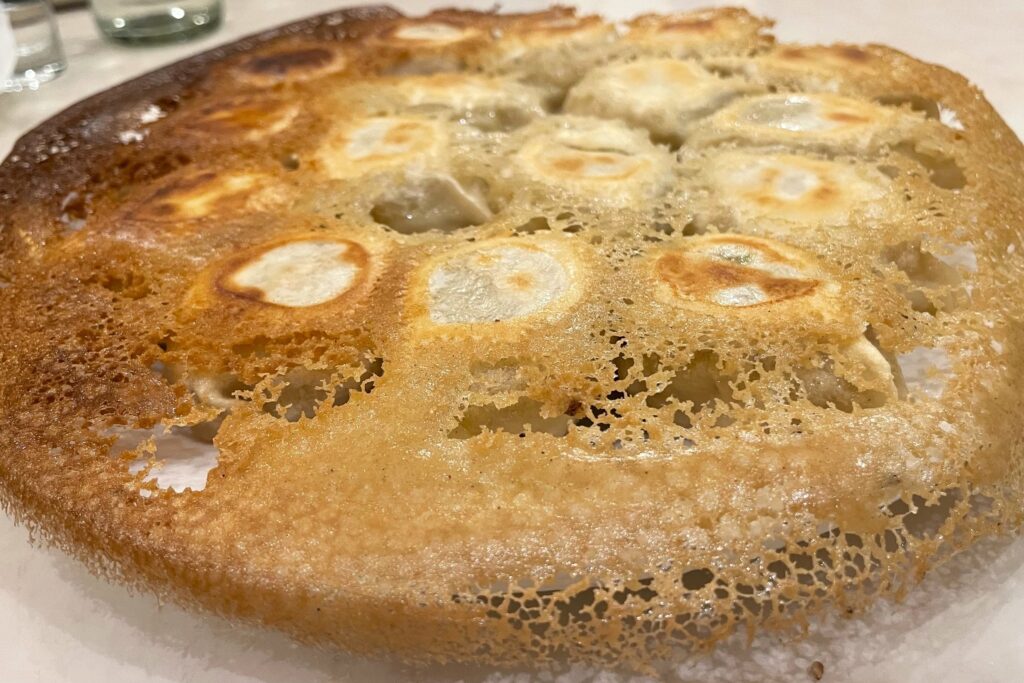
    猪肉锅贴NO4 Fried Dumplings with Pork, also known as 冰花锅贴 or Ice Flower Potsticker, holds a special place in the hearts and stomachs of locals. These Potstickers are celebrated for their crispy and lacey bottom, which resembles an ice flower (冰花 bīng huā) due to the unique pattern formed during cooking. Once beloved mainly in northeastern China, these days you can find them gracing street stalls across the country.

    Crafting these potstickers is an art in itself, requiring careful attention to detail. From mastering heat control—knowing precisely when to crank it up or dial it down—to managing the water temperature and the flour-to-starch ratio for optimal elasticity and crispness during frying, every step shapes the final flavor and texture.

    The dumpling fillings are made from minced pork mixed with soy sauce, rice wine, pepper, salt, and sesame oil. Due to the short frying time, the dumplings must be thoroughly steamed before they are swiftly pan-fried, to achieve their signature ice flower pattern on the crispy base — a step that must be executed flawlessly to avoid any doughy texture.

    It’s served with its crispy bottom side up, so you can start with the most enticing part – the golden-brown, lightly charred, and incredibly fragrant pieces. As you bite into the juicy, savory filling beneath its soft top, you’ll relish a pleasurable crunch and a burst of aromatic flavors all at once – a moment that never fails to excite.

    Noodles with Pork in Soybean Paste” (炸酱面NO7) is a highly popular dish in northern China, especially during the summer months. This traditional noodle dish originates from northeastern China and was brought to Beijing by the Manchus after their conquest in the early 17th century.

    The dish features homemade noodles topped with meat sauce, cucumber slices, scallions and cilantro. The meat sauce, made in-house, involves diced pork stir-fried with ginger and scallions until golden brown, then combined with soybean paste for a deep, savory flavor.

    The real magic lies in the distinctive Northeastern soybean paste, which owes its existence to the region’s long history of soybean cultivation. Crafted from fermented soybeans in a process that takes from months to years, this thick, dark brown sauce has a robust, salty-sweet flavor with earthy undertones.

    Once boiled, the noodles are quickly cooled in cold water, enhancing their firm texture. For those seeking a spicy kick, True Tasty’s homemade chili oil is a must-try.

    A scoop of fragrant chili sauce and a dash of vinegar, mix them up well and ensure every strand of noodles is coated in this savory goodness – isn’t it just downright appetizing?

    Grab a little bit of everything – the firm, smooth noodles, covered in rich umami sauce, paired with fresh cucumbers. Each mouthful is full of aromatic and refreshing flavors, deeply satisfying.

    In a previous post on True Tasty, we delved into the barbecue culture that’s so prevalent in Northeast China, especially in the vibrant, bustling night markets. These markets are where you can truly feel the lively, down-to-earth atmosphere. Street food stalls line the streets, teeming with people on their evening food hunts, their faces light up with excitement, enjoying both the delicious food and the company of friends.

    As an authentic spot for northeastern cuisine, it wouldn’t be right if True Tasty didn’t offer BBQ. Last time, we introduced a few of their BBQ highlights, such as lamb skewers, grilled tofu rolls with tongho, string beans, grilled chicken wings, and octopus. This time, we’d like to spotlight two more must-tries: the grilled chive skewers and the grilled eggplant.

    Grilled chives skewers (烤韭菜 G09) offer a bold and unique flavor.

    The grilling process brings out a slightly charred, smoky flavor that enhances the chives’ natural sharpness and garlicky undertones. Each bite delivers a satisfying chewiness, accompanied by a mild, grassy sweetness.

    Seasoned with cumin, garlic, pepper, chili powder, white sesame seeds and True Tasty’s special barbecue sauce for a touch of sweet, umami flavor, these skewers are savory, aromatic, and pack an intense yet refreshing flavor punch.

    Grilled eggplant (烤茄子 G06) is a popular dish, as the silky softness of the eggplant perfectly complements the smoky, savory BBQ flair.

    The tender eggplant is brushed with BBQ sauce for a sweet, tangy, and spicy touch, then generously topped with sesame seeds, cilantro, and green onions. It’s also loaded with freshly minced garlic, whose enticing aroma mingles with black pepper and cumin for a mouthwatering blend of smokiness and umami.

    In the Northeast, grilled eggplant with garlic is the ultimate pairing. The sharp, zesty flavor of the garlic cuts through the sweet, creamy eggplant for a balanced taste that’s both soothing and exciting.

    Scattered along bustling streets, the familiar flavors of street food are not only a sentimental favorite for many locals, but also remain a perennial pursuit for food lovers around the world. These humble foods reflect the profound depth of culinary artistry, embodying the skill and dedication of their makers. While some local delicacies are best enjoyed in their hometowns, many have journeyed across oceans and found a warm welcome among international food enthusiasts, like at True Tasty. Offering dishes that weave tradition and innovation, it’s a great place to deepen your journey through global flavors.  

  • China Restaurant Joy: From Suzhou’s Imperial Feasts to Yunnan’s Rich Broths and More

    China Restaurant Joy: From Suzhou’s Imperial Feasts to Yunnan’s Rich Broths and More

    During a trip to Munich, we found an impressive restaurant that has incorporated an array of popular dishes from various regions, including some rarely found outside of China. Highlights include the visually striking and delicious Squirrel Fish from Suzhou and the comforting “Crossing the Bridge” noodles from Yunnan. China Restaurant Joy brings a taste of China’s best flavors right to your corner, offering dynamic varieties besides the spicy, numbing Sichuan food typically considered authentic Chinese.

    Restaurant Profile

    Suzhou and Yunnan are revered in China as a paradise that no ornate description can fully convey its charm. Beyond their mesmerizing scenery, their cuisine leaves an indelible mark on all who taste it.

    The first dish we’ll talk about is a perfect example – Squirrel Fish („松鼠鲈鱼“, „Sōngshǔ Guìyú“).

    A masterpiece of Suzhou cuisine, it’s historically been served to emperors, including the esteemed Qianlong from Qing Dynasty (1644 to 1912), who was very fond of this dish.

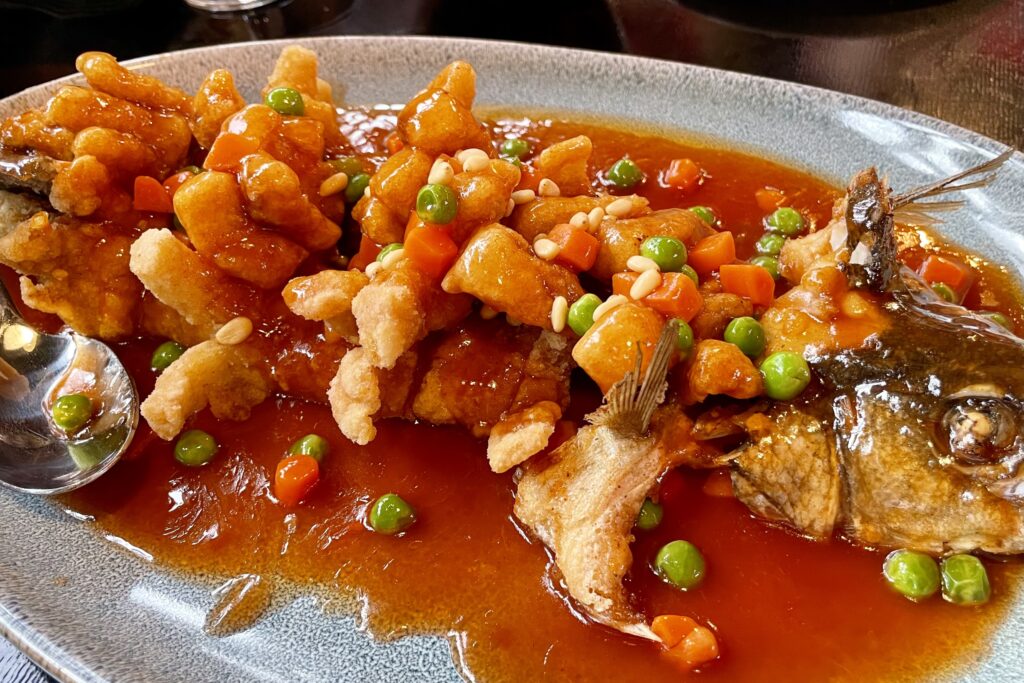
    Its preparation requires precise techniques – deboned perch is meticulously scored with a diamond pattern, dusted with starch, and then carefully deep-fried with skin intact, which allows for sculpting into a squirrel shape.

    When placed on a plate, the fish head is slightly raised, and the tail curved upwards, resembling a squirrel. The hot sweet and sour sauce, poured over the crispy fish, creates a sizzling sound reminiscent of a scampering squirrel. Its complexity makes it a rarity in regular restaurants.

    In addition to its stunning presentation, it’s also renowned for its exquisite flavors. The sweet and sour sauce, made with vinegar, rice wine and more, creates a fresh, tangy yet balanced taste. It complements the savory crunch of the fish, highlighting its golden outer crispness and fresh tenderness inside. The addition of pine nuts, carrots, and green peas provides bursts of nuttiness and vegetal sweetness.

    And don’t overlook the fish skin – incredibly crispy and flavorful, the result of natural oils and fats crisped to perfection will leave you highly satisfied.

    Yunnan cuisine is known for its incredible variety, thanks to the province’s rich ethnic diversity, with over 25 ethnic groups enriching its culinary scene. Xiaoguo Mixian and Crossing the Bridge Noodles are two of the most iconic local specialties, offering a perfect gateway to the region’s rich food tapestry.

    Xiaoguo Mixian (小锅米线), also known as “Small Pot Rice Noodles,” is a traditional Yunnan dish featuring freshly ground rice noodles, flavorful broth, and an array of toppings like minced meats, bean sprouts, and chives.

    The heart of Xiaoguo Mixian is its broth, a savory, slightly tangy, and spicy blend of bone broth, tomatoes, pickled vegetables, chili oil, fermented bean paste, and a variety of spices and herbs.

    The noodles are smooth and slightly chewy, perfect for soaking up the rich broth. To enjoy it, scoop up some noodles, cover them with the various toppings and broth, and slurp it all at once. The tangy tomatoes, savory meat, and fresh veggies blend with the fragrant broth and tender noodles, creating an interplay of flavors and textures that promises ultimate satisfaction and comfort.

    Crossing the Bridge Noodles” (过桥米线) is another signature dish of Yunnan cuisine. This dish must be ordered a day in advance to allow time for meticulous preparation. It offers an interactive dining experience – the noodles, toppings, and broth are served separately, so you can mix them together in the piping hot broth right at your table. As you watch them cook and savor the enticing aromas, you can customize your ingredients. This way, your food is cooked exactly to your liking and to its freshest state just before you eat it.  

    Pan-Fried Pork Ribs with Mint Leaves, Garlic, Sesame, and Dry Chili may not be a classic Yunnan dish, but it brilliantly exemplifies the region’s unique and diverse flavors.

    These lean pork ribs are pan-fried to a crispy exterior and a flavorful, chewy interior with a satisfying, chip-like crunch. Pan-seared mint leaves bring a refreshing coolness that contrasts with the savory richness of the pork.

    The dried chilies and garlic provide a subtle kick and aromatic punch, while sesame seeds lend a nutty crunch. The result is aromatic and tantalizing morsels that’re impossible to resist and keep you reaching for more. Especially when paired with mint, it ensures they never feel heavy but remain balanced and invigorating until the last bite!

    Today we explored some standout dishes from Yunnan and Suzhou provinces, which are not often found in typical overseas Chinese restaurants. China Restaurant Joy also offers a wide range of dishes from other regions of China, from the fiery spices of Sichuan to the imperial elegance of Beijing and the vibrant tastes of Shanghai.

    However, their Yunnan specialties are a highlight not to be missed, bearing the mark of neighboring countries like Vietnam, Laos, Thailand, and Myanmar. You can taste Vietnamese and Burmese influences in dishes like Crossing the Bridge Noodles, and Thai inspirations in 泰味凉鸡 (Thai-style Cold Chicken). China Restaurant Joy serves up a diverse fusion of flavors from China and beyond that can be exotic, exciting and comforting, satiating the most varying tastes and likes.

  • Off-the-Beaten-Path Bliss on Gran Canaria: Secluded Beaches and a Hidden Family-Run Tavern

    Off-the-Beaten-Path Bliss on Gran Canaria: Secluded Beaches and a Hidden Family-Run Tavern

    For those seeking a serene escape from Gran Canaria’s bustling tourist hubs, Playa de Tiritaña and Playa de los Frailes are the perfect spots. These relatively secluded beaches are easily accessible by car, with Playa de Tiritaña just a short 10-minute drive from Playa de los Frailes.

    We parked our car about 10 minutes’ walk from Playa de Tiritaña. The way there felt like a passage through a forgotten dreamscape, marked by an unfinished road nearby that looked like a part of an abandoned resort project. The sky was a mesmerizing shade of blue, casting its brilliance over the landscape. Stone formations atop a nearby hill stood like ancient sentinels, silently watching over this hidden retreat that sees fewer visitors. All this adds a unique, mystical charm to the area.

    Upon arrival at these rocky bays, we were greeted by a rugged and intimate sanctuary. Unlike the typical sandy beaches, here you’ll find larger stones and pebbles. The natural solitude easily envelops you. In this peaceful corner of the world, the only sounds are the slow, rhythmic waves caressing the shore.

    In the naturally formed ponds on the beach, you’ll easily spot playful little fish frolicking freely in the sunlight. Even the usually shy crabs make a bold appearance, basking in the sun for a moment before quickly scurrying back into the shadows under the rocks.

    The water is cool and inviting, nestled against the mountains that hug the coastline, creating a perfect natural setting for a refreshing swim. However, it’s wise to be cautious of the rocky terrain and occasional strong currents.

    If you’re feeling adventurous, you can take a one-hour hike over the mountains that connect Playa de Tiritaña to Playa de los Frailes, and enjoy the stunning coastal views along the way. Despite its uneven paths and occasional steep sections, the trail remains manageable for most hikers.

    As we ascend the hill, leaving behind all sounds except the ocean’s distant ebb and flow, we feel ourselves shedding, layer by layer, our weariness and ambitions, wandering into a vast emptiness where the horizon draws near and stretches far, all at once. It’s as if we’re caught in a transient interlude of time and space; the world slows down and everything feels suspended in this quiet majesty.

    At Playa de los Frailes, you’ll have softer sands that attract beachgoers seeking a quieter seaside experience. A cliffside trail to the right will lead you to a more tranquil spot.

    Perched upon the stone piles at the trail’s end, we found a corner that felt both vast and intimate, with boundless sea and sky stretching infinitely before us.

    As we watch the seawater change its colors in the sunlight and shadows, see it wash over strands of light, see it reflect every grain of sand and stone, see it sometimes raging, sometimes calm, time passes unnoticed. A distant boat drifts by; its sailor appears to notice us and waves warmly from afar. We return the heartfelt gesture—a fleeting yet heart-stirring encounter, treasured all the more in our solitude.

    Tips for your visit:
    • Rocky Shores: The beaches are rocky, so it’s a good idea to bring water shoes to protect your feet when getting into the water.
    • Hiking Essentials: Wear sturdy hiking shoes and carry plenty of water when trekking between the two playas. The trails can be uneven and demanding.
    • Stay Sun-Safe: Pack sunscreen, a hat, and sunglasses. The sun can be intense, and there’s minimal shade along the trails. Start your hike early to avoid the peak heat.
    • Cliffside Cautions: If you’re walking along the cliff trail, be mindful of loose rocks and narrow paths.

    After a day of walking and climbing, what could be more rewarding than a delicious Spanish feast? This time let us introduce you to an absolute must-try restaurant on this island – La Tasquita Gallega. This family-run Spanish tavern serves up almost all the coastal flavors you could possibly crave while visiting Gran Canaria – grilled meats, veggies, fish, seafood, paella of different kinds, and an extensive selection of tapas. Check out their menu here.  

    With such a tempting array of tapas dishes, you can dive into a variety of flavors by ordering smaller portions at adjusted prices—just as we did!

    Our first tapas choice quickly became one of our favorites: Empanadillas, or Spanish dumplings.

    These savory pastries are stuffed with seasoned minced meat, boasting an irresistible, aromatic taste. The flavorful seasoning includes sautéed onions and garlic forming a fragrant base, complemented by oregano, fresh paprika, and earthy cumin. Salt and pepper perfectly round out the flavors, enhancing the juicy, rich minced meat, all encased in a crisp, golden pastry shell that delivers a satisfying crunch with every bite!

    The oysters at La Tasquita Gallega are remarkably plump and juicy.

    Each one comes in an exceptional size and bursts with a clean, briny flavor that evokes the freshness of the sea. The texture is smooth and slightly firm, providing a satisfying chew. Enjoy them raw, with a squeeze of lemon to enhance their natural sweetness and slightly salty flavor. Each morsel delivers a luxurious, refreshing taste that lingers on the palate.

    Padrón Peppers, featured in our previous post, are a go-to tapas for us.

    Quickly fried in olive oil until blistered and tender, they’re beloved for their simple and fresh taste. Served with a sprinkling of sea salt, they offer a savory contrast to their naturally mild, slightly sweet flavor. This vegetarian dish is ideal as an accompaniment to any other tapas or main meal, adding juiciness and crunch.

    Galician Chorizo is known for its rich, savory flavor profile. It has a very robust taste with hints of pepper, garlic, and other aromatic spices used in its seasoning.

    The sausage combines juicy, flavorful pieces of fat with lean meat, creating a firm texture and satisfying chewiness. When stir-fried with onions and bathed in a slightly spicy sauce, it develops a deep, hearty taste that is both savory and subtly tangy. With slightly sweet onions to balance out the rich meaty flavor, it’s a very delicious and well-rounded dish.

    Vieras al Horno, or Spanish Baked Scallops, is a delectable tapas dish, cherished for their exquisite flavors.

    Fresh, plump scallops are delicately baked to a perfect tenderness, accompanied by chopped onion cubes and parsley. These scallops, prized for their buttery, briny and even mildly nutty flavors, take on a subtle umami richness when cooked with aromatic onions and peppery parsley. They add vibrant color to the dish and elevate the natural sweetness and gentle brininess of the scallops, making each morsel thoroughly enjoyable to eat.

    Arroz Caldoso de Marisco holds a special place in the Canary Islands cuisine, offering a sensory enjoyment for its rich flavors and comforting nature.

    It’s served in a soup bowl brimming with tender rice infused with saffron, imparting a warm golden hue and a subtle floral aroma. This dish is a grand celebration of seafood – succulent squid, briny mussels, plump shrimp, and tender octopus — all simmered in an aromatic broth that reveals luscious oceanic flavors and freshness.

    Despite being cooked in a soup, the rice remains distinct and firm, setting it apart from porridge. It absorbs the broth’s rich flavors while maintaining its integrity. Scoop up some rice with other ingredients – the sweetness of seafood balanced by the hey-like, grassy notes of the saffron, accompanied by the soft paprika and the savory broth. Each spoonful is downright gratifying!

    Crema Catalana is a classic Spanish dessert we’ve enjoyed several times during this trip.

    At La Tasquita Gallega, this custard-based treat is similar to crème brûlée, but with its own twist, being subtly flavored with citrus zest and cinnamon. The dessert is topped with a caramelized sugar crust that adds a pleasant contrast of textures—creamy, eggy underneath and crisp on top. Originating from Catalonia, Spain, Crema Catalana is a decadent finale to any meal.

    This concludes our Gran Canaria series. Wherever you’re from, even the most breathtaking landscapes can sometimes feel routine. Whoever we are or whatever we’ve achieved, there comes a time when we desire to seek new horizons. When that moment comes, and we’re longing for a change, may we all embark on a journey with a carefree heart, embracing the elegance of following our own path and encountering a scenery uniquely our own.

  • Nana’s Ramen: A Taste of Japanese Ramen Artistry in Frankfurt

    Nana’s Ramen: A Taste of Japanese Ramen Artistry in Frankfurt

    Welcome to another food adventure in Frankfurt. Today, we’re thrilled to introduce you to a relatively new spot – an authentic Japanese ramen place that’s won our hearts right from the start. We first discovered this cozy eatery just weeks after it opened. Back then, the menu was modest, with only three ramen soup bases.

    Despite the limited options, we kept coming back again and again. What we experienced there is the spirit of craftsmanship, typical of the Japanese fashion – focusing on a few dishes but perfecting each one with care and dedication. Simple, yet exceptional, the hallmark of Japanese cuisine that we deeply admire.

    Now, to our delight, their menu has expanded, offering more appetizers and new ramen soup bases. Of course, we couldn’t wait to try them, and as always, we were not disappointed. So get ready, as we share our favorites from this humble yet extraordinary Japanese ramen restaurant.

    Restaurant Profile

    The first appetizer is vegetarian – Edamame Harumaki, a Japanese spring roll filled with a mix of bell peppers, glass noodles, and lettuce.

    The wrappers have a natural green hue, thanks to the addition of edamame in the dough, which gives it a gentle, sweet, vegetal taste. This flavor goes well with the crisp lettuce, sweet bell pepper, and soft glass noodles, creating a refreshing and crunchy mouthfeel. Paired with yuzu chili sauce, it brings a very delightful balance of citrus brightness, a bit of heat and a touch of bitterness, making it a great complement to the fresh flavors of the roll.

    Next up is a classic Japanese favorite – gyoza. These dumplings are filled with a savory mix of minced meat, carrots, cabbage, corn and shallots, all wrapped in an incredibly thin skin.

    Expertly pan-fried, the gyoza is golden brown and crispy on one side, while the other side remains tender and soft. Thanks to the thin skin, it requires less cooking time and absorbs minimal oil, keeping the dumplings light and letting the juicy, flavorful filling take the spotlight – the minced meat forms rich, hearty base, while the carrots and corn add a natural sweetness. They are nicely balanced by the crisp, fresh cabbage and pungent shallots, creating a satisfying taste in every bite.

    Paired with a dipping sauce of rice vinegar and chili oil, the tangy and spicy kick elevates the flavors to new heights.

    Katsuretsu, or “Katsu with Fillings” is a popular Japanese dish of breaded and fried cutlets with different fillings. Each of the four pieces has a golden, crisp exterior. Two are filled with sweet corn paste, delivering a burst of natural sweetness and a pleasing soft texture against the crunchy breading. The other two are filled with a green paste of vegetables and herbs, and adorned with black sesame seeds. This filling provides a savory and aromatic contrast to the corn-filled pieces.

    Accompanying these cutlets are shredded cabbage stripes, a refreshing palate cleanser between bites of fried foods.

    To add moisture and flavor, dip the katsuretsu into tonkatsu sauce. The sauce has a complex, savory-sweet taste – slightly peppery, mildly sour, and subtly spicy. It pairs well with the fried crispness and enhances the flavors of the fillings.

    Tsukune Cheese is a favorite at izakayas (Japanese pubs) and restaurants, and it’s one of our most frequent orders. This dish consists of Japanese-style meatballs (known as “tsukune”) grilled with melted cheese on top.

    The meatballs are firm, savory and well-seasoned, with a tantalizing blend of soy sauce, garlic, ginger, and a hint of sweetness. The cheese topping, when grilled, gets slightly charred and smoky on top. It looks so appetizing and adds a creamy richness to the savory meatballs.

    This dish is served with a sweet soy-based sauce, likely a mix of teriyaki and dashi (Japanese soup stock) that offers a balanced fusion of sweetness, saltiness and umami. It certainly adds an aromatic depth and boosts its hearty, luscious appeal.

    At Nana’s Ramen, they offer different noodle types to cater to different tastes. Each soup base is paired with the noodle type that best complements its flavor. The thin noodles are delicate and smooth, while the thick noodles are hearty and a bit chewy.

    In addition to standard toppings, Nana’s Ramen now offers numerus customization options at extra costs. You can add extra noodles, pork, chicken slices, or minced meat. They also offer an array of toppings, such as tsukune (three savory meatballs), shrimp, eggs, extra chili, and a variety of vegetables like eggplant, zucchini, corn, tofu, and more. So you can tailor your bowl to your exact liking.

    The specialty of Nana’s Ramen is undoubtedly the Tori Paitan (鶏白湯, which translates to “chicken white soup“).

    Tori Paitan is a beloved classic ramen broth, celebrated for its luscious, creamy white soup and deep, flavorful taste. Its popularity in Japan dates back to the early 20th century. During this time, Japanese chefs began experimenting with ways to fully extract the deliciousness of chicken. Through continuous experimentation and refinement, Tori Paitan gradually emerged as a distinctive ramen feature and has become a vital part of Japanese ramen culture.

    Tori Paitan is made by simmering chicken and chicken bones for a long period, allowing collagen and fat to dissolve into the broth, giving it its signature creamy white color and thick consistency. During the simmering, seasonings like sault and soy sauce are added to enhance the flavors.

    The result is a delicious broth that’s not only rich in flavor but also packed with protein, collagen, and various nutrients that are beneficial to health.

    The Nōkō Shōyu Tori Paitan Ramen (濃厚醤油鶏白湯ラーメン or „Rich Soy Sauce Chicken White Soup Ramen” in English) at Nana’s Ramen offers a gratifying dive into the culinary artistry of Japanese paitan. The creamy white broth has a form-like consistency on top, crafted from hours of vigorous boiling and emulsification of chicken bones. The broth is thick, luscious and umami-rich, sprinkled with sesame seeds for a nutty crunch, and topped with tender chashu pork, tangy red ginger, crisp bean sprouts, and fresh green onions.

    When the silky, smooth noodles are enveloped in the rich broth, each slurp unveils a satisfying depth of flavors. Eat with various toppings for a dynamic mouthfeel – red ginger for a pungent kick, bean sprouts for a fresh crunch, and green onions for a subtle sharpness. The chashu pork slices, braised to a fine tenderness, brings a savory heartiness, wonderfully complementing this deep umami dish.

    Miso Tori Paitan Ramen (味噌鶏白湯ラーメン or “Miso Chicken White Soup Ramen” in English) is a delectable ramen dish that combines the rich, creamy texture of chicken paitan broth with the savory depth of miso. It’s topped with sweet corn, aromatic shallots, and flavorful minced meat, all brought together in a luxurious paitan broth.

    The broth boasts a pronounced umami-ness from the miso and a satisfying saltiness that complements each ingredient beautifully. The noodles are thick and slightly chewy. Its firm texture is perfect for soaking up the rich broth, making every mouthful packed with flavor. Pair with sweet corn and the pungent shallots that balance the hearty minced meat and the rich, creamy broth. It’s a great choice for those who love rich and savory flavors.

    However, due to miso’s inherent saltiness, the soup is best enjoyed in moderation to avoid excessive thirst. If you’re sensitive to salt or prefer a lighter experience, it’s a good idea to sip the broth sparingly rather than drink it in large quantities. 

    Ebi Shio Ramen (海老塩ラーメン or “Shrimp Salt Ramen” in English) is a delicious ramen dish known for its clear and light broth, different from the richer paitan soups. The broth, with its shio (“salt” in Japanese) base, has a clean, savory taste. It’s seasoned with shirasu, small dried, salted shrimps, which lend a briny, umami flavor.

    Standard toppings include green onions, spring sprouts, and a grilled shrimp skewer. We customized it with extras like chashu pork and chili paste, which add a delicious tenderness and a spicy kick. The thin, slightly firm noodles are ideal for the shio broth, allowing the broth’s delicate flavors to come though without overpowering it.

    The spotlight of this dish is the grilled shrimps, with their tender and smoky flavor. The shirasu and garlic on top are slightly charred, imparting a subtle burnt taste and a layer of garlicky, umami goodness, nicely contrasting against the light broth. We asked for extra chili paste (level 2, the spicier option available) in a separate dipping bowl to adjust the spice level in our broth and enjoy dipping the grilled shrimp. The fiery addition perfectly complements the shrimp’s natural sweetness, making each morsel all the more dynamic and invigorating!

    The introduction of ramen to Japan dates back to 1912 when it arrived in Yokohama with returning Japanese travelers from China. This exchange was facilitated by the Treaty of Amity and Commerce between Japan and Qing China in 1871, which spurred Chinese migration and the establishment of Chinatowns in major ports like Yokohama, Kobe, and Nagasaki. One of the earliest ramen shops in Japan catering to these communities, “Rairaiken,” opened in Asakusa, Tokyo, in 1910.

    While ramen has its roots in China, it has been considerably evolved and popularized in Japan. Unique variations include soy sauce, salt, miso flavors, and chicken paitan which we explored today. At Nana’s Ramen, you can also try spicy broths like Tantanmen (特製担々ラーメン) with chili pepper.

    Additionally, there’re vinegary broths reminiscent of soba, European-style tomato broths, and even curry flavors. One of the most beloved styles is tonkotsu, originating from Kyushu, known for its rich, creamy pork bone broth. There’s much more to discover in the world of Japanese ramen, and Nana’s Ramen is a great place to start. Join us as we continue our delicious explorations – stay tuned for more!

  • Gran Canaria: From Sioux City’s Old West Thrills to Allende 22º’s Global Cuisine

    Gran Canaria: From Sioux City’s Old West Thrills to Allende 22º’s Global Cuisine

    Sun, beach, mountain, and culture have been the key words in our travels through the island of Gran Canaria so far. As we mentioned in our previous post, apart from its natural beauty, this island is not short of countless man-made entertainment opportunities such as amusement parks, golf and tennis clubs etc. Normally, when visiting an island, amusement parks are not high on our agenda. However, Sioux City Park San AUGUSTIN in Gran Canaria, a western-themed amusement park, has unexpectedly become one of the highlights of our trip.

    Nestled in the arid landscape of San Bartolomé de Tirajana, Sioux City Park blends seamlessly with its natural surroundings – the rugged, sun-baked terrain and dessert climate – a perfect backdrop for this Western oasis.

    The moment we walked through the gates, we felt as if we had landed right in the heart of the Old West, a world straight out of a western film, characterized by the expansion of the American frontier, the gold rush, and the presence of cowboys and outlaws.

    The various settings – the Native American village showcasing tribal life and culture, the Mexican villages, old Western hotels, bustling saloons, schools, churches, sheriff’s office, a bank and even a Chinese inn – create a dynamic social fabric that brings the cultural melting pot of the Old West to life.

    But these aren’t just static displays – this is a living, breathing town. You can step inside and experience how people lived and worked in these historic spaces. The great attention to detail makes you easily forget that you’re on a Spanish island rather than in a late 19th – century Western town.

    Your explorations are also intertwined with well-thought-out live shows. Order a tequila at the saloon, and the waiter, dressed in period costume, will serve you in true Western style. One moment you’re sipping your drink, the next moment the room erupts into chaos as part of a show. Suddenly, the waiter who just served you is “shot” in a thrilling reenactment.

    And then the show unfolds right in the middle of the audience, bringing the action right up close.

    The performers are incredibly interactive. They’ll engage with you, invite you to dance, or wink at you as you snap photos, making you feel like you’re part of the story.

    The live shows – such as the bank robbery, the saloon show with its dancing, music, and bar fights, and the dramatic gunfights between the sheriff and outlaws – vividly recreate the romanticized Old West. They evoke larger-than-life figures like Billy the Kid and Wild Bill Hickok, who embody bravery, rugged individualism, and resilience.

    These performances revive an era when civilization and savagery coexisted, a lawless land where people could reinvent themselves and leave their pasts behind.

    Amid the rise and fall of the horses’ hooves seems to lie the struggle between justice, morality, and survival. In the end, who is to decide the blurred lines between good and evil? This complexity, however, is expressed through actors’ raw dialogue and interactions, reflecting simplicity and straightforwardness of that time, which aligns perfectly with the spirit – of a time when hard work and perseverance could lead to success and prosperity.

    Compared to today’s complex society, it’s easy to see why many still idealize this period of opportunity and transformation, and see it as one of the most fascinating parts of US history, shaping the nation’s character and values.

    The Sioux City Park rekindles this bygone age, offering a journey back in time that’s fun, nostalgic, and educational. 

    Tips for your visit:
    • Book Online for Better Prices: Tickets are around 25 EUR per person, varying by season. Online booking is usually cheaper than buying on-site. The ticket includes all the live shows but not food.
    • Getting There: Easily accessible by car. Alternatively, there’re also bus tours that include free transportation and entrance fees, like this one. Using the same link, you can also check out the live show schedules.
    • Arrive Early: If you’re not joining a tour, get there before 11 am to catch the first show. Live shows run throughout the day until 3 pm, with breaks in between to grab a bite or explore the town.
    • Food Options: Food is available inside the park for an additional cost. Most are fast-food style like fries, burgers, and fried chicken wings.

    In sync with our visit to the cultural melting pot of the Old West, we chose a dining experience that mirrors this diversity – Restaurante Allende 22º. This spot is a fusion hub, blending Asian, American, Mexican, and traditional Canary Island flavors into an intriguing menu. The mix of global influences on various dishes sparked our curiosity right away.

    Portions are on the smaller side here, but they’re perfectly priced for exploring various tastes and styles. We dove in with three appetizers and two mains, which suited our adventurous appetites just right.

    22º Nachos: Corn Crisps with “Chili Bean” Made with Shiitake Mushrooms, Guacamole, Sour Cream, and Mango – a dish that clearly echoes global inspirations.  

    Crispy corn crisps and the purple sweet potato chips form a satisfying base. The purple sweet potatoes add a visually striking touch with their darker color. Their slightly sweeter taste with earthy, nutty notes makes them a unique addition to nachos. The chili beans, enriched with savory shiitake mushrooms, deliver a meaty umami punch without any actual meat.

    Fresh guacamole offers a creamy, citrusy, and earthy blend. Along with the cool, tangy sour cream, it provides a refreshing contrast to the rich flavors of the “chili bean”. Scoop them up with the potato chips, for crunch and sweetness, accompanied by juicy cherry tomatoes and peppery microgreens. Together, they create the perfect balance to the dish’s savoriness.

    And let’s not forget the mango – the occasional bust of fruity taste dazzles with its tropical sweetness, adding an exotic touch of indulgence to this nacho magic.

    Fried Eggplant with Cane Honey can be enjoyed as an appetizer or as a dessert.

    These eggplant fries are coated in a light egg batter, making them crisp on the outside while tender and soft inside, with a delightful savory touch. The natural sweetness of the eggplant pairs well with the drizzled cane honey, which has a robust, complex flavor with hints of caramel and smokiness. Despite its intensity, the dish isn’t overwhelmingly sweet, thanks to the mild eggplant that balances the deep taste of the cane honey. It’s a uniquely satisfying dish, with a harmonious blend of sweet and savory flavors.

    Croquettes with Iberian Ham, Cod and Shrimps, Beet and Goat Cheese offered us a great tasting experience. Typically, you’d choose one filling, but we asked to try them all, and our waiter graciously arranged it with the kitchen. Served as a set of six, these homemade treats include 2 each of Iberian ham, cod and shrimp, and beet and goat cheese.

    These croquettes are made with mashed potatoes and flavorful fillings, expertly breaded and deep-fried to an appetizing golden crunch. Their freshness really stands out. The fillings are well-seasoned and moist, encased in a thin, crispy exterior that’s at all not greasy. Enveloped in the velvety interior, you’ll relish the rich savoriness of the Iberian ham, the delicate oceanic flavor of the cod and shrimp and their tender, flaky textures. The earthy, sweet beetroot and the tangy goat cheese offer a tantalizing contrast, wonderfully balanced within the creaminess of the croquettes.

    Black Rice with Baby Squid, Prawns, and Aioli didn’t pass up on our order, although we’ve enjoyed it several times on this trip. Its hearty, satisfying nature made it an ideal reward after a day of travel.

    Unlike traditional paella dishes, which typically serve two or more people, this black rice dish can be enjoyed in a single serving.

    The rice is modestly portioned, allowing each grain to be generously infused with the deep, savory, umami flavor of the squid ink. The tender baby squid and plump shrimps brighten up with their freshness and a hint of brininess. Mixing aioli with the black rice enriches its already luxurious flavor with a creamy, garlicky taste, and a tangy twist that harmonizes with the savory squid ink. It’s a coastal indulgence not to be missed.

    Previously, we indulged in the melt-in-your-mouth sensation of Iberian ham, renowned for its excellent marbling. Back then, we couldn’t help but wonder how incredible it would taste when grilled. Today, we’re excited to unveil the Grilled Iberian Pork.

    The premium cut boasts a naturally sweet and nutty flavor, with a hint of pepper and a subtle fruity undertone, likely from a wine glaze during cooking. As the fat renders and melts on the grill, it enhances the meat’s richness without making it greasy. The result is tender, plump meat that bursts with juicy savoriness in every bite. Contrasting with the succulent interior is a lightly charred and caramelized exterior, adding depth of flavor.

    Served with concentrated pan sauces and a simple drizzle of olive oil, the natural umami goodness of the pork is superbly accentuated. 

    Yogurt with Candied Pumpkin and Vanilla is a sweet treat that soothes the senses.

    The tangy, slightly tart yogurt nicely balances the other sweet ingredients. Vanilla weaves its smooth fragrance into the creamy yogurt, enhancing the overall richness. The candied pumpkin adds a fresh, caramelized sweetness with a subtle earthy note, bringing a cozy warmth to each bite. This comforting, refreshing dessert is perfect for those seeking a touch of sugary pleasure without overwhelming sweetness.

    After an exhilarating day at Sioux City amusement park, our next trip will take us to secluded beaches, where untouched coastlines await, far from the bustle of crowds, with endless horizons and the gentle rhythm of the sea as our only company. Stay tuned!