Summer is relentless. The sun blazes, the air sticks, and even the thought of stepping outside feels like a workout. So what could possibly lure me out of my cool sanctuary? The first thing that comes to my mind: the delicate, raw, chilled, and modestly portioned Japanese cuisine. And my appetite drifts to J’epoca SAKAbar, a Japanese izakaya (or snack bar).
J’epoca is like a little slice of Tokyo located in the heart of Frankfurt. The service is warm, the flavors are authentic, and the bite-sized tapas-style dishes leave you satisfied, but not stuffed – light, elegant, subtly seasoned, and never overwhelming. It’s the perfect antidote to the sweltering heat.
Restaurant Profile
🏷️ Name of the Restaurant: J’epoca SAKAbar (incl. menu)
📍 Adress: Fritschengäßchen 5, 60594 Frankfurt am Main
🍜 Style: Japanese Cuisine – Japanese tapas, rice dishes, noodle soups, grilled skewers, sashimi, fried foods, soups and vegetarian options etc.
💰 Price: around 35 – 55 EUR per Person (incl. Drinks and Tips)
Shishi no Sato Junmai Ginjo “Saketabe” – a premium sake with 16% alcohol
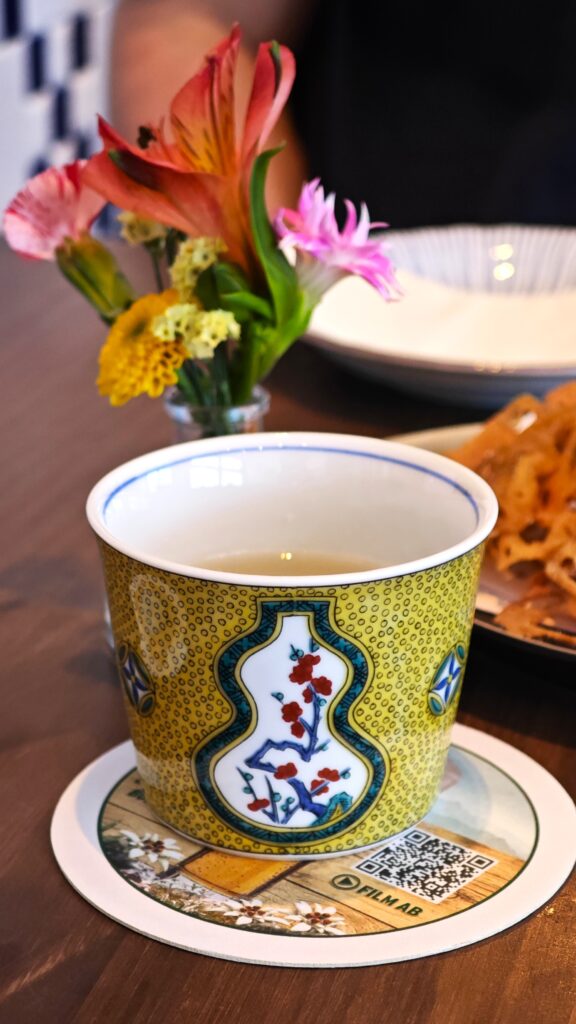
J’epoca is not just about the food—it’s also a haven for sake lovers.
This cozy izakaya boasts an impressive selection of umeshu (plum wine), sake (served chilled or warm), and offers bottles for purchase online. Many come here specifically for the drinks.
We tried the Shishi no Sato Junmai Ginjo “Saketabe”.
The word “Sake-tabe” means “eating sake” – reflecting that this isn’t just a drink for a quick sip, but meant to be enjoyed like a fine dish, with attention to its flavor, aroma, and texture.
Its aroma is delicate, almost floral, with hints of ripe pear and melon.
At first sip, the fruity brightness surprises. As it lingers, the signature ginjo fragrance unfolds—smooth, polished, with a steamed rice sweetness.
The alcohol (16%) glides down with a gentle warmth that settles comfortably in the stomach.
There’s a faint medicinal note—similar to yamahai sakes—but balanced by a subtle, almost honeyed sweetness that softens any sharp edges.
It’s best savored solo, or – as the staff recommends – alongside sashimi or grills.
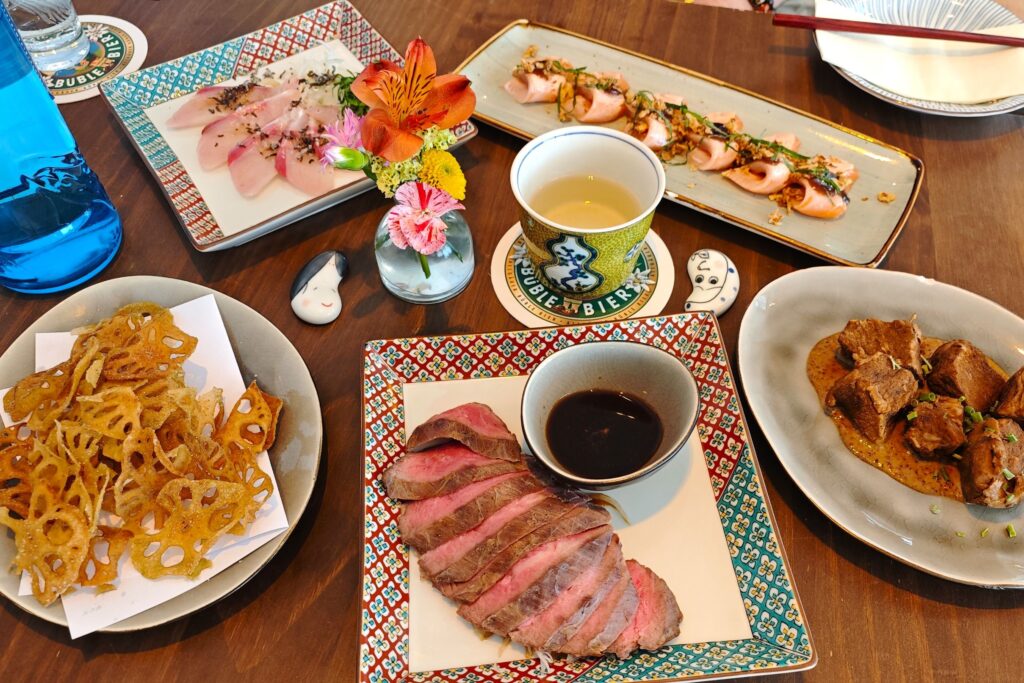
002 Renkon Chips (蓮根チップス) – crispy lotus root chips with wasabi salt
This snack flies out of the kitchen fast. It’s simple, but incredibly addictive.
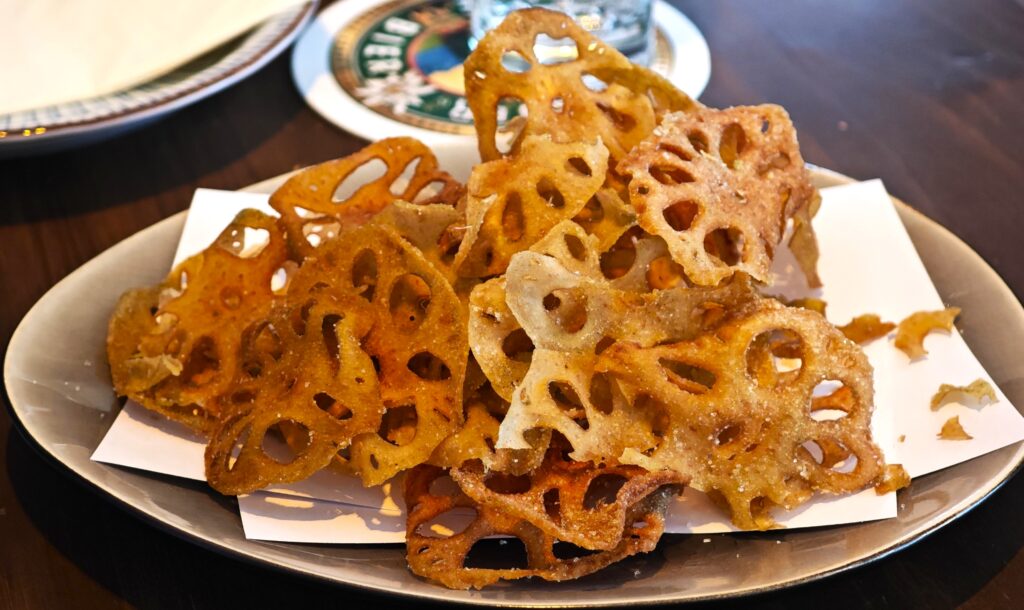
Each slice is razor-thin and shatteringly crisp, delivering an instant, kari-kari (extra crunchy) bite. The wasabi seasoning sneaks up on you: first salty, then a slow, spicy hum that makes you reach for another and another.
Unlike heavy potato chips, these have a clean, slightly nutty depth with an earthy aftertaste.
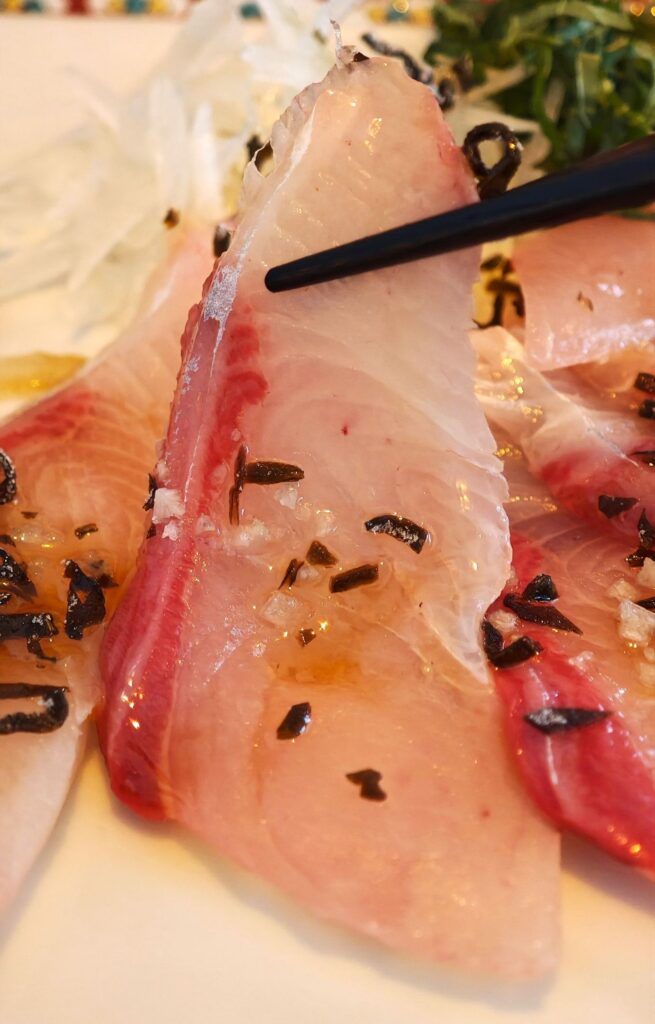
012 Hamachi Sashimi (はまち刺身) – sashimi of yellowtail fish with kombu seaweed dashi sauce
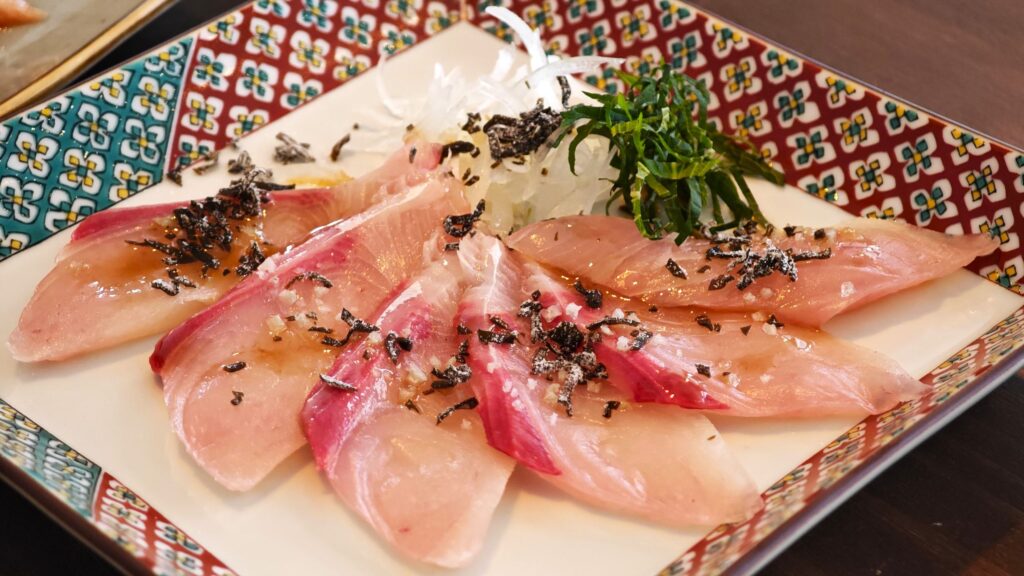
This dish embodies fragrant umami and refinement.
The hamachi fish is silky-soft and slightly chewy.
It melts slowly on the tongue, releasing waves of a clean, sweet oceanic freshness that’s beautifully deepened by the dashi’s savory umami.
Scattered on top are crumbled kombu and flakes of sea salt – tiny flavor bombs that add a briny intensity and bursts of sea, like ocean’s version of aged perfection.
The drizzle of sesame oil is a genius touch. It infuses a toasted richness without overpowering, wrapping everything in a fragrant, indulgent finish.
It’s served with thin strips of white daikon radish, for a light, cool, crunchy garnish.
004 Shoyu-Zuke Cream Cheese (クリームチーズ醤油漬け) – cream cheese marinated in soy & mirin, served on crackers
This dish features cool, creamy cheese cubes atop delicate crackers.
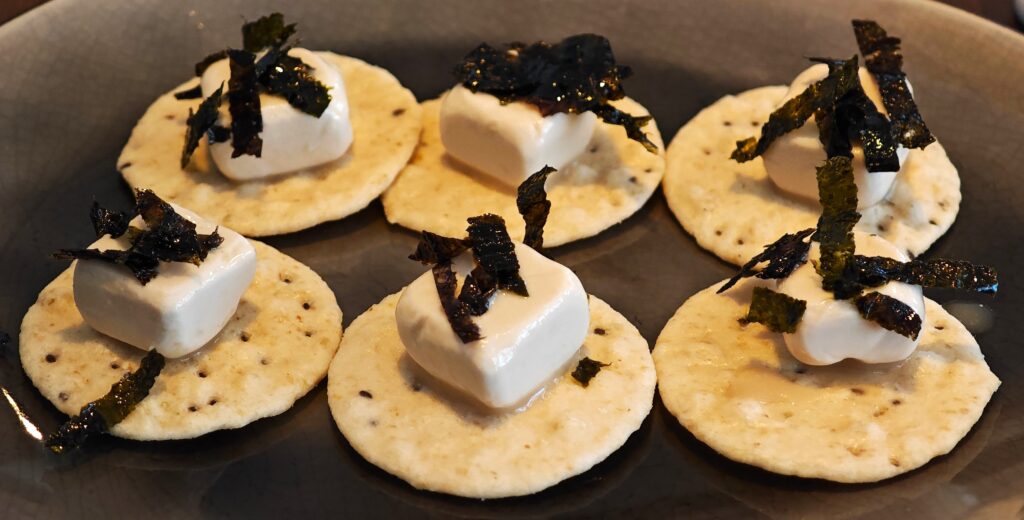
The silky, savory cheese is luxuriously smooth, chilled, and has an almost mousse-like consistency. It’s rich but not heavy, with a clean, milky freshness. The shoyu (soy sauce) and mirin marinade adds a caramelized umami—salty-sweet, with a hint of fermented richness.
The crisp seaweed (nori) on top lends a subtle sea breeze—briny, fresh, and lightly crisp against the creaminess.
The base is a plain, buttery cracker—mild, a little toasty, and just sturdy enough to add crunch without stealing the spotlight.
This little snack doesn’t leave a strong impression; rather, it’s quietly indulgent.
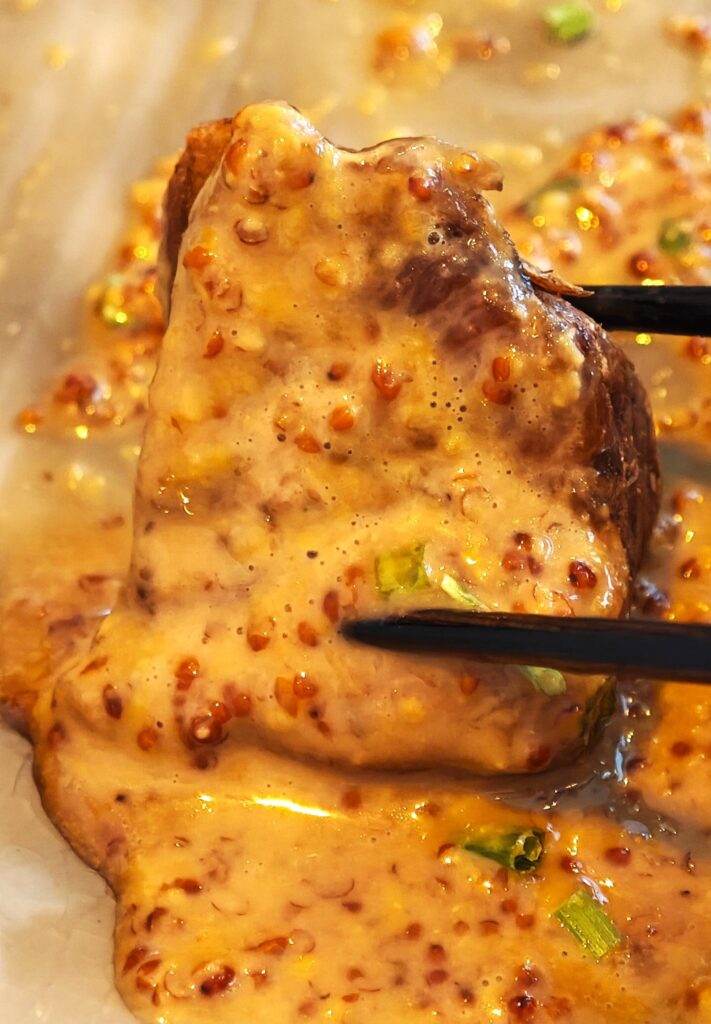
014 Nibuta (煮豚) – slow-cooked pork shoulder with Dijon mustard sauce

Nibuta (煮豚) means “simmered pork” in Japanese.
This meat-centric dish gets a French-Japanese makeover with a Dijon-mustard sauce, a French staple that brings a sharp, sophisticated edge.
The slow-cooked pork has a subtle sweetness (likely from mirin or sugar in the braise) and a rich, savory depth. It’s tender and meaty, with a slight chew.
The Dijon mustard sauce is where things get interesting. Dijon isn’t just sharp, it’s fruity (thanks to white wine), sour, peppery, and even a little minty-fresh.
With a hint of heat, creamy and zingy, it cuts through the pork’s richness like a bright spotlight.
The dish might’ve been prepped ahead, to let the flavors mingle and sink in.
010 Aburi Salmon Sashimi (炙りサーモン) – flame-seared salmon sashimi with miso sauce
This dish features premium salmon belly, the most decadent cut, lightly torched and draped in a miso glaze.
The belly cut boasts marbled fat layers that melt at body temperature. It dissolves almost too easily, like ocean butter, delivering an unparalleled richness.

The texture is silky-soft yet substantial – like the salmon version of toro tuna.
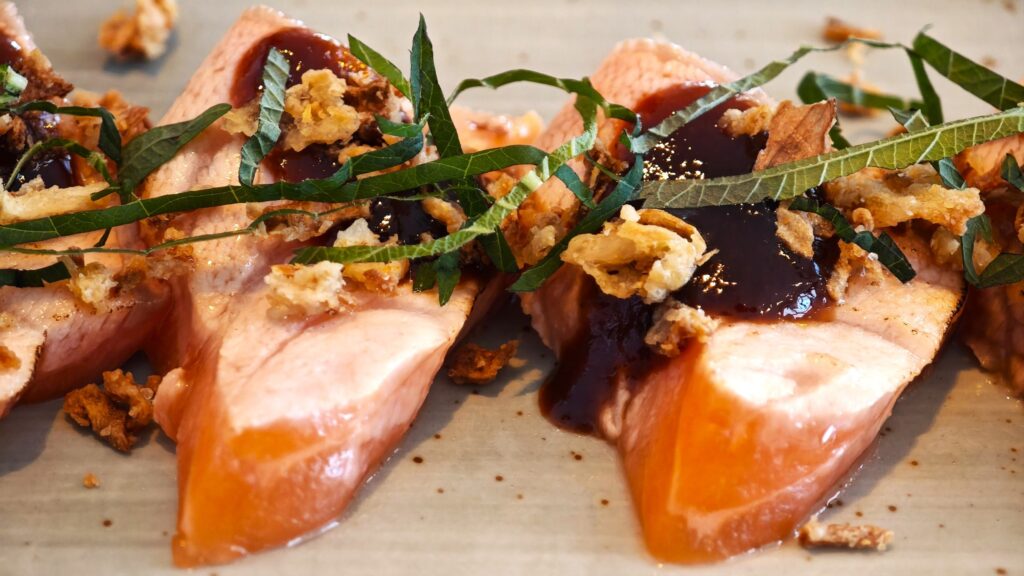
The flame-searing or quick torching (aburi style) caramelizes the surface while keeping the center cool and raw, creating an irresistible contrast of warm and chilled, seared and smooth.
The dark, complex miso sauce brings deep umami, caramelized sweetness, and savory depth that complements the fatty fish.
Roasted onion pops with toasty crunch, while the fresh shiso (Japanese herb) adds a fragrant, herbal lift.
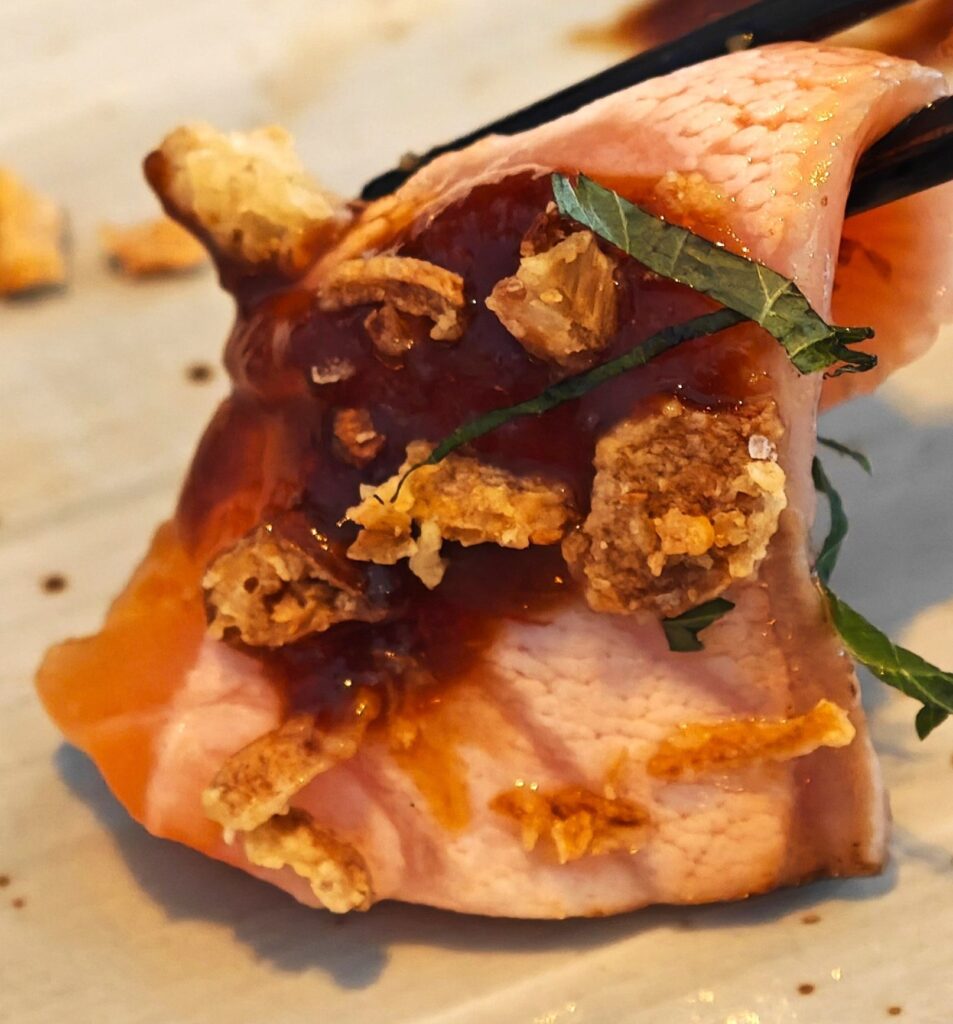
It’s the kind of dish that makes you pause between bites just to savor the memory.
023 Gyu Tataki (牛たたき) – Japanese-style seared beef with sweet onion and horseradish
This dish presents another delicate duet between raw and cooked, much like the aburi salmon. It’s roast beef done the Japanese minimalist way.
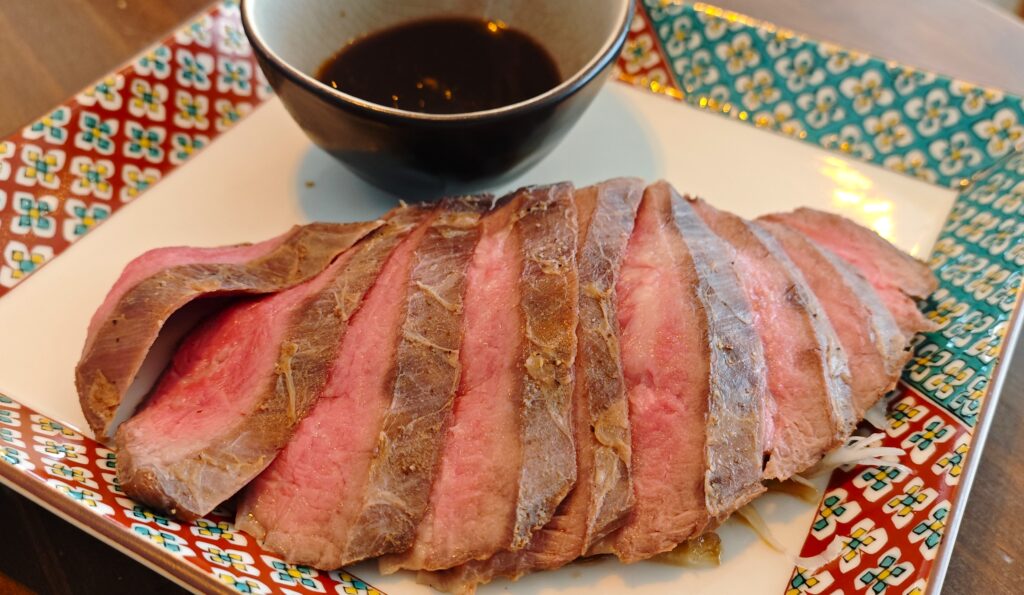
The Tataki-style cooking originated in Kochi prefecture, where samurai would quickly sear fish or meat on swords after hunting! Here, the beef gets a brief 10-second flame, just enough to ignite a smoky aroma while leaving the inside cool, ruby-red.
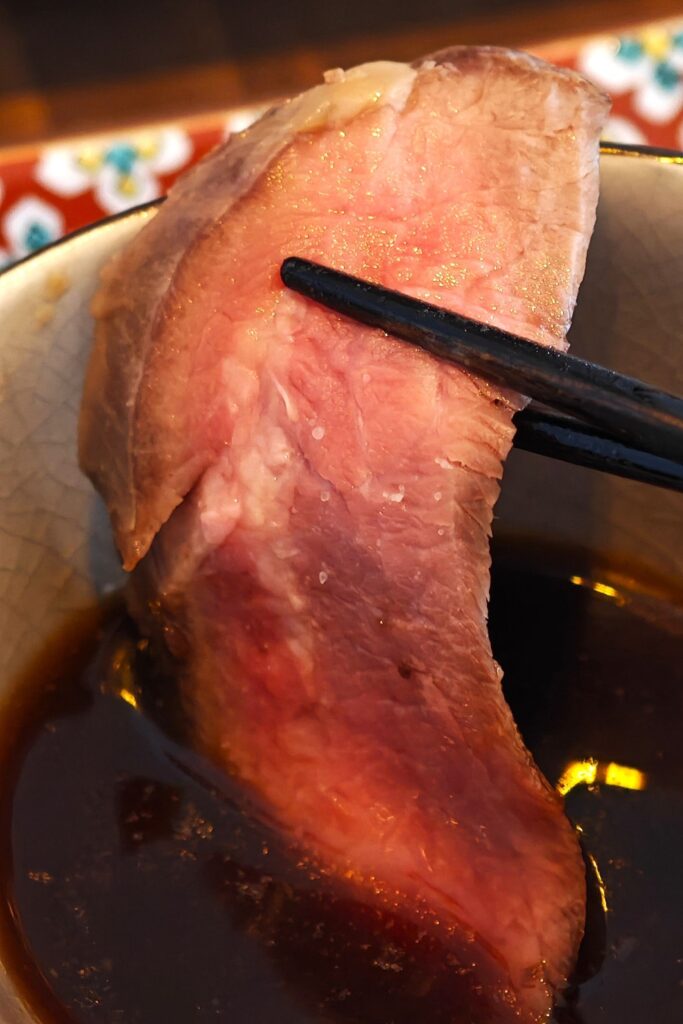
The meat is served naked, celebrating the meat’s purity. The half-raw slices are silky yet with an elastic chew, offering a clean, mineral-rich flavor – more subtle than grilled steak.
The marbled fat is the best part. It melts during searing as a natural tenderizer, releasing a wave of umami-rich glutamates.
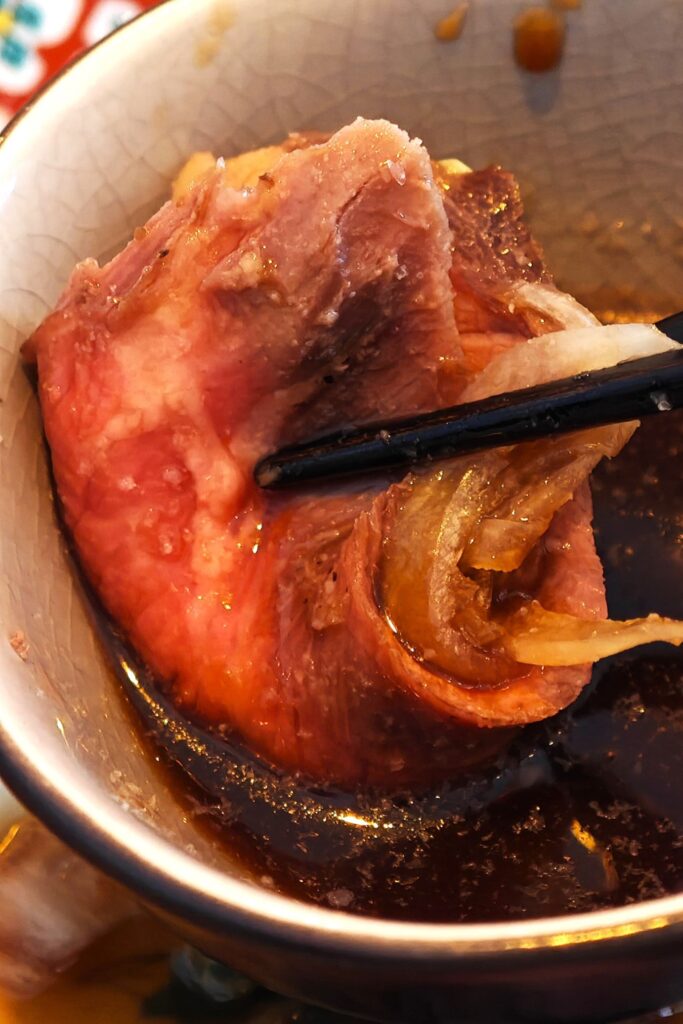
The soy-sauce is slightly sweetened (likely with mirin), with a wasabi kick that makes your sinuses tingle.
Eat it with those raw onion slices – their pungent sweetness cuts through the richness perfectly.
024 Tako Kara (たこ唐揚げ) – Japanese fried octopus
When the sizzling plate of golden-brown morsels hits your table, your nose knows first. That first oily, oceanic whiff is a pure appetite trigger – something you crave after many cool, raw delicacies.
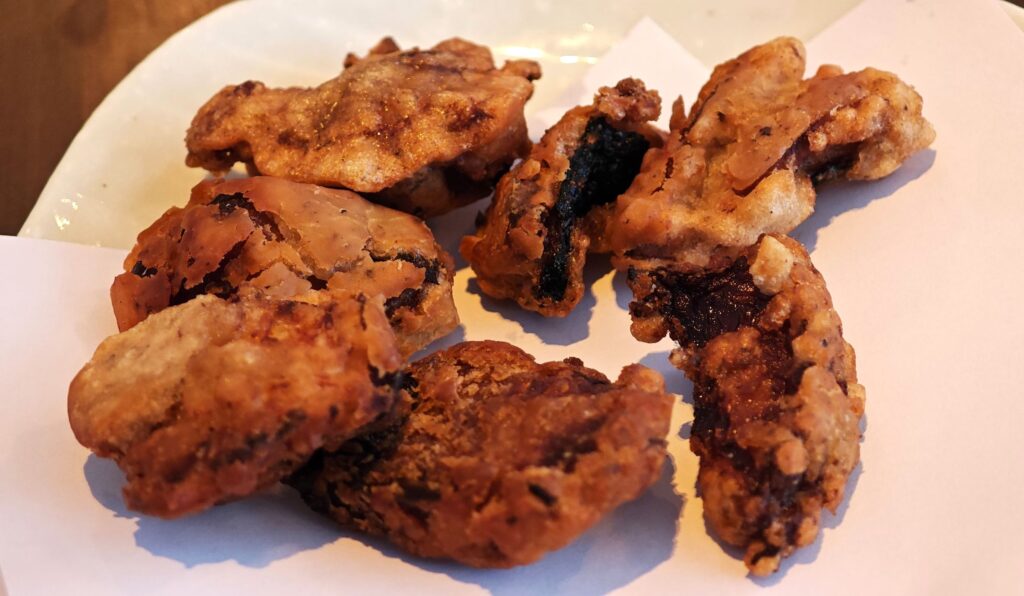
This dish features thick, plump octopus tentacles, juicy and springy, tucked into in a crunchy, savory armor. The batter is relatively light, allowing flash frying to lock in moisture while forming micro-bubbles in the batter.
Together with the luscious gelatin from the fat, each bite releases hot oceanic juices – a mix of crackling oil, sea brine and savory coating that’ll leave you pleasantly greasy.
Matcha Ice-cream (抹茶アイス)
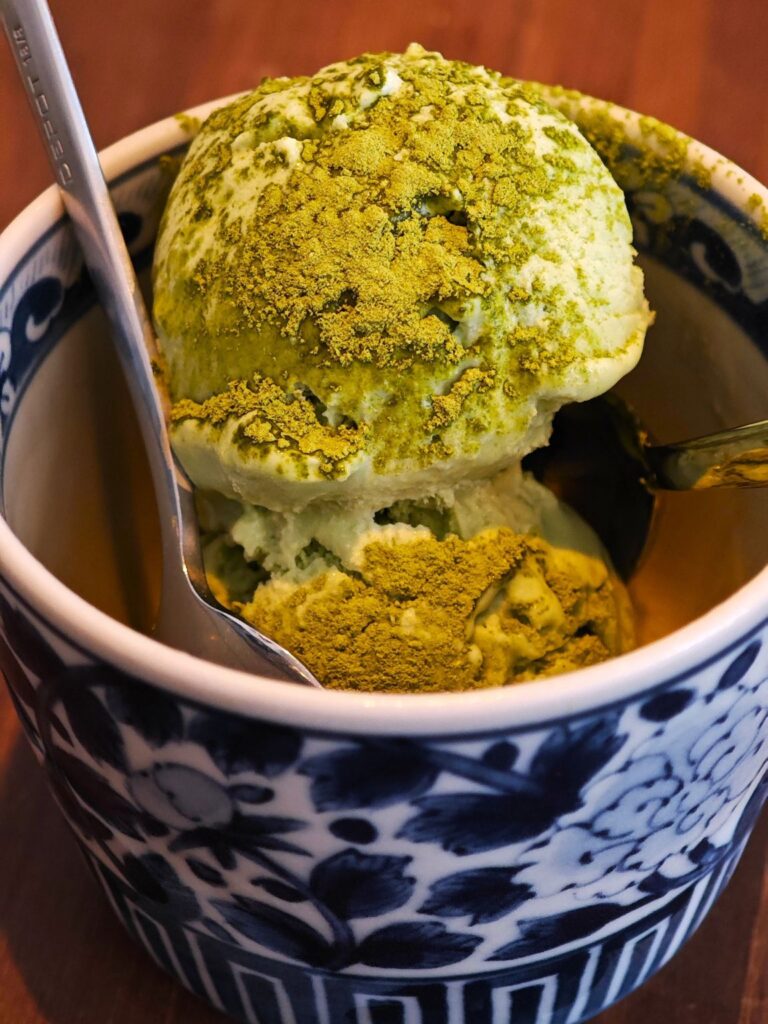
Priced surprisingly close to what you’d find at a regular ice cream shop, this green finale comes with a matcha vegetal aroma, and an intense, honest flavor.
The dusting of matcha powder on top gives a full-throttle matcha taste, with its grassy depth and subtle bitterness balanced by milky sweetness.
The ice cream is smooth as silk, rich but not cloying. Its cool creaminess gives way to a slow-building matcha intensity—earthy, and almost umami-rich, mixed with a mild, vanilla-like sweetness.
This dessert is decadent yet light.
At J’epoca, alongside various tapas, you can also find comforting donburi rice bowls, and slurp-worthy noodles to ground the feast.
Izakaya is often translated as snack bars or pubs, but it’s far more than that. Unlike typical pubs, every dish here is crafted with intention, where even drinking snacks can rival formal dining.
Born in the Edo period as simple sake shops offering bites to accompany drinks, these izakaya has evolved into cultural icons, often seen in films and dramas. It’s a great way to taste a living chapter of Japanese history.
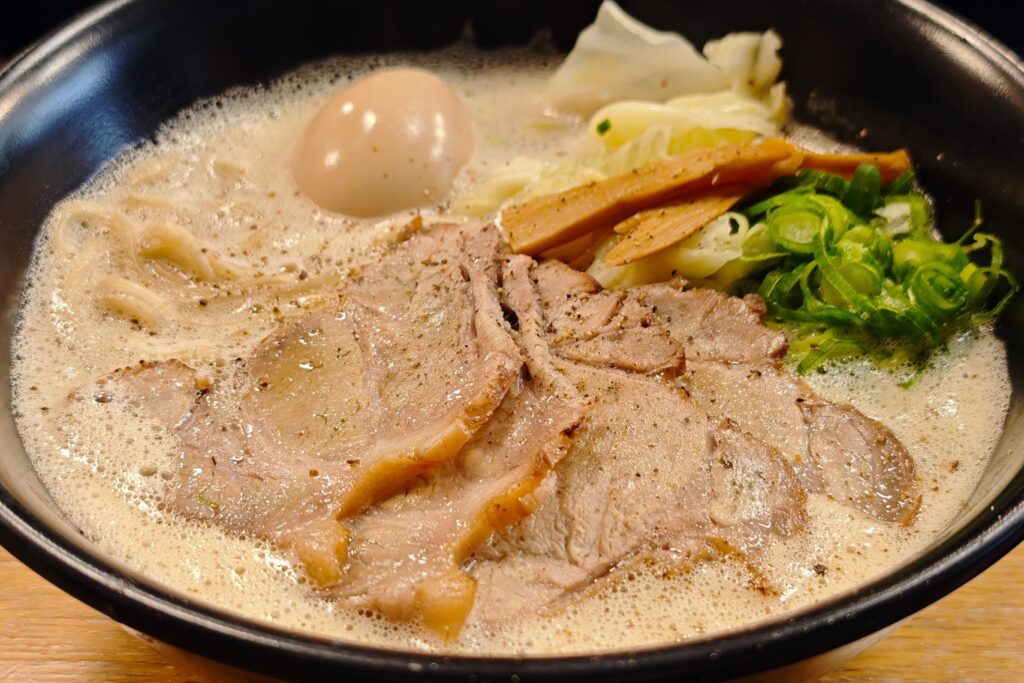

If you’re looking to fill up, this place might not be the best choice. The restaurant focuses on tapas and a wide selection of Japanese sake and beer, it’s perfect for a evening of drinks and small bites.