
Located within the Madrid‘s lush “Golden Triangle of Art” is a powerhouse trio completed by
- the Thyssen-Bornemisza museum – showcasing a chronological sweep of Western art;
- the Reina Sofía museum – home to the 20th century’s masterpieces, most famously Picasso’s searing anti-war mural, Guernica);
- and last but not least, the Prado Museum – a national treasure that tells the epic story of Spain itself through brushes dipped in passion, power, and darkness.
For a perfect art day in Madrid – you can start with the Prado (3h) for Old Masters, stroll to Thyssen (1.5h) for variety, and finish at Reina Sofía (1.5h) to be shaken by Picasso.
But if time only allows for one museum in Madrid, I’d make it the Prado for its extraordinarily rich collections. By the late 19th century, it was already celebrated as one of the “world’s four greatest art museums,” alongside the Louvre in Paris, the Hermitage in St. Petersburg, and the Uffizi Gallery in Florence.
THE PRADO MUSEUM
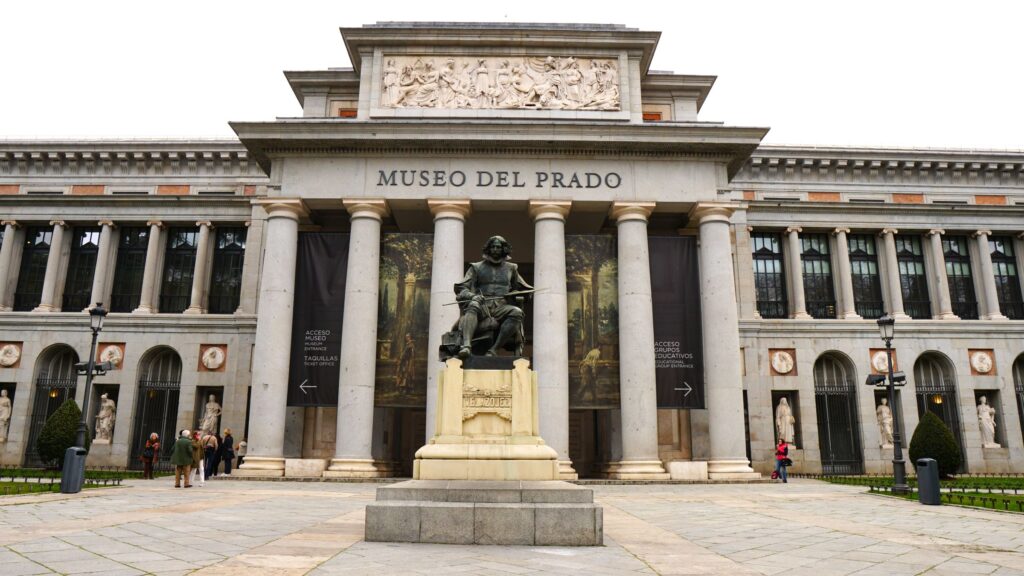
Forget Trying to See It All
With over 7,000 paintings sprawled across three floors, that way lies madness and sore feet. If you want to savor, not sprint. We’d suggest to be a hunter, not a wanderer.
Grab the map when you enter, circle your targets, and plot your route. So, you can dive into its depths without getting lost in the glorious maze.
Here’s a room-by-room guide that highlights some of the most important paintings in Western art. Now, let’s go find some legends!
📍Ground Floor – Lower Right Section
Room 55B: Albrecht Dürer’s Self-Portrait (1500). Before selfies, there was Dürer. He paints himself with a serene, frontal pose reserved for Christ.
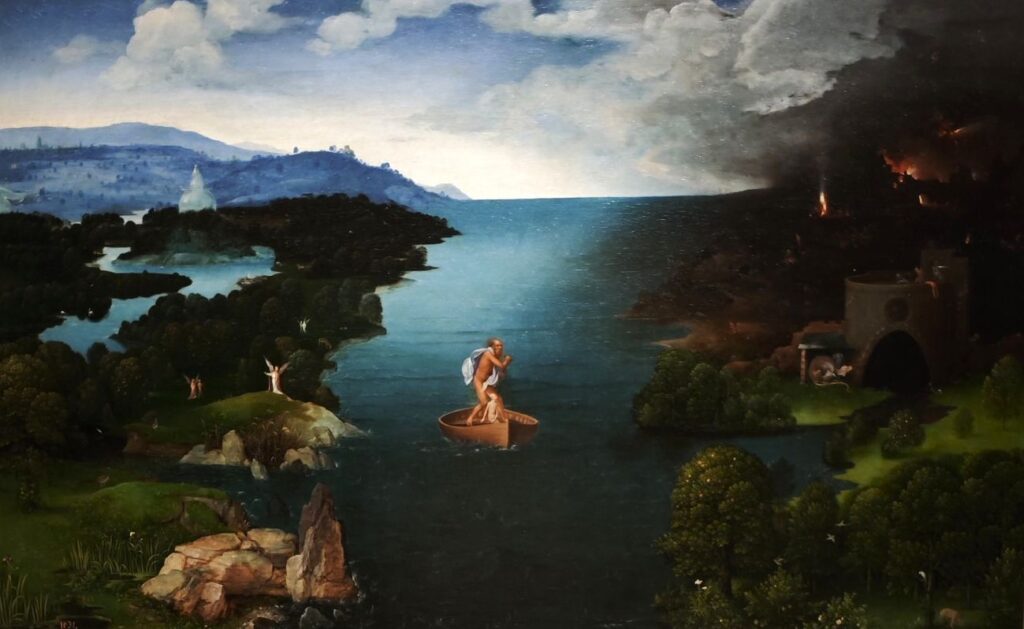
Room 55A: Joachim Patinir’s Crossing the River Styx (c. 1520-1524). A moral compass rendered in imaginary landscape that maps the soul’s journey after death. The blessed are guided to a Paradise on the left, while the damned are ferried to a hellish cave mouth on the right. It’s a stark reminder of the medieval mind, full of consequence and divine judgment.
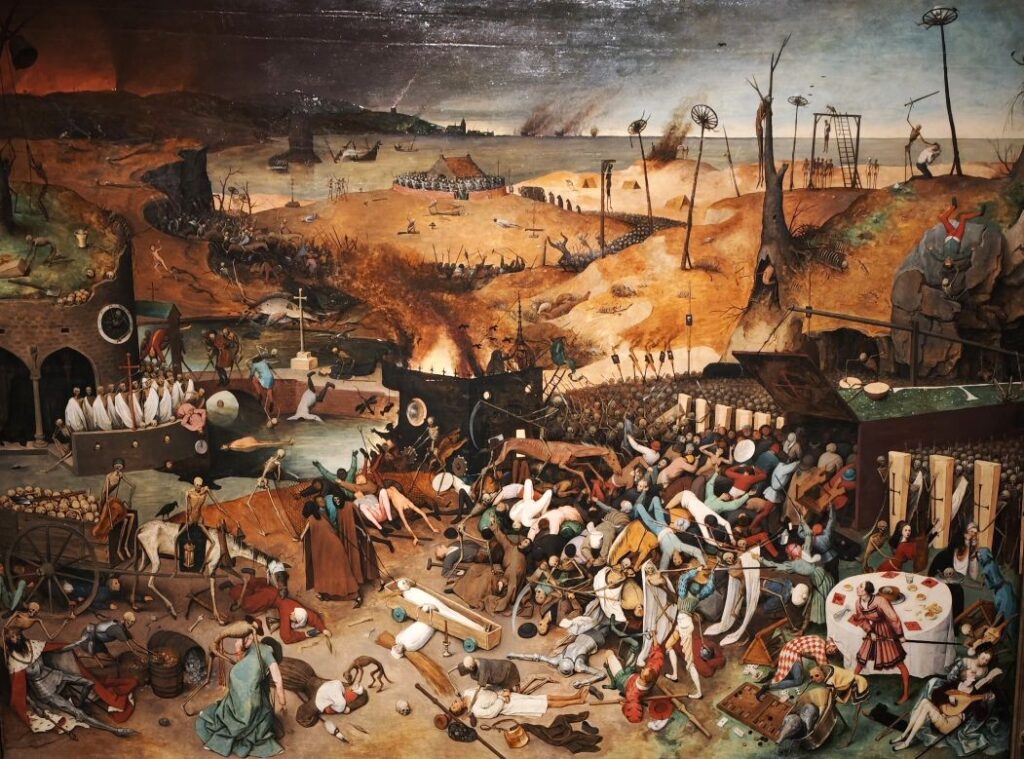
Room 55A: Pieter Bruegel the Elder’s The Triumph of Death (c. 1562). The end of the world painted against the backdrop of the brutal religious wars and constant violence in the 16th-century Flanders. An infinite army of skeletons marches across a scorched earth, exterminating everyone—kings, knights, clergy, peasants, lovers. No one is spared. It’s a stark memento mori (remember you must die) that declares the ultimate democracy of death. The details are chilling: a skeleton parodying a musician while another strangles a victim; a king dying futilely beside his treasure; a line of living people being herded into a coffin-shaped trap. The horror is inventive and inescapable.
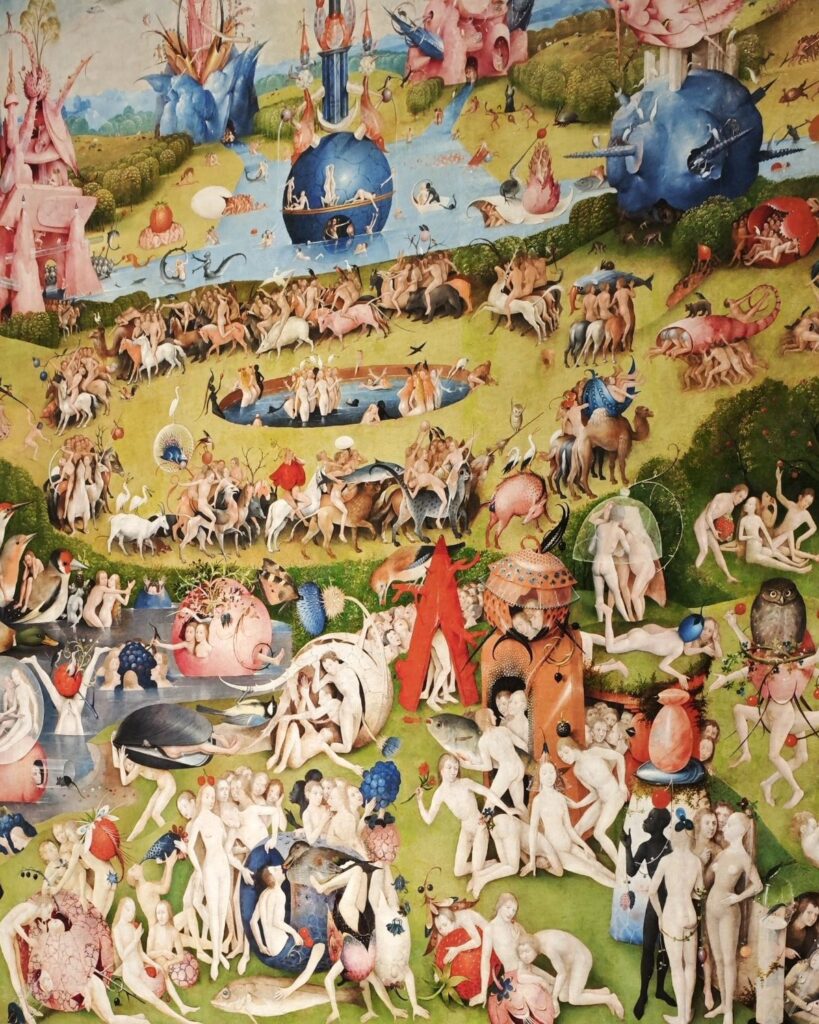
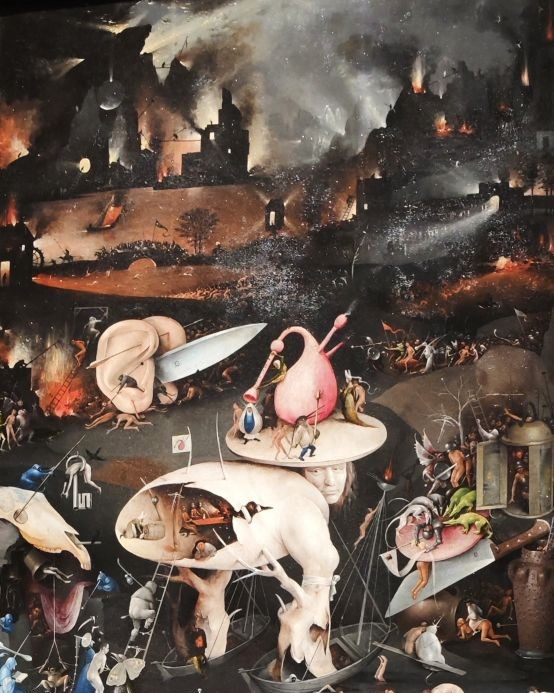
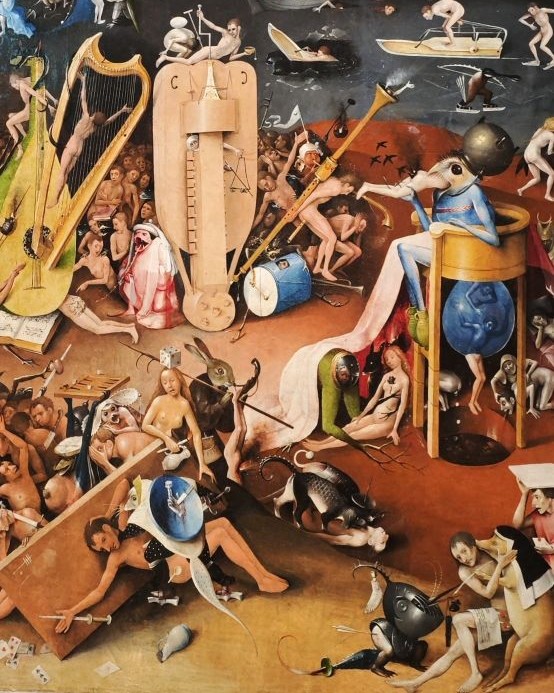
Room 56A: Hieronymus Bosch’s The Garden of Earthly Delights (c. 1490-1500). This triptych is a trip. It’s a sprawling and bizarre panorama depicting the innocence of Eden, the chaotic hedonism of earthly life, and the grotesque punishment of Hell. Its power lies in the details – giant birds, people emerging from eggs, musicians crucified on harps. You can stare at it for an hour and still find new, weird details.
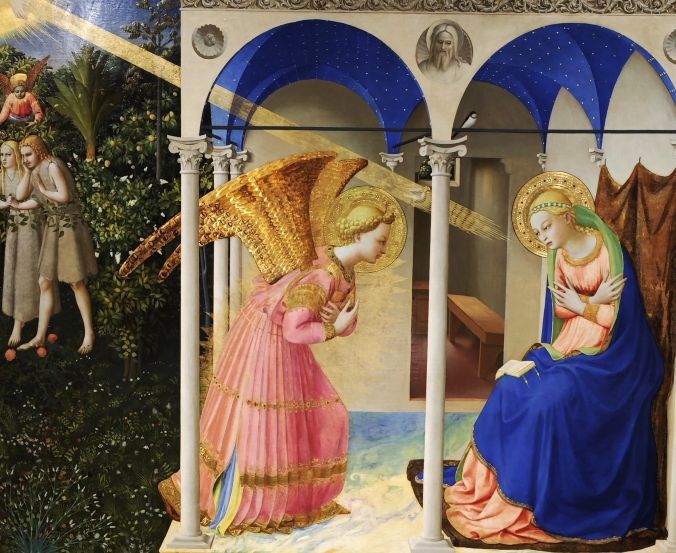
Room 56B: Fra Angelico’s The Annunciation (c. 1425-1428). After Bosch’s chaos, this Florentine masterpiece is a balm. An early Renaissance egg tempera painting with its profound serenity and grace.
Room 49: Raphael’s Portrait of a Cardinal (c. 1510-1511). A masterclass portrait in restrained power and psychological depth, embodying the Renaissance ideals of grace and authority.
📍Ground Floor – Upper Left Section
Room 60A: Joaquín Sorolla’s Children on the Beach (1910). The blinding, glorious sunlight of the Spanish Mediterranean. Sorolla, the master of light, captures the carefree summer moment of celebrating pure, luminous joy.
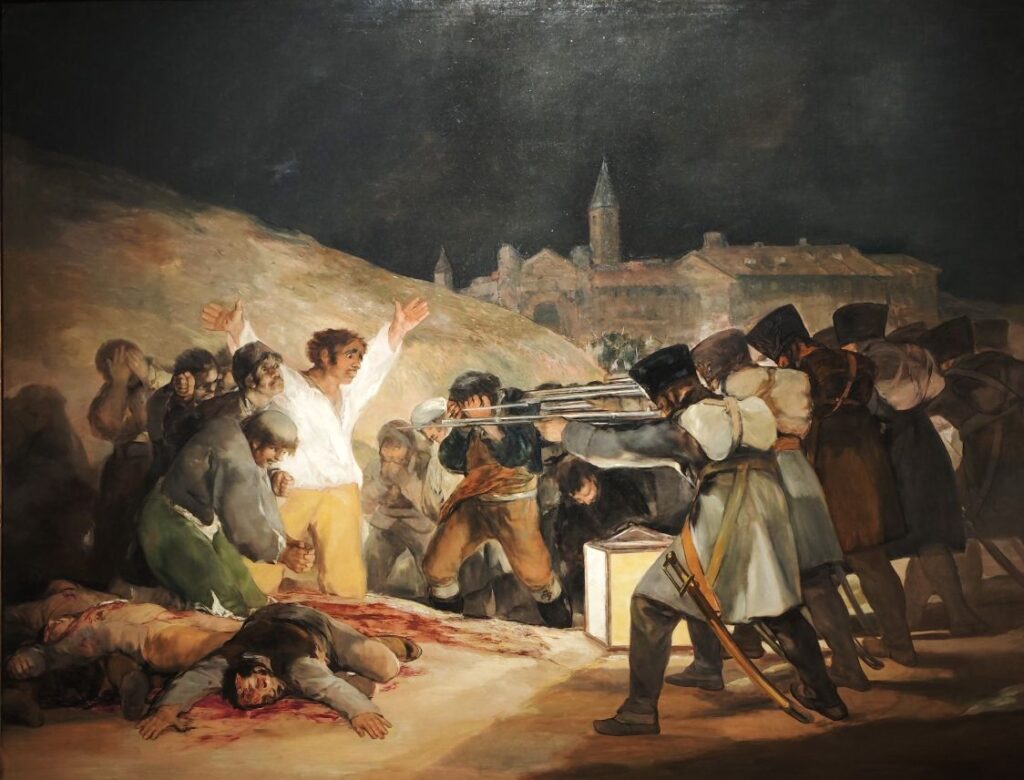
Room 64: Francisco de Goya’s The 3rd of May 1808 (1814). A powerful anti-war statement, it depicts the brutal aftermath of a civilian uprising against French Napoleonic troops in Madrid. Goya forces us to witness the execution of Spanish rebels. The focus is on the terrified face of the central figure in white, his arms outstretched in a pose echoing Christ’s crucifixion, confronting a faceless, inhuman firing squad. A moment where art stops being about ideals and starts being about truth.
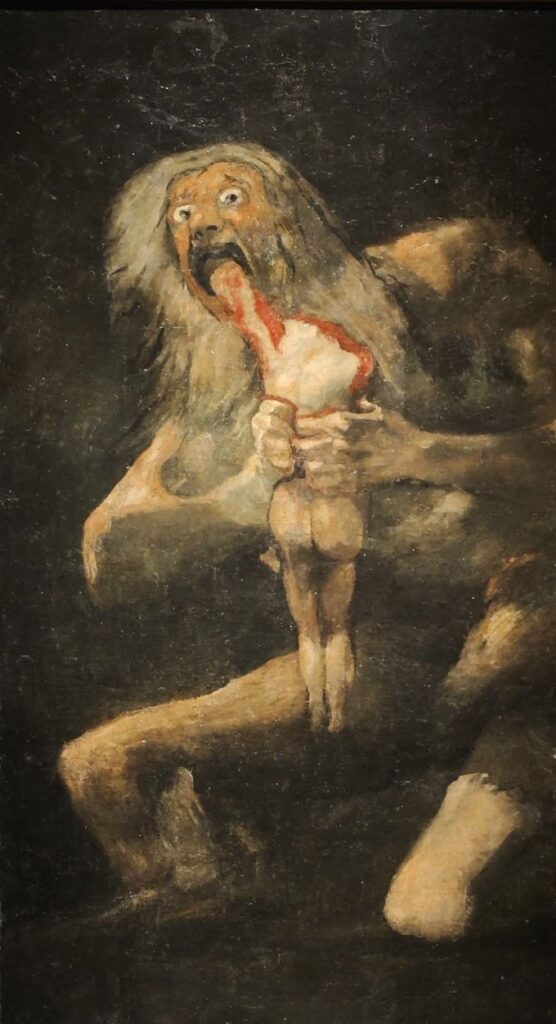
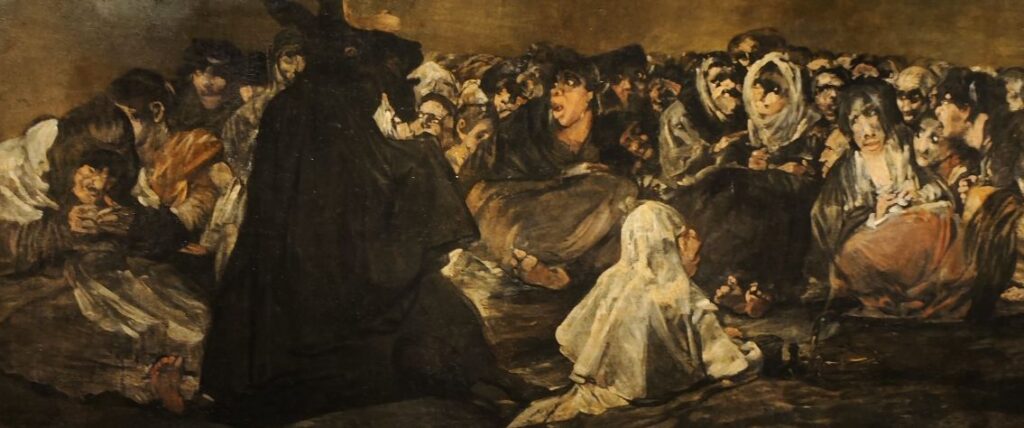
Room 67: Goya’s Black Paintings – The Dog and Saturn Devouring His Son (c. 1819-1823).
This is the descent into a private nightmare. In his later years, deaf, disillusioned, and living in isolation, Goya painted these horrifying masterpieces directly onto the walls of his country house, Quinta del Sordo (the House of the Deaf Man). They were never meant to be seen by the public.
- The Dog: An image of profound, existential loneliness. A dog’s head appears, struggling to keep above a vast, sloping expanse of ochre earth, beneath an empty, oppressive sky.
- Saturn Devouring His Son: Based on the myth of the Titan eating his children to prevent a prophecy, Goya puts it into a pure, primal madness. The wild eyes, the brutal grip, the dark, chaotic brushwork—it’s a vision of irrationality and despair, a window into the darkest corners of the human psyche.
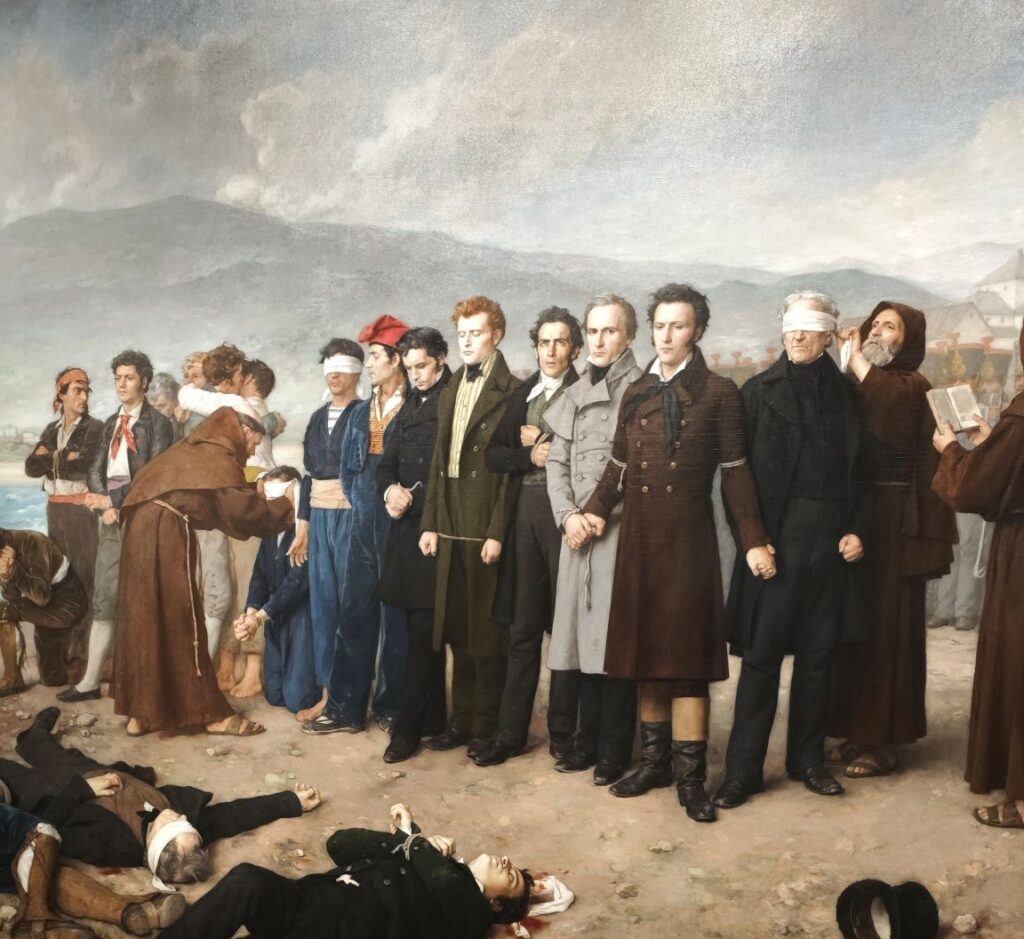
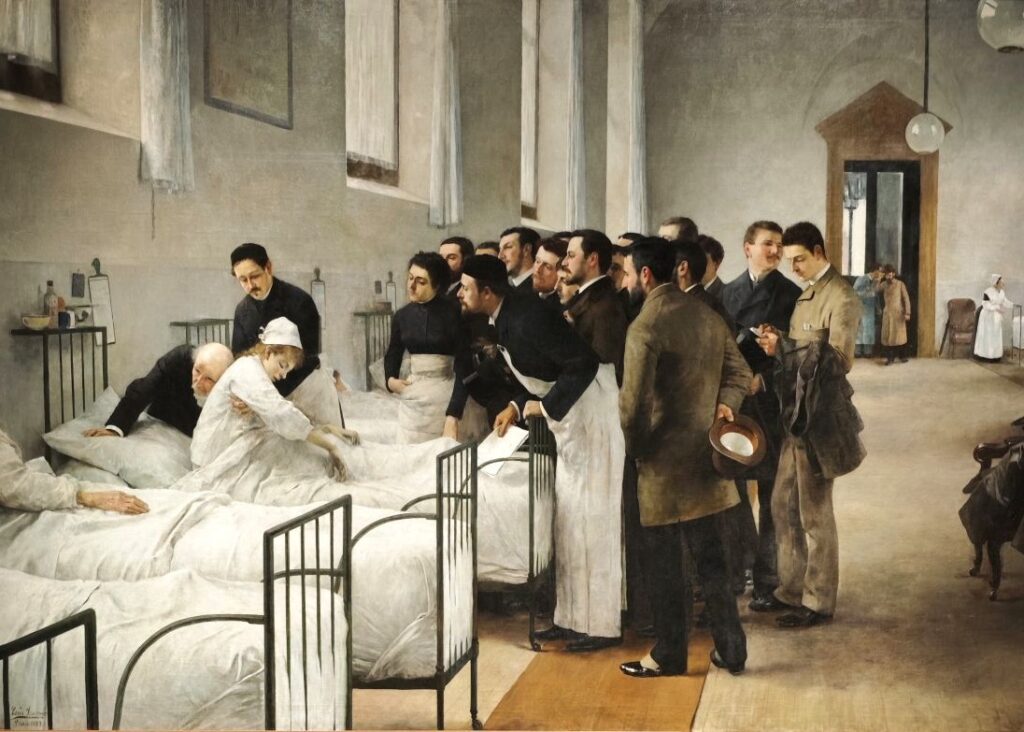
Room 75: Antonio Gisbert’s The Execution of Torrijos and his Companions on the Beach at Málaga (1888). A monumental history painting and one of the most powerful in the entire Prado. It depicts a real and tragic event: the execution without trial of General José María Torrijos and his liberal companions in 1831 for defying the absolutist rule of King Ferdinand VII. Torrijos, at the center, clasps hands with his companion, a final act of solidarity in the face of tyranny. The grey, dawn sky and the empty beach create a feeling of immense isolation and tragedy.
📍First Floor – Lower Right Section
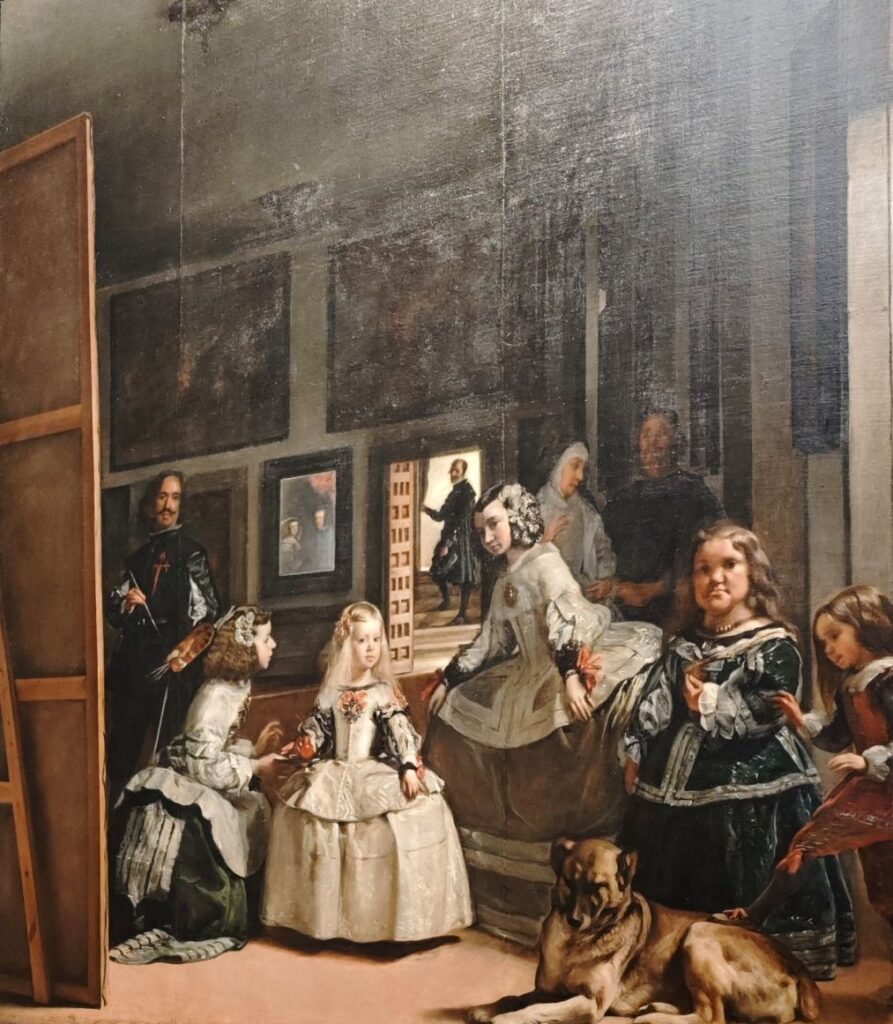
Room 12: Diego Velázquez’s Las Meninas (The Maids of Honor) (1656). This is the painting, the Sistine Chapel of the Prado. It’s a breathtakingly complex illusion. The Infanta Margarita is the center, but her parents, King Philip IV and Queen Mariana, are reflected in a mirror at the back of the room. And to the left, palette in hand, stands Velázquez himself, painting the scene we are looking at. It’s a puzzle about reality, illusion, and the role of the artist that continues to be debated.
Room 12: Velázquez – Portraits of the Infanta Margarita. These portraits show the delicate face of a child constrained by the immense weight of royal duty and extravagant costume.
Room 7A: Caravaggio’s David with the Head of Goliath (c. 1600). A dark, dramatic piece. The young victor David looks down with pity at the severed head of Goliath—a pained self-portrait of Caravaggio himself and a shocking, personal meditation on violence.
Room 42: Titian’s The Worship of Venus (c. 1518-1520) and The Bacchanal of the Andrians (c. 1523-1524). The Renaissance party scenes. Titian’s lush, colorful visions of mythical revelry are pure, sensual joy and a celebration of life.
Room 3: Nicolas Poussin’s The Parnassus (c. 1630-1631). Apollo and the Muses inspire history’s great poets on a mountain of perfect order. A pinnacle of harmonious, intellectual classical composition.
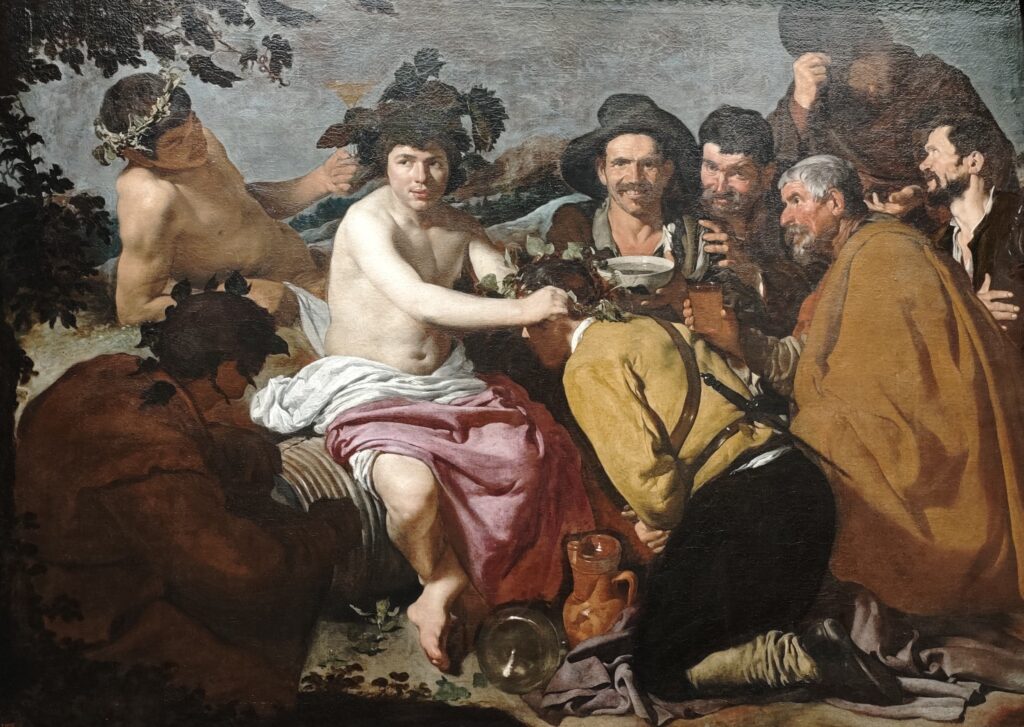
Room 10: Velázquez’s The Feast of Bacchus (The Drunkards) (1628-1629). This groundbreaking scene depicts the Roman god of wine, Bacchus, crowning a group of rough, joyful, and common Spanish peasants. It’s a revolutionary fusion of classical mythology with gritty, everyday realism (a style known as bodegón). Velázquez treats these drunkards with the same dignity with the presence of a god, celebrating earthly human pleasure.
📍First Floor – Upper Left Section
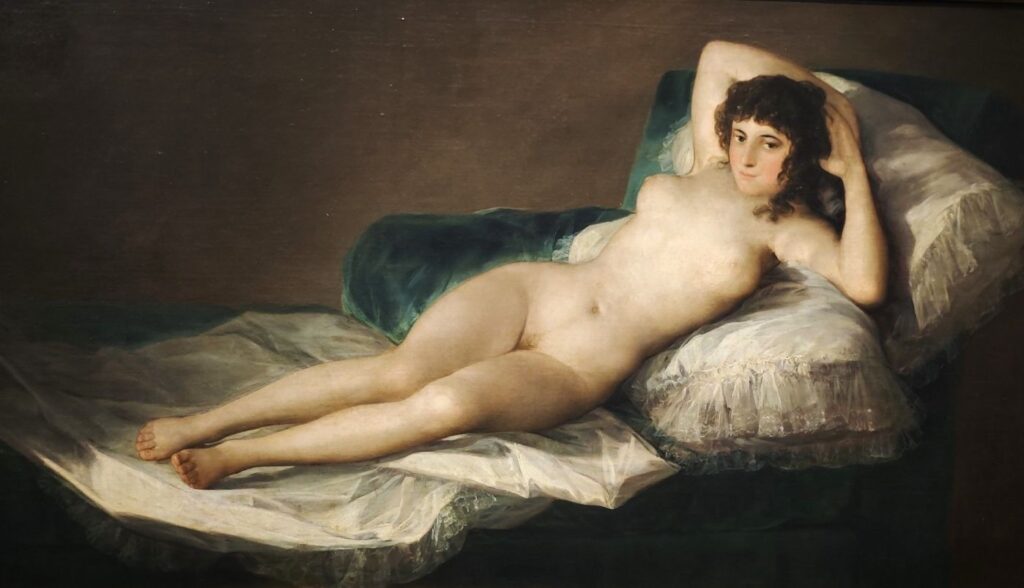
Room 38: Francisco de Goya’s The Naked Maja (c. 1797-1800). She’s bold, she’s confrontational, and she was scandalous. For a long time, it was one of the first explicitly nude paintings in Western art not to hide behind a mythological title. Painted for a powerful minister, it was a private, provocative work, with her direct gaze challenging the viewer and the conventions of her time.
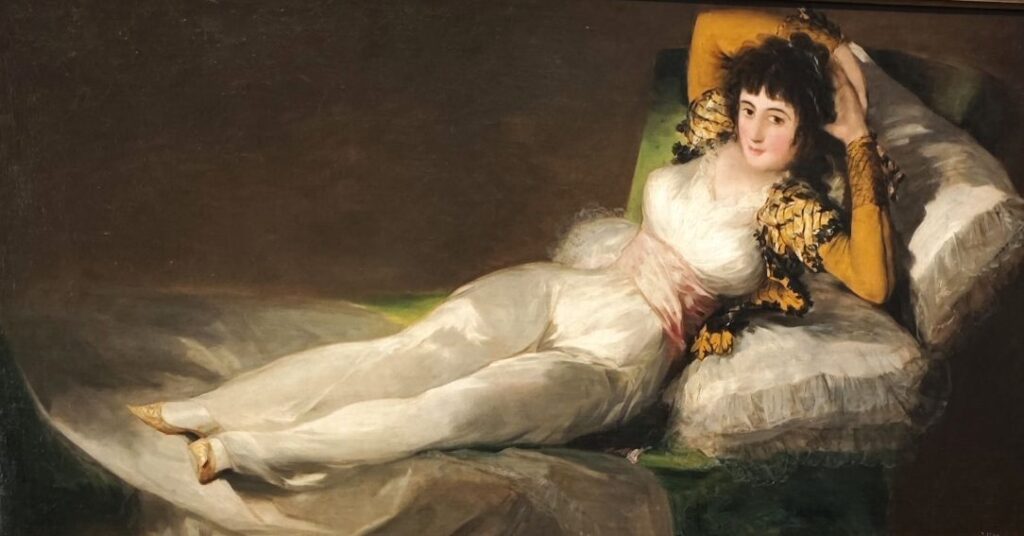
Hanging right next is her clothed version (The Clothed Maja).
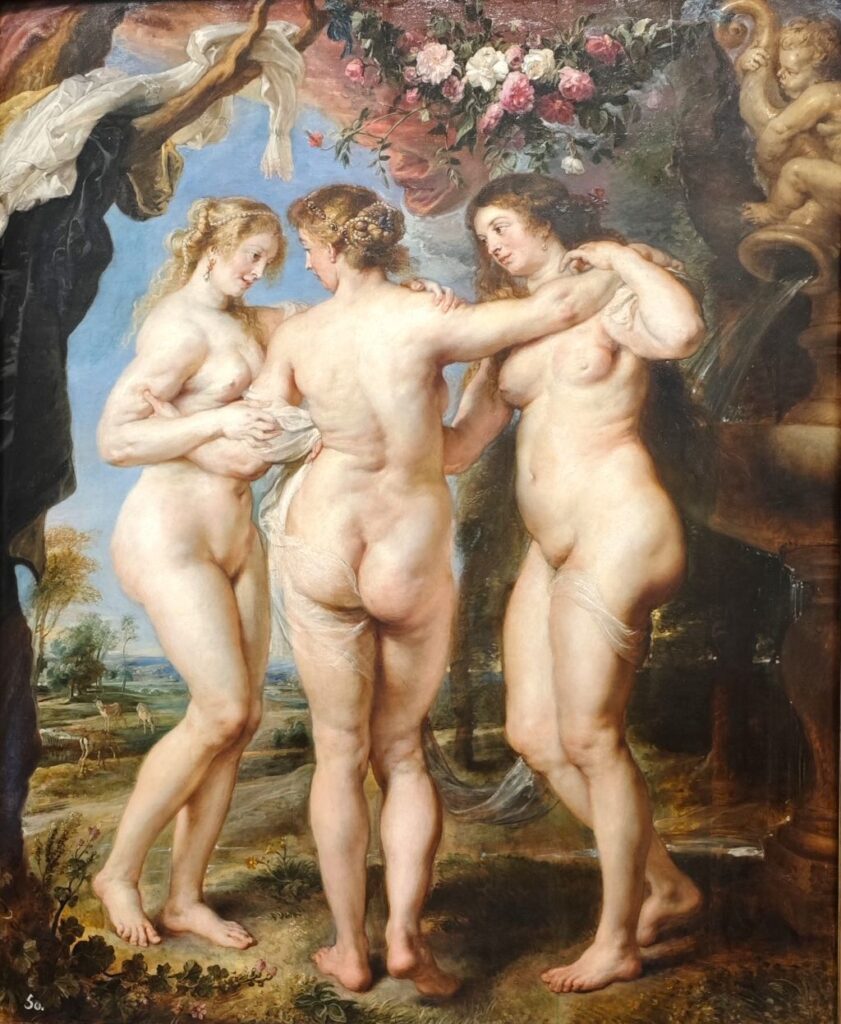
Room 29: Peter Paul Rubens’s The Three Graces (1630-1635). A radiant celebration of feminine beauty, vitality, and abundance. Rubens’s goddesses are all luminous skin, soft curves, and playful intimacy.
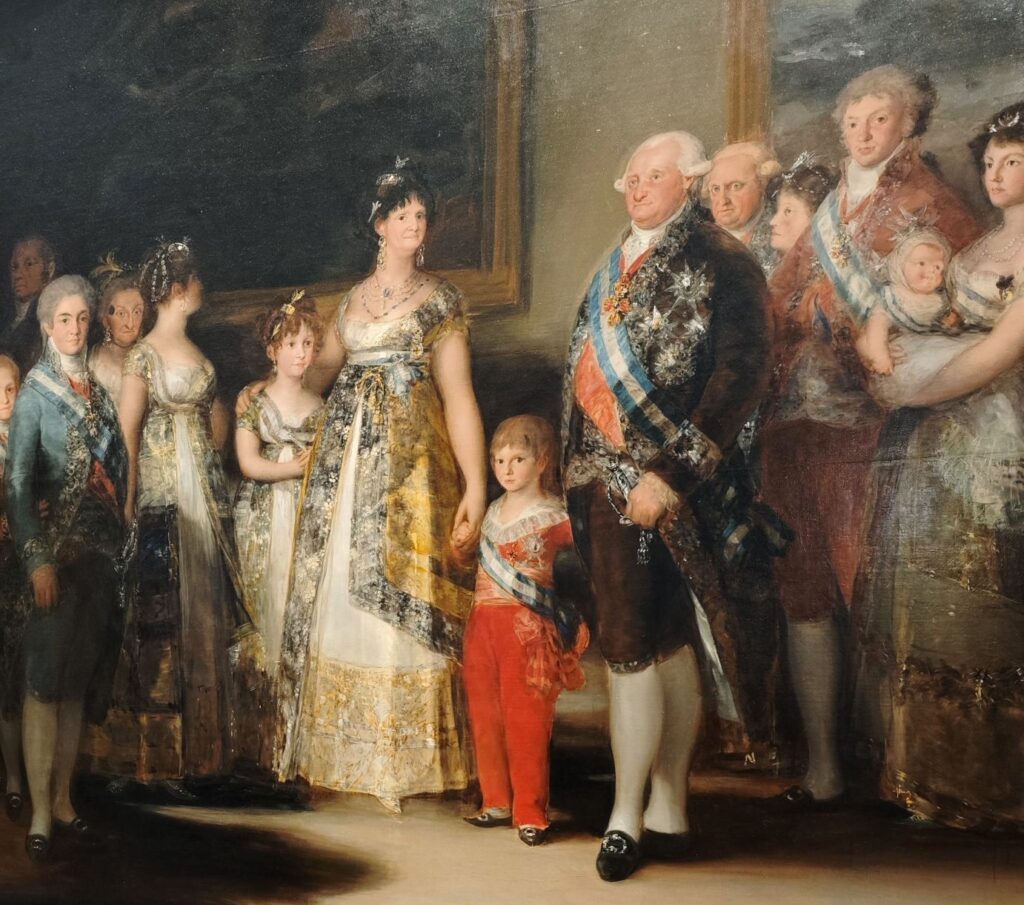
Room 32: Francisco de Goya’s Charles IV and His Family (1800). A dazzling group portrait of the royal family, dripping with medals, silks, and the weight of their own pride. If you look closer, Goya, the masterful psychological portraitist, captures a vacant king, a domineering queen, and their heirs with vapid or suspicious stares – a public display of power that feels like a private roast.
📍Second Floor – Lower Right Section
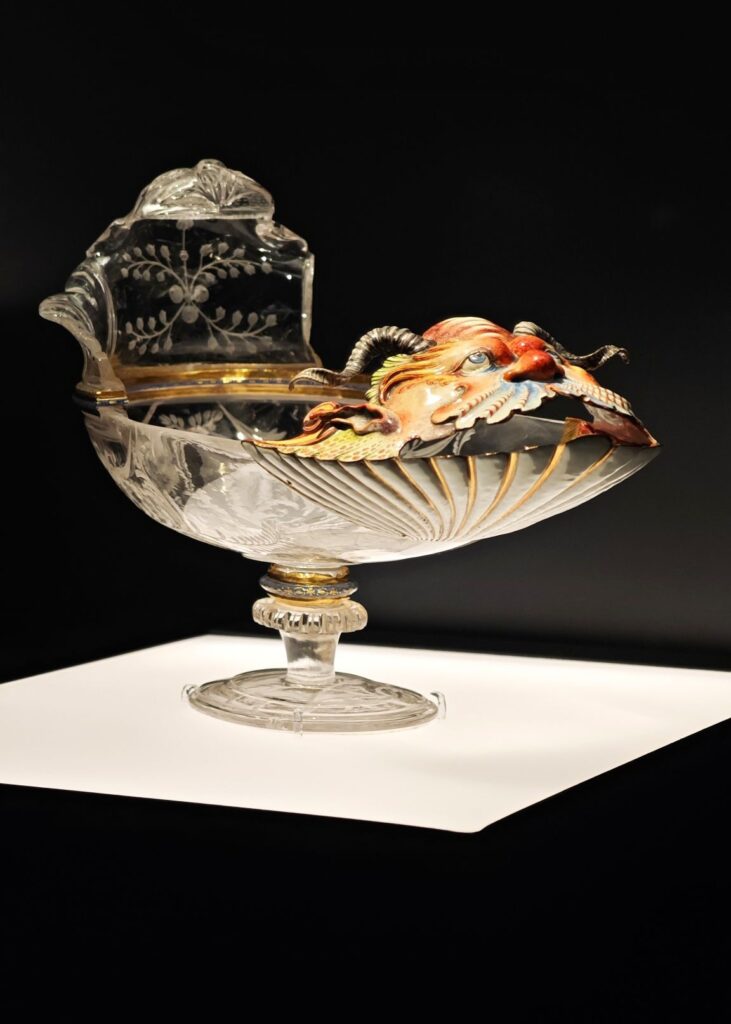
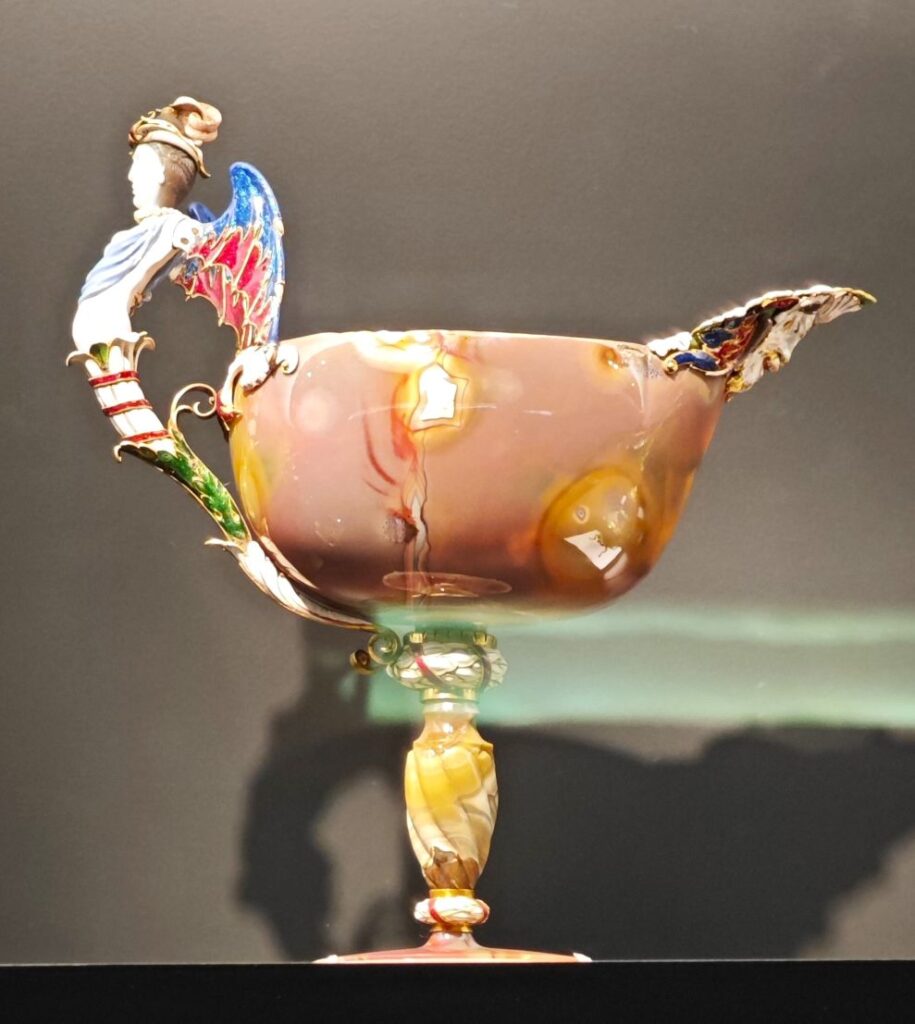
Room 79B: The Dauphin’s Treasure – The Nautilus Gold Cup with a Siren (c. 1600). A glowing nautilus shell is made into a mythical golden siren. Pure Mannerist luxury.
Room 83: Brueghel & Rubens – The Five Senses. Brueghel paints a room overflowing with hundreds of objects – instruments, musical scores, flowers, food, and art, while Rubens adds the sensual figures who embody themselves: Sight looks into a mirror, Touch embraces, Taste sips wine. It’s a sensory overload and celebration of human experience.
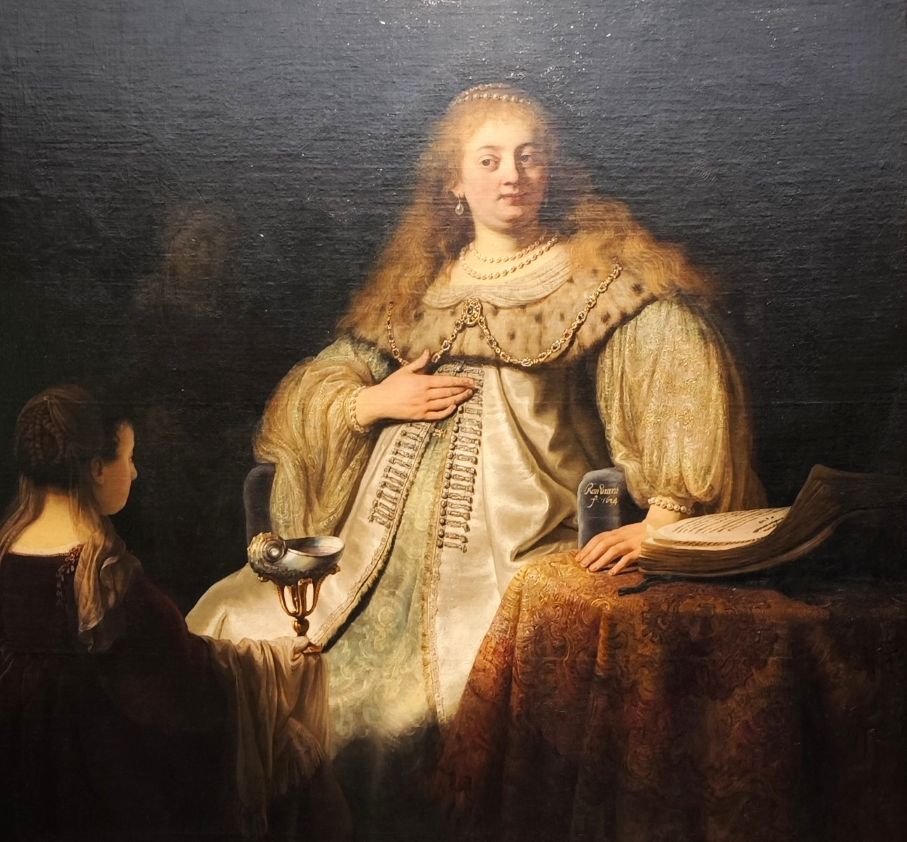
Room 76: Rembrandt van Rijn – Judith at the Banquet of Holofernes (1634). A masterclass in psychological drama and light, and a moment captured after the heroic act. Judith, beautiful and composed, is not shown beheading the Assyrian general, but rather pausing in the dark tent, her face illuminated by a single light source, lost in solemn thought. An old maid servant whispers urgently beside her. The tension is palpable, quiet, and deeply human.
📍Second Floor – Upper Left Section
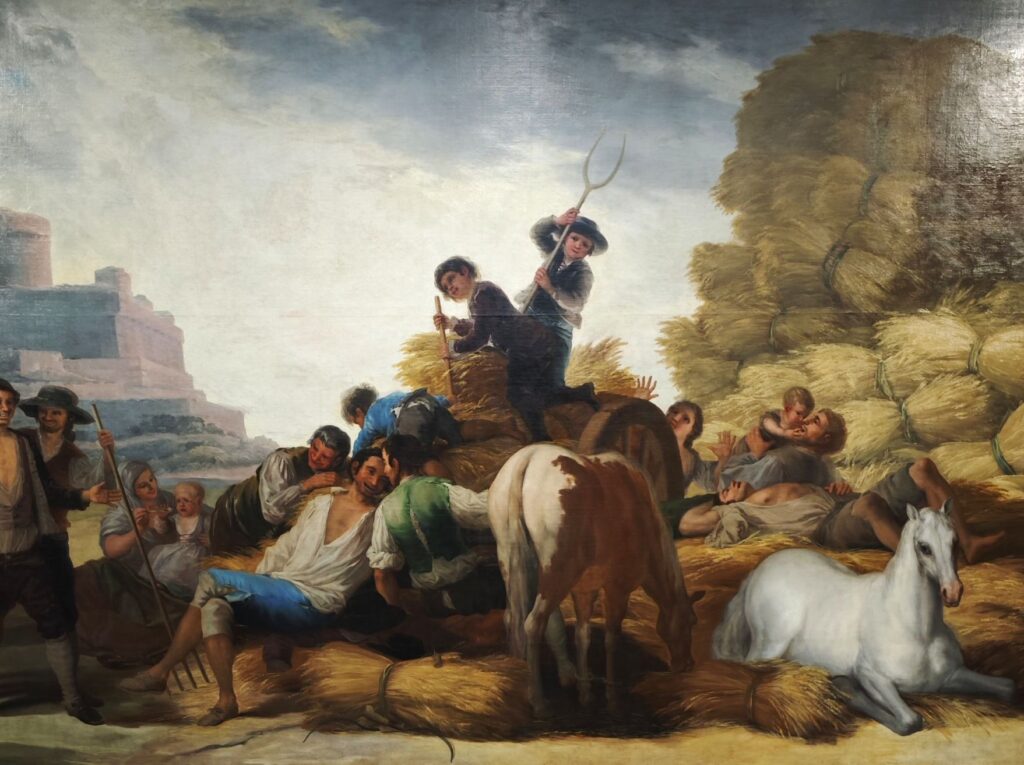
Room 85: Francisco de Goya – Summer (or The Harvest) (1786). After the darkness of his later works, this painting is life-affirming. It depicts handsome, idealized peasants gathering a bountiful harvest under a bright, hazy Spanish sun. The colors are warm and soft, the mood is one of a peaceful, fruitful labor. It shows Goya’s mastery of the graceful Rococo style early in his career, and puts a hopeful note to the end of your journey through the Prado.
More Tips
The museum’s suggested 3-hour audio tour route is brilliant, but give yourself at least four hours. Magic often happens on detours, in those unplanned moments when you turn a corner and gasp at something not on any list.
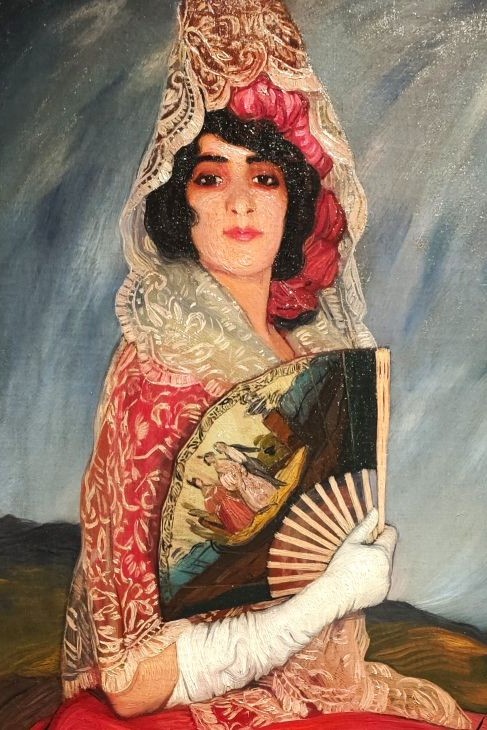
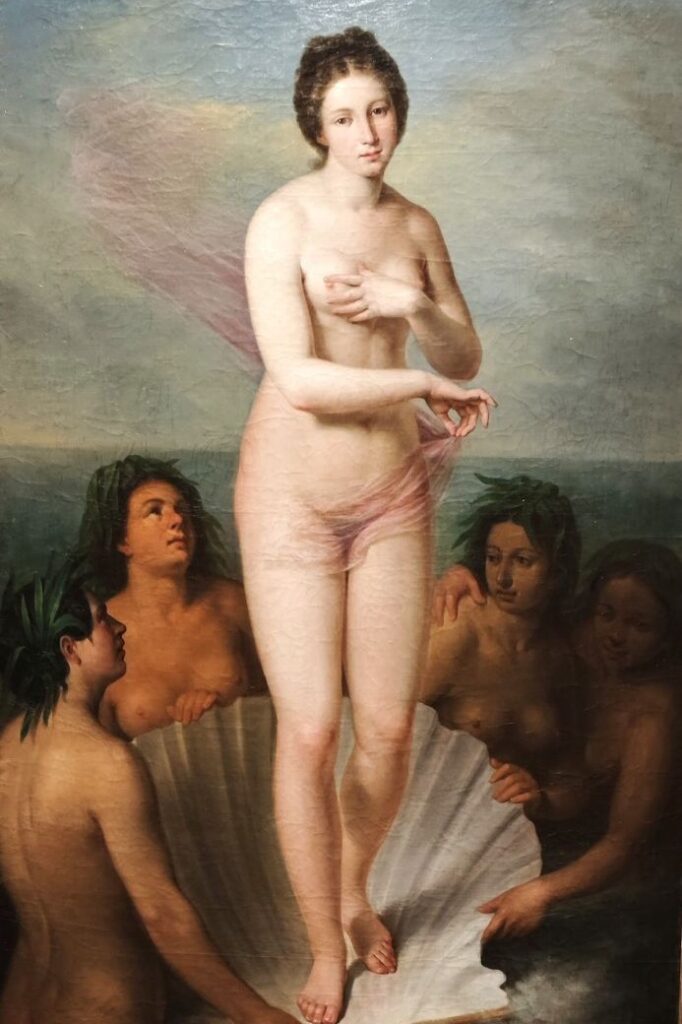
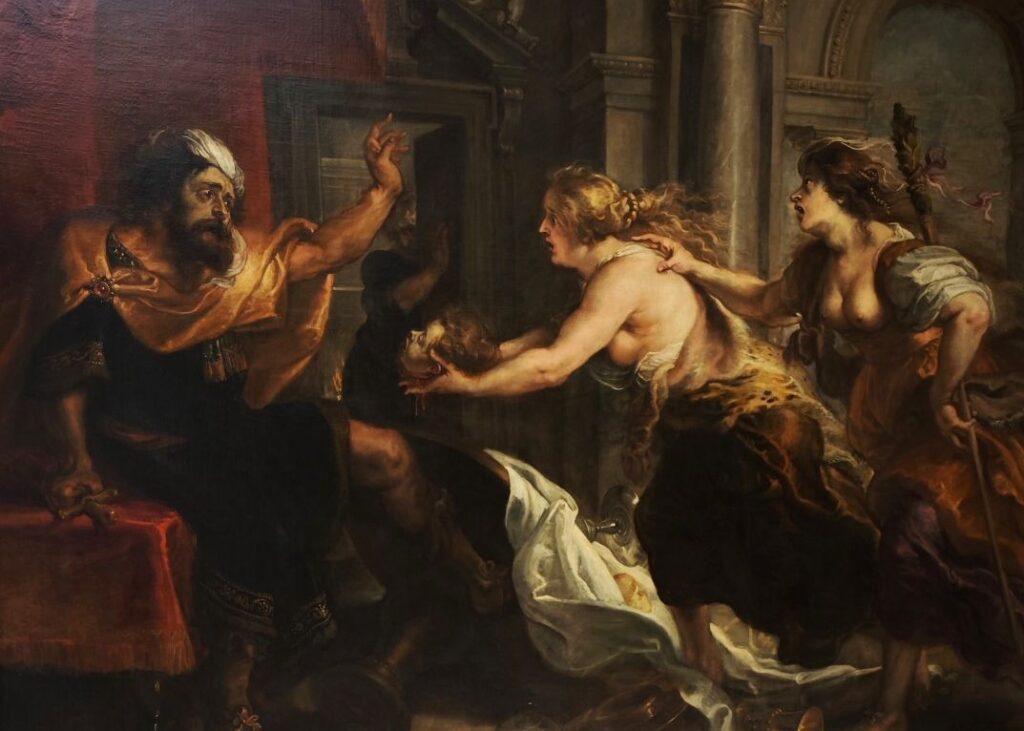
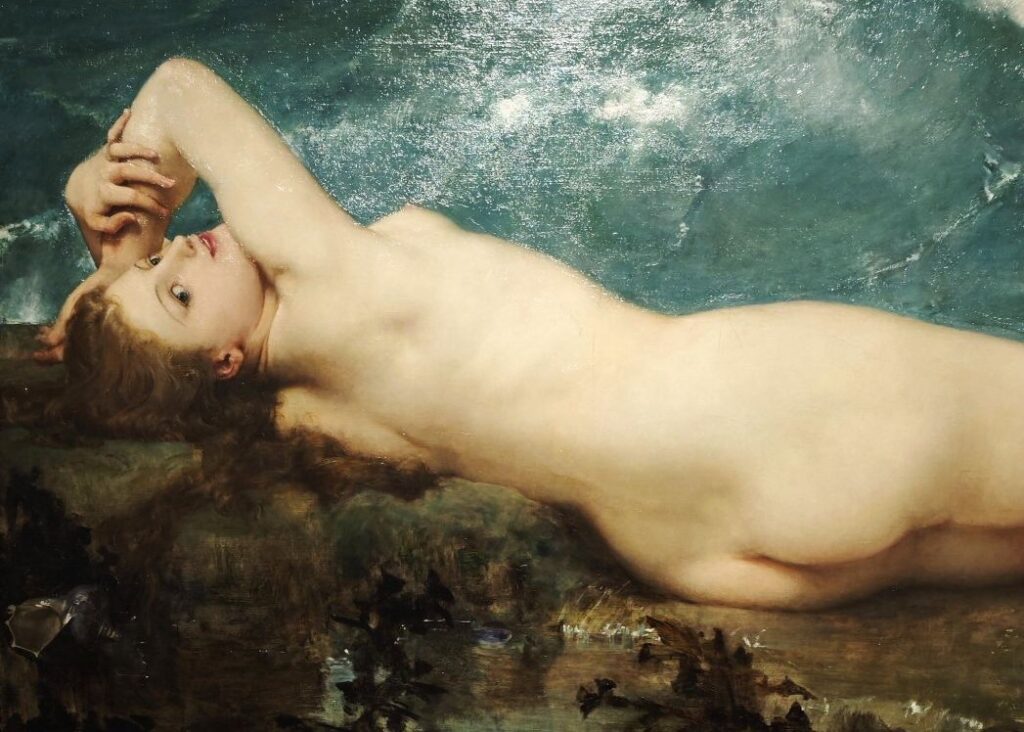


A pro tip for thrifty traveler: From Monday to Saturday, entry is free from 6 PM to 8 PM (and from 5 PM to 7 PM on Sundays). Just make sure you’re in the correct, separately marked line for free entry. It saves €15, but you only get two frantic hours. For a first visit, paying for a full day is worth it.
After visiting the Prado Museum, a leisurely stroll will take you to El Retiro Park—it’s right next door.
EL RETIRO PARK
Once the exclusive playground of Spanish royalty, this 350-acre retreat was opened to the public in the 19th century, and today, it remains the place where Madrid unwinds.
From broccoli-shaped trees and fountains, to rowboats gliding under the sun and dream-like glass palaces, El Retiro invites you to find the pulse of the city and to belong.
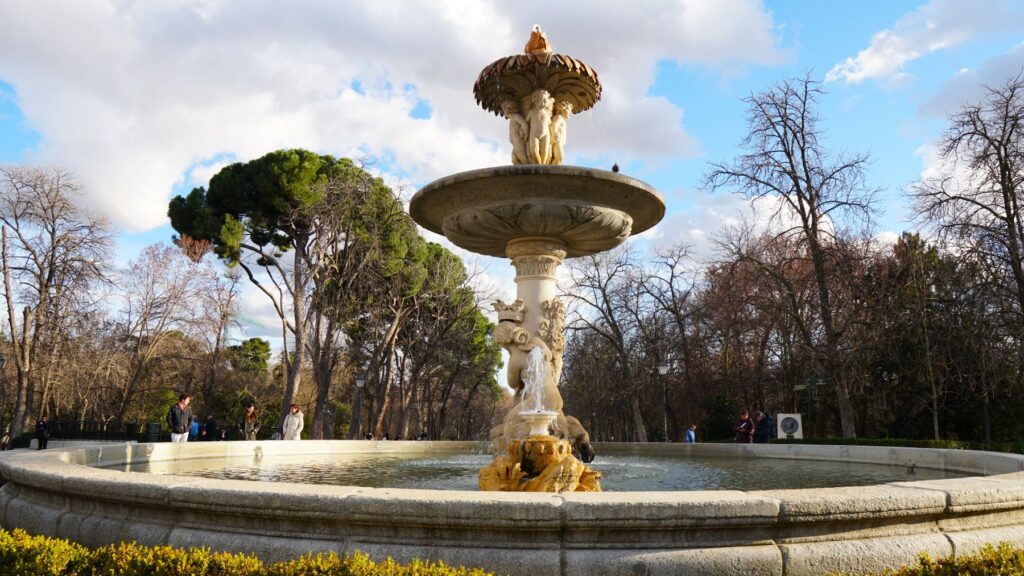
Iconic Experiences and Must-sees:
🚣♂️Rowing on the Grand Pond
At the northern end of the park’s large central pond (Estanque Grande del Retiro), you’ll find the rowboat rental dock. For €8 for 45 minutes, you can take to the water, surrounded by the monument to King Alfonso XII, gliding past curious swans. The swans tend to gather near the southwestern corner of the monument. Pro tip: arrive one hour before sunset, and watch the sky turn pink and gold over the lake 🌅

💎The Crystal Palace
Among tall trees and reflected in a tranquil pond, you’ll find the Palacio de Cristal – a 19th-century glass greenhouse, originally built to showcase tropical plants. It shimmers in the sunlight, especially when the light pours through the structure and casts glittering reflections on the water.
🌹The Rose Garden (La Rosaleda): In winter, blooms are sparse. But in spring, this place erupts in color and fragrance. If you’re lucky, you may spot peacocks🦚 roaming freely, unbothered and majestic.
Studies have shown that spending just 20 minutes in a park can significantly reduce stress and elevate your mood.
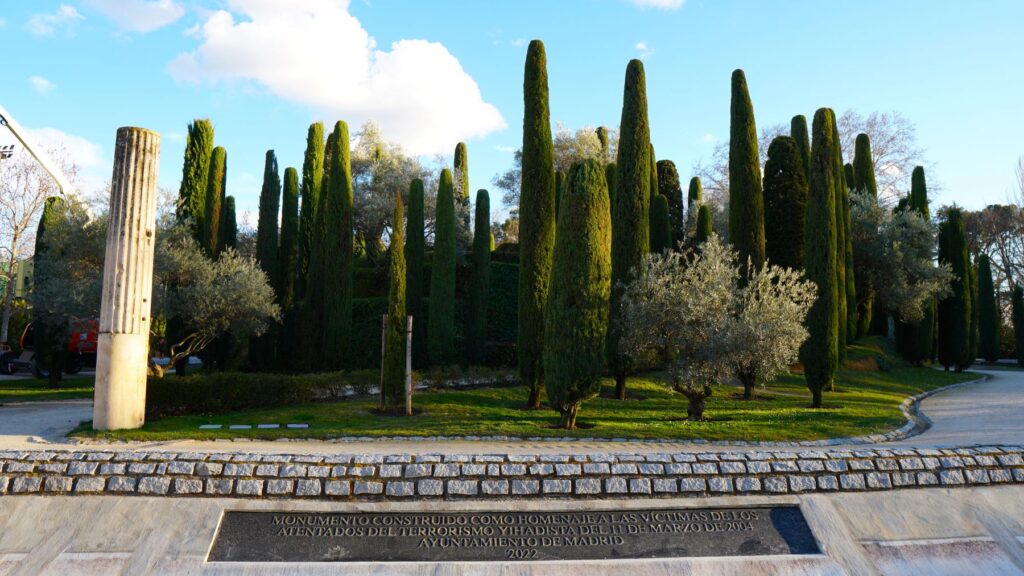
And in El Retiro, it’s palpably true. Whether you’re sitting on a bench reading, or simply lying on the grass watching clouds drift past the palace towers, something loosens in your shoulders. As the city’s noise fades, you remember what it feels like to be present.
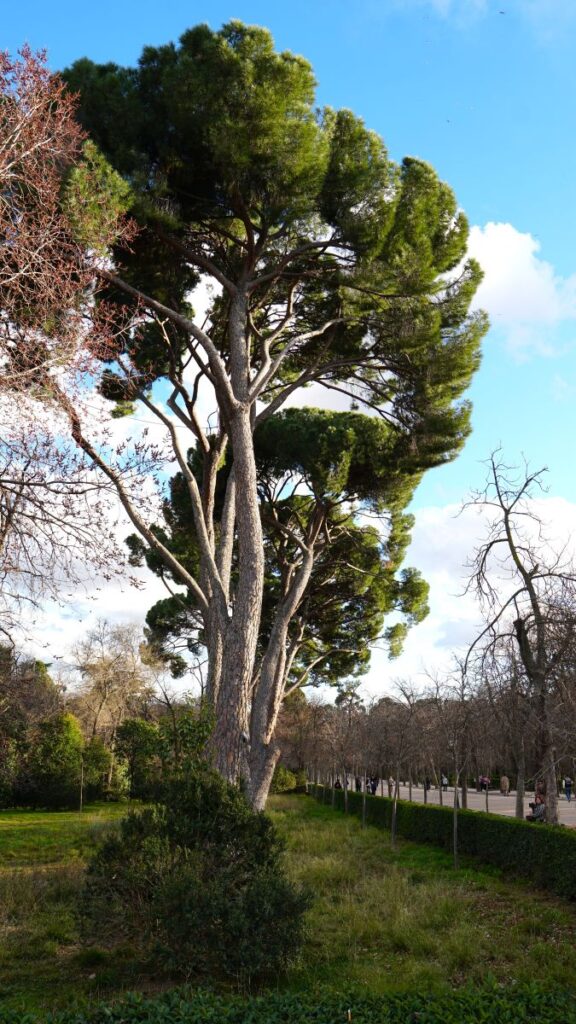
LITERARY QUARTER – BARRIO DE LAS LETRAS
Located between the grand art museums and the bustling Puerta del Sol lies Madrid’s Literary Quarter. This isn’t just a district you see; it’s one you read – where cobblestones, walls, taverns whispering verses from Spain’s Golden Age, as you tread the same paths as literary giants.
Look down, between Calle de la Cruz and Calle de San Jerónimo streets, you’ll find quotations from Cervantes, Quevedo, and Calderón de la Barca, inlaid in the pavement. Look up, and you’ll spot plaques, statues, and tributes to these literary masters. Sunlight filters through the tree leaves and spills over those words and the balconies above, making them feel alive, as if the city itself is breathing.
Highlights:
✍️ 📖The house where Cervantes once lived, the home of Lope de Vega (often called the “Father of Spanish Theater”), which is now a museum offering a glimpse into 17th-century life; and the Convent of the Trinity (Convento de las Trinitarias), where Cervantes was buried. At Plaza de las Cortes, you’ll find the statue of Cervantes. All of these are located within or directly tied to the Barrio de las Letras.
☕🍷 The neighborhood is also famous for its tabernas centenarias (century-old taverns) and literary cafes: The legendary Casa Alberto, founded in 1827, is one of Madrid’s oldest taverns. The Café Gijón (technically located along Paseo de Recoletos, just outside the quarter) is known for gatherings of writers, poets, and intellectuals throughout the 20th century.
Beyond history, the area today is a hotspot for hip, modern tapas bars and innovative restaurants.
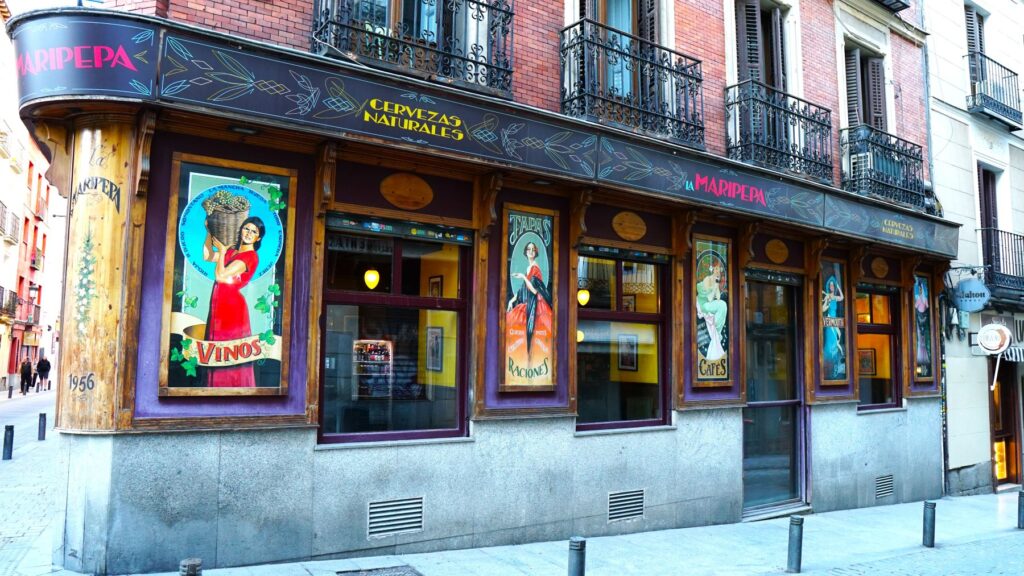
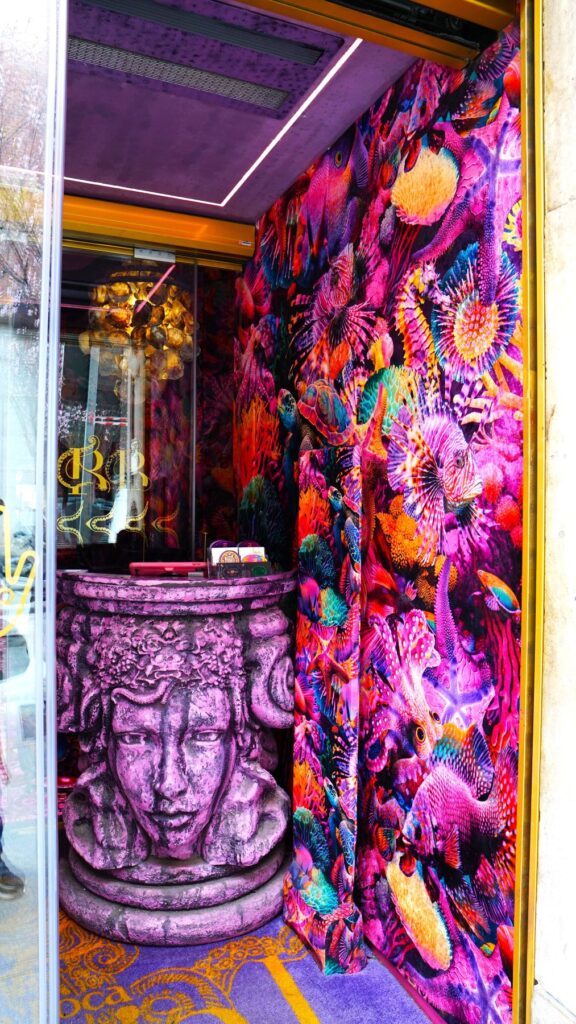
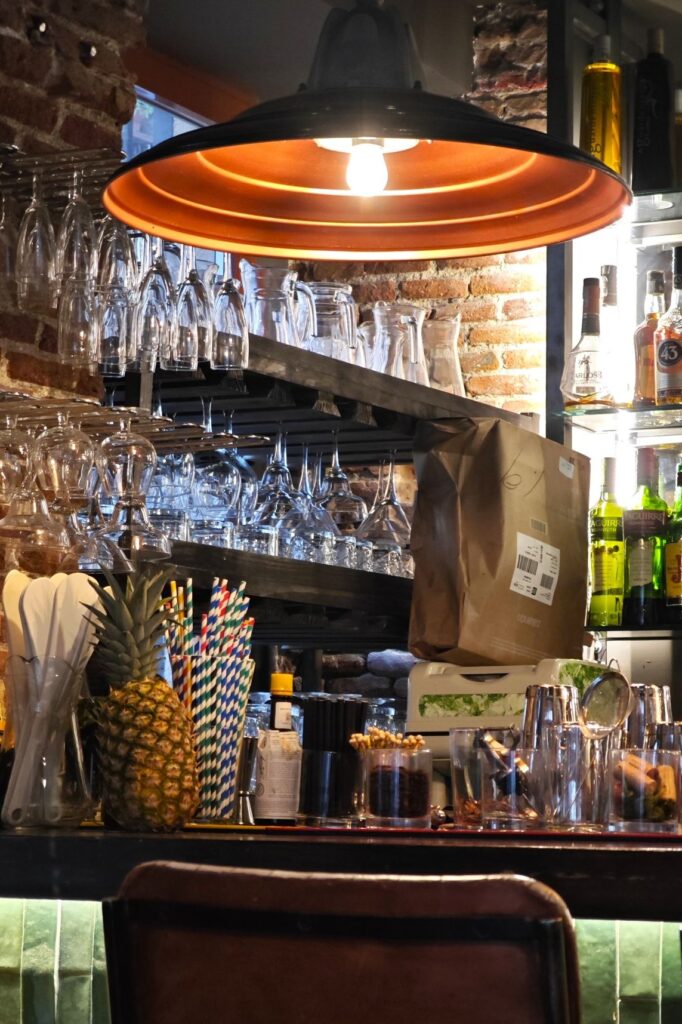
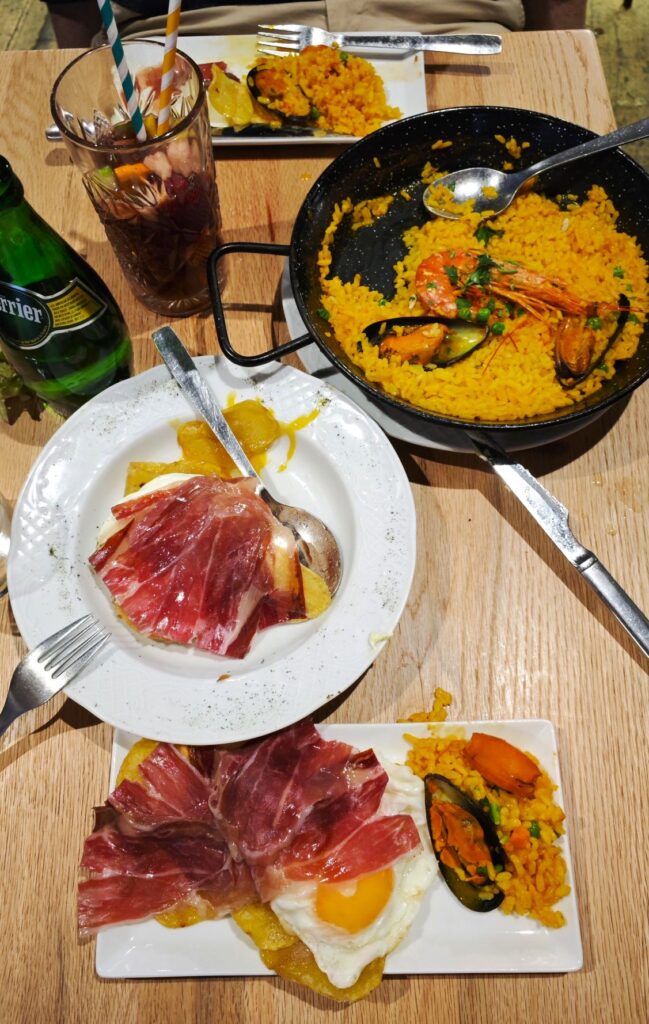
We chose a tapas bar named El Sur de Moratín, a casual, lively dining spot with good portion and good price. Each dish offers a different flavor bliss without pretentiousness. Let’s break down our delicious meal.
Sangria
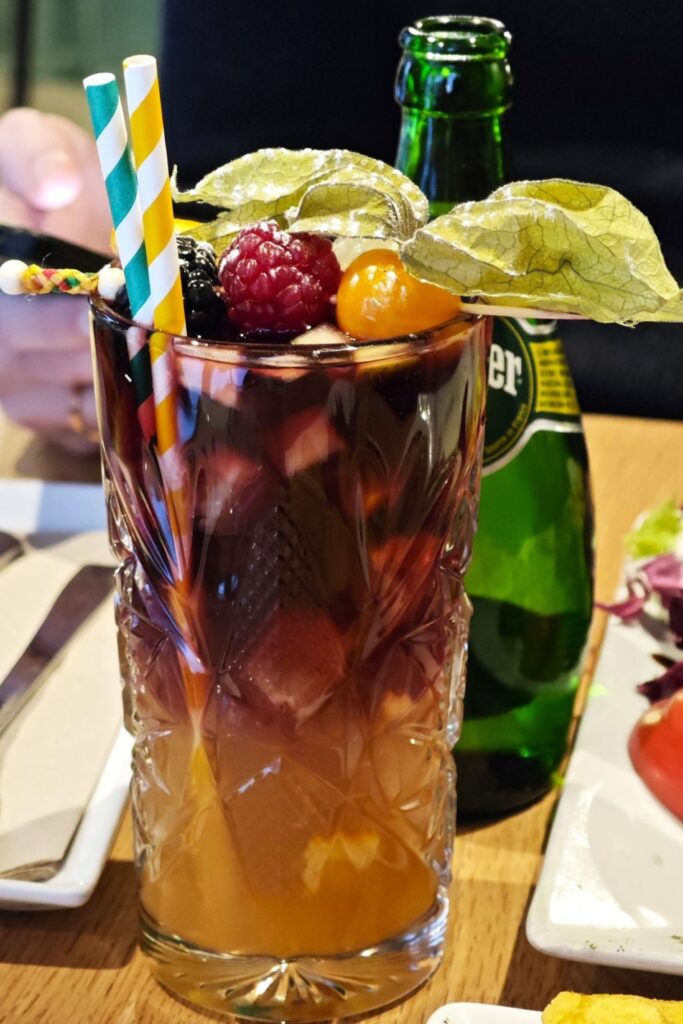
This classic Spanish refresher is sweet and fruity, where the bold punch of red wine is mellowed by the fresh, juicy notes of berry, orange, and melon. A splash of brandy and rum gives it its warming potency and an alcohol kick. A good balance of fruit and fire.
Seafood Paella
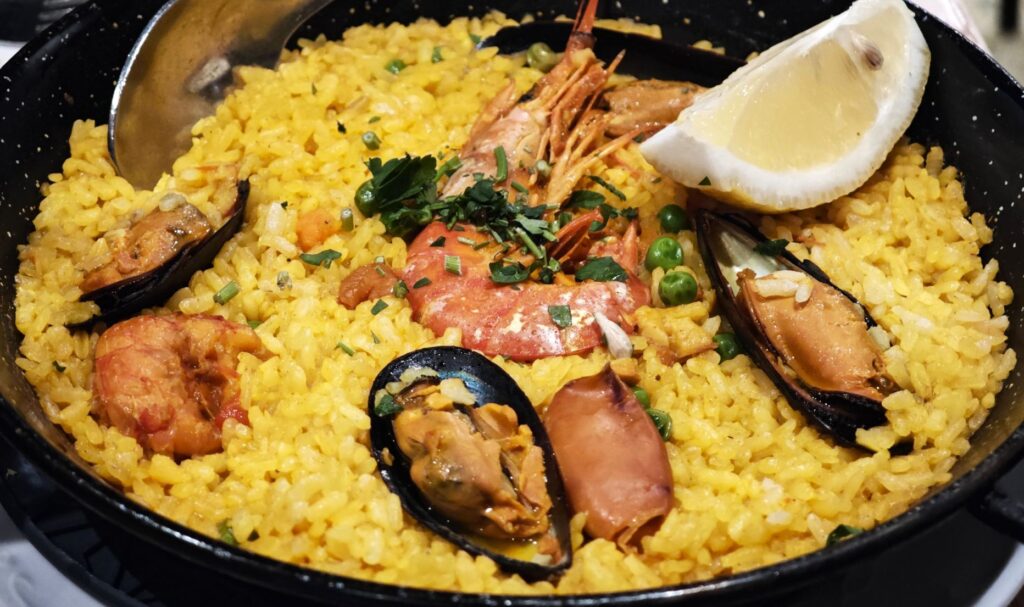
This paella has a good mix of sea and soil. The saffron-infused rice absorbs the deep, briny flavor from the baby squid, clams, and shrimp, while the beans and chopped paprika provide a soft, earthy contrast. The socarrat—the slightly crispy, caramelized rice layer at the bottom of the pan—is the most prized part!
Pan-fried Eggs with Iberian Ham
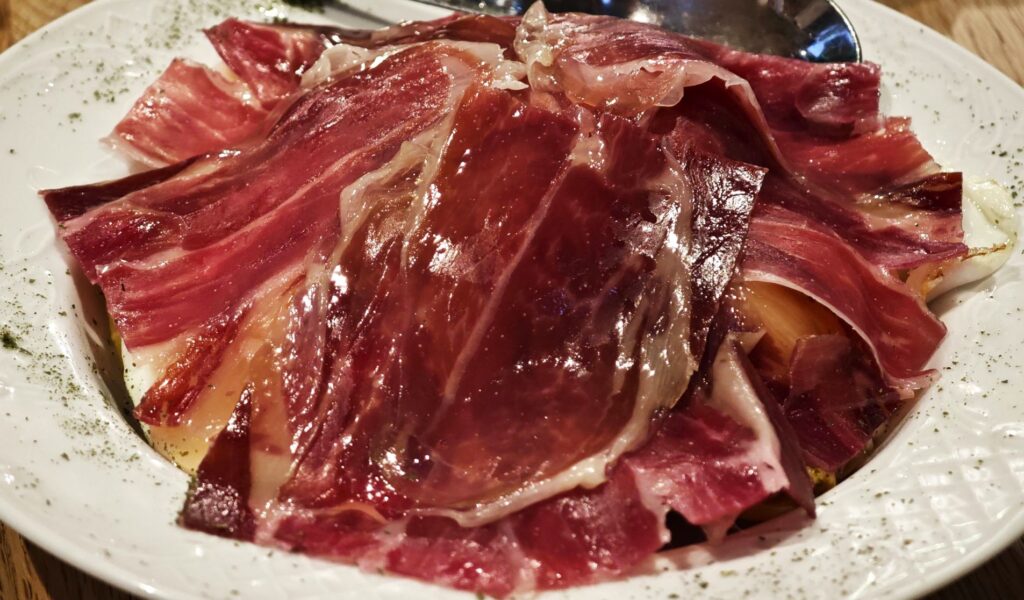
This dish is pure, unadulterated luxury. Breaking the three raw egg yolks and letting their rich, golden creaminess cascade over everything is the main event. They coat the salty, nutty, and intensely flavorful Iberian ham. The chips at the bottom soak up the runny yolk and ham juices, becoming gloriously soft and savory, while remaining crisp.
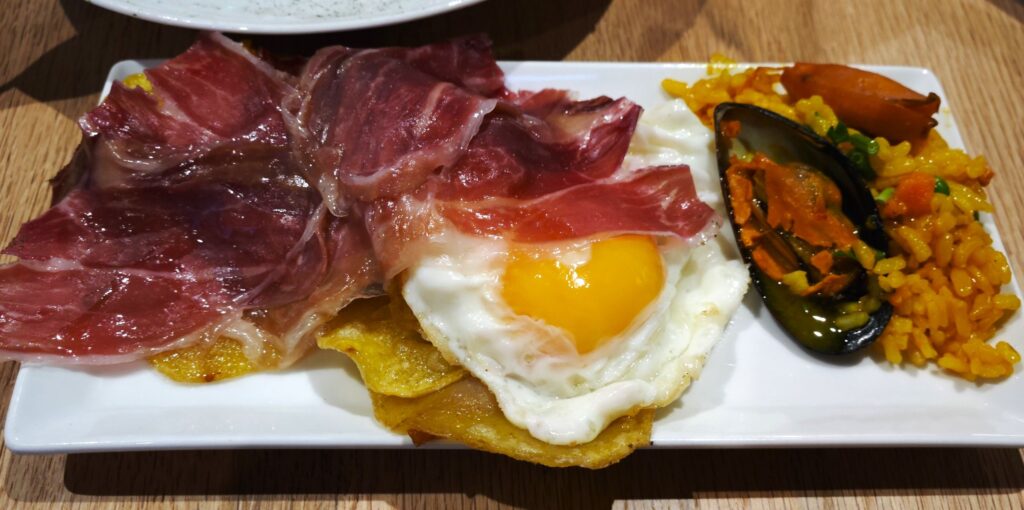
Iberian ham (Jamón Ibérico) is a national treasure. The best grades come from pigs that roam oak forests, eating acorns (bellota), which gives the fat its unique, melt-in-the-mouth quality.
Grilled Baby Squid with Salad
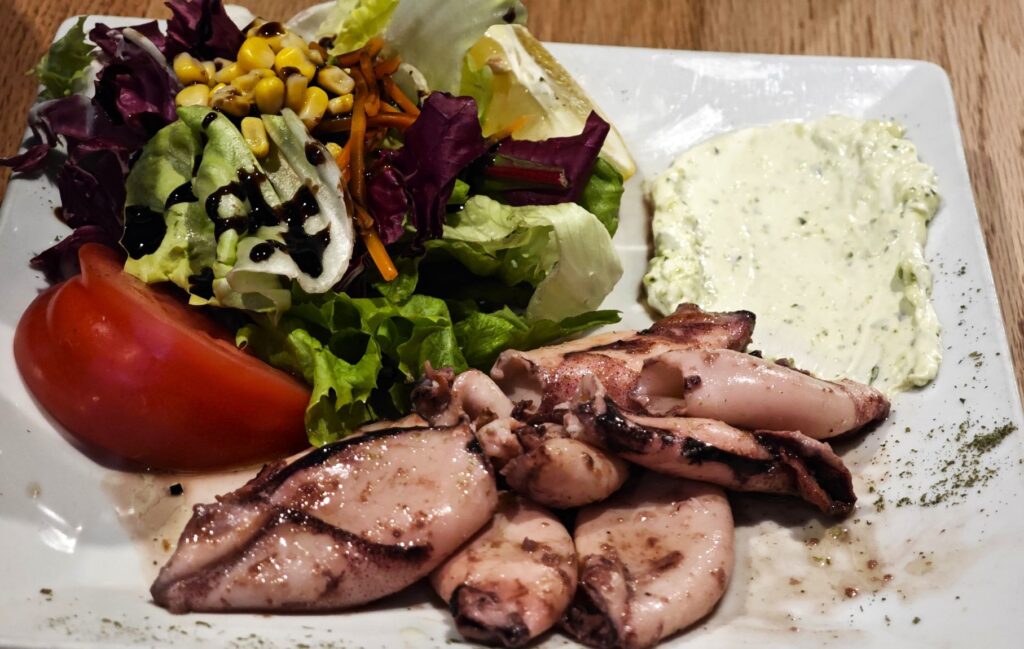
Incredible ingredients need little embellishment. The grilled baby squid is a dream—juicy, tender, and meltingly soft, with a lightly charred surface. The garlicky, creamy aioli provides a rich, herbal dip. A fresh squeeze of lemon cuts through the richness, while the side salad with its sweet balsamic dressing offers a refreshing, tangy palate cleanser.
Cuban-Style Shredded Beef
This dish is hearty and comforting. The beef is slow-cooked until it’s tender yet retains a slight chew, shredding easily. The dominant flavor is a sweet and warm BBQ-style glaze.
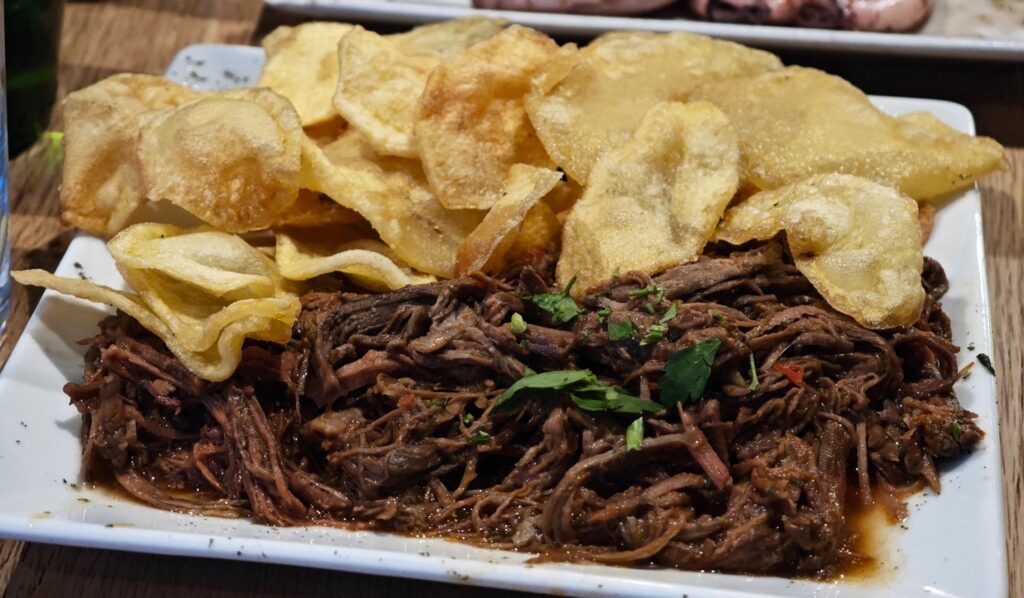
“Cuban-style” (estilo Cubano) refers to a flavor influenced by ropa vieja (which literally means “old clothes”), one of Cuba’s national dishes. Thebeef is stewed in a tomato-based sofrito sauce with onions, bell peppers, garlic, vinegar, and warming spices like cumin and oregano. The “sweet” note from white wine balances the tomatoes’ acidity. Served with chips, it’s a flavorful and filling tapa with a Caribbean appeal.
As the final sip of sangria is savored, Madrid settles into us.
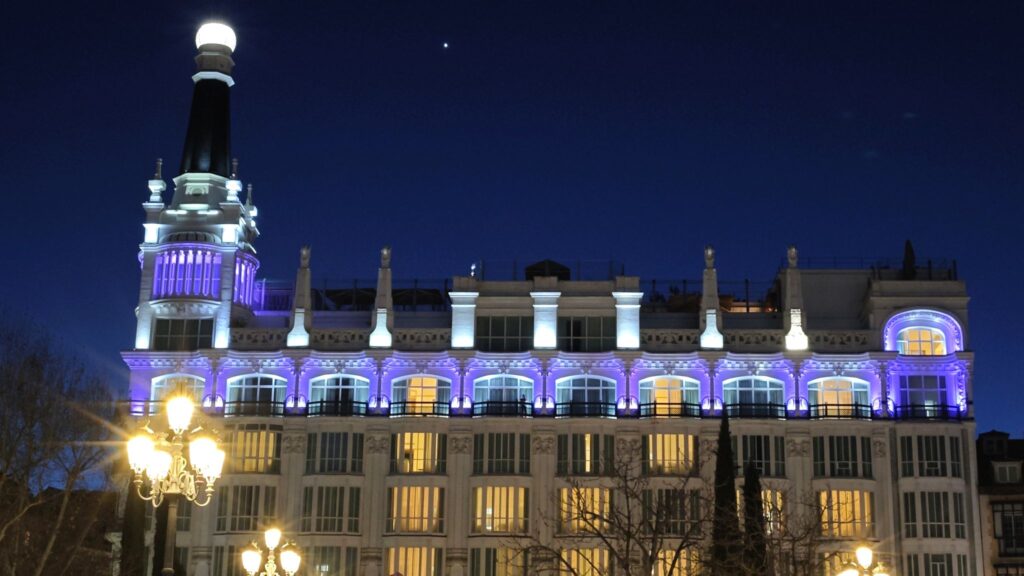
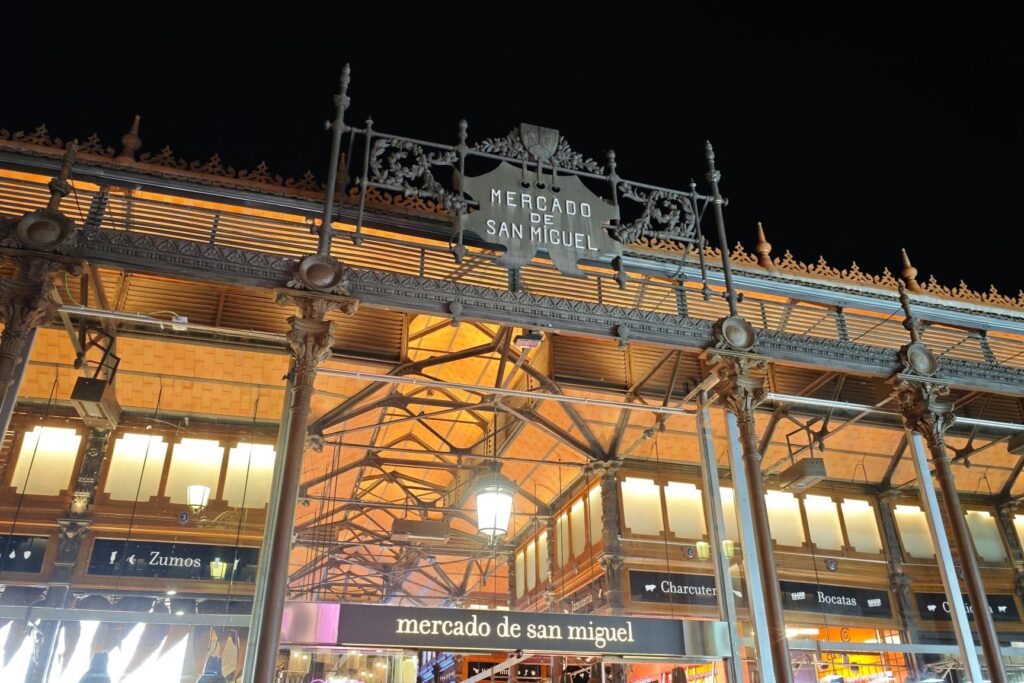
For icons, it has the grand sweep of the Royal Palace, the masterpieces of the Prado, the historic buzz of Plaza Mayor. As you find peace rowing on the lake in Retiro Park, taste centuries of tradition in the crispy skin of Botín’s suckling pig, you leave with so much more, as if the city’s rhythm has slipped into your steps, carrying the energy of Gran Vía and the pulse of Mercado de San Miguel. It’s a city that lives loudly and loves deeply, and it invites you to do the same.

What a cute hidden area in Madrid
Are you allowed to take photos in the museum?